
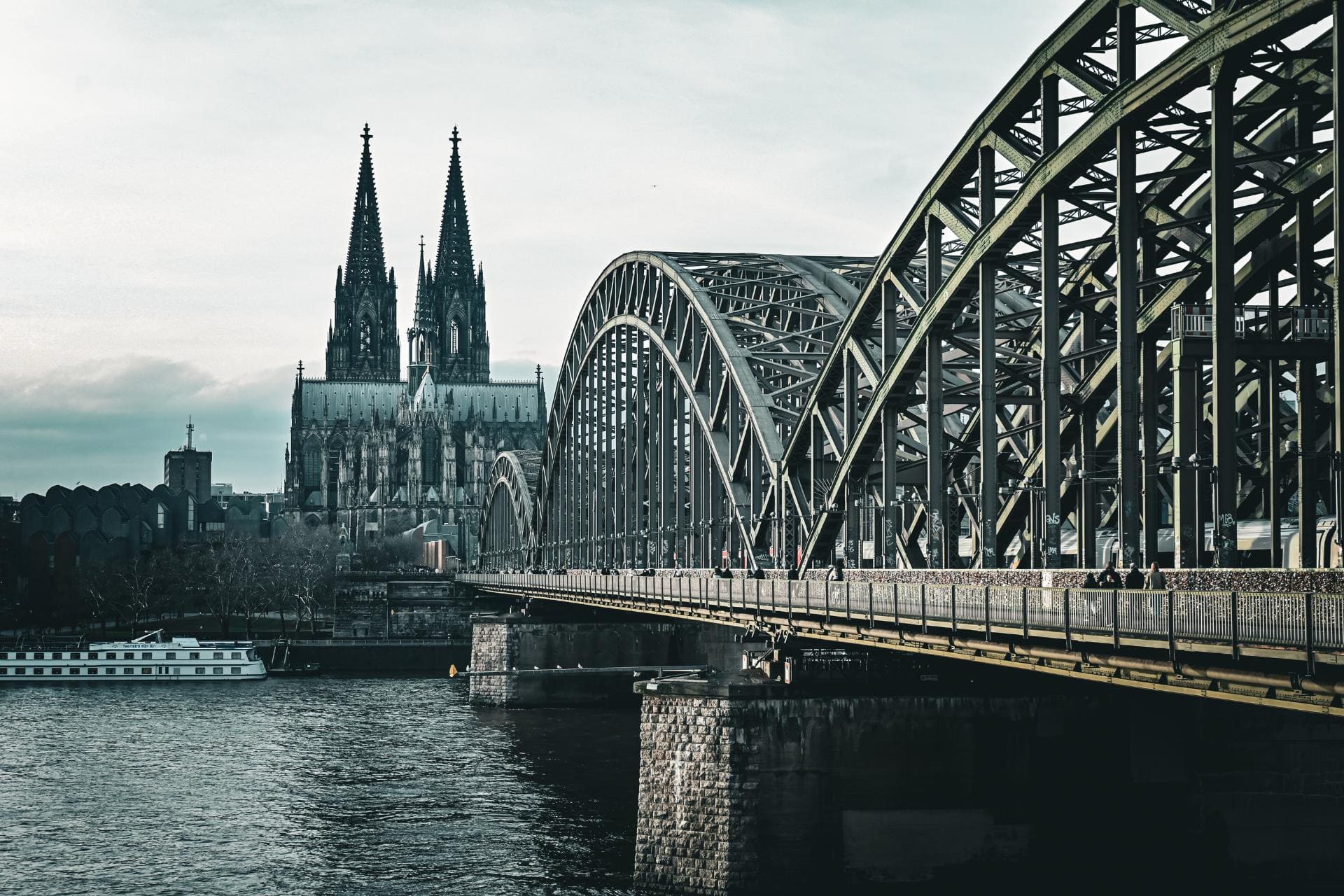
This week, I'm on a UNESCO World Heritage and Christmas market tour. Yesterday, I visited Aachen Cathedral, and today I'm taking the train to Cologne.
Cologne Cathedral is one of Germany's most famous buildings – yet its significance often only becomes apparent at second glance. As UNESCO World Heritage Sites it stands not only for monumental architecture, but also for the religious, political, and cultural history of Europe. For centuries, the cathedral has shaped the cityscape, made Cologne one of the most important pilgrimage centers of the Middle Ages, and remains a defining symbol of the city to this day.
This day trip to Cologne is the start of a new series in which I will gradually UNESCO World Heritage Sites in Germany I imagine – not as complete museum visits, but as personal snapshots, supplemented by historical background information and art-historical classification. Cologne Cathedral is particularly well suited for this: hardly any other monument combines so impressively medieval architecture, outstanding works of art and modern interventions such as Richter window.
UNESCO World Heritage Site Cologne Cathedral
UNESCO status: since 1996
Location: Cologne, North Rhine-Westphalia
Type of World Heritage Site: cultural heritage
UNESCO criteria:
- Criterion (i): Masterpiece of human creativity
Cologne Cathedral is considered an outstanding example of Gothic architecture. Its monumental architecture, the consistent implementation of the Gothic cathedral plan and the exceptional quality of its craftsmanship make it a masterpiece of European architectural history.
- Criterion (ii): Significant exchange of architectural and artistic influences
The cathedral is an example of cultural exchange in medieval Europe. Models from France were adopted, further developed and continued over the centuries in a building process that closely linked Cologne with the great Gothic centers.
- Criterion (iv): Outstanding example of a building form or architectural ensemble
As one of the largest Gothic cathedrals in Europe, Cologne Cathedral impressively illustrates the development of cathedral architecture from the Middle Ages to the 19th century and at the same time documents the long, historically unique construction process.
Meaning: Cologne Cathedral is a monumental Gothic cathedral with over 600 years of construction history. With the Shrine of the Epiphany, it became one of the most important pilgrimage centers in Europe in the Middle Ages and still shapes the image of the city of Cologne today as a spiritual, cultural and urban landmark.
You can find more exciting travel destinations in Germany in my overview Destination Germany - 100+ selected places by federal state.
1. Arrival at Cologne Cathedral – the west facade
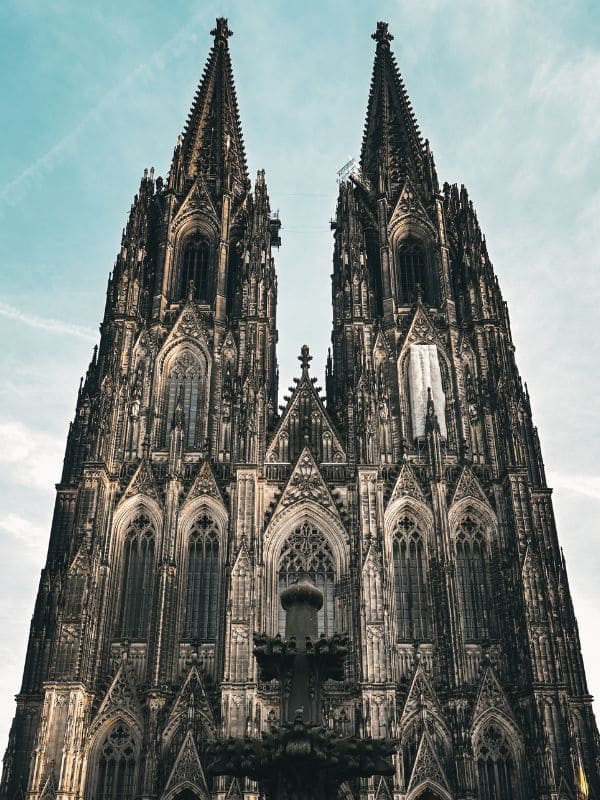
My first glance falls on the monumental west facade of Cologne Cathedral with its two towers. With a height of 157.38 meters the cathedral was the tallest building in the world after its completion in 1880 .The foundation stone was laid as early as 1248 , but construction dragged on—with a long interruption—for more than 600 years. Since 1996 Cologne Cathedral belongs to the UNESCO World Heritage.
2. View from Above – Cologne Triangle
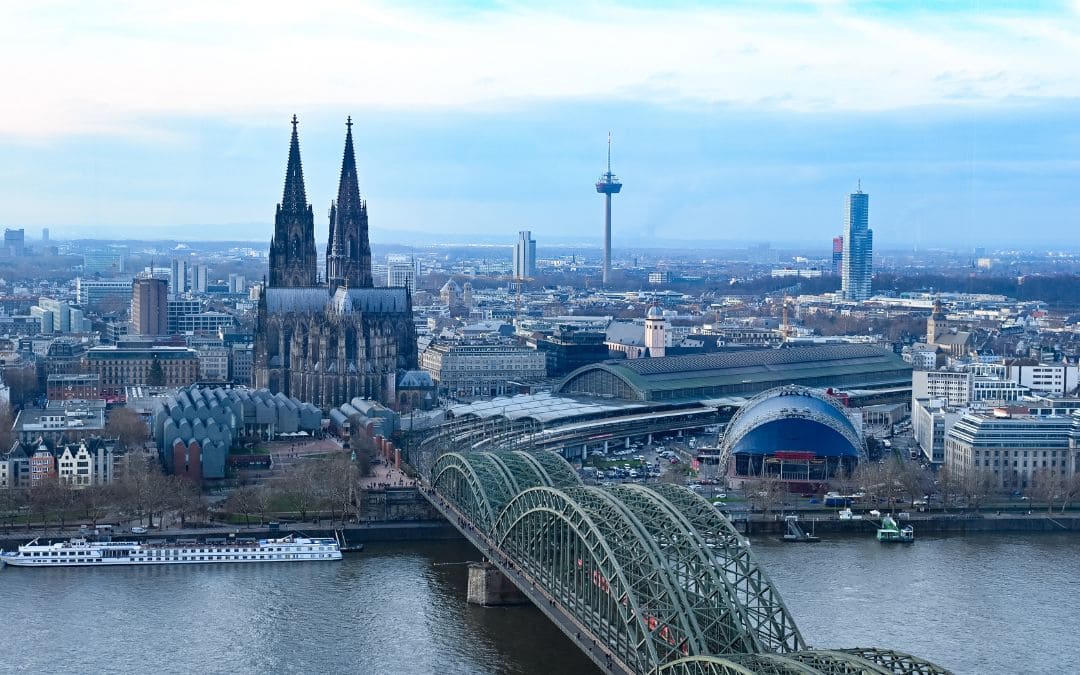
I follow the advice of a friendly old lady I spoke to on the train, and first walk across the Hohenzollern Bridge to the glass skyscraper with its visitor platform. The KölnTriangle on the right bank of the Rhine offers a magnificent view over Cologne. The observation deck at a height of 100 meters is easily accessible by elevator. From here, you can see the cathedral's dominance over the cityscape particularly well: it still towers over the entire city center and can be seen from almost every point in the city.
3. Cathedral, Rhine, and City Panorama
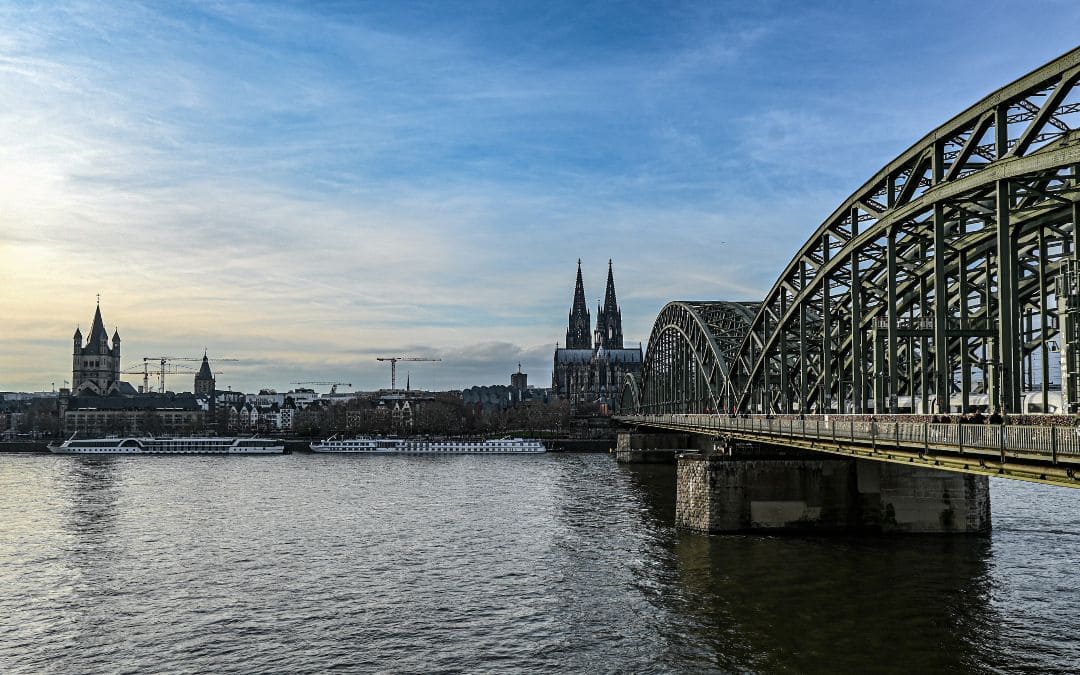
On the way back, I stop to take some photos at the Hohenzollern Bridge viewpoint. The view shows Cologne from its classic side: the cathedral, the old town, the Rhine, and the boats. The Rhine has been one of Europe's most important transport routes since Roman times—Cologne was already an important trading center and archbishopric in the Middle Ages.
4. Love Locks on the Hohenzollern Bridge
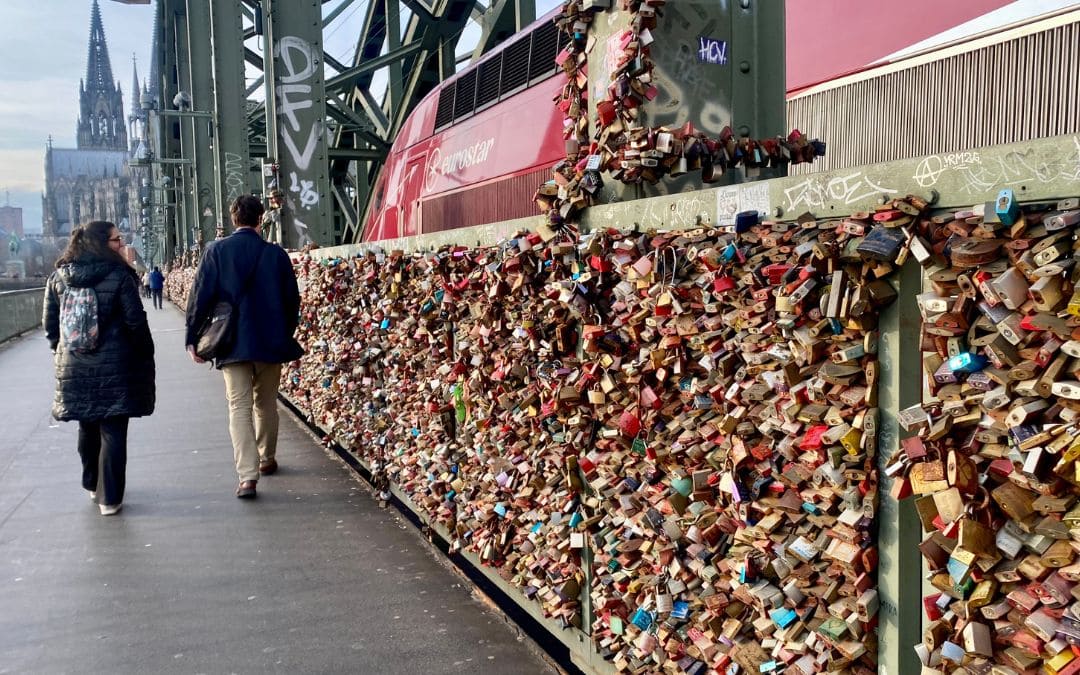
The Hohenzollern Bridge is famous for its thousands of love locks. Estimates suggest over 500,000 locks weighing several hundred tons. The bridge itself dates back to the early 20th century and is now one of the busiest railway bridges in Germany—with a direct view of the cathedral.
Just in time for the cathedral tour, which is scheduled to start at 3:30 p.m., I arrive at the cathedral forum, where participants receive headphones and audio devices to wear around their necks 10 minutes before the tour begins. At 3:30 p.m. sharp, we follow our guide past the cathedral guards and into the cathedral.
5. The high choir – the heart of the cathedral
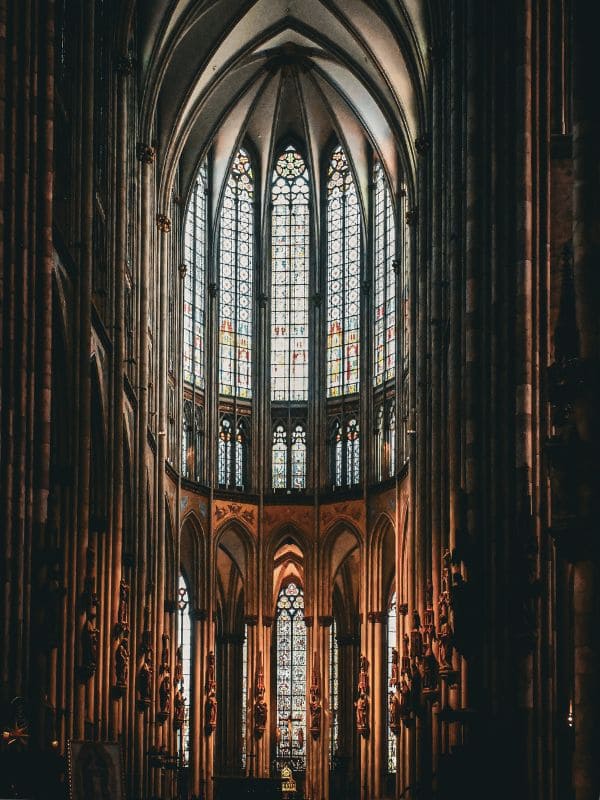
The high choir of Cologne Cathedral was already 1322 consecrated and is the oldest completed part of the Gothic cathedral. With its tall tracery windows, it is considered one of the most significant examples of French-influenced High Gothic north of the Alps. The ring of seven chapels is also reminiscent of French cathedrals such as those in Amiens or Reims.
6. The Shrine of the Three Kings
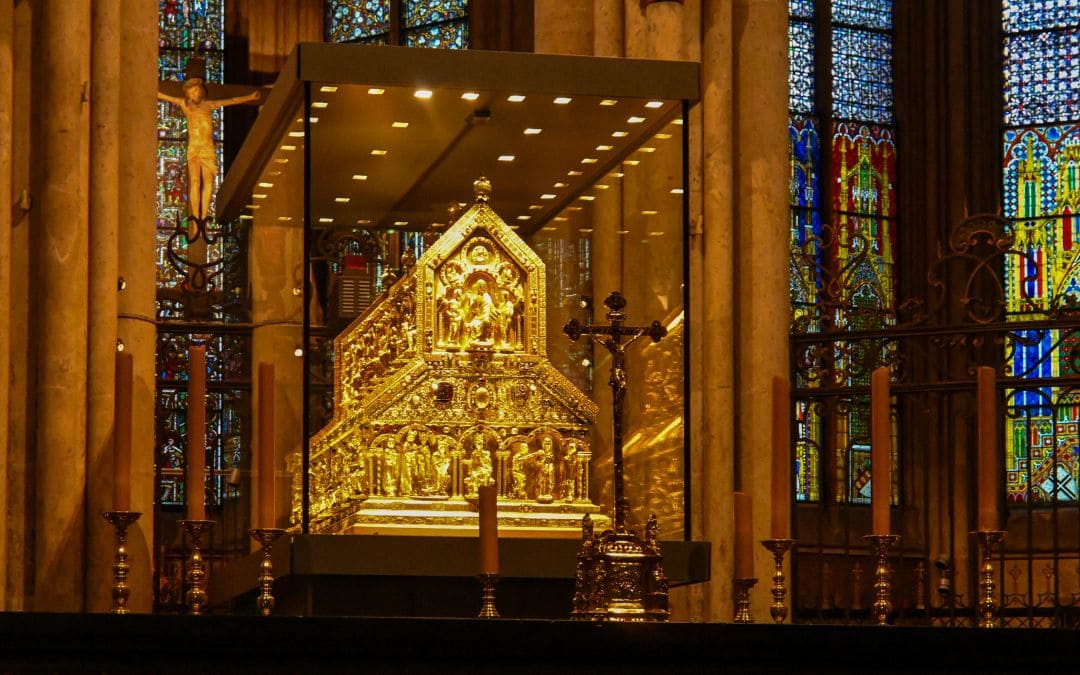
The Shrine of the Three Kings is the most important medieval work of art in Cologne Cathedral—and one of the most significant reliquaries of the Middle Ages. It was built around 1180–1225 created and contains the Relics of the Three Kings, Archbishop Rainald von Dassel 1164 from Milan to Cologne. This shrine alone made Cologne one of the most important pilgrimage sites in Europe during the Middle Ages.
7. The Agilolphus Altar
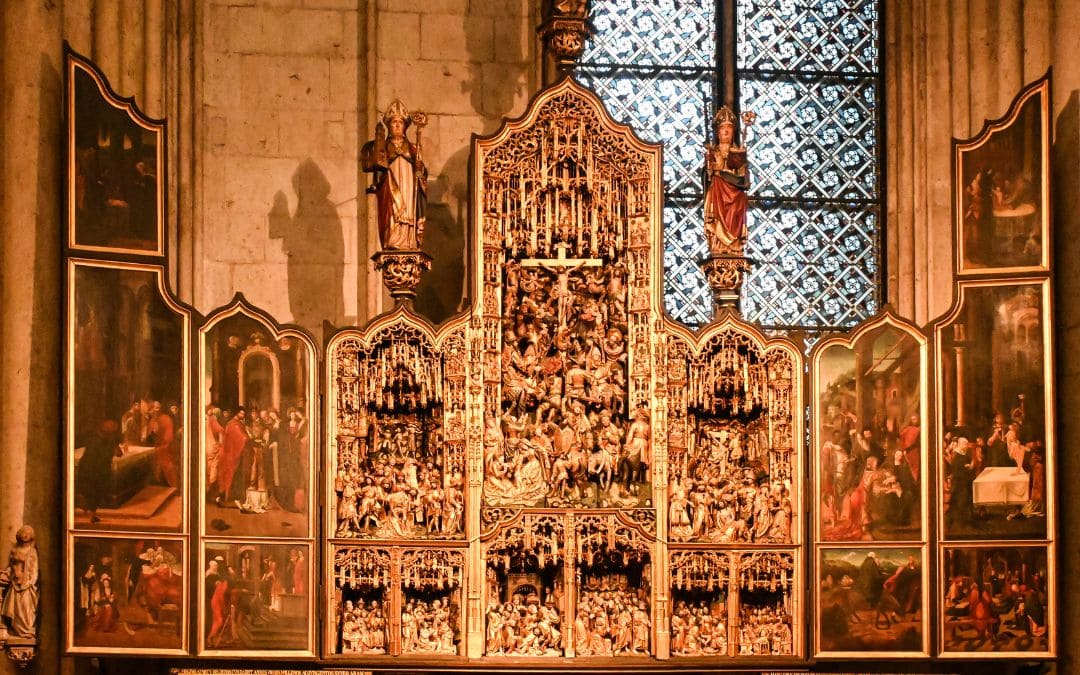
The Altar of Agilolphus is a Antwerp carved altar from the early 16th century (to 1520/1521). It originally comes from Cologne's collegiate church. St. Mary at Gradus, which was demolished in the 19th century, and ended up 1817 in Cologne Cathedral. With its rich array of finely carved wooden figures, the altar is one of the most significant Antwerp altarpieces in Germany and is a prime example of the highly developed sacred art of the late Gothic period.
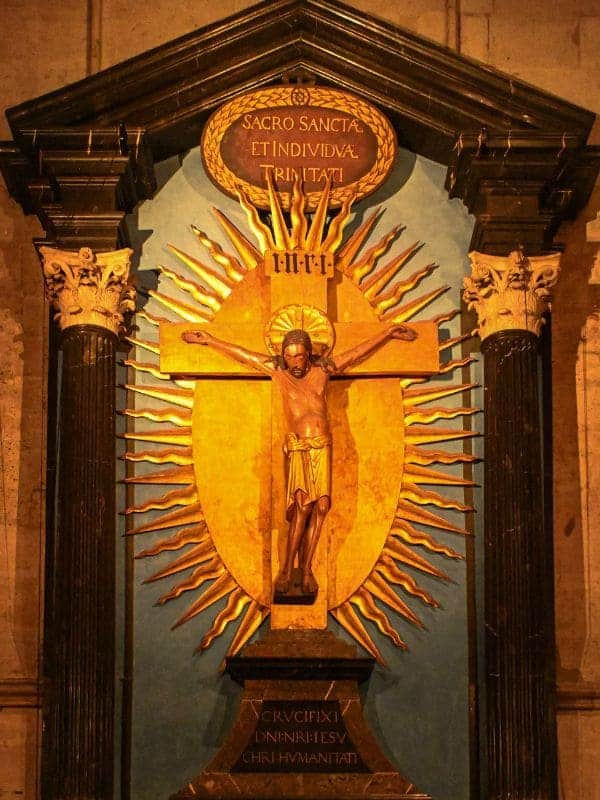
8. The Gerokreuz
The Gerokreuz is considered the Oldest monumental crucifix north of the Alps. It was created around 970 and marks a turning point in the depiction of Christ: for the first time, he is shown not as a triumphant victor, but as a suffering human being. This cross had a major influence on European art history.
9. The floor mosaic
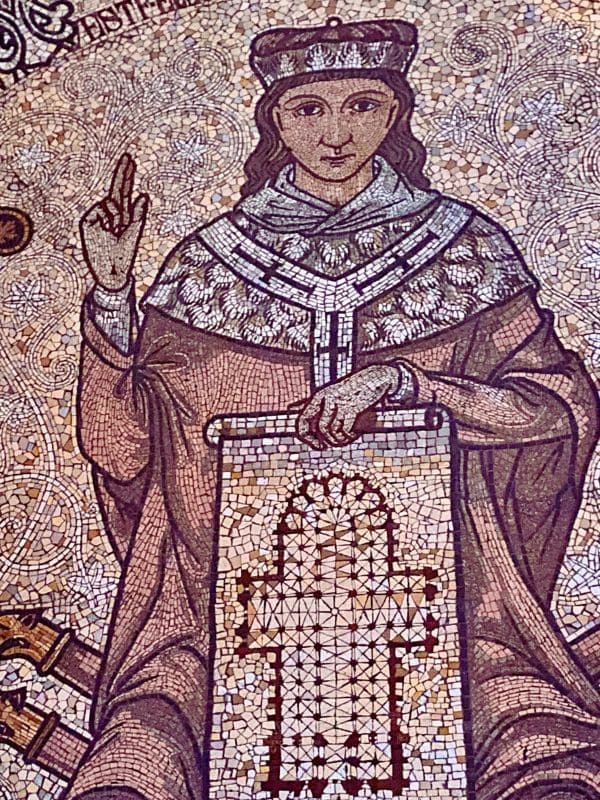
It's worth taking a look down: the floor mosaic from the 19th century With a total area of 1,350 square meters, it is the largest work of art in Cologne Cathedral. My image shows Archbishop Konrad von Hochstaden, which floats above the August 15, 1248 laid the foundation stone for Cologne Cathedral. In his left hand he holds the cathedral's floor plan. The ceramic stones for the mosaic were made by Villeroy & Boch manufactured – a beautiful detail of industrial history, in my opinion.
10. The Milan Madonna
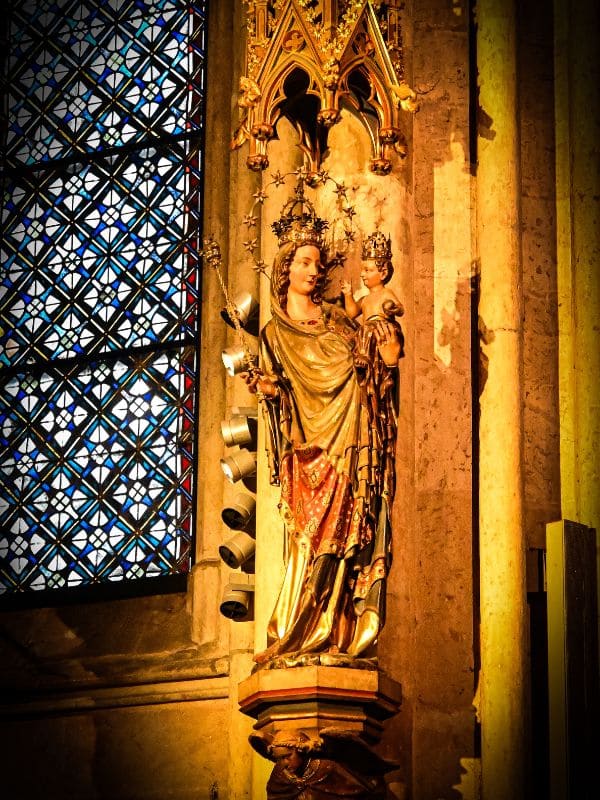
The Milan Madonna is a Gothic wooden sculpture from the early 14th century. It probably arrived in Cologne from Milan together with the relics of the Three Kings. The depiction of Mary is strikingly lifelike and human—a typical feature of Gothic sculpture.
11. The Richter window in the south transept
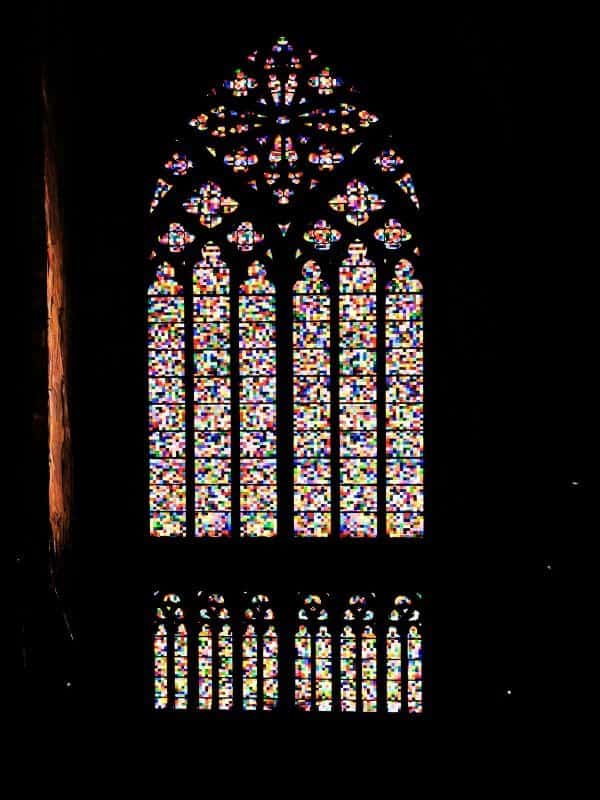
The stained glass window in the south transept was 2007 based on a design by Gerhard Richter used. It consists of 11,263 hand-blown glass panes in 72 shades of color. The abstract window was initially controversial, but is now considered an important example of contemporary art in a historical space. Depending on the time of day, the play of colors changes with the incidence of light. The original window was destroyed during the war and replaced with colorless glazing in 1948.
12th Christmas Market at the Cathedral – Closing ceremony with sparkling lights
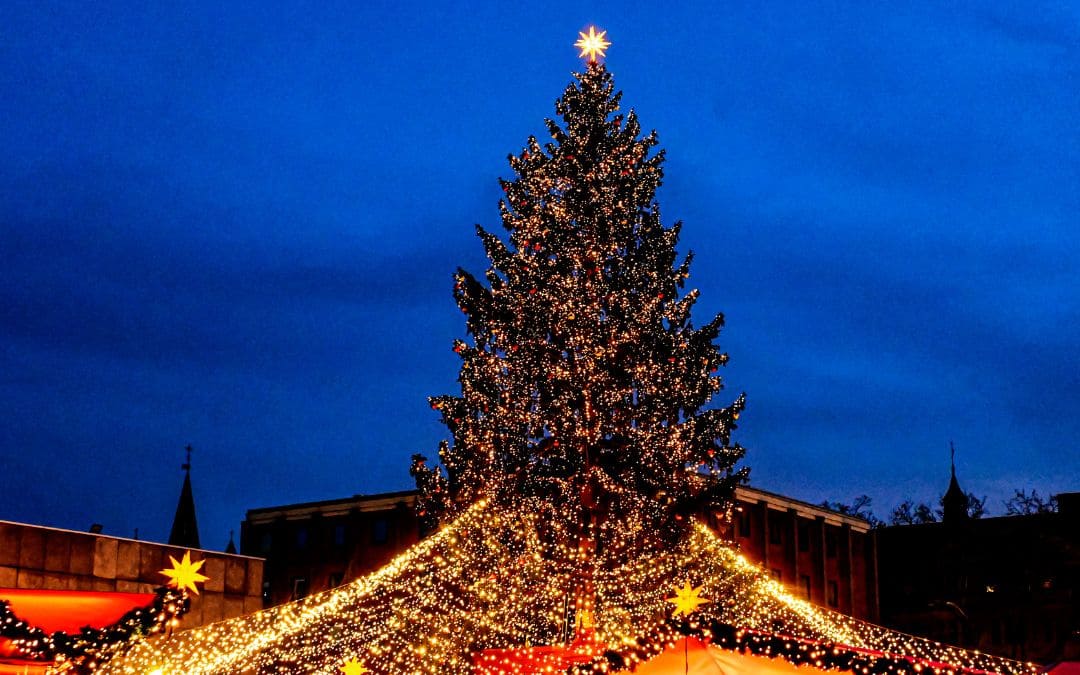
At the end of the day, I walk through the Christmas market at the cathedral, one of the most popular Christmas markets in Germany. The huge Christmas tree and the roof of lights create a special atmosphere—especially in front of the cathedral illuminated at night. An atmospheric contrast between medieval world heritage and modern urban culture, before I head back to Aachen.
Visit to Cologne Cathedral
📍Address: Domkloster 4, 50667 Cologne
Cologne Cathedral is usually open daily. As opening hours may vary depending on the season, church services, and events, I recommend checking the official website. For visitors interested in art history, I recommend a cathedral tour. You can find details on this at the following link:
👉 Current opening hours & guided tours:
https://www.koelner-dom.de
Getting there & location
Cologne Cathedral is located right next to Cologne Central Station and is easily accessible by train. It is also within walking distance of the old town and the banks of the Rhine.
The area around the cathedral is car-free; parking garages are within walking distance. You can find a Overview of all parking garages with current capacity utilization.
Conclusion: World Heritage between history and the present day
A visit to Cologne Cathedral impressively demonstrates why it has been designated a UNESCO World Heritage Site. Here, Over 1,200 years of church history, medieval high art and contemporary design come face to face. From the Shrine of the Epiphany to the Gero Cross and Gerhard Richter's abstract stained glass window, the exhibition spans a wide arc through European art and cultural history.
Especially in the interplay with the city - the Rhine, the bridges, the modern Cologne Triangle and the lively Christmas market - it becomes clear that the cathedral is not an isolated monument, but a building that is still anchored in the middle of everyday life.
My UNESCO series is designed to make you want to take a closer look: at places that you may think you already know, but whose history and significance only really reveal themselves at second glance.
Continue Reading
In my comprehensive overview article on UNESCO World Heritage Sites in Germany you can find all listed locations at a glance—from Cologne Cathedral to lesser-known World Heritage Sites that are equally worthwhile destinations for a trip or excursion.
The Cologne Christmas market at the cathedral is one of the Most popular Christmas markets in Germany. Anja from the travel blog Travel on Toast states in her article on the The most beautiful Christmas markets in Cologne her favorites. She lived in Cologne for 12 years and shares her Best tips for sightseeing, shopping, restaurants, and hotels.
12 of 12 info
If you liked my article, then take a look at the blog Draußen nur Kännchen over. On the 12th of every month, you will find lots of interesting 12 out of 12 articles there.
If you like reading about history, culture and special places in Germany, then stay up to date with my newsletter.
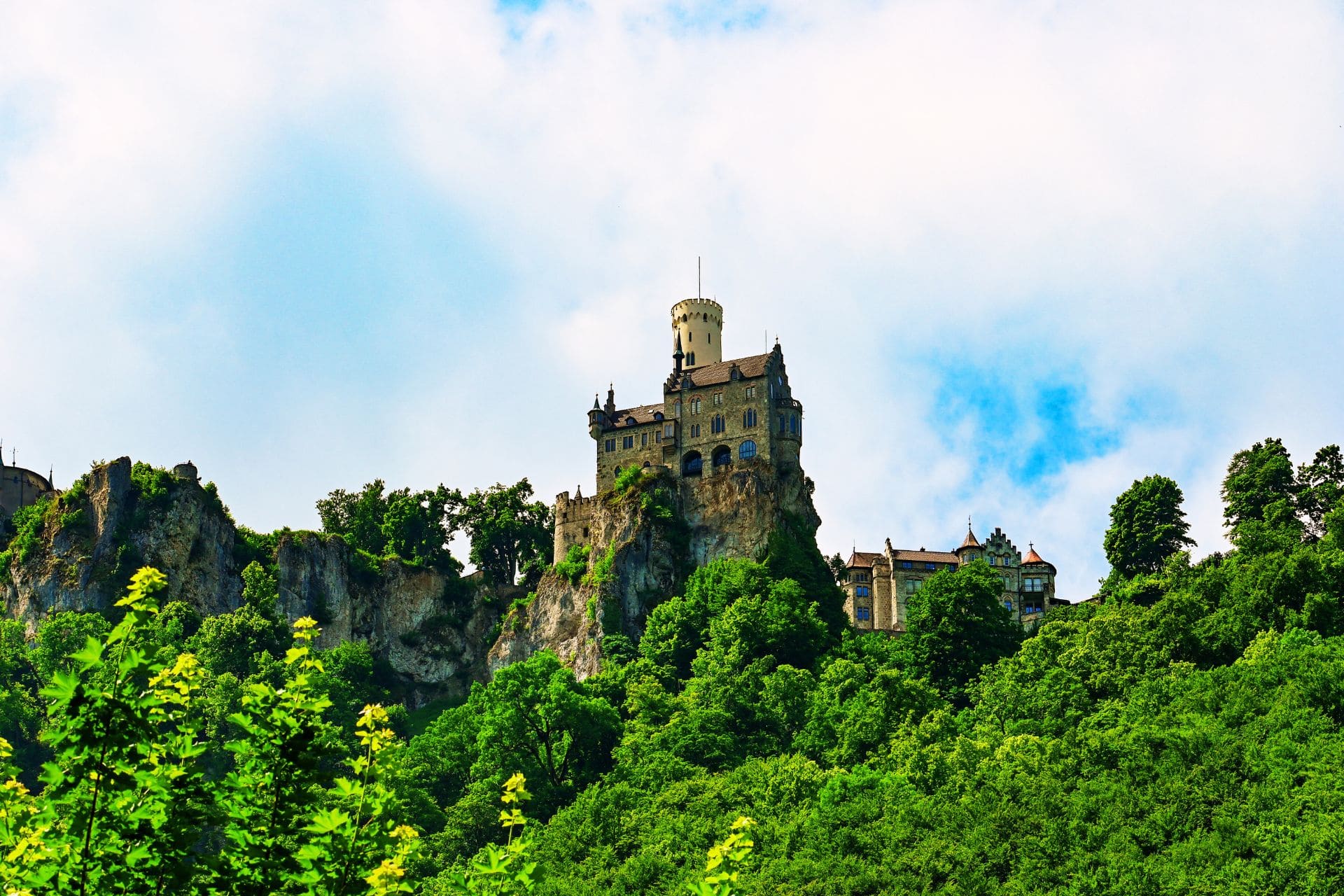
Between Albtrauf, half-timbered houses and World Heritage Site The Swabian Alb is still one of Germany's underrated regions. Yet it combines a read more
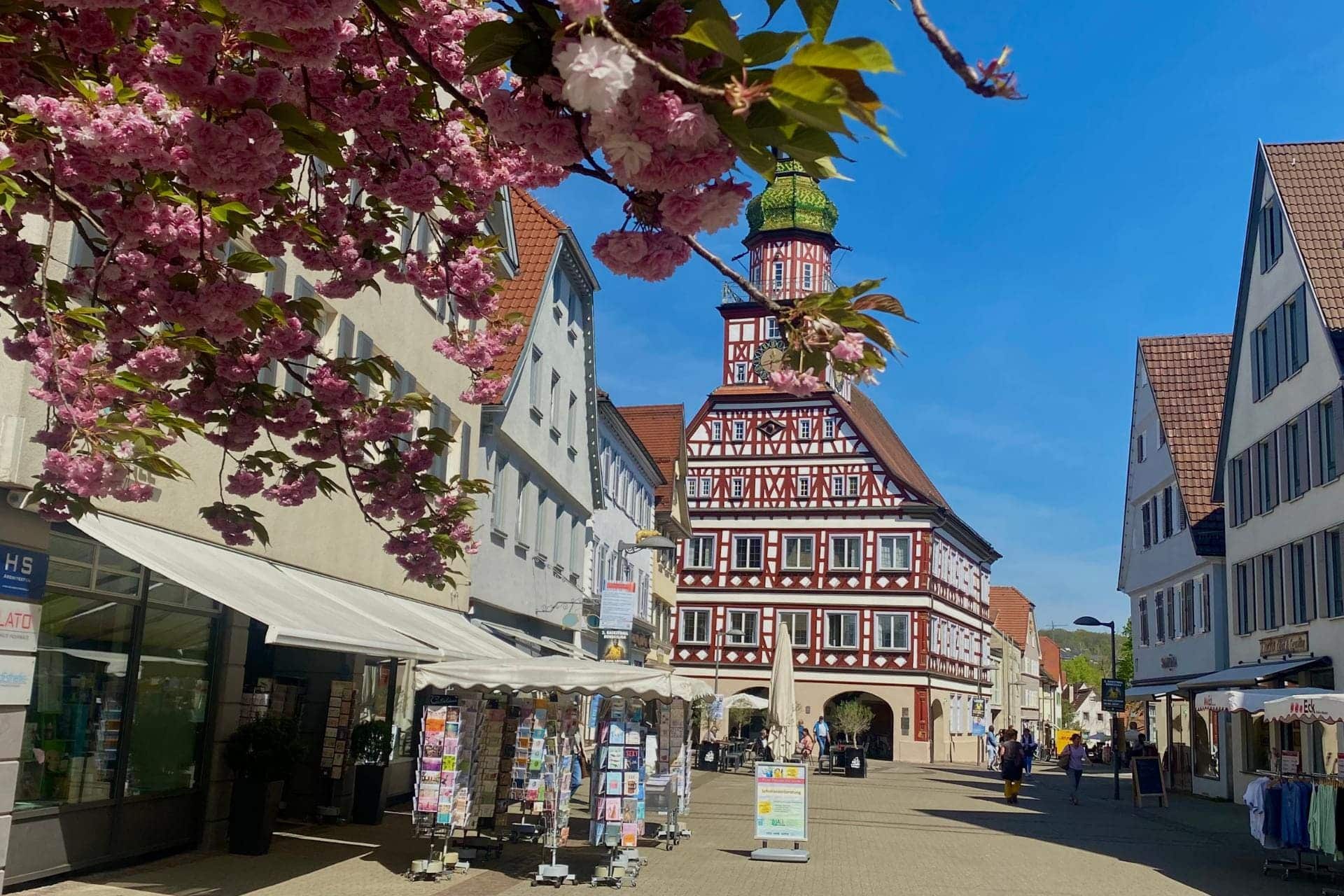
For today's 12 out of 12, I decided to use my €49 ticket and take the S-Bahn to Kirchheim unter Teck read more
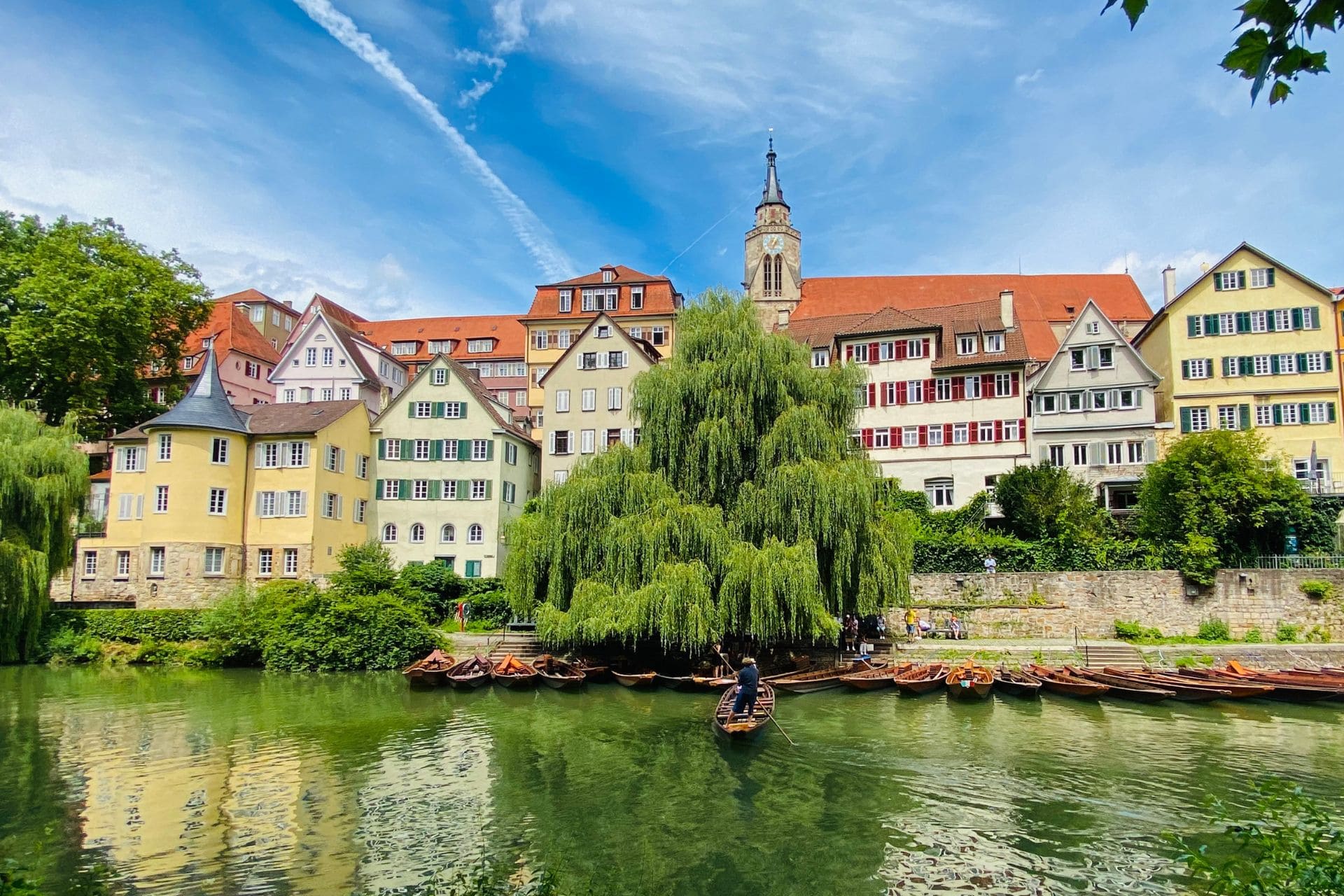
On this city tour through Tübingen, I will show you the most important sights of the old town, which is one of the most beautiful in Baden-Württemberg read more
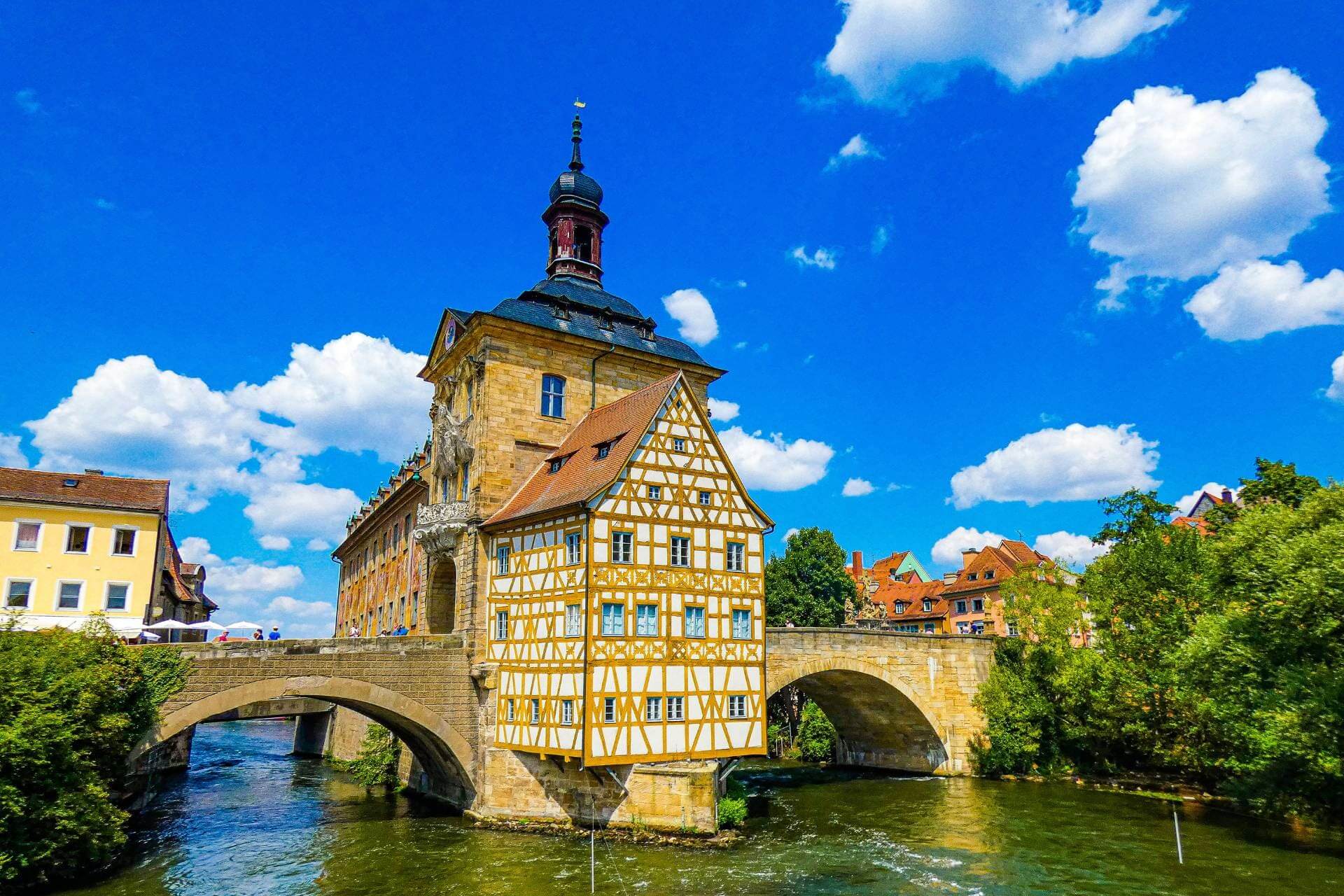
UNESCO World Heritage Sites are places of outstanding universal value, whether for their cultural significance or their unique natural setting. The UNESCO World Heritage List was read more

About me: I love to travel, write and photograph - preferably in places where the past is visible. Whether it's half-timbered towns, castles or quiet landscapes - there's something in every place that touches you and inspires you to think further. With my blog Angie's Travel Routes I would like to inspire you to discover Germany on your own. I share my experiences, personal impressions and practical route tips to make your next trip a special experience.
You can find out more about me to my newsletter.

 Deutsch
  English