
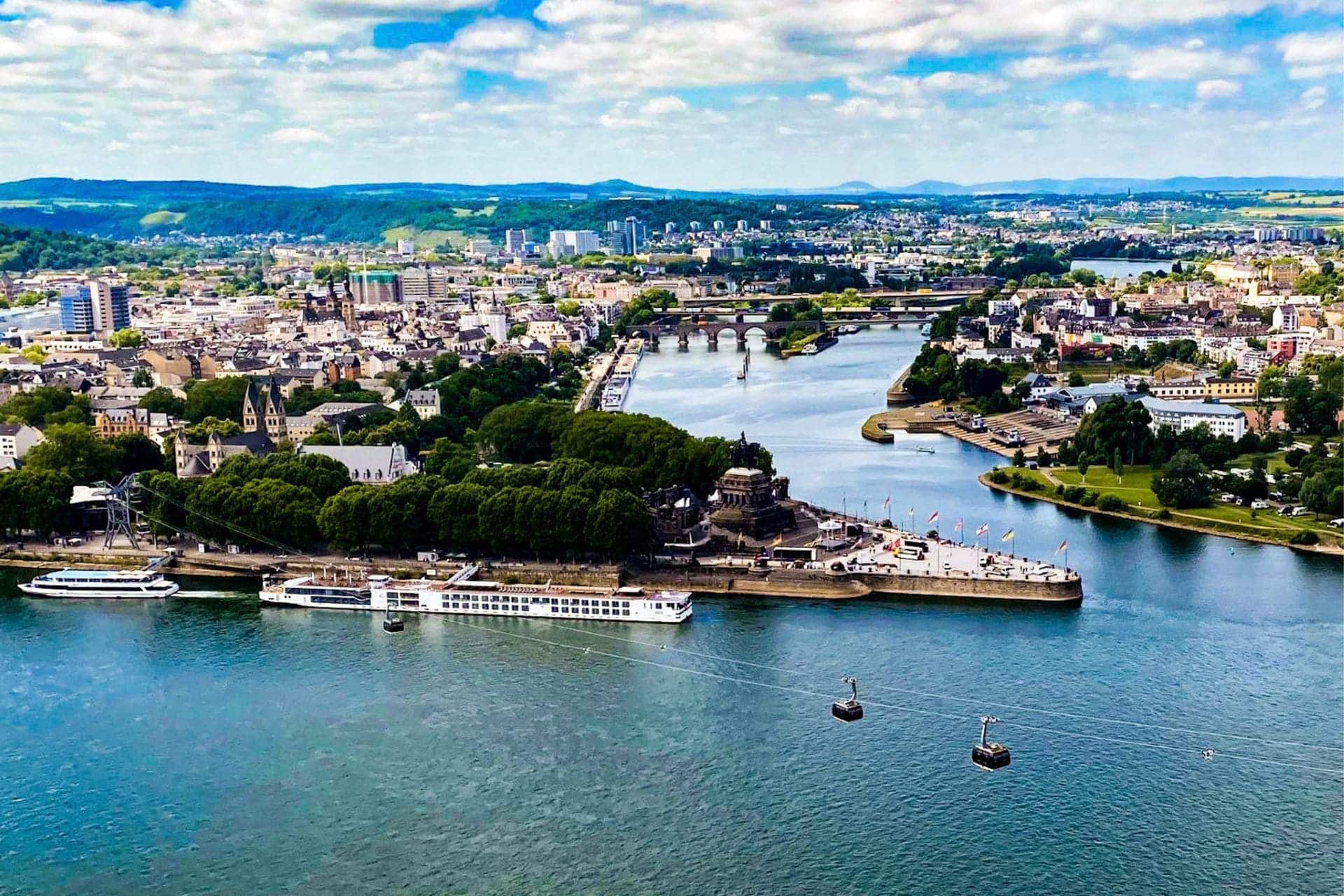
For a long time, I knew Koblenz mainly for Deutsches Eck. The Rhine and Moselle rivers, the monumental statue of Emperor Wilhelm I, and Ehrenbreitstein Fortress high above them are probably the first images most people associate with the city. But there is much more to this 2,000-year-old city's story.
The confluence of the Rhine and Moselle was strategically important even to the Romans. Around 55 BC, they established a fort here called “Castellum apud confluentes.” The name Koblenz later developed from “Confluentes,” meaning “the confluence.” That makes Koblenz one of Germany's oldest cities.
This time, I explored the city with Verena Mettler of Koblenz-Touristik. She lives in Koblenz and showed me her hometown from a personal perspective. Together, we visited the Old Town, Ehrenbreitstein Fortress, and Stolzenfels Castle, and I got to know Koblenz as a wine city. After all, two long-established wine regions meet here along with the Rhine and Moselle.
Then there is Koblenz's location at the northern end of the Upper Middle Rhine Valley UNESCO World Heritage Site. This celebrated cultural landscape extends from Bingen and Rüdesheim to Koblenz, with steep vineyards, castles, historic towns, and views of the Rhine that captivated artists such as J. M. W. Turner in the 19th century.
In this guide, I'll share my favorite sights and experiences in Koblenz, take you to some highlights of the Upper Middle Rhine Valley, and show you how to discover the city's wine culture.
- Deutsches Eck and Ehrenbreitstein Fortress: The city's best-known landmark stands where the Rhine and Moselle meet. The fortress offers my favorite view over Koblenz.
- Cable car ride across the Rhine: The trip up to the fortress is an experience in itself, with wonderful views of Deutsches Eck, the Old Town, and both rivers.
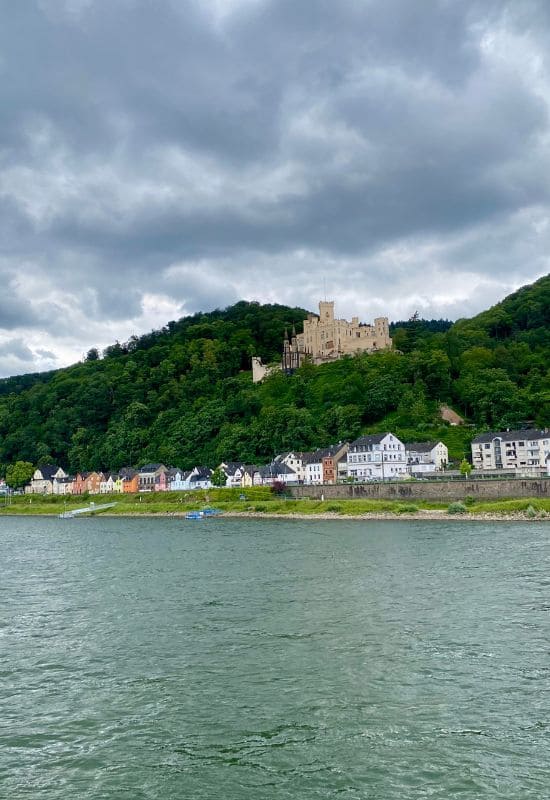
- Stolzenfels Castle: This romantic castle above the Rhine combines Gothic Revival architecture, gardens, and river views in one of the Middle Rhine's most impressive settings.
- Koblenz as a wine city: Winemaking has a long tradition between the Rhine and Moselle. A tasting at Weingut Göhlen is a particularly enjoyable way to experience it.
- Koblenz's Old Town: Around the Four Towers, the Schängel Fountain, and the historic squares, you'll discover the city's lively character and long traditions.
- Cruise through the Upper Middle Rhine Valley: From the water, you'll see the UNESCO landscape of castles, vineyards, and historic towns from a fresh perspective.
- Marksburg Castle near Braubach: This well-preserved hilltop castle is one of the Middle Rhine's great highlights and an excellent day trip from Koblenz.
Your Koblenz City Break at a Glance
The Top Sights in Koblenz in One Day
If you have just one day in Koblenz, I'd spend the morning walking through the city center. The Old Town is compact, so you can see its main sights on foot in a few hours. These include the Four Towers, the Schängel Fountain, Liebfrauenkirche, the Basilica of St. Castor, and, of course, Deutsches Eck.
In the afternoon, take the cable car across the Rhine to Ehrenbreitstein Fortress. The ride alone gives you sweeping views of Koblenz and both rivers. Allow enough time at the top for the fortifications, exhibitions, and, above all, the view.
Koblenz Between the Rhine and Moselle: A City on Two Rivers
The Rhine and Moselle have shaped Koblenz for more than 2,000 years. They define the cityscape and have influenced the city's development for centuries. The Romans recognized the strategic value of the confluence. Later, the rivers became important routes for trade and travel, carrying goods, people, and ideas.
The Rhine and Moselle remain inseparable from Koblenz today. They shape its waterfront promenades, viewpoints, and, of course, Deutsches Eck. Winegrowing also plays an important role. About 125 acres (50 hectares) of vineyards are cultivated within the city limits, continuing a tradition that reaches back to Roman times.
Koblenz and the Upper Middle Rhine Valley UNESCO World Heritage Site
Koblenz marks the northern end of the Upper Middle Rhine Valley UNESCO World Heritage Site. This cultural landscape stretches from Bingen and Rüdesheim to Koblenz and was inscribed on the UNESCO World Heritage List in 2002.
Koblenz is more than a gateway to the World Heritage region. Numerous historic landmarks within the city are themselves part of this cultural landscape, including castles, fortresses, palaces, and religious buildings.
The Upper Middle Rhine Valley is characterized by the close relationship between nature and culture: steep vineyards, historic towns, castles and fortresses, and roads and settlements adapted over centuries to the narrow valley.
Additional tip: You can find a detailed overview of the cultural monuments included in the World Heritage Site in the German-language Wikipedia list Kulturdenkmale im Welterbe Oberes Mittelrheintal.
The Best Things to See in Koblenz
Koblenz Old Town: Squares, Local Characters, and Sweet Treats
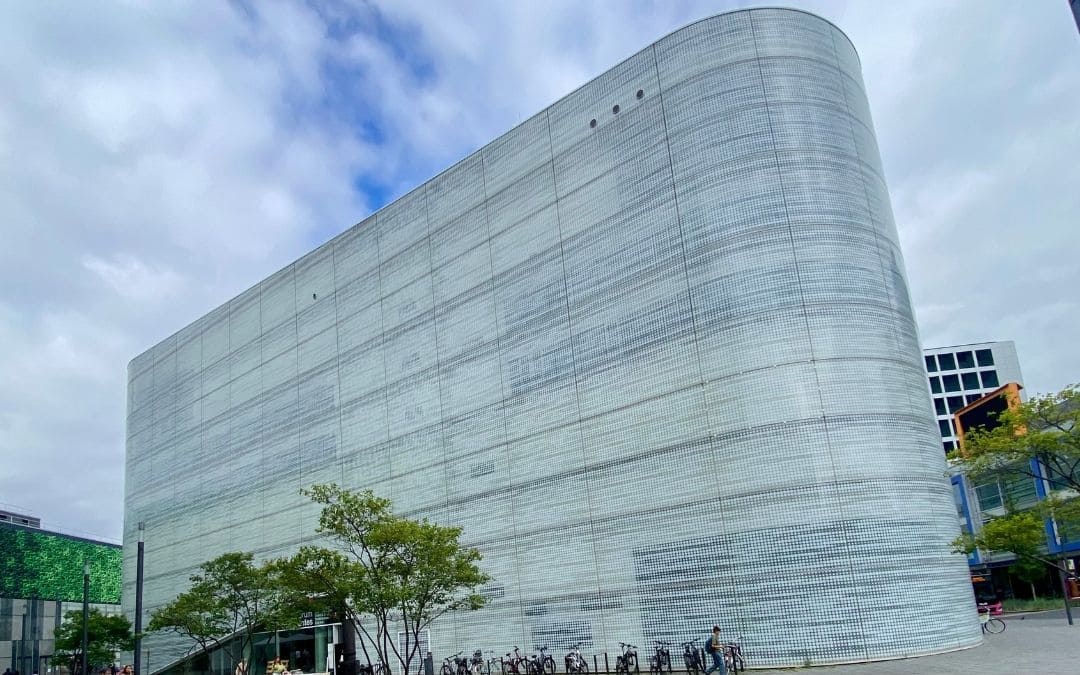
The main sights are close together, so a morning is enough for this walk. I'd start at Forum Confluentes on Zentralplatz. The tourist information center is here, where you can pick up a map and brochures. The building also houses the city library and the Mittelrhein-Museum, whose collection spans more than 2,000 years of art and cultural history.
The name “Confluentes” itself points back to Koblenz's Roman past. The Latin word refers to the meeting of the rivers and recalls the city's position at the confluence of the Rhine and Moselle.
If you have a little more time, the Mittelrhein-Museum is worth a visit. You can see the surviving portion of Emperor Wilhelm I's head from the original equestrian statue at Deutsches Eck. The monument, unveiled in 1897, was badly damaged in 1945. Much of the copper figure was dismantled and melted down after the war. We'll see the present-day statue at the end of our walk. My tip: The surviving fragment of the emperor's original head is displayed where you can see it through a window from Forum Confluentes.
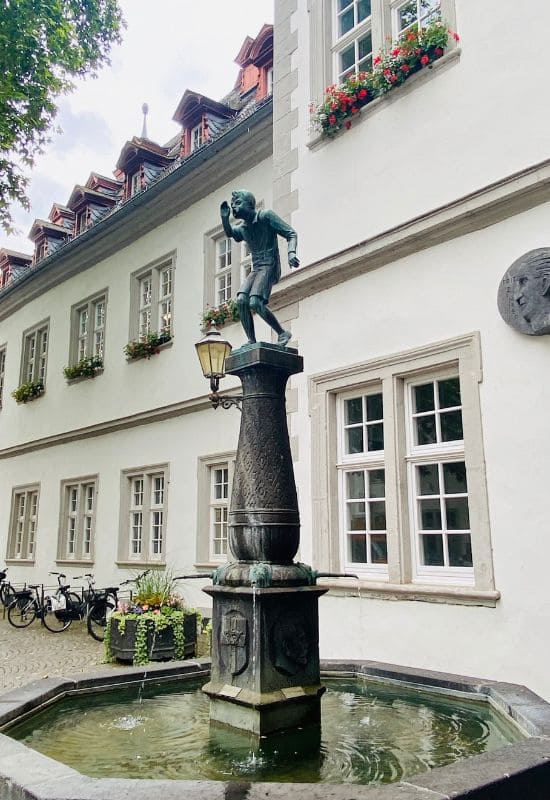
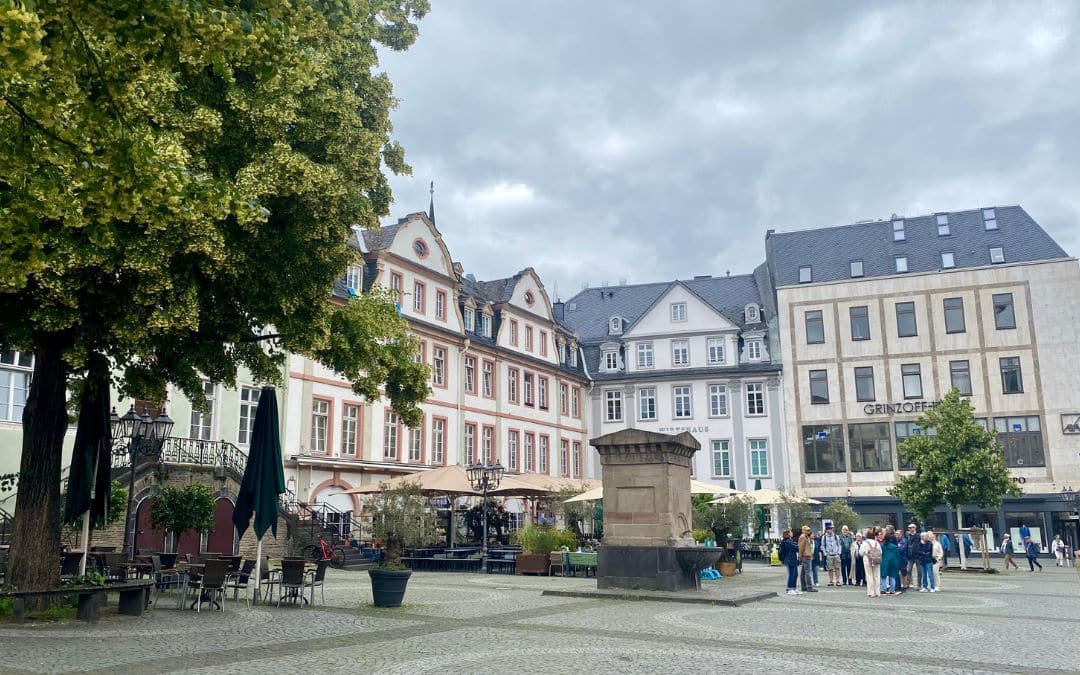
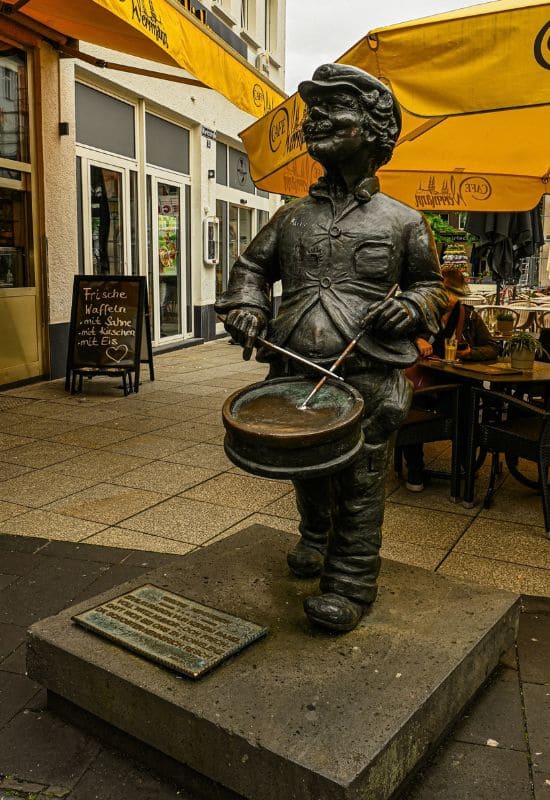
It‘s only a few minutes from Zentralplatz to Willi-Hörter-Platz with the town hall and Schängel Fountain. The cheeky Schängel is a symbol of Koblenz. Watch out as you approach: The little figure spits water at regular intervals and often catches unsuspecting visitors.
Right behind it is one of my favorite spots in Koblenz's Old Town: the Jesuitenplatz. The magnificent former Jesuit high school, now part of the town hall, and the former Jesuit church create an almost continuous historic backdrop around the square. The church, now called Citykirche, currently houses Michael Patrick Kelly's #PeaceBell No. 3. For his peace project, the musician had scrap metal from war melted down and cast into bells, reversing what happened during the two world wars, when church bells were melted down to make weapons.
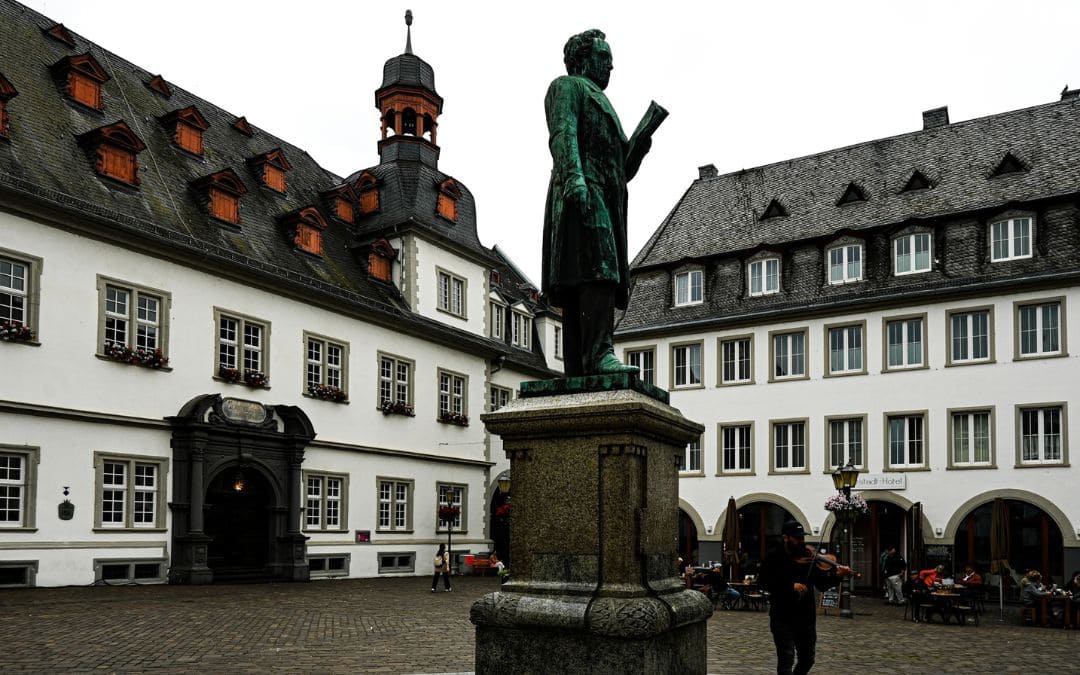
A monument in the middle of Jesuitenplatz commemorates Johannes Müller, a physiologist and anatomist born in Koblenz. But I also liked the square simply for its atmosphere. It's a good spot for a first break. If you'd prefer a spritz to a coffee, you'll find SprizzAtelier in nearby Jesuitengasse, with a remarkable selection of spritz drinks, including alcohol-free options.
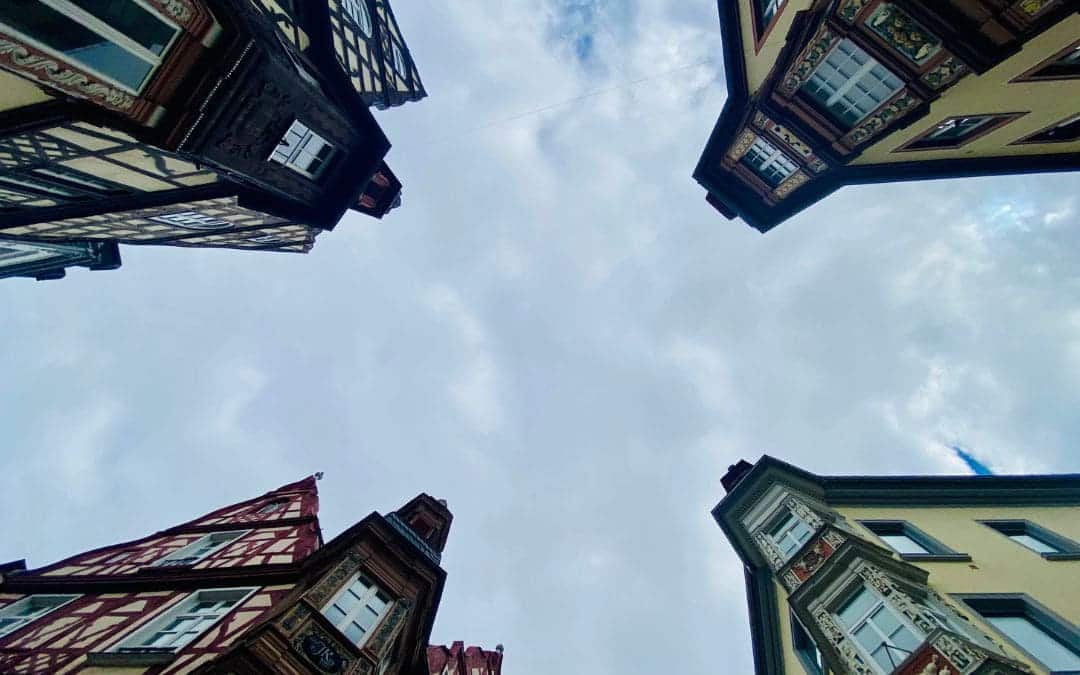
Continue to Am Plan, a square once used for markets, tournaments, and court proceedings. Today, the Baroque city commandant's building and its grand staircase catch the eye. At the intersection of Am Plan, Marktstraße, Altengraben, and Löhrstraße, look up: The Four Towers („Die Vier Türme“) are four richly decorated Baroque corner houses whose bay windows project over the streets.
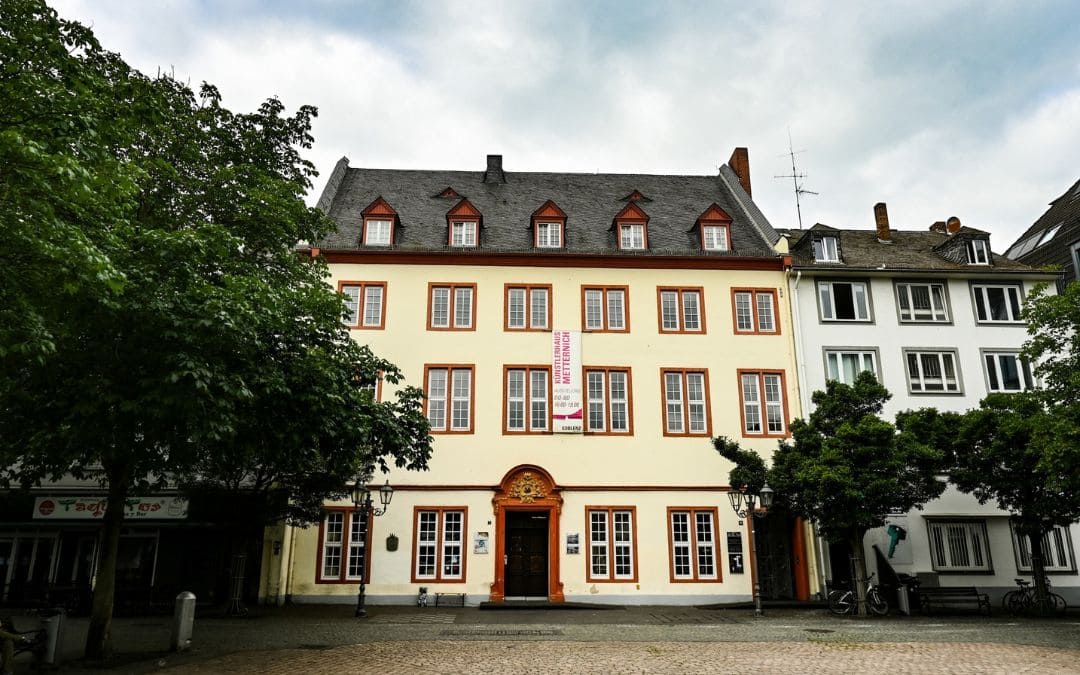
Marktstraße leads to Münzplatz. Its name recalls the former mint of the Electorate of Trier. On the west side stands Haus Metternich. Clemens von Metternich was born here in 1773; he later became Austria's foreign minister and chancellor and was a leading figure at the Congress of Vienna.
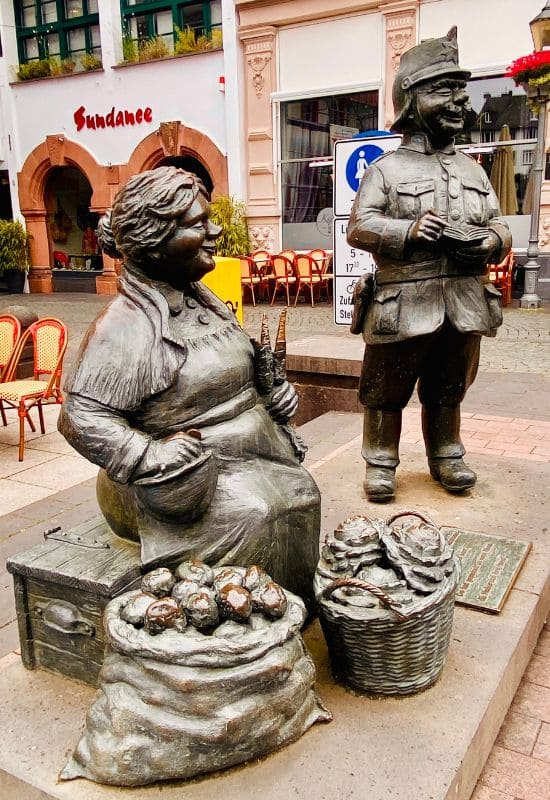
On Münzplatz, you'll also neet two of the Koblenz Characters who pop up throughout our walk: “Resche Hennerich” and “Die Maatfrau sat zom Schutzmann.” These figures commemorate people and stories from everyday city life. For me, they make the Old Town much more engaging than a simple series of historic facades.
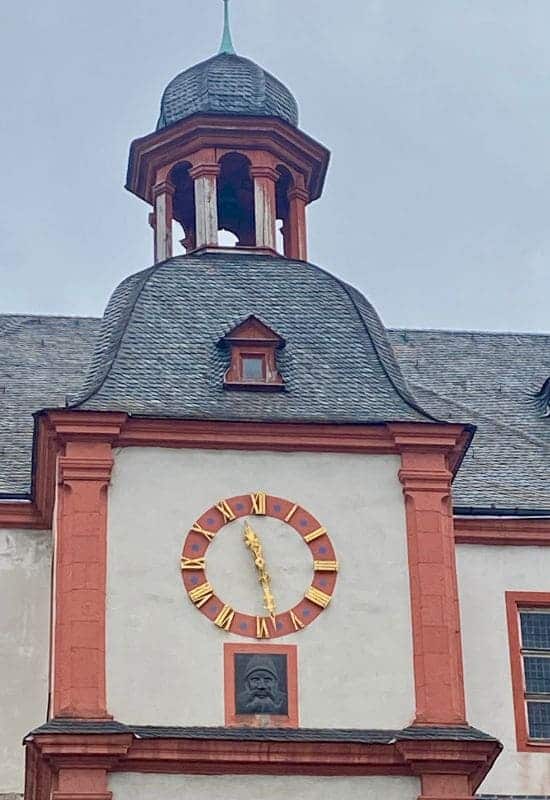
At Florinsmarkt another local character awaits, this time high on the facade of the old trading and dance hall (Altes Kauf- und Danzhaus). The famous Augenroller, or “eye roller,” moves its eyes to the clock's rhythm and sticks out its tongue every quarter hour. It's worth waiting a few minutes.
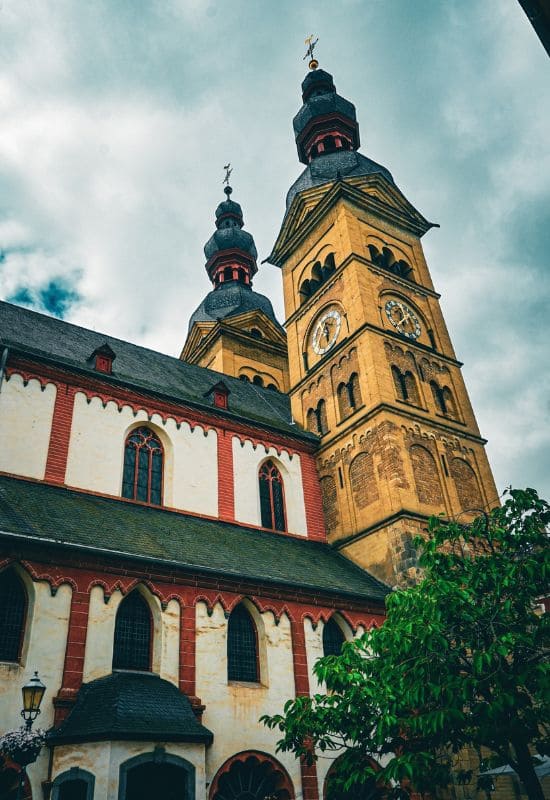
From here, I'd continue through quiet Mehlgasse with its attractive old townhouses. There we encountered another Koblenz character, “Pfefferminzje.” Then take a look inside Liebfrauenkirche(Church of Our Lady). I especially liked its colorful modern stained-glass windows.
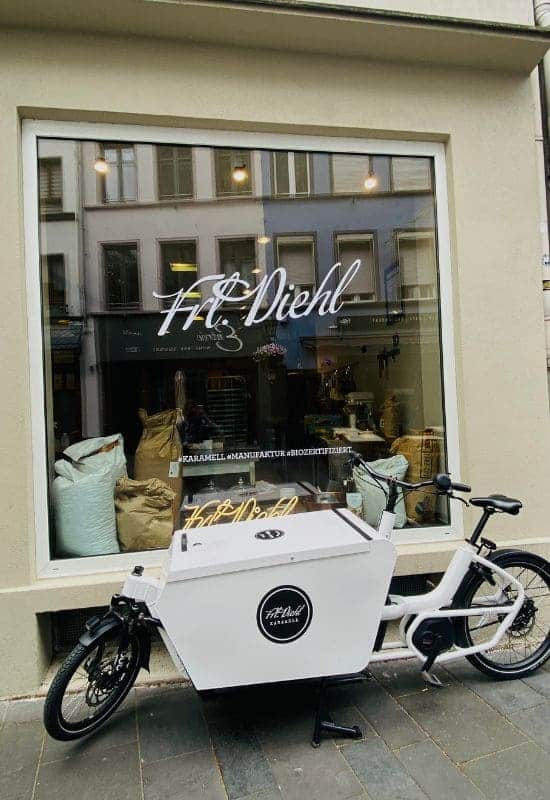
After that, you can take a break from cultural history 😅. At Frl. Diehl you can taste handmade caramels and watch them being made. In fact, I noticed that several small Koblenz businesses deliberately make their production visible. You can also peek behind the scenes at the eGeLoSIa ice cream shop or Cahua‘s “secret chocolate lab.”
Kunstgässchen is worth a detour for its crafts, jewelry, and places to stop for a bite. Here, you'll meet yet another local character,
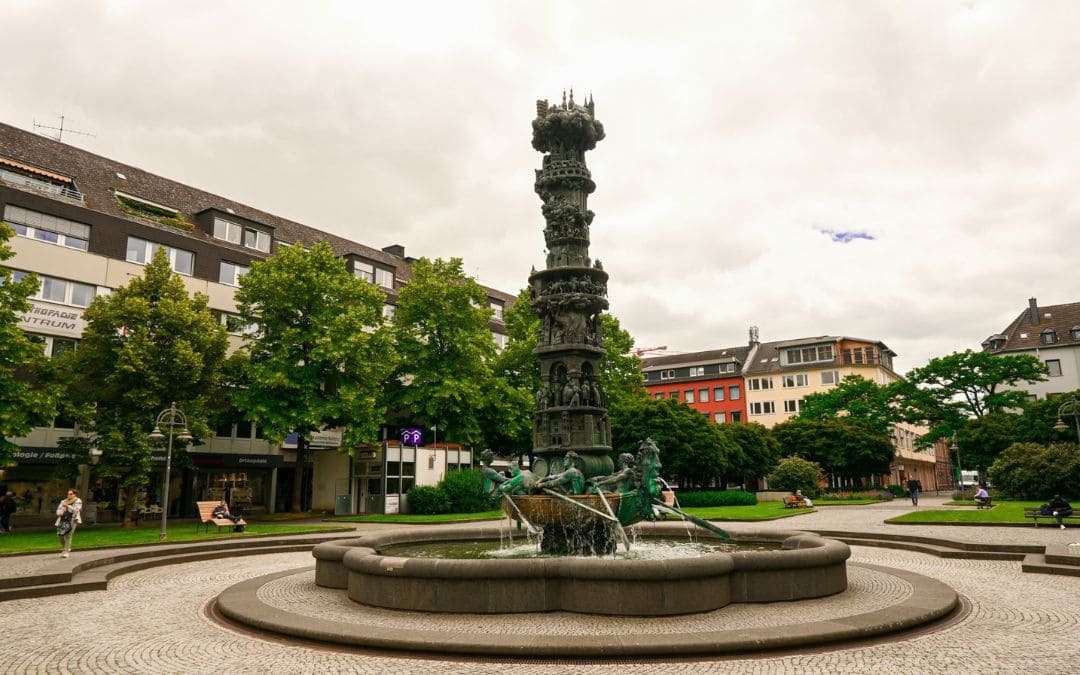
Before heading to the Rhine, stop at Görresplatz . At its center stands the History Column by sculptor Jürgen Weber. Ten stacked scenes tell Koblenz's story, from its Roman founding through the Middle Ages and French Revolution to the 20th century. If you've already learned a little about the city, it's fun to recognize the periods depicted on the column.
From Görresplatz, the walk leads to the Rhine. Pass the St. Castor Basilika and you'll reach Deutsches Eck, where the Moselle flows into the Rhine. The morning walk ends right by the lower cable car station for Ehrenbreitstein Fortress. To me, that's an ideal combination if you want to see Koblenz's main sights in one day.
Koblenz Old Town at a Glance

St. Castor Basilica: Where Emperors and Kings Met
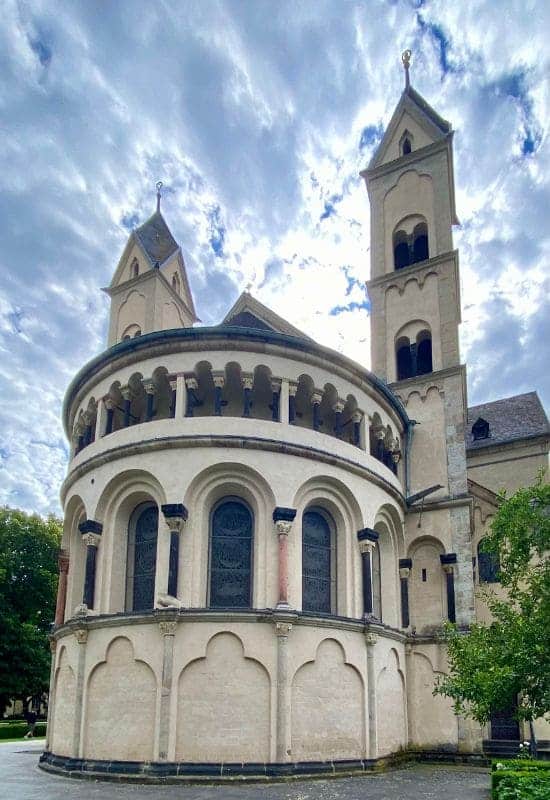
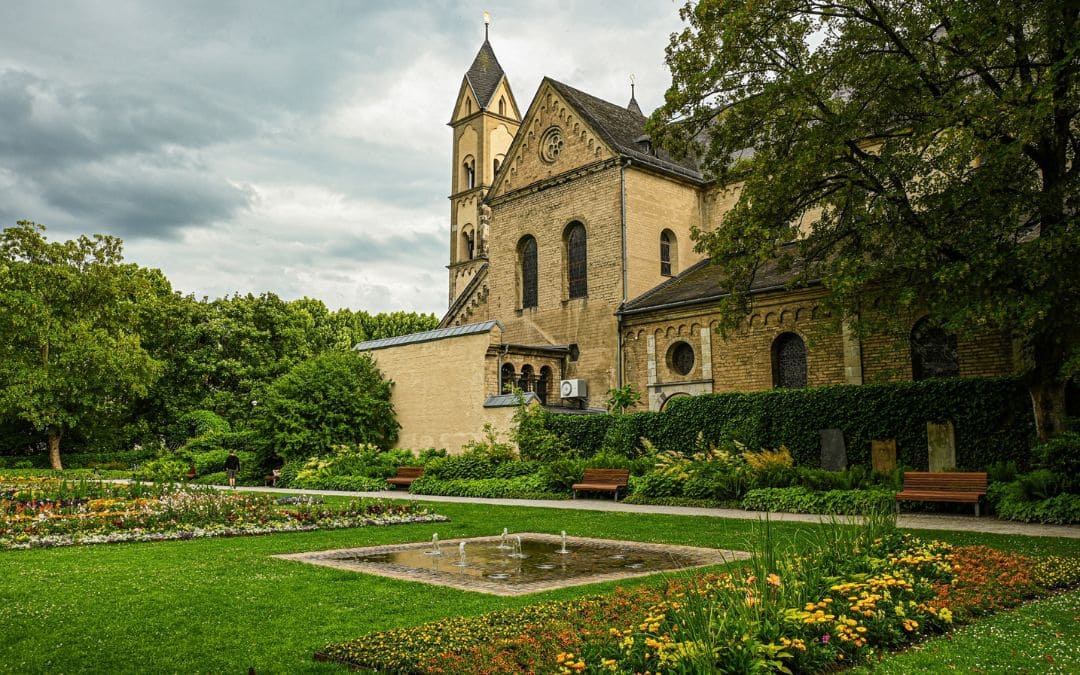
St. Castor Basilica is just a few steps from Deutsches Eck and is Koblenz's oldest surviving church. Its history goes back to the ninth century: The first church was built here between 817 and 836 and consecrated in 836. Most of the Romanesque elements you see today date from the 12th and early 13th centuries. The Gothic star vault was added later.
However, St. Castor was more than a religious site. It also played a role in European politics on several occasions. Important negotiations involving rulers of the Carolingian Empire took place here in the ninth century. Emperors and kings continued to meet in and around the church in later centuries. It reminds us that Koblenz was an important place on the Rhine and Moselle long before Prussia and the Romantic Rhine.
Inside, look more closely at the historic tombs, the 17th-century pulpit, and the remains of a late medieval rood screen. In recognition of its long history, Pope John Paul II granted the former collegiate church the status of minor basilica in 1991.
Behind the church lies the Blumenhof, and next door is the former house of the Teutonic Order, now home to the Ludwig Museum. St. Castor therefore fits easily into an Old Town walk before you continue to Deutsches Eck and the cable car.
St. Castor Basilica at a Glance
Deutsches Eck - Where the Rhine and Moselle Meet
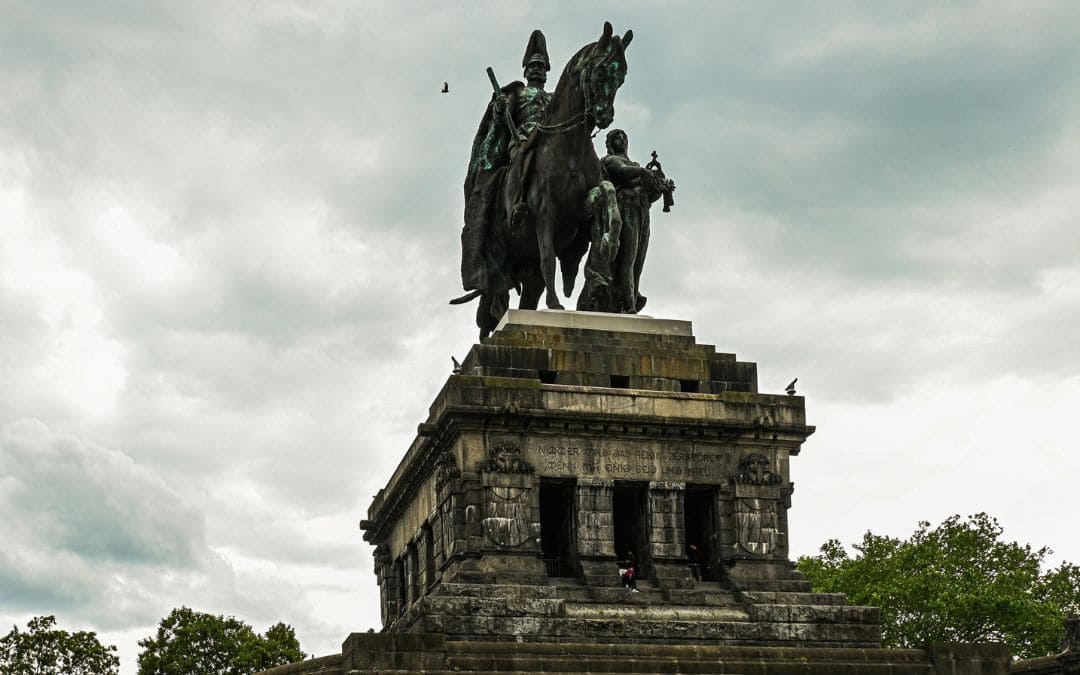
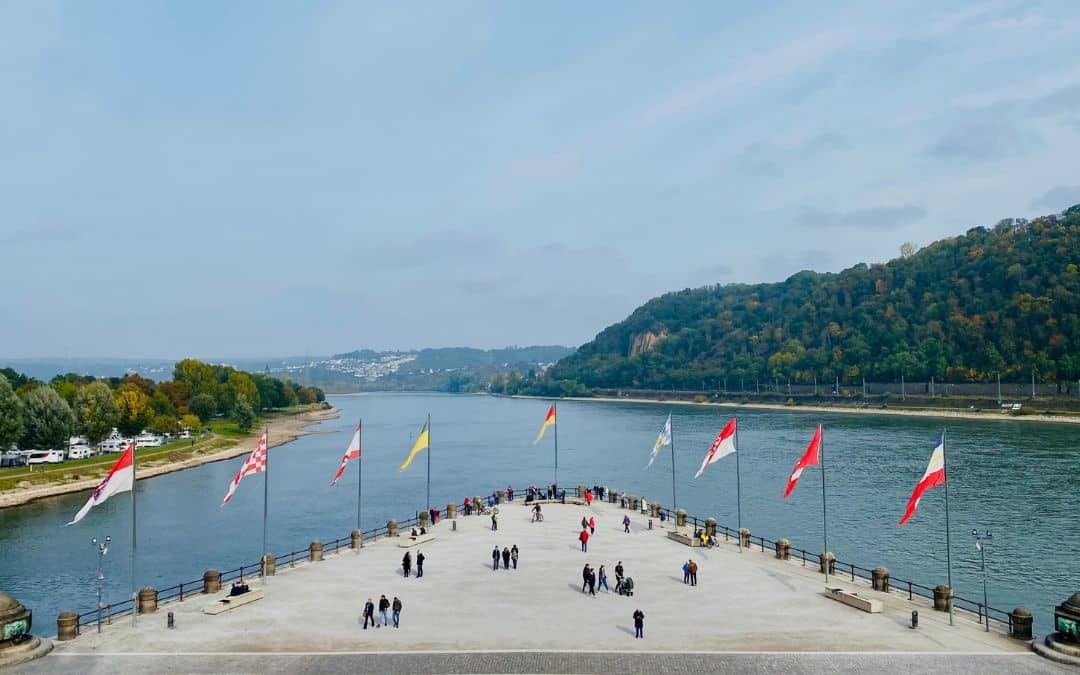
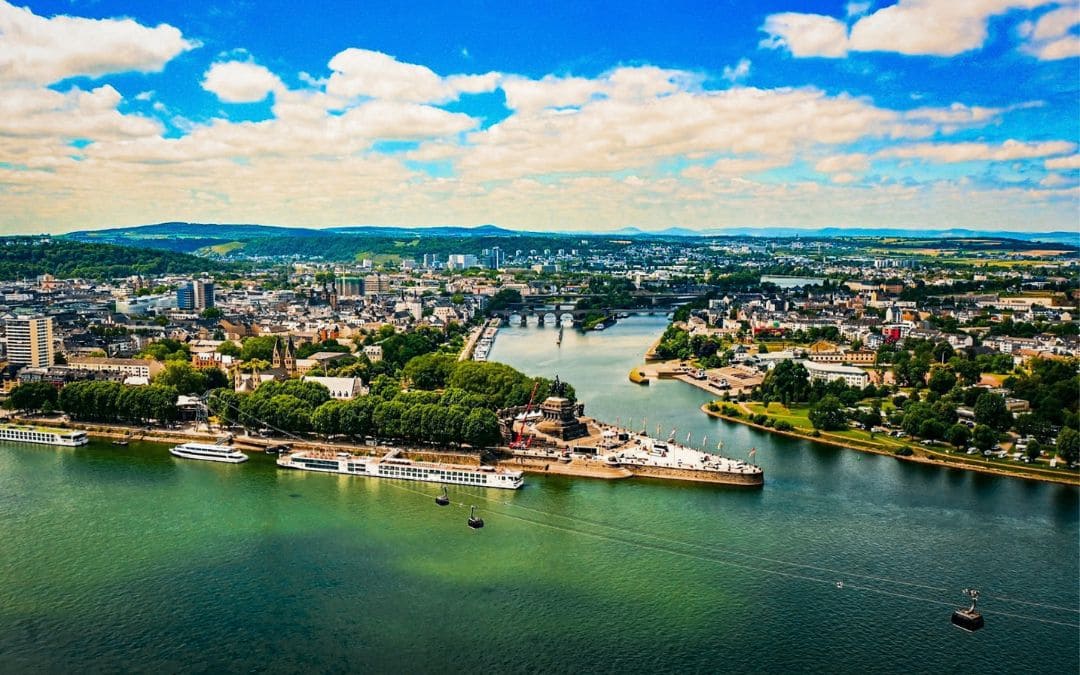
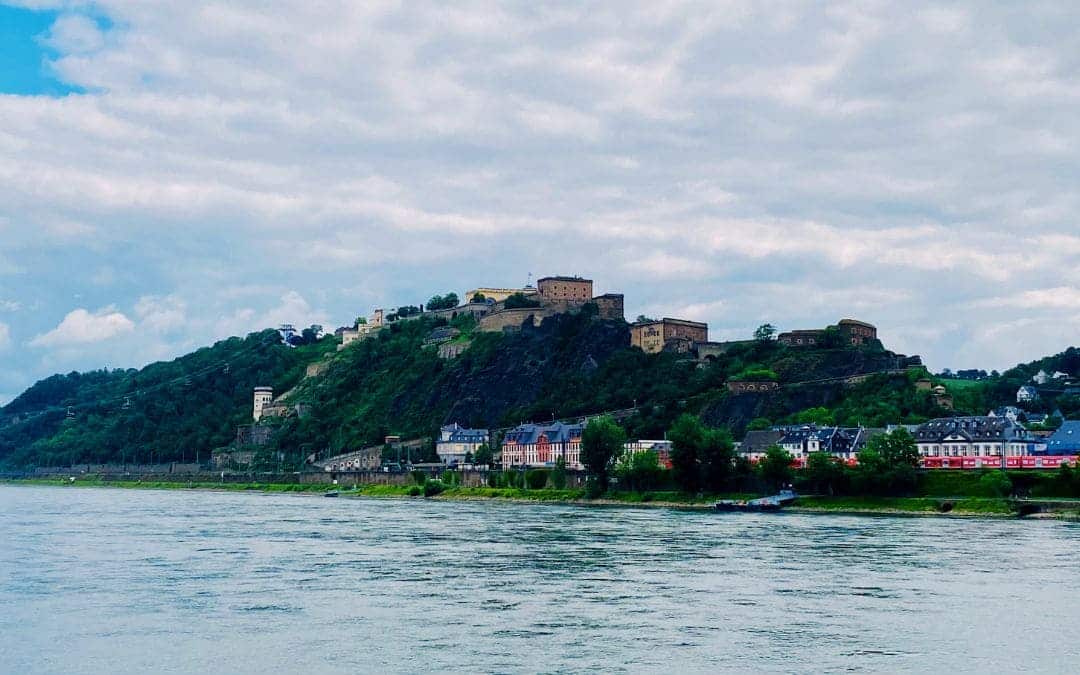
Deutsches Eck is Koblenz's landmark and probably the first place you associate with the city. The Moselle joins the Rhine here, with Ehrenbreitstein Fortress rising on the opposite bank. More than anywhere else, you can see how the two rivers have shaped Koblenz.
The name Deutsches Eck, literally “German Corner,” comes from the Teutonic Order, not the monument to Emperor Wilhelm I. In 1216, the Archbishop of Trier gave the order part of the land near today's Basilica of St. Castor. The order established a house here, and the name evolved from “Deutscher Ordt” into Deutsches Eck.
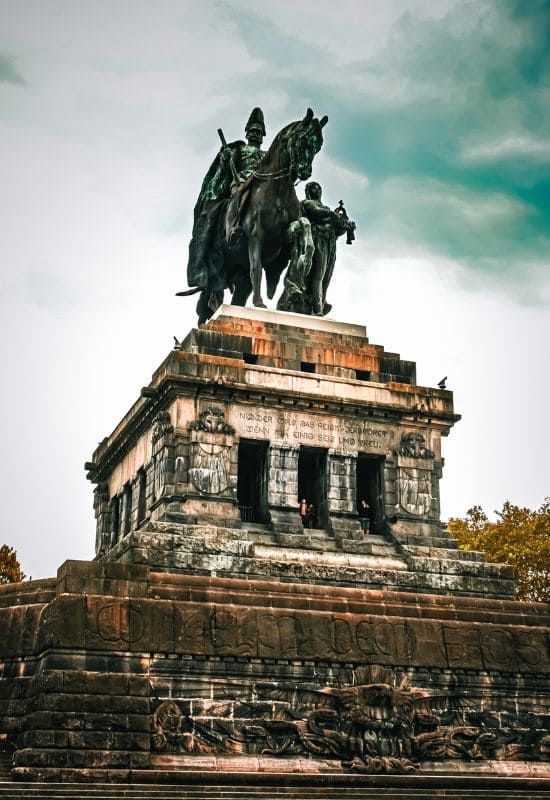
The site today is dominated by the monumental equestrian statue of Emperor Wilhelm I. The 118-foot-high (36-meter-high) monument was built on an artificial spit of land in the late 19th century and unveiled in 1897. It commemorated Wilhelm I, under whose reign the German Empire was founded in 1871. The statue was badly damaged during World War II and later removed. At the initiative of Theodor Heuss, the empty pedestal became a memorial to German unity in 1953, bearing the new German flag in place of the statue. A replica of the equestrian figure was installed in 1993.
Today, Deutsches Eck is part of the Upper Middle Rhine Valley UNESCO World Heritage Site, along with other historic buildings in Koblenz. For me, this view is quintessential Koblenz: the Moselle on the left, the Rhine on the right, and Ehrenbreitstein opposite. In a single glance, you can see why the city's history is so closely tied to both rivers.
Deutsches Eck at a Glance
Take the Cable Car Across the Rhine to Ehrenbreitstein Fortress
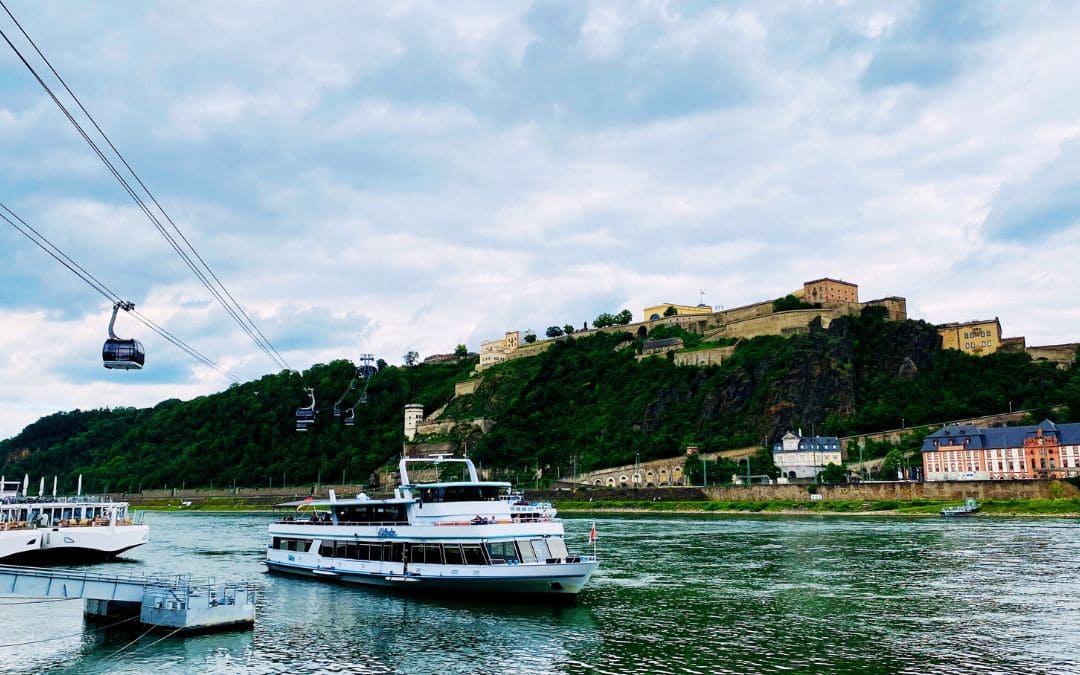
The cable car ride across the Rhine is one of my favorite experiences in Koblenz. The lower station is just a few steps from Deutsches Eck, beside the Basilica of St. Castor. From there, the cabins rise 367 feet (112 meters) to Ehrenbreitstein Fortress. Within moments, views open up over the Rhine, Deutsches Eck, and the mouth of the Moselle. I'd recommend the cable car even if you're simply looking for the easiest way to reach the fortress.
The cable car was originally built for Germany's 2011 Federal Garden Show and was initially meant to be temporary. By now, it's hard to imagine Koblenz without it. Its panoramic cabins connect the riverfront directly to the fortress plateau and make visiting Ehrenbreitstein much easier.
A combined cable car and fortress ticket is convenient if you plan to do both in one day. Check the current hours and prices before you go, as they vary by season and event.
The Koblenz Cable Car at a Glance
Ehrenbreitstein Fortress – 5,000 Years of History Above the Rhine
The story of Ehrenbreitstein Fortress began long before the present structure. People lived on this rocky outcrop about 5,000 years ago, and there is evidence of fortifications from around 3,000 years ago. Celts, Germanic peoples, and Romans all used its strategic position above the confluence of the Rhine and Moselle.
Ehrenbreitstein Castle was built here around the year 1000. From 1020, it belonged to the archbishops and prince-electors of Trier, who expanded it over the centuries and at times used it as a residence and treasury for their archbishopric. French troops occupied the fortress, and parts of it were blown up in 1801.
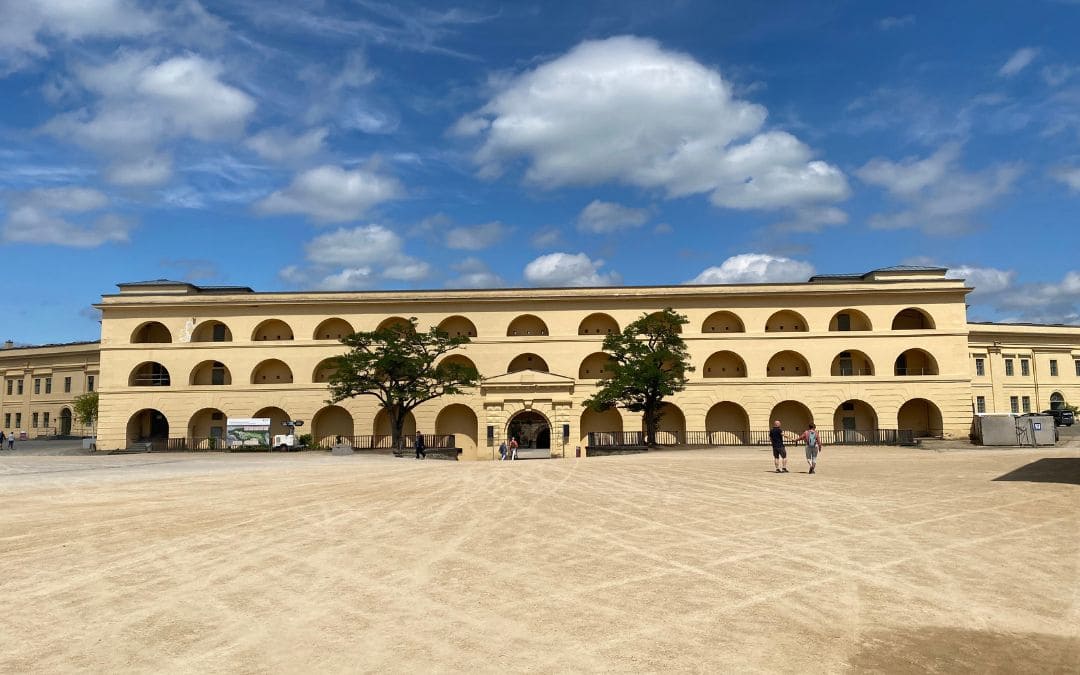
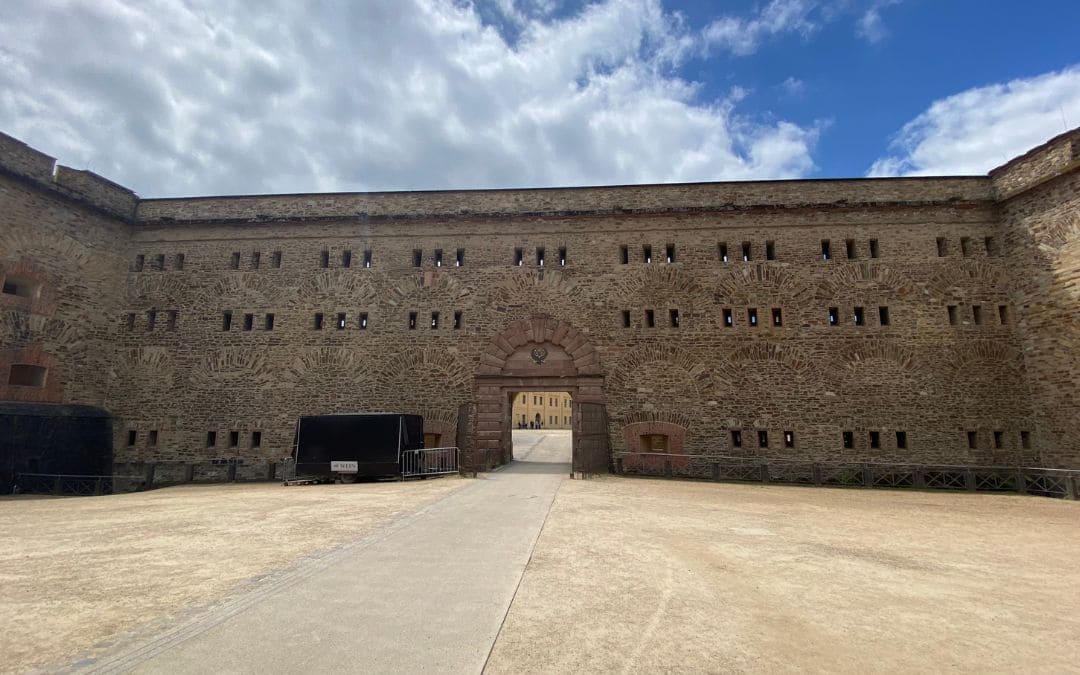
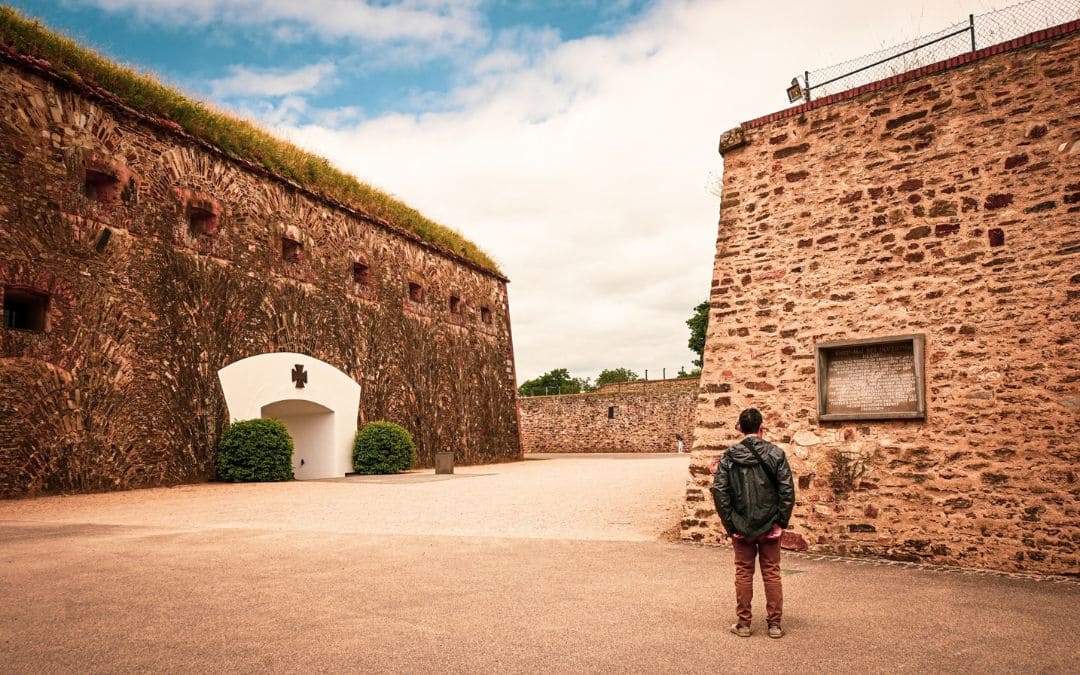
After the Congress of Vienna, the Rhineland passed to Prussia. Between 1817 and 1828, the Prussians built the fortress complex we see today. It was part of a wider Prussian defensive system on the Rhine, intended to secure this strategically important region. Large sections have survived virtually unchanged.
I was especially interested in the fortress's later uses. During World War II, it served in part as an antiaircraft position and shelter. After the war, people who had lost their homes found accommodation here.
A reconstructed apartment belonging to the Suderland family in the section known as the Ravelin shows what life at the fortress was like in the 1950s and 1960s. Luzia and Peter Suderland moved to Ehrenbreitstein in 1949 and later lived in this apartment with their two children. Residents grew vegetables and kept small animals to help support themselves. For me, this postwar apartment was one of the fortress's most surprising exhibits because it offers such a personal look at Koblenz's recent history.
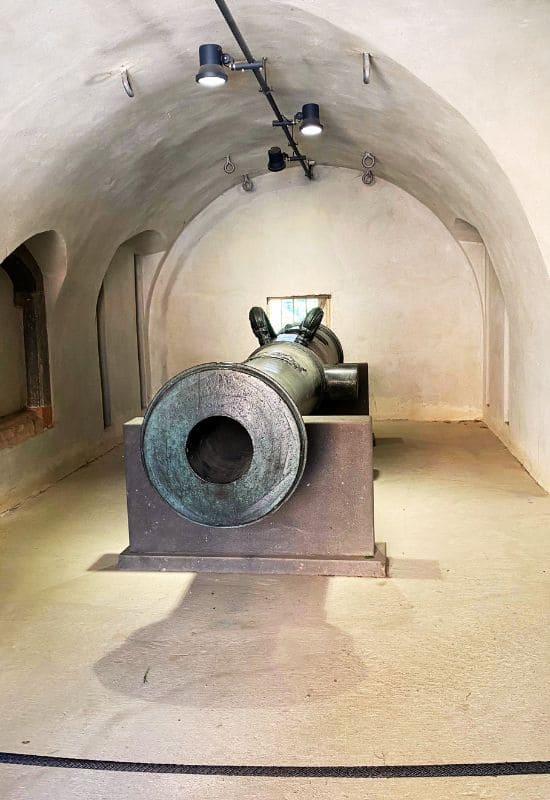
Today, the fortress houses the Koblenz State Museum and several exhibition spaces. Their subjects include archaeology, photography, regional economic and cultural history, and wine and food. Then there's the view: From the fortress plateau, you can see Deutsches Eck, the mouth of the Moselle, Koblenz, and the Rhine stretching into the distance.
If you have the time, allow at least two to three hours for the fortress, exhibitions, and views.
Ehrenbreitstein Fortress at a Glance
Electoral Palace – Residence on the Rhine
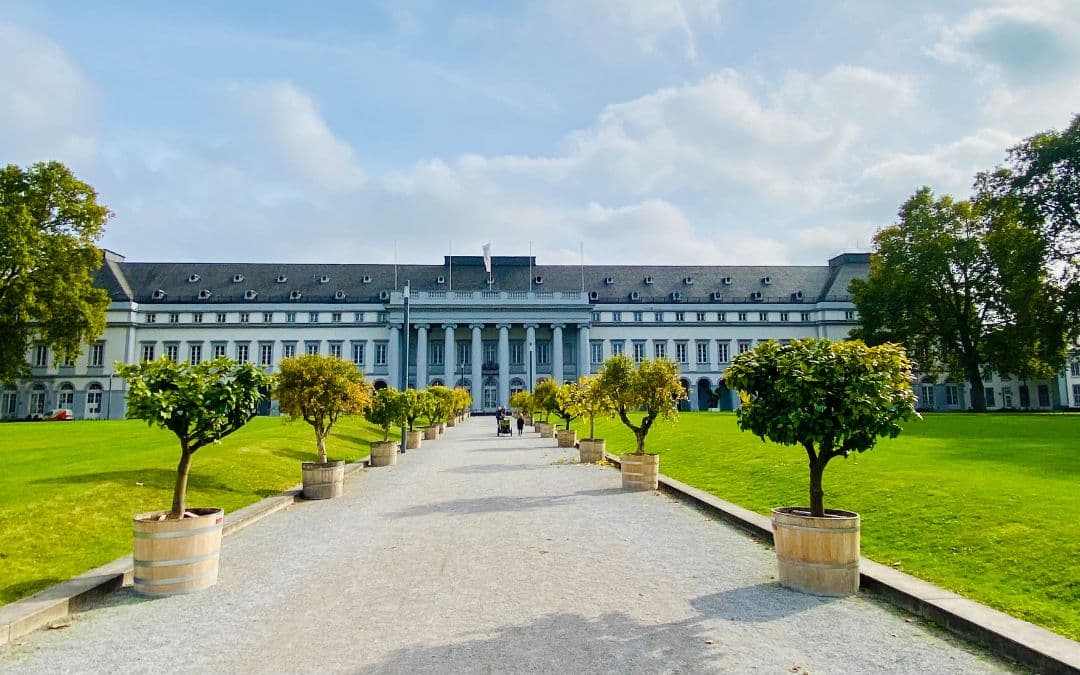
The Electoral Palace was built in the late 18th century for Clemens Wenzeslaus of Saxony , the last prince-elector and archbishop of Trier. He moved his residence across the Rhine from Ehrenbreitstein and had a grand new palace built right on the river between 1777 and 1793. He moved in as early as 1786.
The palace changed Koblenz considerably. A planned New Town took shape south of the medieval Old Town, while the electoral court brought artisans, officials, and cultural life to the city. Clemens Wenzeslaus also commissioned a theater and a public library. His time in Koblenz was brief, however: He fled the French Revolutionary troops in 1794, bringing the city's era as an electoral residence to an end.
Architecturally, the palace is one of the most important examples of early Neoclassicism on the Rhine. On the river side, the facade features a central projection with six columns, topped by a relief depicting an allegory of the Rhine and Moselle.
The Electoral Palace is now owned by the German federal government. It has been undergoing extensive renovations since 2025 and is not normally open. Work will continue for several years. The current goal is to finish at least the exterior restoration before the 2029 Federal Garden Show (BUGA); the full reopening is expected much later.
The Electoral Palace is now owned by the German federal government. It has been undergoing extensive renovations since 2025 and is not normally open. Work will continue for several years. The current goal is to finish at least the exterior restoration before the 2029 Federal Garden Show (BUGA); the full reopening is expected much later.
The Electoral Palace at a Glance
Rhine Promenades: A Walk Between the Palace and Deutsches Eck
The Rhine promenades link several major Koblenz sights along about 2.2 miles (3.5 kilometers) of the river's left bank. They consist of Konrad-Adenauer-Ufer to the north and the Kaiserin-Augusta-Anlagen (Empress Augusta Gardens) south of the Electoral Palace.
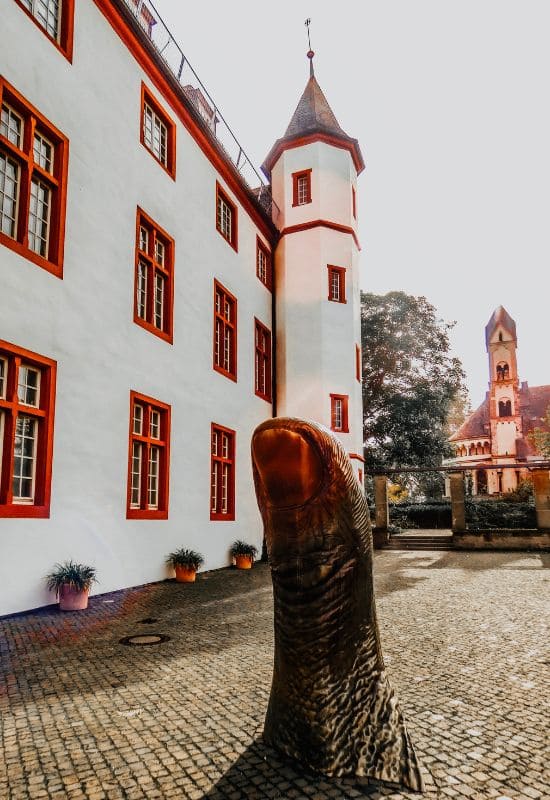
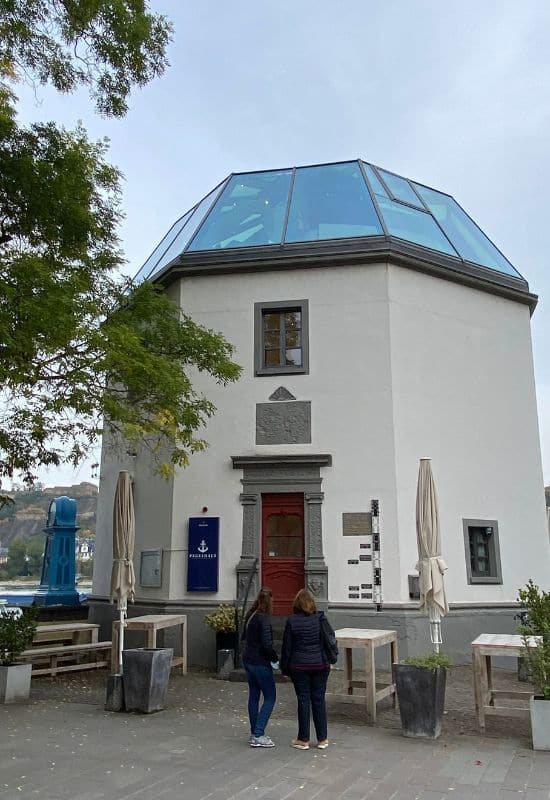
Between the palace and Deutsches Eck, you'll pass several sights. Along Konrad-Adenauer-Ufer are Pegelhaus, once a river gauge station, the Basilica of St. Castor, and the former house of the Teutonic Order, which houses the Ludwig Museum. Outside the museum stands César's famous bronze sculpture „Le Pouce“, an enormous thumb.
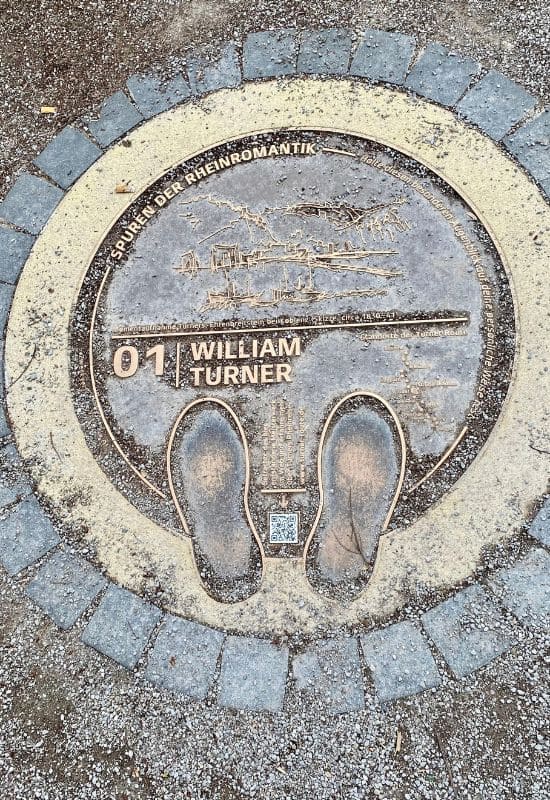
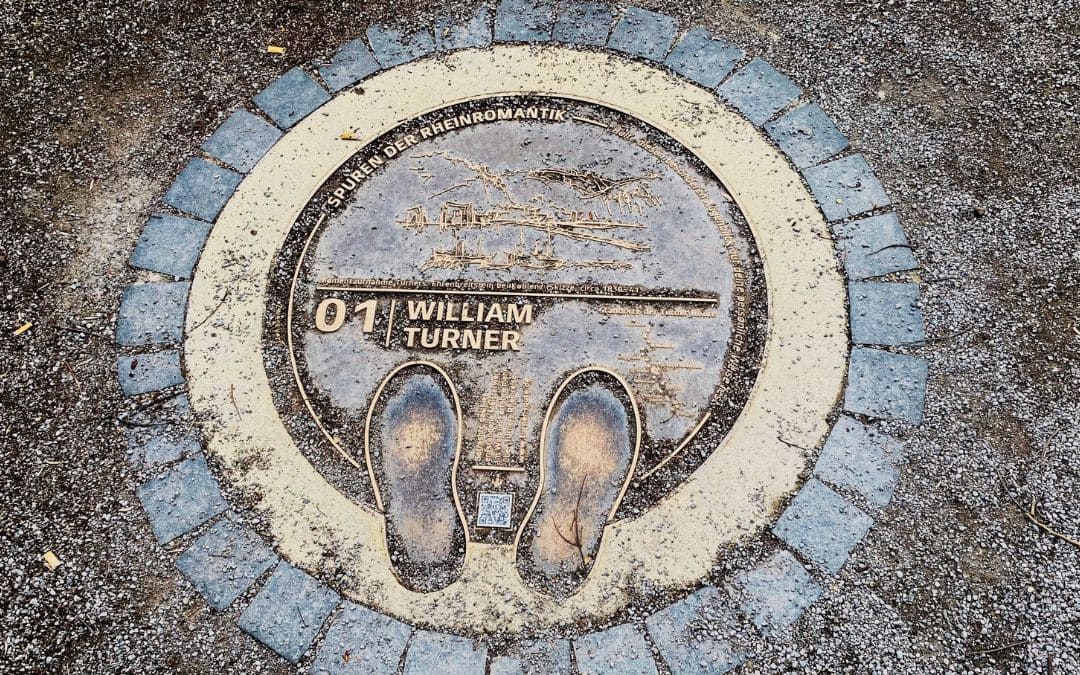
Near Pegelhaus, a bronze marker for stop 01 of the William Turner Route has stood since 2025. The route connects historic depictions of the Rhine with the landscape today. From this spot, you can compare the view of Ehrenbreitstein with a work by the British painter J. M. W. Turner.
Right next to the Ludwig Museum is Gerhards Genussgesellschaft, where I had an excellent meal. A few steps farther on, you'll reach Deutsches Eck and the view of the Rhine and Moselle confluence.
South of the Electoral Palace, Konrad-Adenauer-Ufer becomes Kaiserin-Augusta-Anlagen Empress Augusta had this riverside promenade created in the 19th century. Peter Joseph Lenné designed the grounds as a landscape garden based on plans by Prince Hermann von Pückler-Muskau with winding paths, mature trees, monuments, and sculptures. This stretch has a very different feel from the more urban riverfront farther north. Construction around Pfaffendorf Bridge and the Electoral Palace currently limits access to parts of the gardens, however.
Koblenz Rhine Promenades at a Glance
Stolzenfels Castle: Romantic Rhine Scenery Straight Out of a Storybook
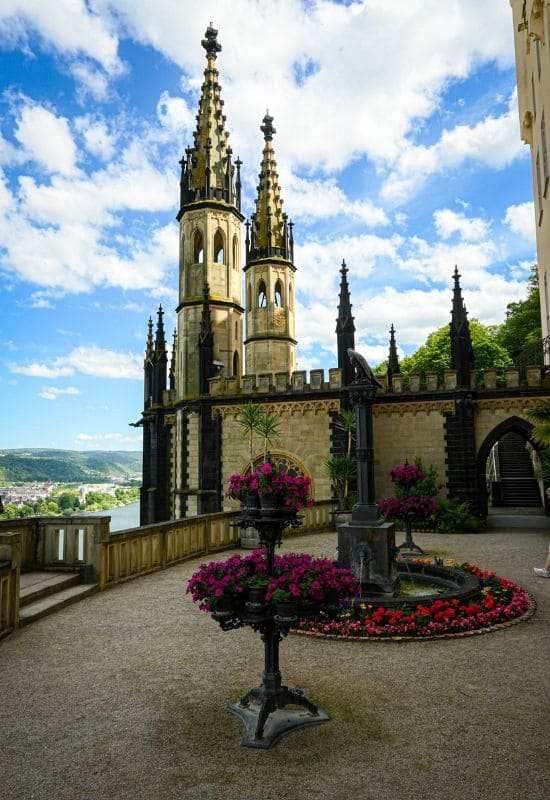
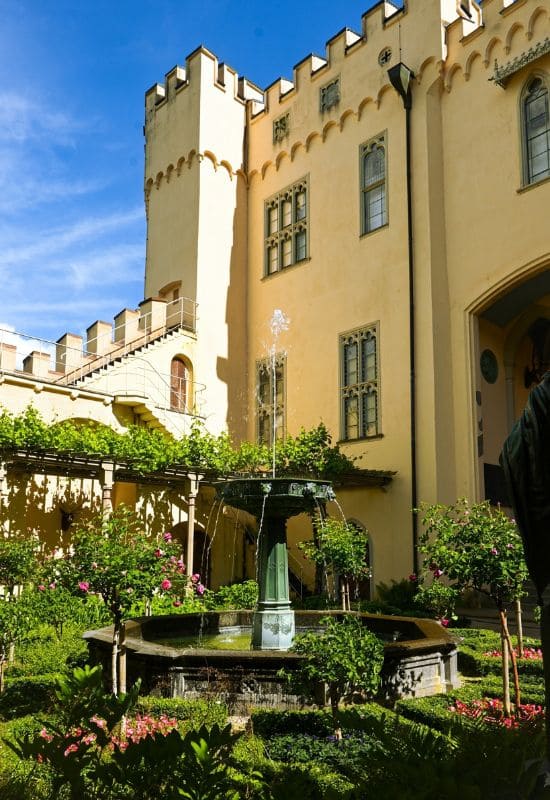
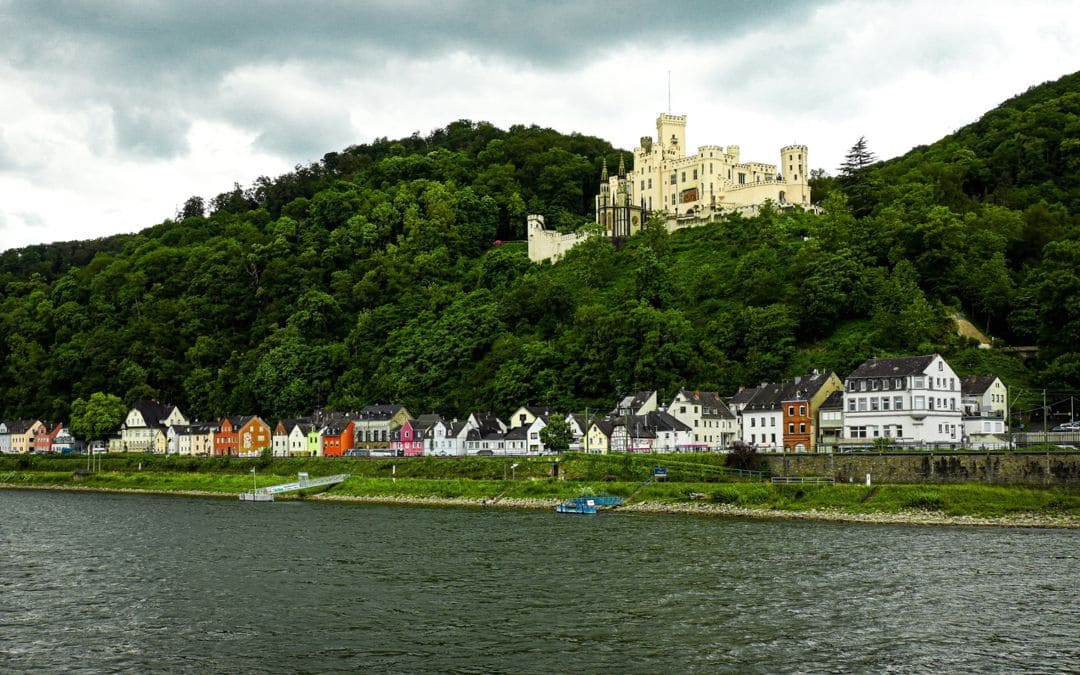
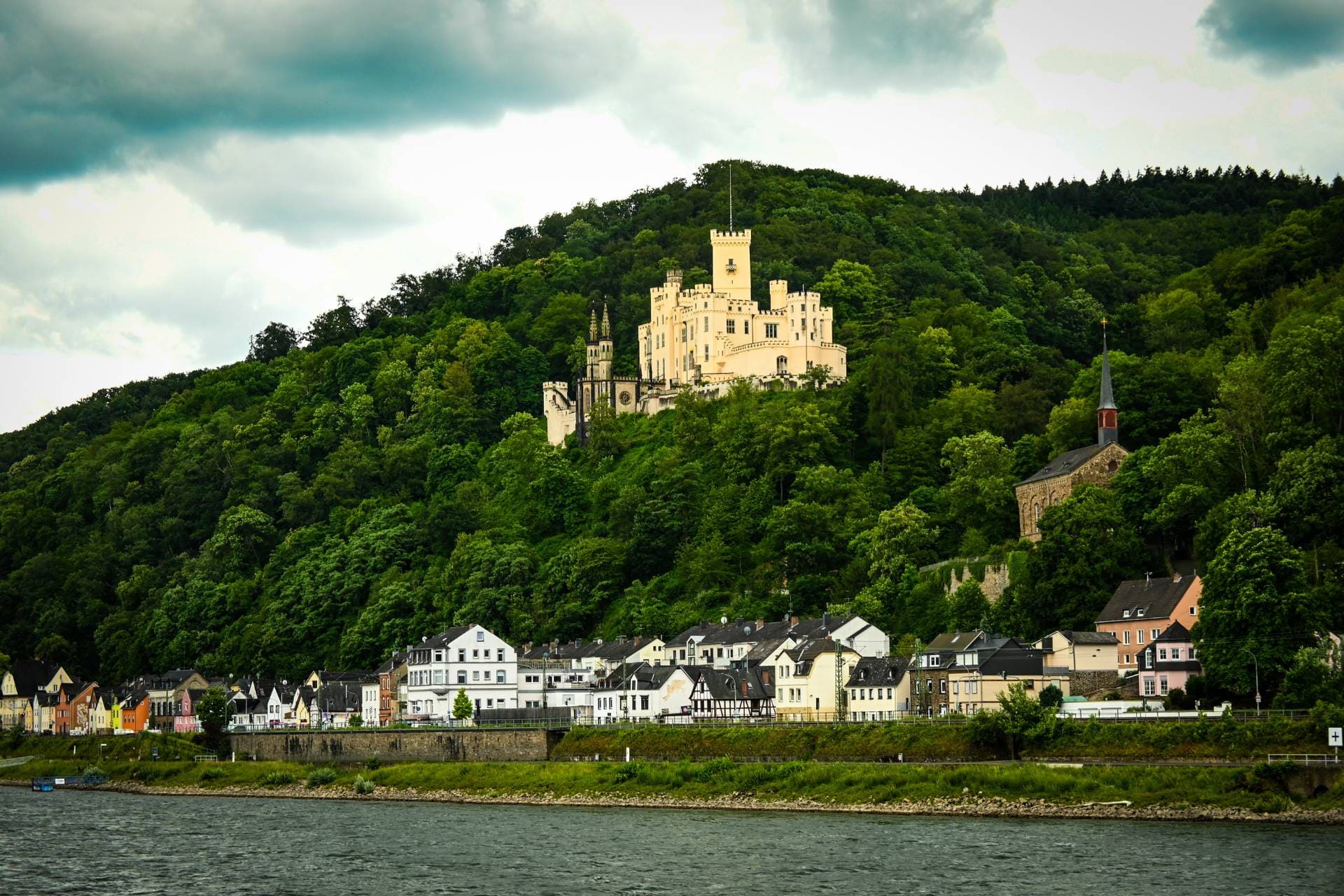
You can spot Stolzenfels Castle from afar, its pale facade standing out against the wooded slopes above the Rhine. The castle you see today is one of the clearest expressions of the 19th-century Romantic Rhine.
The original castle was built in the 13th century and destroyed in 1689 during the Nine Years' War, known in Germany as the War of the Palatine Succession. In 1823, the city of Koblenz gave the ruins to the Prussian crown prince Friedrich Wilhelm, who later became King Friedrich Wilhelm IV. Beginning in 1836, he had them transformed into a romantic summer residence. Leading Prussian architects and landscape designers took part: Karl Friedrich Schinkel provided the master plan, Friedrich August Stüler continued the work, and Peter Joseph Lenné designed the landscape park.
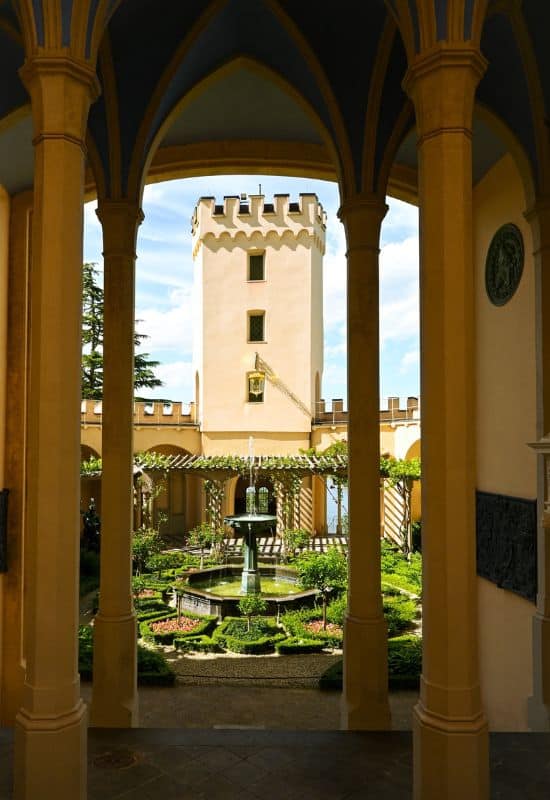
The result is not a faithful reconstruction of a medieval castle but a romantic 19th-century creation. Towers, battlements, great halls, courtyards, and a Neo-Gothic chapel combine with the gardens and park to form a complete work of Prussian Rhine Romanticism. I especially loved the pergola garden and the changing views of the river.
Much of the 19th-century interior survives. As you tour the rooms, you get a sense of how Friedrich Wilhelm IV and Queen Elisabeth used the castle as a summer residence.
During my visit, the staff shared the castle's history with real knowledge. I learned that Queen Victoria and Prince Albert stayed at Stolzenfels in 1845.. One of the guest apartments where the British queen stayed still survives. She is said to have been enchanted by the views over the Rhine Valley. I haven't been able to verify whether she really said „It's too pretty!“ , but it makes a fitting little Stolzenfels anecdote.
To reach the castle, follow the path known as Königsweg, or King's Way, uphill from the Stolzenfels district through Lenné's landscape park. Views of the castle, park, and Rhine open up along the way. The climb is fairly steep, so allow enough time.
Stolzenfels Castle at a Glance
Experience Koblenz as a w Wine City
Why Koblenz Is a Wine City
At the confluence of the Rhine and Moselle, Koblenz sits where two long-established wine landscapes meet. Winemaking has been part of the city's history since Roman times and still shapes Koblenz today, both in its food and drink and in its scenery. About 125 acres (50 hectares) of vineyards remain within the city limits.
The vineyards are not all far out in the countryside. You'll find vines along the Moselle around Güls and Moselweiß and on the Rhine's right bank in Mühlental. Steep slopes and dry-stone walls, typical of the Moselle and Middle Rhine, are common. Winegrowing is a visible part of the Koblenz cityscape.
Around two dozen wineries now produce Koblenz wine. Riesling is the leading grape, but Pinot varieties, including Spätburgunder (Pinot Noir), and Dornfelder are also grown. Some wineries have been in the same family for generations and offer tastings, wine taverns, or vineyard tours.
You’ll notice that Koblenz considers itself a wine city not only when you visit a winery. Wine is part of city tours and walks, wine bars and seasonal winemakers' taverns, and events such as the Koblenz Wine Festival.
Wine Tasting at Weingut Göhlen: Almost Like Tuscany
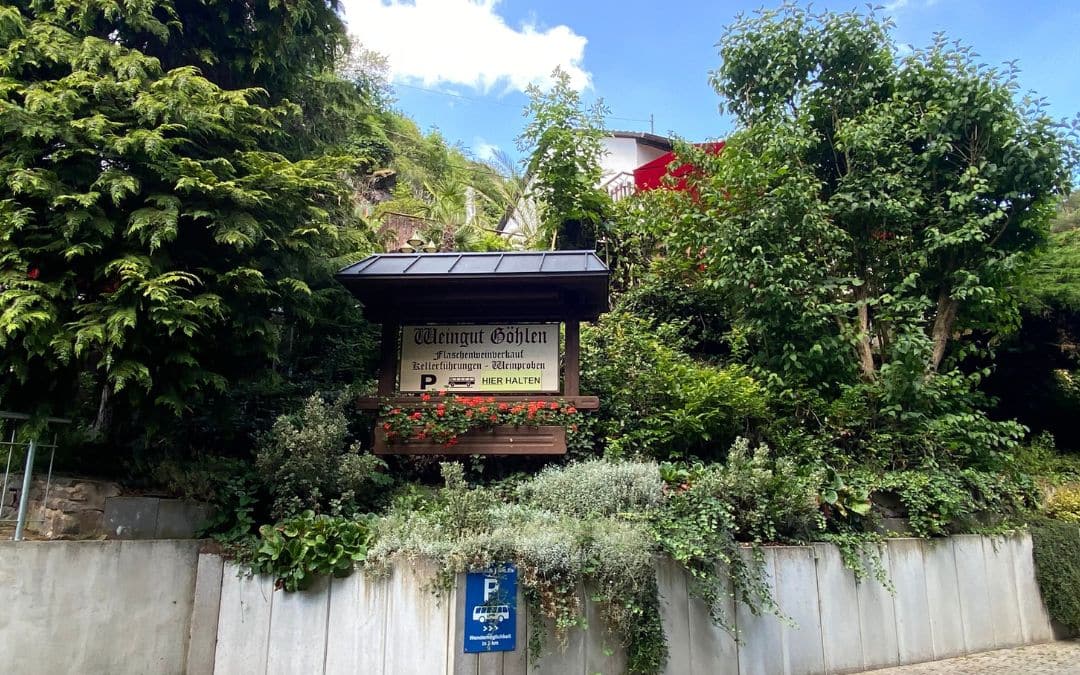
Verena and I walked downhill from Ehrenbreitstein Fortress through the wooded slope to Mühlental in about 30 minutes. Weingut Göhlen is there, and when we arrived, I almost felt as though I had found myself at a Tuscan winery.
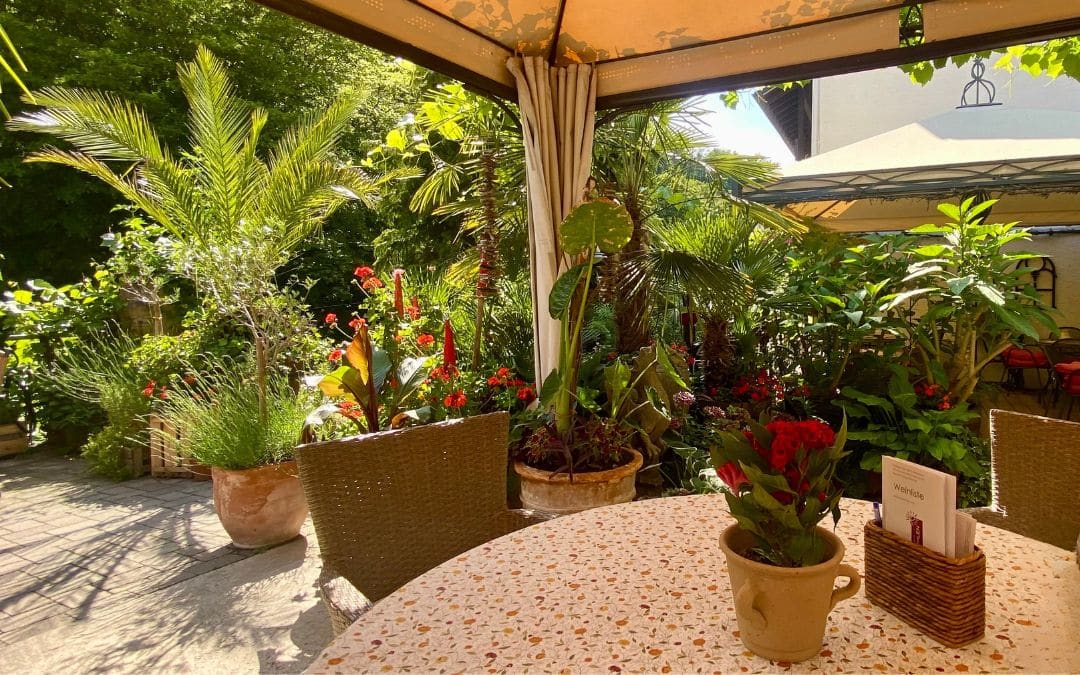
On the terrace in the flowering garden, the tables are thoughtfully set with tablecloths and flowers. Baskets of different breads and rolls are ready to accompany the wine, assuming you can resist them until the tasting starts. 😅
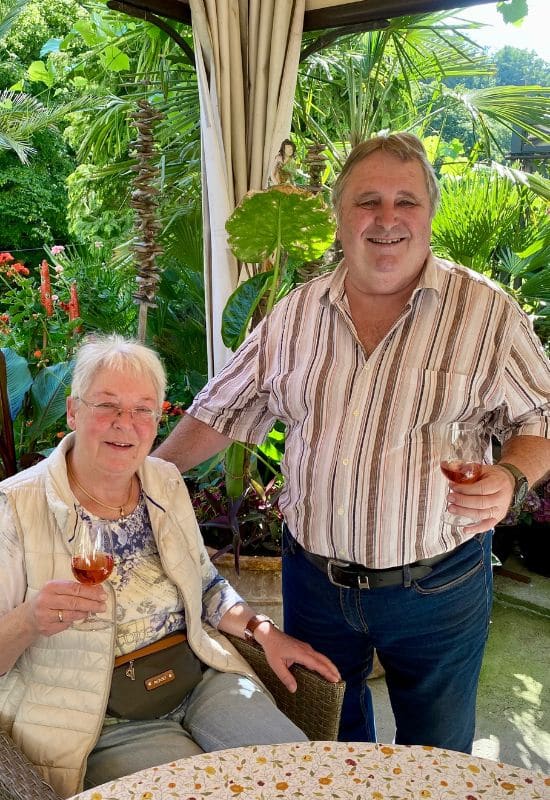
Franziska and Georg Schmidt are the third generation to run the winery. Franziska's grandparents founded it, and her parents later took over. The two welcomed us so warmly that I felt at home immediately.
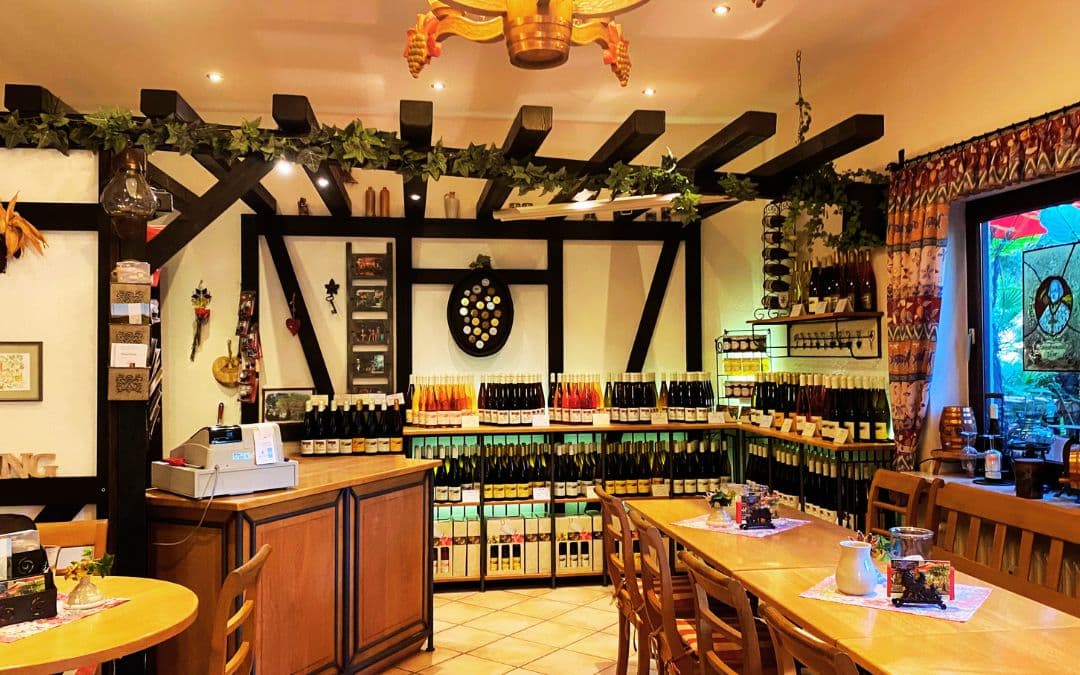
Because our group included visitors from the US and Asia, Georg Schmidt gave a short tour of the rustic wine cellar and explained the winemaking process in English. The tasting was then tailored to guests' preferences. We sampled five wines across the range, from Weißburgunder (Pinot Blanc) to Bacchus.
My personal favorite was the 2023 Rotling, a blend of red and white grapes that are pressed together. I liked it so much that I bought a whole case. With such welcoming hosts in this idyllic setting, I would happily have stayed longer.
One thing is certain when I return to Koblenz: I'll visit Weingut Göhlen again.
Weingut Göhlen at a Glance
Wine Experiences in Koblenz: From Festivals to Cellar Tours
Wine is also part of Koblenz beyond its wineries, through tours, walks, tastings, and events.
The annual Koblenz Wine Festival runs between May and July and showcases wines from Koblenz and the surrounding Middle Rhine, Moselle, and Ahr regions. Its varied program includes temporary wine bars, the “Blaue Stunde” (“Blue Hour”), and „Wein on the Water“. Wines featured at the festival are served aboard this cruise. One of its day trips took me from Koblenz through the Upper Middle Rhine Valley to the Loreley and back.
Electronic Wine at Deutsches Eck pairs regional wines with electronic music, house, and techno. It attracts a crowd ready to celebrate and shows a contemporary side of Koblenz wine culture.
For something quieter, try WeinStadtWandern, a self-guided wine walk. Pick up a wine package with a map and a walking-friendly bag at the tourist information center and explore Koblenz at your own pace. Depending on the route, you might walk through the Old Town, beside the Rhine and Moselle, or up to Ehrenbreitstein Fortress. Along the way, choose a spot by either river or on the fortress plateau for a wine break.
If you'd like to learn more, add a cellar tour and tasting. Various Koblenz wineries offer insights into production, storage, and grape varieties. Some tours take you through both modern tank cellars and traditional wooden-barrel cellars before finishing with a tasting of several wines.
Your options range from a glass of wine on the Rhine riverfront to guided tastings and big events at Deutsches Eck.
💡 Current wine experiences: You can find dates, tickets, and other wine-related events in Koblenz on the Visit Koblenz website in section The Wine City.
Following in William Turner's Footsteps on the Rhine
British painter Joseph Mallord William Turner is one of the artists who still shape how we picture the Romantic Rhine. In 1817, he traveled through the Middle Rhine Valley, sketching castles, cliffs, river bends, and the river's distinctive light. He later developed many of these sketches into watercolors and paintings.
Turner stayed in Koblenz from August 21 to 23, 1817. Ehrenbreitstein Fortress fascinated him so much that he drew it from several angles. He returned to Koblenz on later journeys between 1839 and 1844.
Today, you can get a sense of Turner's view of the Rhine in many places. The William Turner Route marks 26 viewpoints between Koblenz and Bingen where he found subjects for his Rhine works. Displays at each stop show the relevant work so you can compare it with the landscape today.
Two stops lie within Koblenz. Stop 01 is on Konrad-Adenauer-Ufer near Deutsches Eck and shows Turner's view across the Rhine toward Ehrenbreitstein Fortress. A bronze marker has identified the scene since 2025.
Stop 02 lies farther south on the riverside path toward Stolzenfels. Turner walked upriver here on August 23, 1817, sketching the landscape around Stolzenfels Castle. A curious detail in his later watercolor is that he placed the mouth of the Lahn on the wrong side of the Rhine. Whether that was a mistake or a choice for the composition remains unclear.
If you enjoy art and the Romantic Rhine, look for the Turner stops on your excursions through the Upper Middle Rhine Valley. They're excellent photo spots too.You'll find other locations near Boppard, St. Goar, and Kaub, giving you the chance to see this landscape through the eyes of an artist who traveled here more than 200 years ago.
💡 My tip: The Turner Route website has a list of all 26 stops. Amateur photographers, as well as painters, will find wonderful viewpoints along the way.
From Koblenz into the Upper Middle Rhine Valley UNESCO World Heritage Site
Koblenz sits at the northern end of the Upper Middle Rhine Valley UNESCO World Heritage Site, making it an ideal base for exploring farther south. Castles, historic towns, vineyards, and viewpoints are packed into the stretch between Koblenz and Bingen. Many make easy half-day or day trips.
There are many ways to experience the Middle Rhine Valley: from a medieval castle, on a chairlift above the vineyards, or from a boat. Each gives you a different perspective on the same landscape.
My personal highlights include Marksburg Castle near Braubach, the Königsstuhl in Rhens, the view from Gedeonseck above Boppard, and, of course, a cruise through the World Heritage landscape.
Marksburg Castle: The Storybook Castle Above Braubach
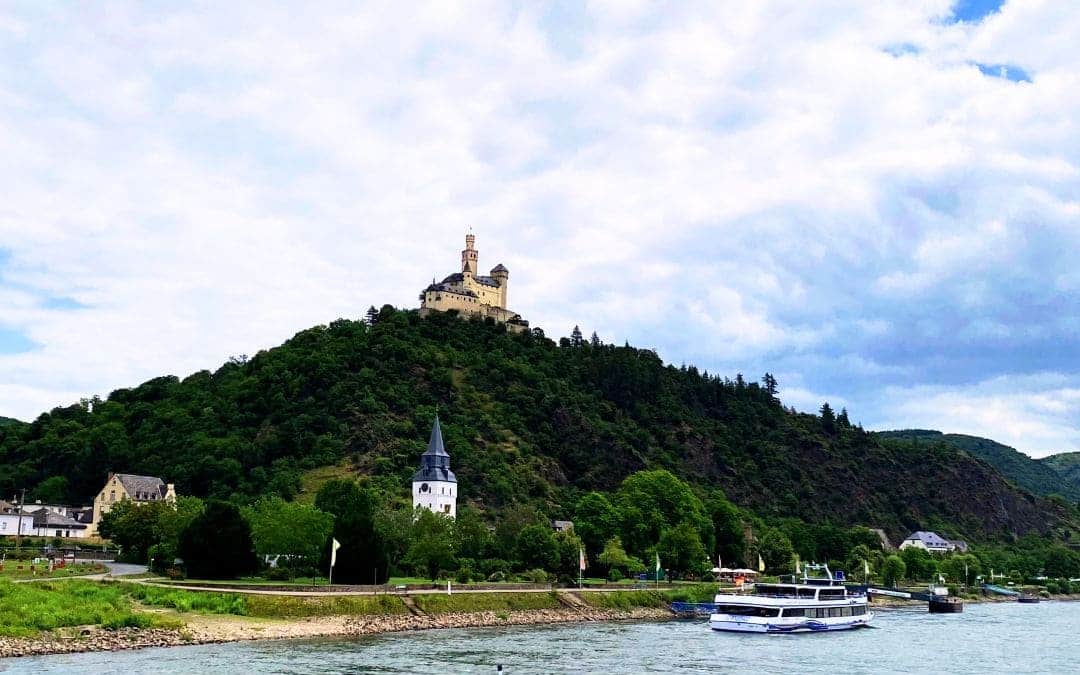
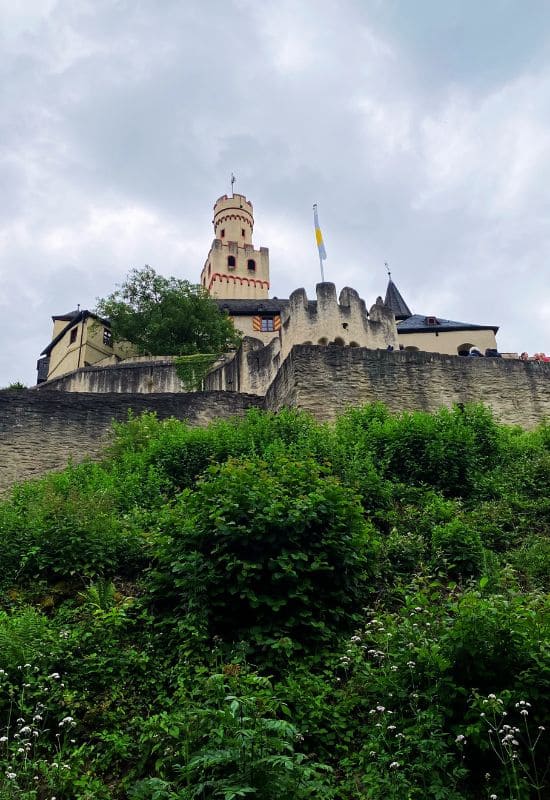
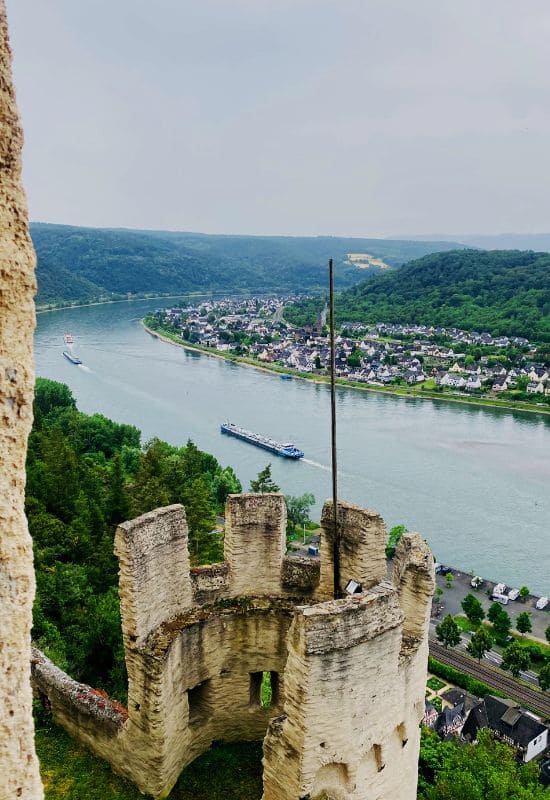
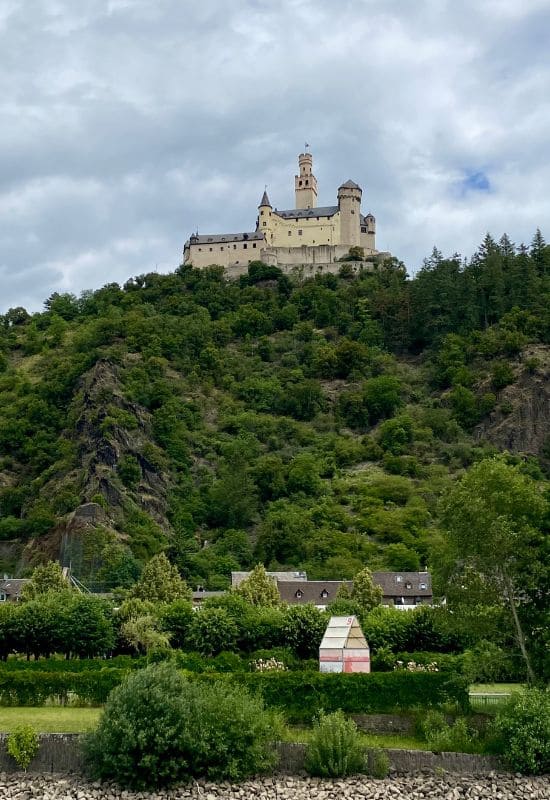
The Marksburg Castle Perched high on a rocky hill above Braubach and the Rhine, it was never destroyed, unlike many other castles in the region. That makes it a particularly good place to understand the layout of an authentic medieval hilltop castle.
Its history goes back to the 12th century. The castle was expanded and adapted repeatedly over the centuries, yet its medieval core survived. Today, Marksburg is home to the German Castles Association.
You can visit only on a guided tour, which takes you through several courtyards and historic spaces, including the castle kitchen, knights' hall, chapel, armory, and wine cellar. The tour vividly showed what daily life in a medieval castle was like. It covered practical matters such as storing supplies, defending the castle, and keeping warm and comfortable, as well as the lives of its lords.
From the castle, you'll enjoy lovely views of Braubach, the Rhine, and the surrounding slopes. You can also see why so many Middle Rhine castles were built on prominent heights.
If castles and history interest you, I'd definitely include Marksburg during a stay in Koblenz. It's only a short distance south of the city and makes a good stop on a day trip, perhaps toward Bad Ems or Rüdesheim.
Marksburg Castle at a Glance
Rhens and the Königsstuhl: A Small Town with a Big History
Rhens is just a few miles south of Koblenz and, at first glance, seems like a pretty, quiet Rhine town. Its historical role surprised me, though. Beginning in the 13th century, the prince-electors met here to discuss the election of German kings. In 1346, Charles IV was even elected king in Rhens.
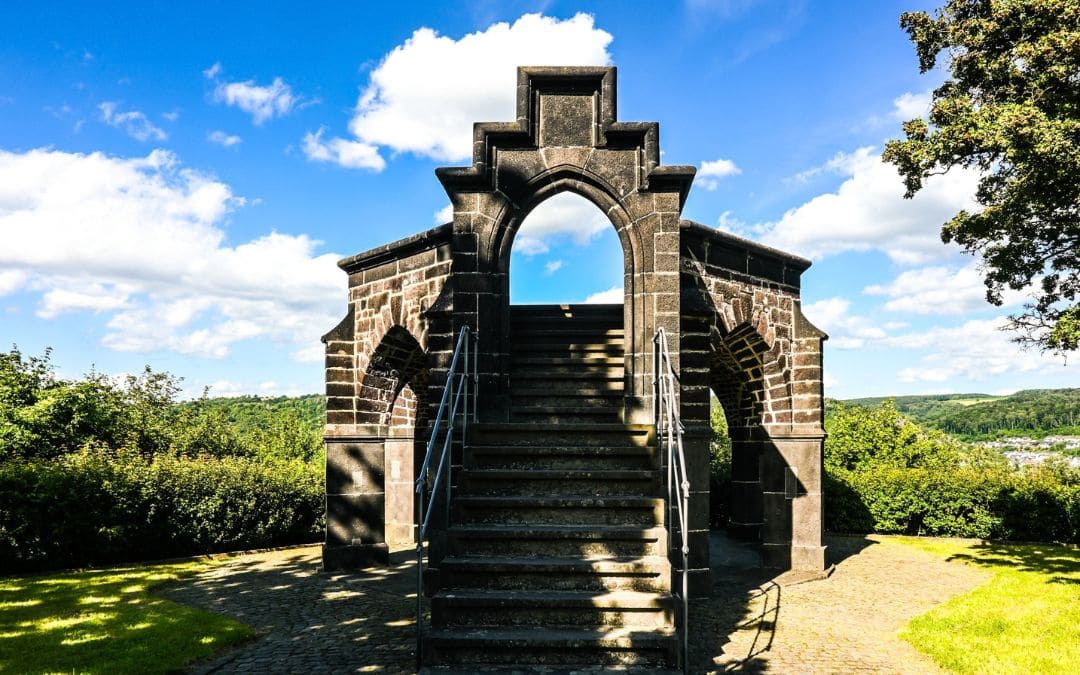
The Königsstuhl , or King's Chair, above the town recalls that period. Today's structure is an 1842 reconstruction; the original was dismantled in the early 19th century. The site offers broad views across the Rhine Valley.
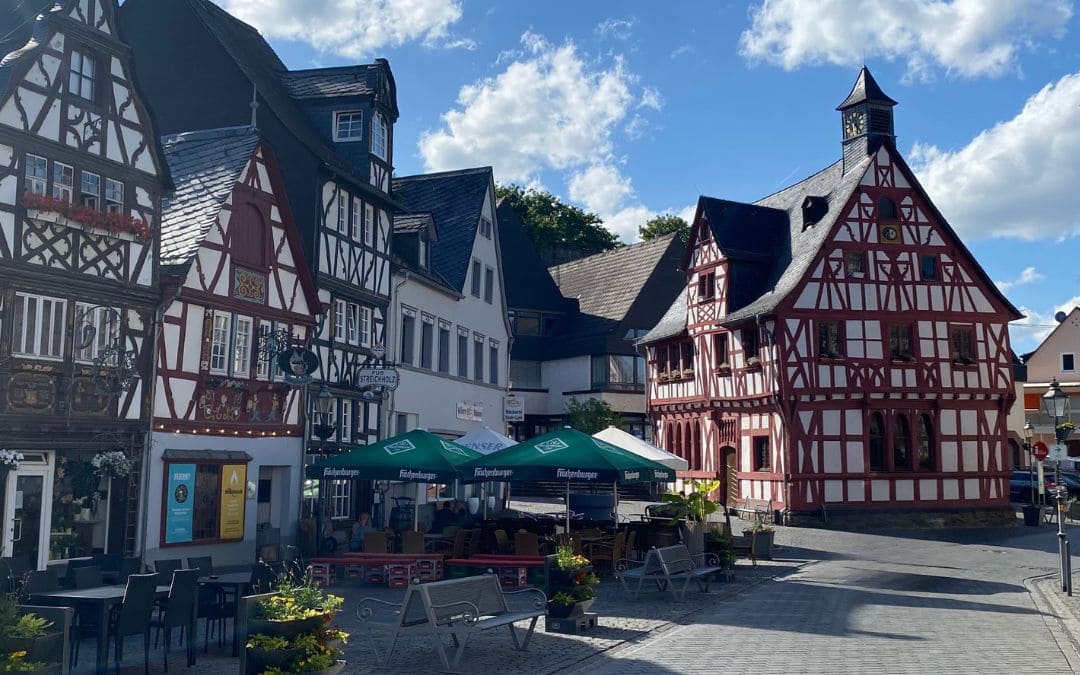
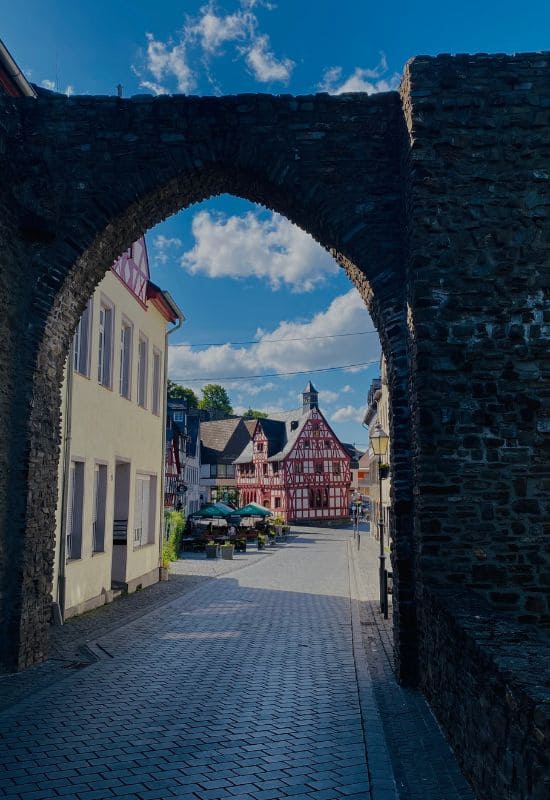
Afterward, take a walk through the historic center, with its half-timbered houses, old town hall, and remnants of medieval town defenses.
Rhens works for more than a short stop. If you'd rather stay somewhere quiet while exploring the Middle Rhine Valley, it also makes a good base for several days. Roter Ochse Hotel and the tastefully furnished Burgenheimat apartments are two appealing places to stay. I'll introduce them in the hotel section below.
Rhens and Königsstuhl at a Glance
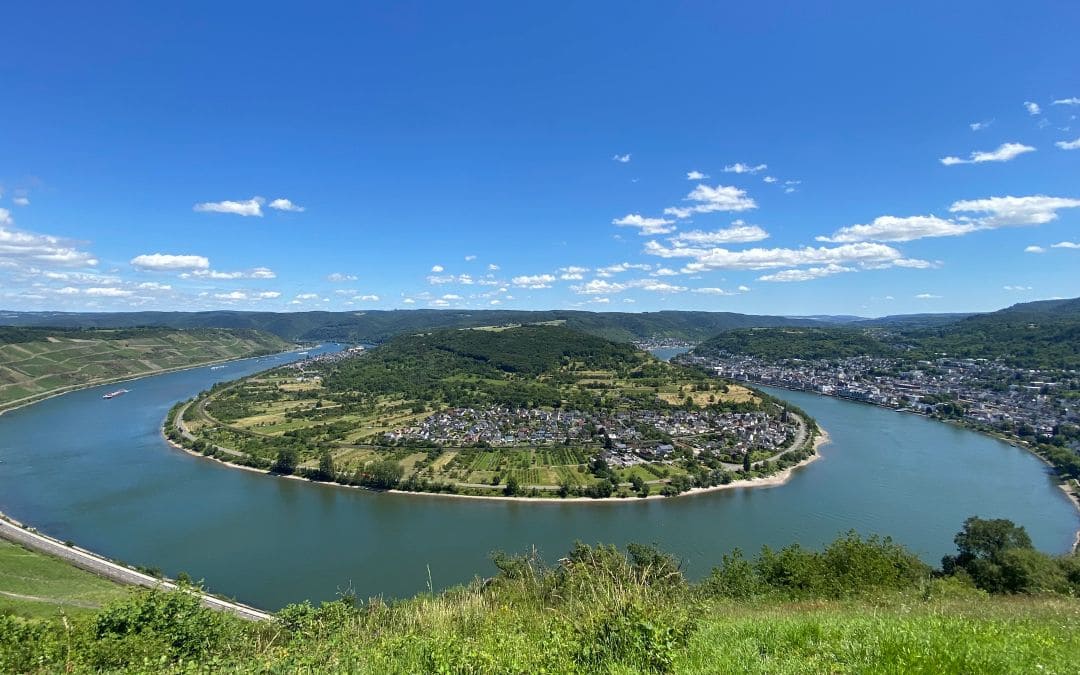
Boppard from Above: Chairlift, Gedeonseck, and Vierseenblick
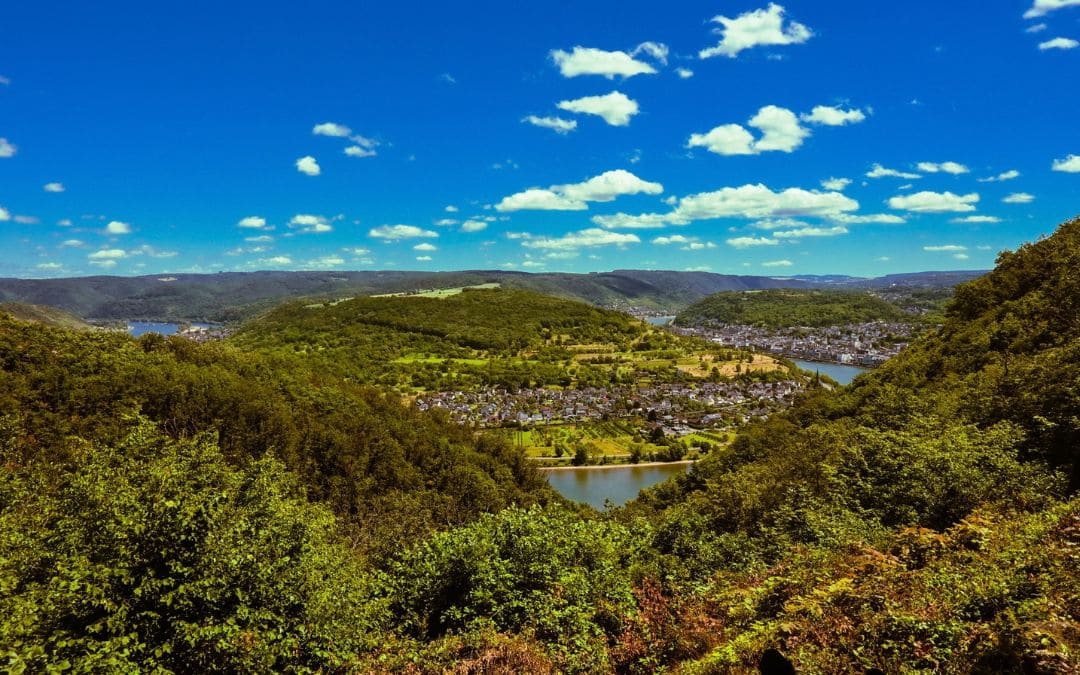
Boppard sits on a striking bend in the Rhine, best appreciated from the viewpoints above town.
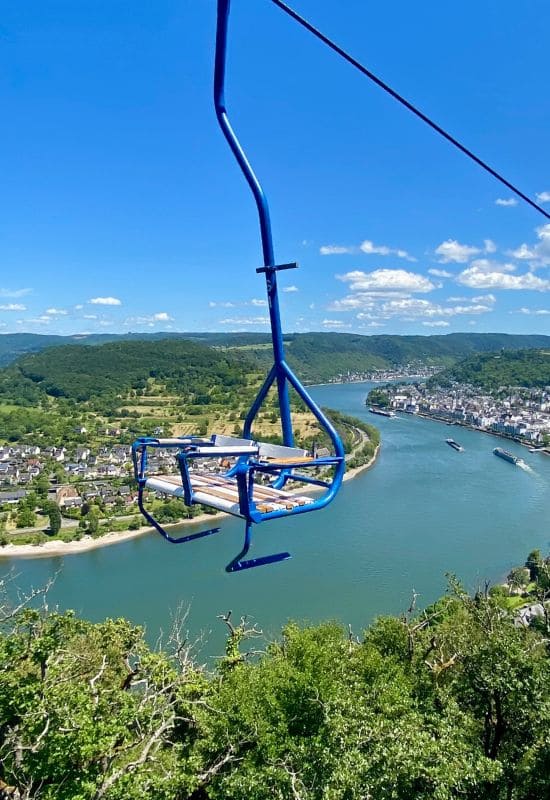
The easiest way up is the Boppard Chairlift provided you're comfortable with heights. As you ride, views open up across the Rhine, vineyards, and town. A short walk from the top takes you to Gedeonseck, overlooking Boppard's famous Rhine bend.
Vierseenblick, or Four Lakes Viewis a little farther on. From here, the wooded slopes divide your view of the Rhine into what look like four separate lakes, hence the name. The chairlift ride and the panorama from Gedeonseck are among my most memorable experiences in the Upper Middle Rhine Valley.
If you enjoy hiking, you can add a section of the Rheinburgenweg (Rhine Castles Trail) . This long-distance trail follows the Rhine's left bank through the Upper Middle Rhine Valley and crosses the hills around Boppard. Several local trails also lead through the vineyards and to viewpoints above town.
Boppard Chairlift at a Glance
A Rhine Cruise Through the Upper Middle Rhine Valley: Castles, Wine, and the Loreley
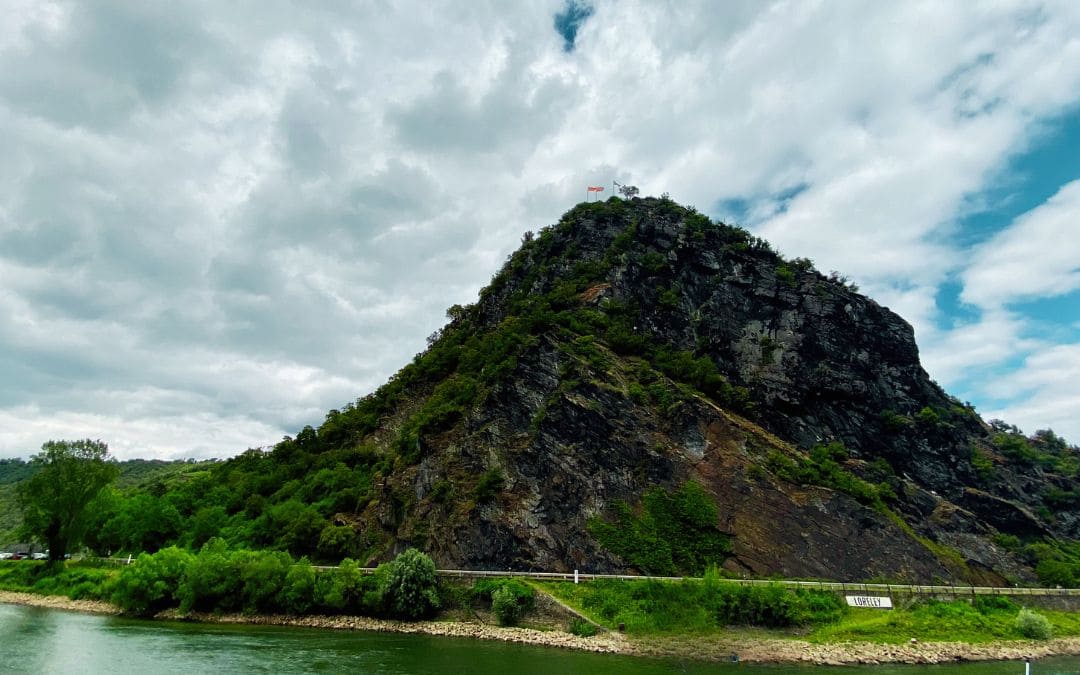
A cruise lets you see the Upper Middle Rhine Valley from a perspective you can't get from shore. Only from the water do you fully appreciate how closely the river, steep vineyards, castles, historic towns, and cliffs fit together. On the way toward the Loreley, castles, vineyard slopes, and little riverside towns alternate along the banks.
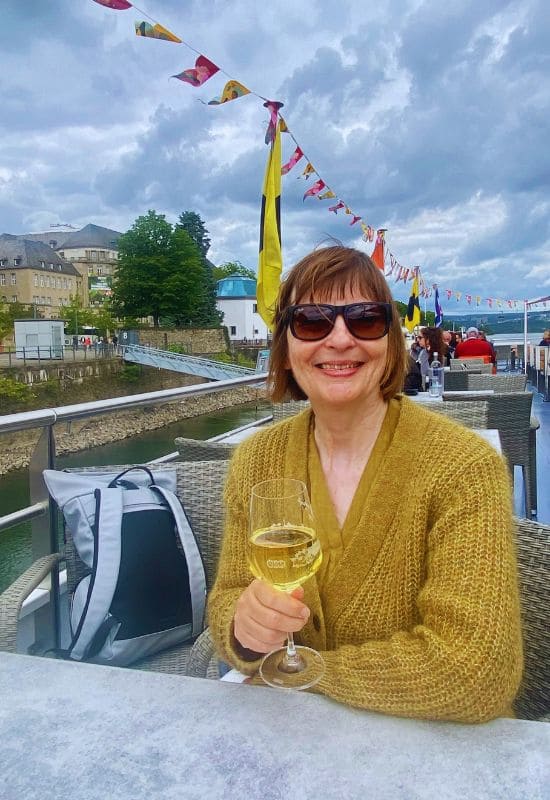
During the Koblenz Wine Festival, I joined a „Wein on the Water“ day cruise. Various festival wines were served on board, with music playing pleasantly in the background, never so loudly that it felt like a party boat. That's exactly what I liked: We could enjoy the wine and scenery and still have a normal conversation.
A day cruise was the right choice for me. On a longer trip, you have time to take in the landscape. If this is your first visit to the Middle Rhine, I'd recommend a classic day cruise or a several-hour scenic cruise over an event cruise.
The cruise is also special because you see castles and towns from the perspective that fascinated 19th-century travelers during the Romantic Rhine era. Add visits to places such as Braubach, Rhens, or Boppard afterward, and you'll get a much fuller picture of this remarkable cultural landscape.
💡 My tip: If you have enough time, choose a longer cruise reaching the Loreley area. It gives you a much better sense of the UNESCO site's scale than a short round trip.

More Day Trips from Koblenz
Koblenz puts several very different landscapes and cultural regions within easy reach. To the south lies the Upper Middle Rhine Valley , with the Loreley, Bacharach, Rüdesheim, and numerous castles. Follow the Moselle to wine villages and historic towns. West of Koblenz begins the Eifel region, while the Hunsrück lies to the southwest, where the Geierlay suspension bridge is a popular excursion. The Westerwald lies east of the Rhine, and the historic spa town of Bad Ems is a short trip away on the Lahn River.
Especially on a longer stay, Koblenz makes a practical base for day trips into several regions.
Eltz Castle: A Medieval Fairy-Tale Castle in the Eifel Foothills
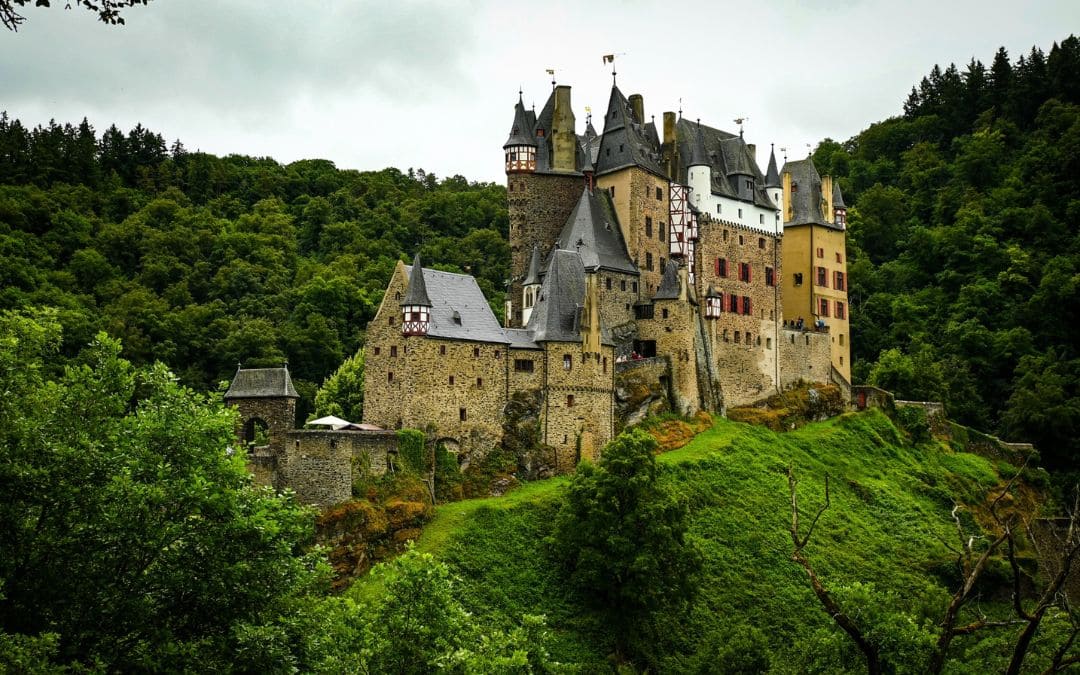
The Eltz Castle. Hidden in a wooded side valley of the Moselle, it rises above the Elzbach stream on a rocky outcrop. Unlike many other castles, it was never destroyed and has belonged to the same family for more than 800 years. The earliest documentary references to the Eltz family date to 1157.
Its unusual architecture is distinctive: Several tall residential towers cluster around a courtyard because space on the rock was limited. On a guided tour, you'll see historic living quarters, armor, furniture, and artworks; a treasury is also part of the visit.
Eltz Castle is an easy day trip from Koblenz to combine with time beside the Moselle.
Cochem and Reichsburg Castle: Moselle Romance with a View
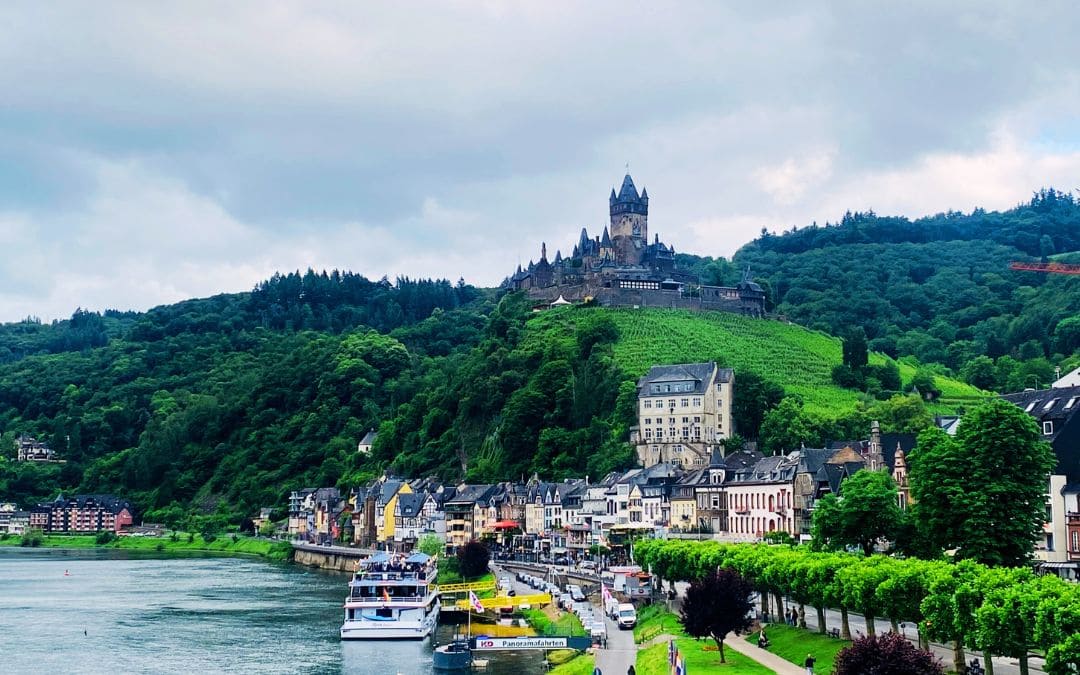
Also Cochem is easy to reach from Koblenz and pairs well with a visit to Eltz Castle. The town lies directly on the Moselle, with Reichsburg Cochem rising above its Old Town and defining its skyline.
The castle you see today is not a fully preserved medieval building. After the original was destroyed in the 17th century, Berlin businessman Louis Ravené rebuilt it in the 19th-century romantic castle style. The Old Town, Moselle scenery, and romanticized castle still attract many visitors to Cochem.
You can see the rooms inside Reichsburg only on a guided tour. From the castle, you can look out over Cochem, the Moselle, and the surrounding vineyards.
If it's your first time in the Moselle region, combine Cochem with other wine villages or a scenic drive beside the river.
Bad Ems – Imperial Spa Town and UNESCO World Heritage Site
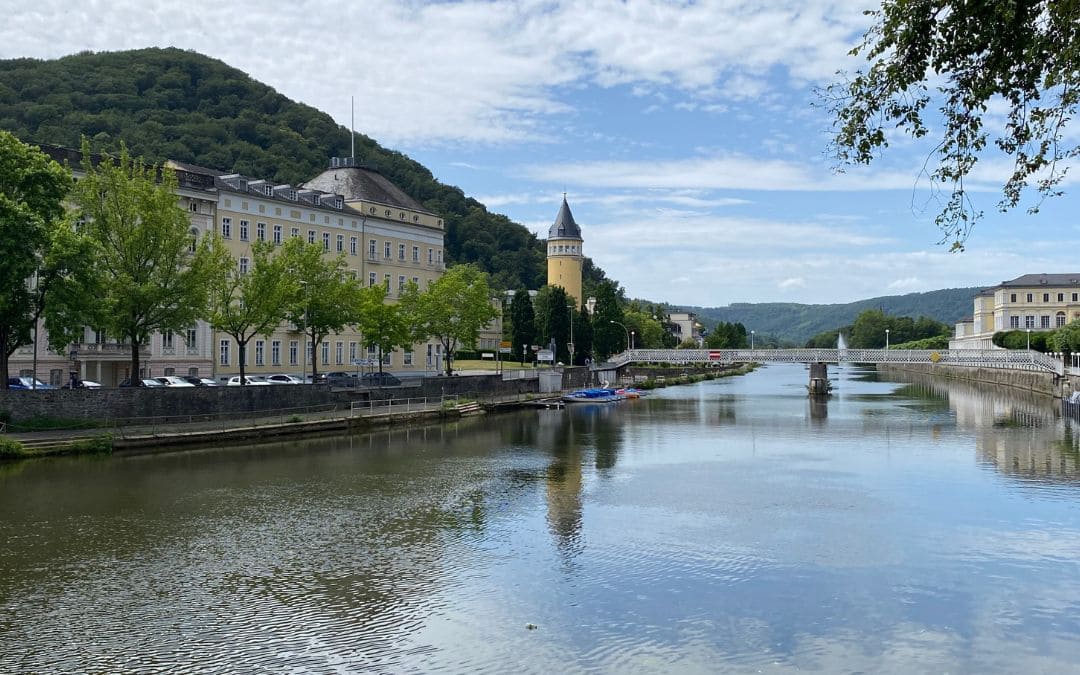
Bad Ems on the Lahn River has a completely different character. In 2021, this historic spa town joined ten other European resorts on the UNESCO World Heritage List as part of the Great Spa Towns of Europe. Other members include Baden-Baden, Bad Kissingen, Vichy, and Bath.
Bad Ems became an internationally known spa resort mainly in the 18th and 19th centuries. Grand spa buildings, historic hotels, baths, and its setting on the Lahn still evoke that era. Emperors, kings, artists, and politicians came here to take the waters.
If you're interested in architecture and cultural history, Bad Ems is just over 20 minutes from Koblenz by train or car. Its spa architecture on the Lahn offers a striking change from the castles, vineyards, and medieval towns of the Rhine and Moselle.
Practical Travel Tips for Koblenz
Best Time to Visit Koblenz
I'd recommend May and June, when everything is green and many events take place, or September and October, when the vine-covered slopes turn autumn colors and the grape harvest shapes the region. These months make it pleasant to combine city sightseeing, castle visits, Upper Middle Rhine Valley excursions, cruises, and hikes.
July and August I'd be less inclined to choose for a trip focused on culture and outdoor activities. Midsummer can be very hot here, making castles, longer walks, and hikes more tiring.
Koblenz is much quieter in winter. The Old Town Christmas market and Christmas Garden at Ehrenbreitstein Fortress make the Advent season a good choice for a short winter trip, though.
Koblenz Festivals and Events at a Glance
- Landpartie at Ehrenbreitstein Fortress: A spring garden fair with plants, decorations, food, and an accompanying program on the fortress grounds.
- Historienspiele at Ehrenbreitstein Fortress: In spring, living history, period scenes, and hands-on activities bring several millennia of fortress history to life.
- Koblenz Wine Festival: Wine events, temporary wine bars, and special offerings celebrating Koblenz as a wine city from May to July.
- Festungssommer: Summer concerts and other outdoor events turn the fortress into a performance venue.
- HORIZONTE World Music Festival: A multiday summer festival with music from around the world on several stages at Ehrenbreitstein Fortress.
- Electronic Wine: A summer festival at Deutsches Eck pairing regional wines with electronic music.
- Koblenz Summer Festival with "Rhine in Flames" (Rhein in Flammen®): One of the city's major summer events, with music, riverside activities, and a well-known fireworks display.
- SchängelMarkt: Koblenz's traditional city festival in September.
- Koblenz Christmas Market: An Advent market spread across several Old Town squares.
- Christmas Garden Koblenz: From November into winter, Ehrenbreitstein Fortress becomes an illuminated garden experience after dark.
💡 My tip: Check the current event calendars from Koblenz Tourism and Ehrenbreitstein Fortress before you travel. Dates and formats can change from year to year.
How Many Days Do You Need in Koblenz?
In one dayyou can get a first impression if you focus on the major sights. Explore the Old Town in the morning, take the cable car from Deutsches Eck, and spend the afternoon at Ehrenbreitstein Fortress.
With two days your trip will be much more relaxed. Then there will be extra time to visit Stolzenfels Castle and take a trip to Boppard via the chairlift, Gedeonseck, and Vierseenblick.
Three to four days are ideal if you also want to experience Koblenz's wine culture and explore the Upper Middle Rhine Valley UNESCO World Heritage Site. A wine tasting, Marksburg Castle, Rhens, or a longer Rhine cruise can then fit comfortably into your plans.
If you're using Koblenz as a base for trips to the Moselle, Hunsrück, Eifel, Westerwald, or Bad Ems, you can easily stay a few days longer.
Getting to Koblenz
Koblenz is well connected by train and car. Its position on major rail routes makes it a good destination even without a car.
By train
Koblenz Hauptbahnhof (main station) is served by ICE high-speed trains, IC intercity trains, and regional services. Direct connections include Cologne, Mainz, Frankfurt am Main, and Trier. The ICE takes less than an hour from Cologne or Mainz, while Frankfurt takes about an hour and a half depending on the service. A direct regional train reaches Trier in roughly 1½ hours.
The Old Town is about a 15- to 20-minute walk from the main station. Buses also run toward the center and Deutsches Eck.
By car
Koblenz is conveniently located between the A3, A48, and A61 highways. Depending on your approach, the B9, B42, B49, and B416 roads lead into the city. If you drive, allow a little extra time for the major construction work around Pfaffendorf Bridge.
By plane
The nearest major airports are Frankfurt am Main and Cologne/Bonn. You can reach Koblenz by train from either. Frankfurt is especially useful for international connections.
💡 My tip: You don't necessarily need a car if you're mainly exploring Koblenz and the Upper Middle Rhine Valley. Many places are easy to reach by train, boat, bus, and cable car.
Getting Around Koblenz
Walking through the city center
The Old Town, Deutsches Eck, the Rhine waterfront, and many other major sights are close together. The center is also about a 15- to 20-minute walk from the main station.
By bus and train
Public transportation is useful for sights farther out. City buses connect downtown Koblenz with its other districts and attractions beyond the center. Trains are also a good alternative to driving for trips into the Upper Middle Rhine Valley.
For example, to visit Weingut Göhlen, take the bus to the Mühlental stop and walk about ten minutes to the winery. That's the more sensible choice for a wine tasting anyway. 😅
By cable car to Ehrenbreitstein Fortress
The cable car connects Konrad-Adenauer-Ufer near Deutsches Eck directly to Ehrenbreitstein Fortress. The ride takes only about seven minutes and, to me, is an essential Koblenz experience. During operating hours, cabins depart every minute or so.
If you're visiting the fortress, a combined cable car and fortress ticket is convenient. Check the current operating hours in advance, as they vary with the season and events.
Parking in Koblenz
If you're driving, you'll find several parking garages in the center. The Forum Mittelrhein Garage at Zentralplatz is especially convenient for my walking route, since Forum Confluentes and its tourist information center are right next door.
The underground garage at Görresplatzis another good option. From there, you can quickly reach the Old Town and Forum Confluentes.
Other central parking options include the Schängel Center and Schloss underground garages. Ehrenbreitstein Fortress also has its own parking area on the Rhine's right bank.
💡My tip: For the city walk, I'd head straight to the Forum Mittelrhein garage. You can leave the car there and explore Koblenz on foot and by cable car.
Where to Stay in and Around Koblenz
Your choice of accommodation mainly depends on whether you want to stay as centrally as possible in Koblenz or prefer a quieter base in the Middle Rhine Valley.
Four Points Flex by Sheraton Koblenz: Convenient for the Main Station
I stayed at Four Points Flex by Sheraton Koblenz. It's right next to the main train station, making it ideal if you arrive by rail. It also works well if you drive: The station's underground garage has spaces with direct access to the hotel.
The rooms are comfortable, and I found the breakfast buffet generous and good. The Old Town is about a 15- to 20-minute walk away. If you'll be taking trains and buses often or planning trips into the Middle Rhine Valley, the station location is a real advantage.
Motel One Koblenz: Central City Location
If you'd rather stay closer to the Old Town, the Motel One Koblenz is a good alternative. Opened in 2026, it stands between Löhrstraße and Hohenfelder Straße. The Old Town, Deutsches Eck, and the Rhine waterfront are within easy walking distance. It also has its own underground garage and a rooftop terrace overlooking the city.
Rhens: A Quiet Stay in the UNESCO World Heritage Landscape
If you want to explore Koblenz and the Middle Rhine Valley without staying in the city, I particularly like Rhens as an alternative. This small historic town lies within the Upper Middle Rhine Valley UNESCO World Heritage Site and makes a peaceful base for trips along the Rhine.
The family-run AKZENT Hotel Roter Ochse is in the heart of the historic center. The Kochhäuser family has operated it since 1936. It has rooms in the main building and a guesthouse.
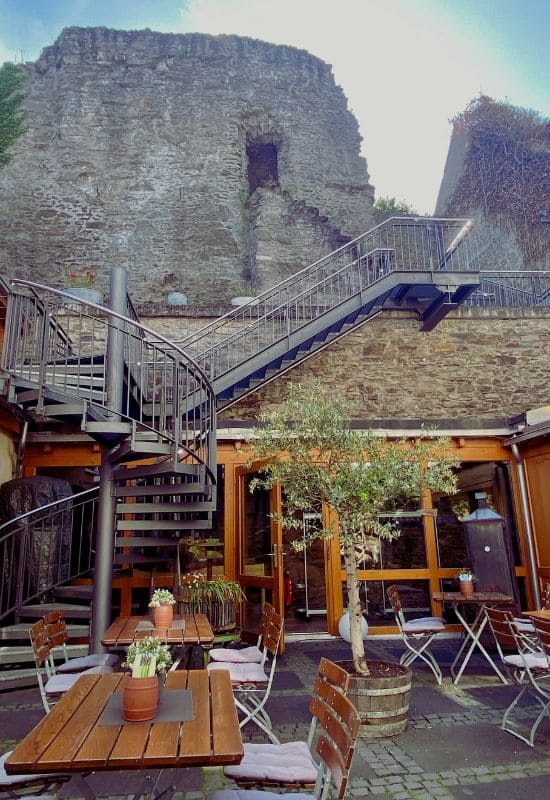
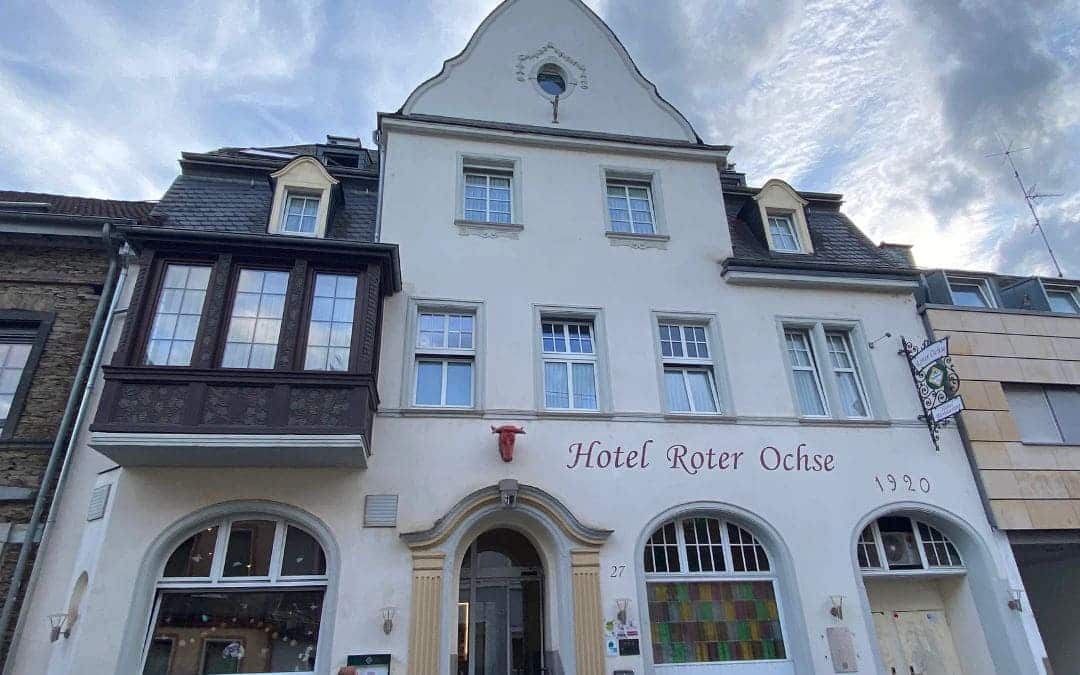
Right next door is Burgenheimat, also run by Werner and Heike Kochhäuser. Its modern, tastefully furnished studios and apartments offer more space, particularly if you're staying several days or want a little more independence with meals.
💡My tip: If your main aim is to see Koblenz, I'd stay in the city. For several days exploring the Upper Middle Rhine Valley, Rhens is a good alternative: quieter than Koblenz while still conveniently situated.
Where to Eat and Drink in Koblenz
My Koblenz restaurant and café suggestions range from dining with a Rhine view to small specialty shops in the Old Town.
Gerhards Genussgesellschaft: My Restaurant Pick Near Deutsches Eck
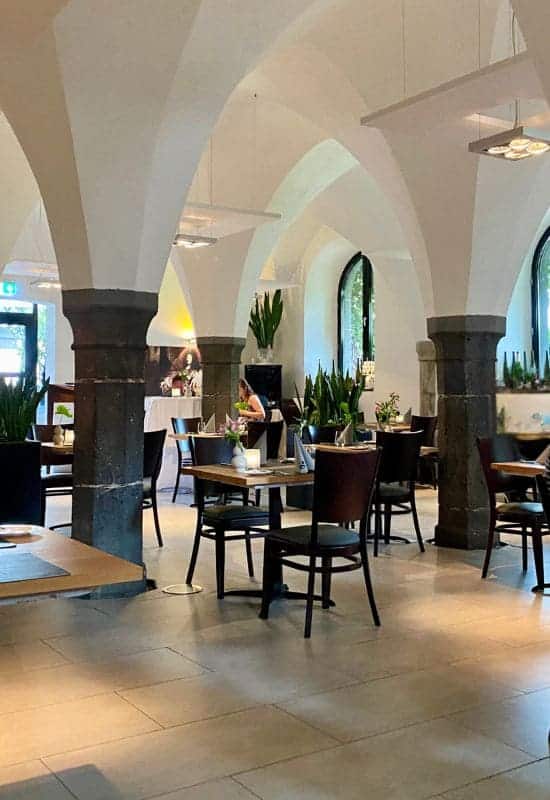
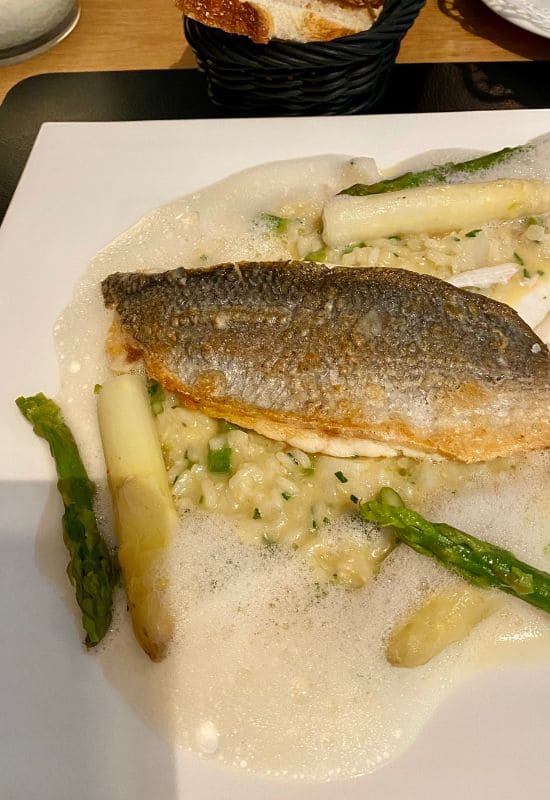
Gerhards Genussgesellschaft is right next to the Ludwig Museum and only a few steps from Deutsches Eck. I had an excellent meal there, and its wonderful location on Blumenhof is an added bonus.If you'd like a special meal after a walk around town, this would be my first recommendation.

Casino at Ehrenbreitstein Fortress – Dining with a View
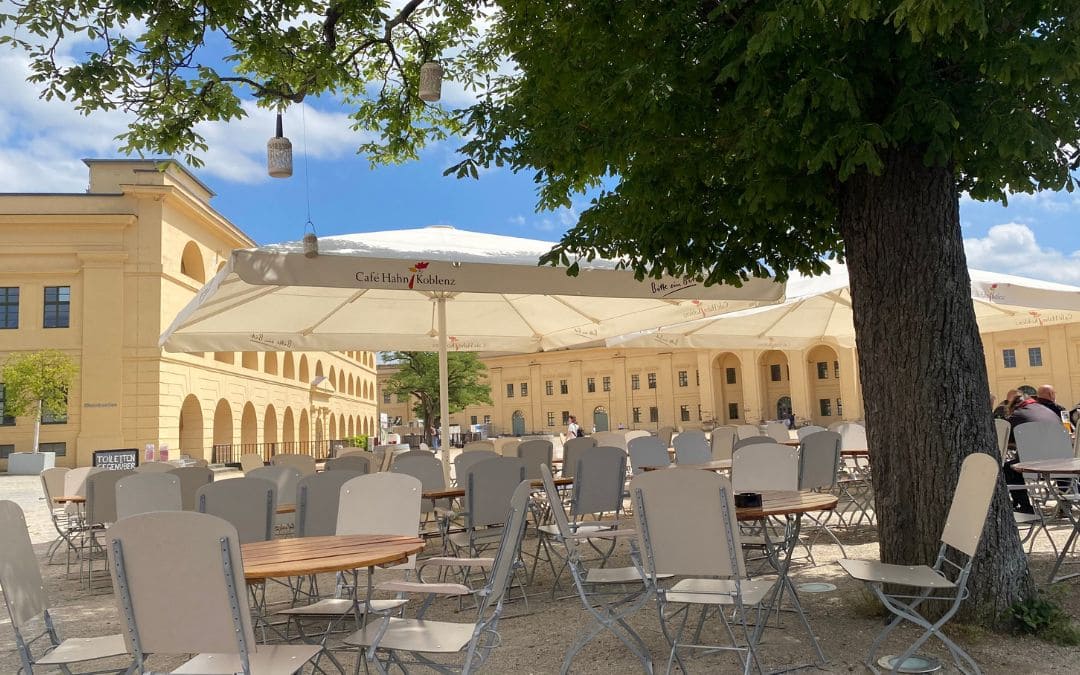
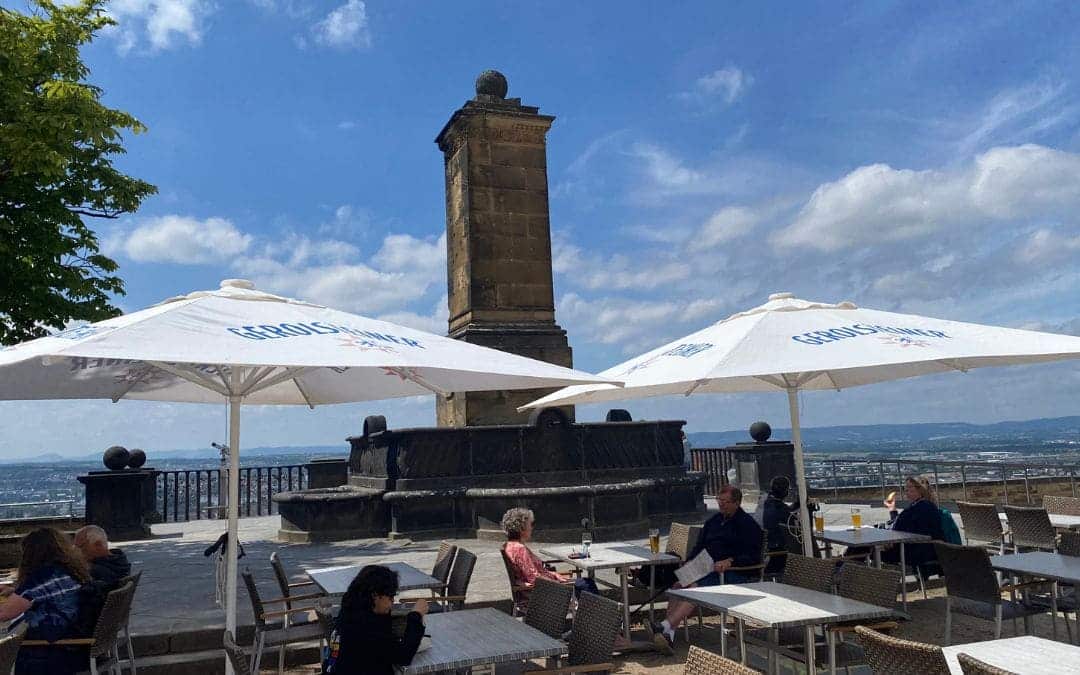
You can also eat well at Ehrenbreitstein Fortress. The terrace of the Casino restaurant looks out over Koblenz and Deutsches Eck. On a sunny day, it's a lovely place to pause during a fortress visit.
Wirtshaus Alt Coblenz: A Traditional Tavern at Am Plan
The well-known Wirtshaus Alt Coblenzis in the middle of the Old Town. Its historic vaulted cellar gives the restaurant much of its character. If you're looking for a traditional German tavern in a central location, this is a good choice.
Cafés, Ice Cream, and Sweet Breaks
eGeLoSIa is one of my favorite spots for delicious ice cream creations. From the street, you can even watch the gelatieri make the ice cream in the glass-walled lab next to the shop.
Right by Liebfrauenkirche Frl. Diehlis worth a stop for coffee and handmade caramels. You can also take a look behind the scenes and watch how the sweets are made.
Located on Jesuitenplatz, Galestro, is a great place for a coffee break during the Old Town walk.
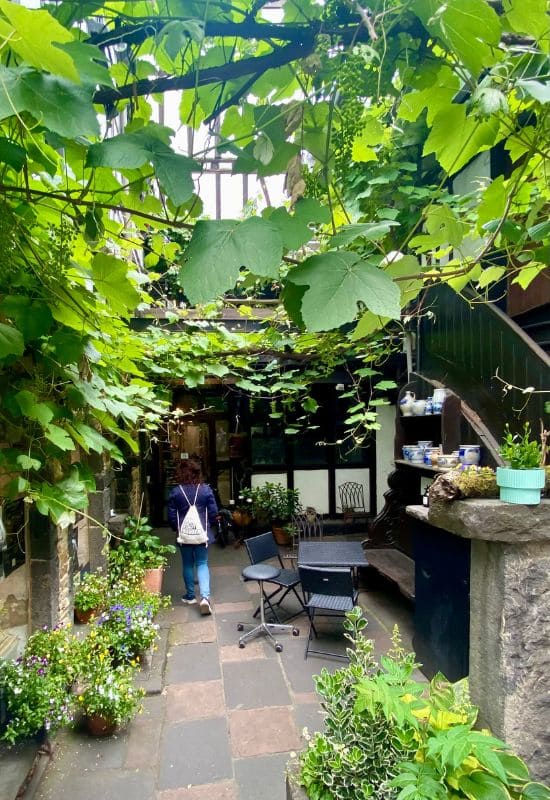
Café Pfefferminzje on quiet Mehlgasse has an inviting terrace in a courtyard with a fountain, a tasty breakfast, and a wide selection of cakes, including vegan options.

SprizzAtelier – a drink on Jesuitengasse
If an aperitif sounds better than coffee, stop by SprizzAtelier on Jesuitengasse. Its impressive range of spritz drinks includes alcohol-free alternatives. To me, this little spot is perfect for a break near Jesuitenplatz.
Tickets, Visitor Passes, and Information
The Tourist Information Office at Forum Confluentes on Zentralplatz is the main place to pick up city maps and brochures and ask about tours, events, and tickets.
KoblenzCard
If you plan to visit several ticketed attractions in one day and use public transportation, the KoblenzCard may be worth considering. It's valid for 24 hours and includes travel on buses and trains within Koblenz. It also offers discounts for museums, guided city tours, Ehrenbreitstein Fortress, Stolzenfels Castle, the cable car, and various cruises.
Whether it saves you money depends on your plans for the day. If you're combining the Old Town, cable car, and fortress and also using public transit, compare the current individual prices with the KoblenzCard's benefits.
Guided Tours and Tickets
Koblenz-Touristik offers public and private guided walks. Alongside the classic Old Town tour, options include night watchman tours and wine-themed walks. You can buy tickets online or at the tourist information center in Forum Confluentes.
It's worth checking opening hours and tickets online in advance for the cable car, Ehrenbreitstein Fortress, Stolzenfels Castle, and cruises .
Koblenz Tourist Information at a Glance
My Final Thoughts on Koblenz
Koblenz is often summed up by Deutsches Eck and Ehrenbreitstein Fortress. Yet the city has many layers: More than 2,000 years of history meet Romantic Rhine scenery, winemaking, and the exceptional setting where the Rhine and Moselle join.
There are many ways to experience Koblenz. You can stroll through the Old Town in the morning, ride the cable car over the Rhine to the fortress, visit a winery in the afternoon, and spend the next day in the heart of the Upper Middle Rhine Valley UNESCO World Heritage Site. Stolzenfels Castle, Marksburg Castle, Boppard, and cruises toward the Loreley are all close by.
For me, Koblenz is therefore much more than just a starting point for excursions along the Rhine and Moselle. The city itself is worth taking the time to explore—for its history, for its wine, and for the many views of the two rivers that meet here.
[Ad] Before I set off on my road trip through the Saarland, along the Moselle, and into the Upper Middle Rhine Valley, I had definitely expected read more
[Ad] I had already visited Trier twice and, up to that point, had come to know it primarily as an important Roman city. The Porta Nigra, the Imperial Baths, the amphitheater, and read more
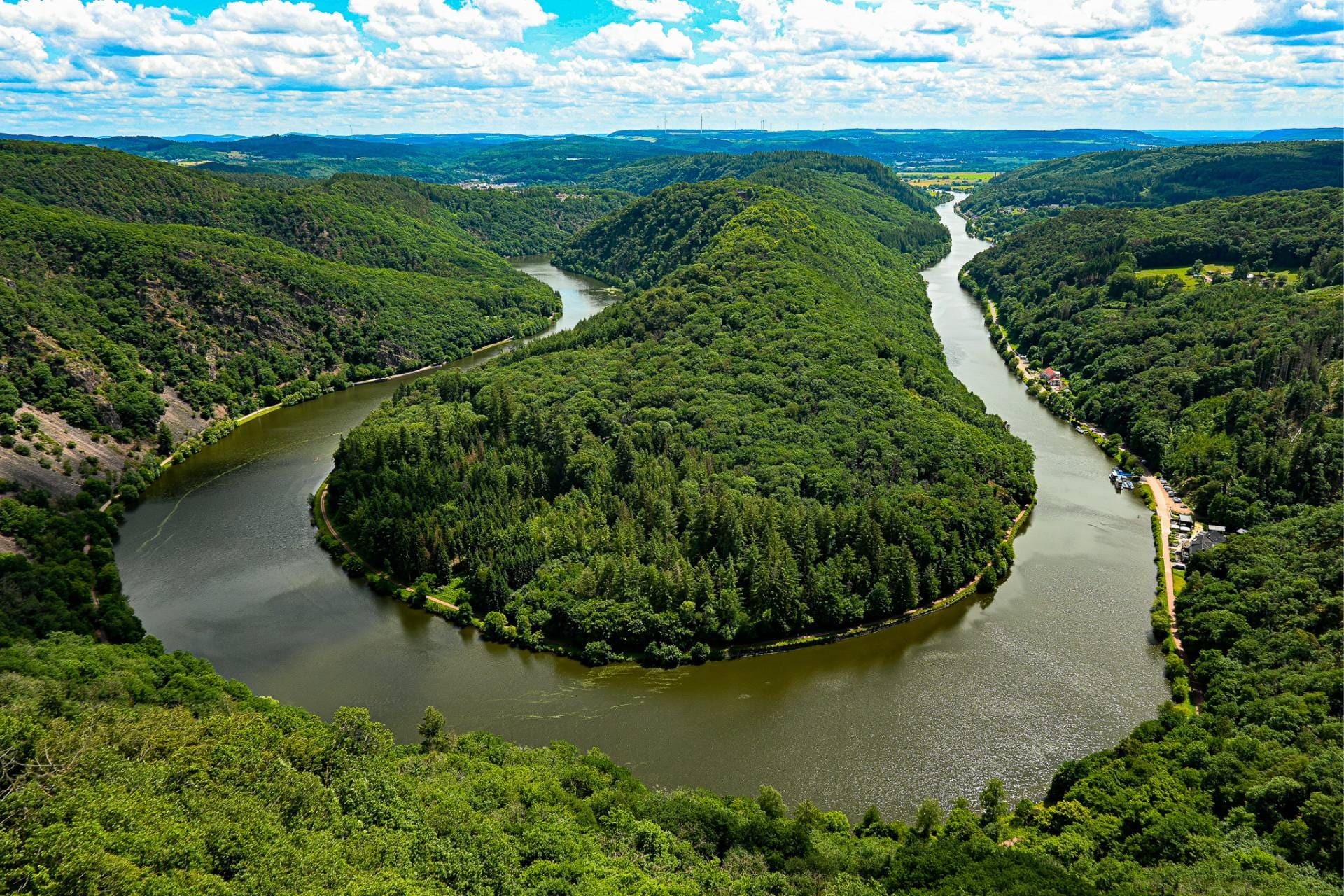
I had planned to spend three days in the Saarland. At first, that sounded reasonable: the distances are short, Saarbrücken is centrally located, and read more
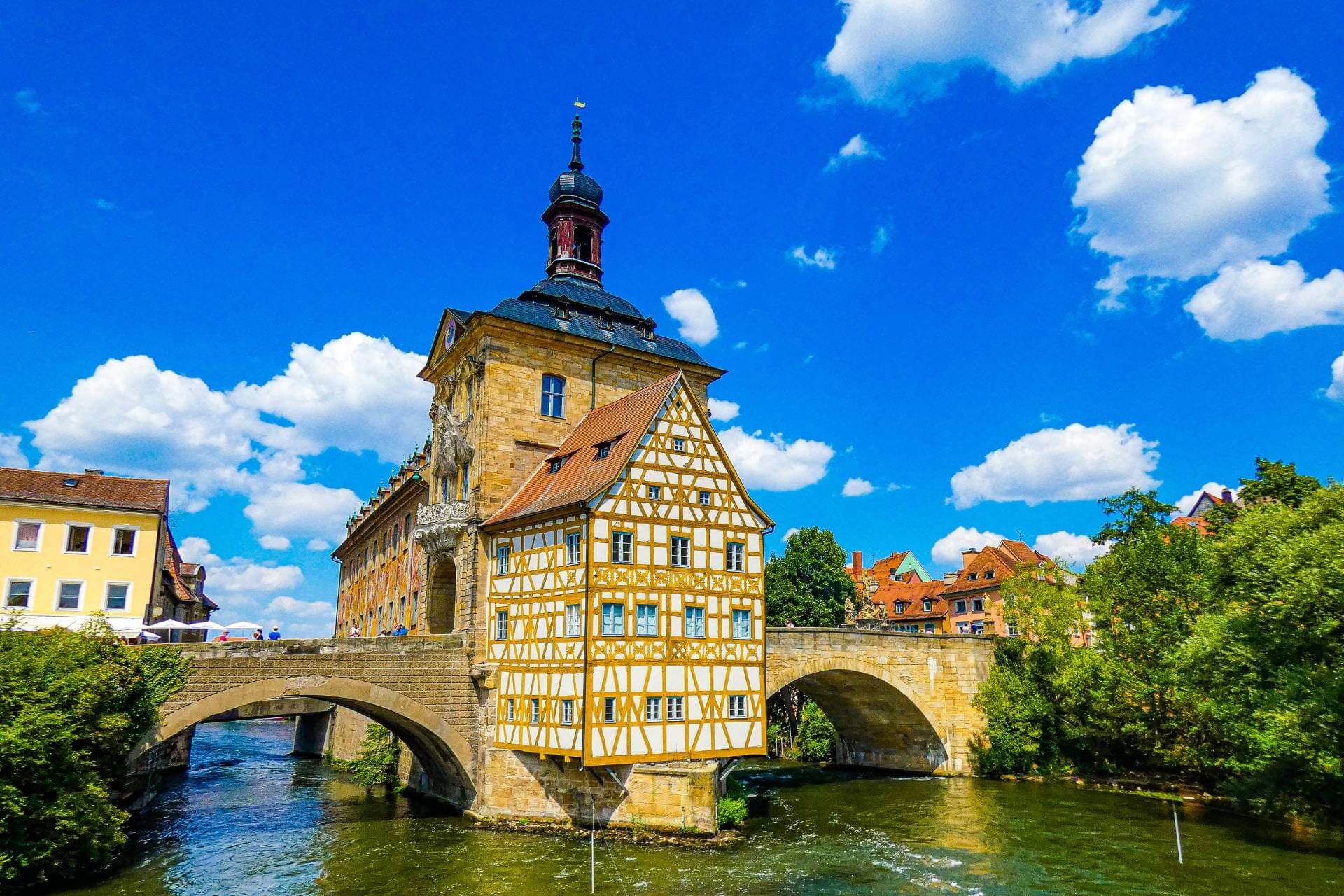
UNESCO World Heritage Sites are places of outstanding universal value—significant testaments to history and culture, as well as unique natural landscapes. When the read more

About me: I love to travel, write and photograph - preferably in places where the past is visible. Whether it's half-timbered towns, castles or quiet landscapes - there's something in every place that touches you and inspires you to think further. With my blog Angie's Travel Routes I would like to inspire you to discover Germany on your own. I share my experiences, personal impressions and practical route tips to make your next trip a special experience.
You can find out more about me to my newsletter.

 Deutsch
 English
0 Comments