
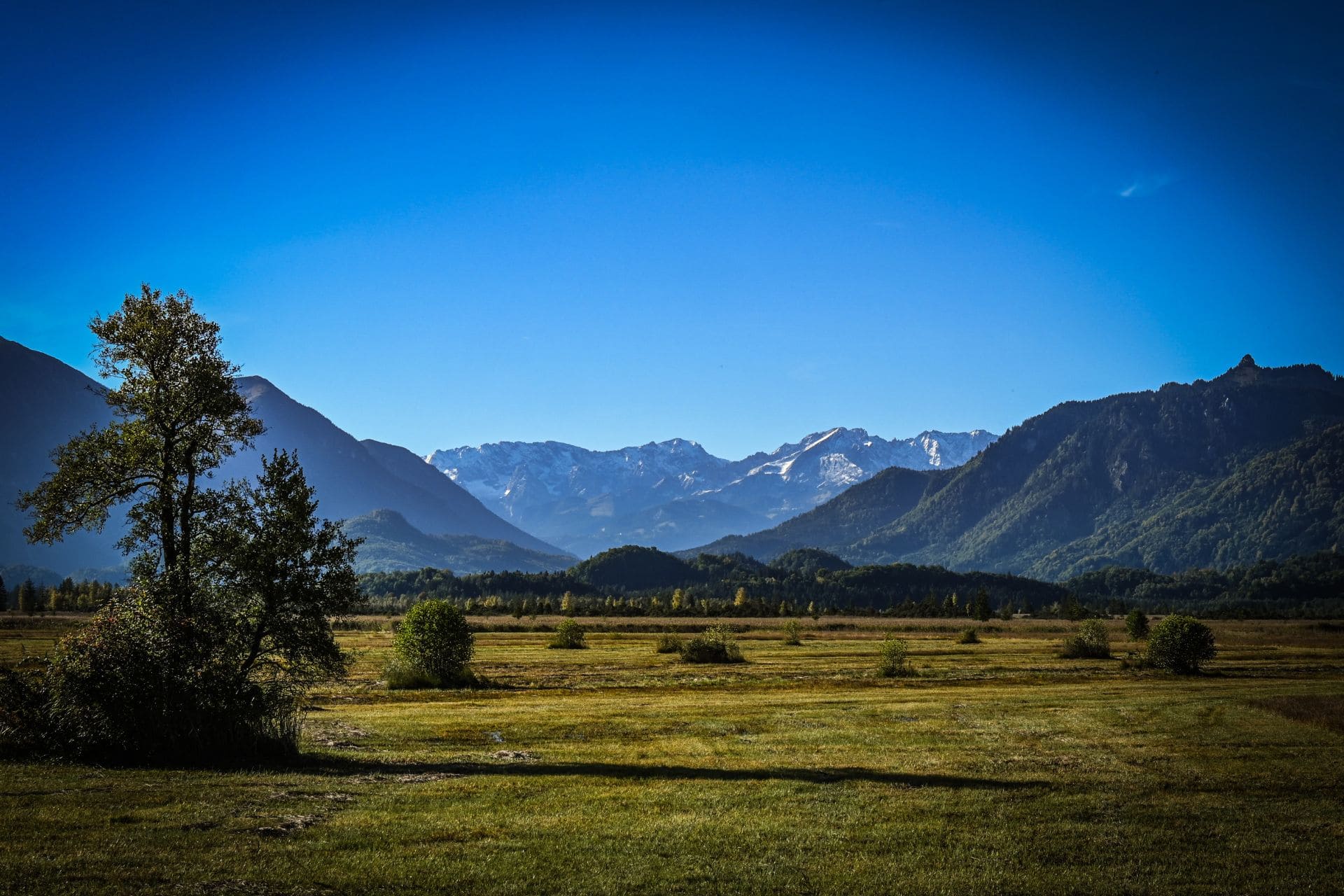
Some places do not reveal themselves at first glance. Murnau am Staffelsee is one such place. Between Staffelsee, the foothills of the Alps and Murnauer Moos lies a market that combines art history, nature and the Bavarian way of life in a special way - provided you know where to look.
Murnau is considered the heart of the Blue Land, a landscape inseparably linked to the expressionist artists of Der Blaue Reiter (The Blue Rider) . Ever since my school days, I have been fascinated by this group of expressionist artists, whose traces can still be found in Murnau and its surroundings today.
Shortly before my trip in October 2025, a fortunate coincidence occurred: through a mutual friend, I met local guide Jac-Peter Tölkes This gave me the opportunity not only to explore Murnau on my own, but also to discover it with an insider — someone who has known the town for years and can make its stories, connections, and atmosphere visible in a way no guidebook ever could.
In the following interview, Jac-Peter talks about „his“ Murnau: about well-known places and quiet corners, about the special landscape of the Murnauer Moos, about art, history and personal perspectives. A conversation for anyone who wants to understand Murnau better - and who wants to look beyond the obvious.
Murnau am Staffelsee at a Glance
Location:
Upper Bavaria, in the Alpine foothills between Munich and Garmisch-Partenkirchen
Region:
The Blue Land
Known for:
Home of the Blue Rider (Der Blaue Reiter) artists, Murnauer Moos, Lake Staffelsee, colorful pedestrian market street
Distinctive features:
A unique combination of art history, moor landscape, and vibrant market traditions
Recommended stay:
1 day for Murnau itself; several days or even weeks as a base for regional excursions
Best time to visit:
April to October for nature walks and cycling; winter for a peaceful atmosphere
Ideal for:
Travelers interested in culture and art, nature lovers, food enthusiasts, and slow travelers. Also perfect for visitors who prefer gentle terrain without steep climbs
Also ideal for those who like to travel without steep inclines
Interview with Local Guide Jac-Peter Tölkes
Who's Speaking
Jac-Peter Tölkes Jac-Peter Tölkes has been living in Murnau for many years and has worked as a certified local guide since 2022. With curiosity, enthusiasm, and a keen sense for historical connections, he introduces visitors to the special places and stories of the region — knowledgeable, engaging, and occasionally with a touch of humor. As a member of the German Association of Tourist Guides, he regularly pursues further training. His tours can also be designed to be accessible upon request.
I have found Jac to be someone who explains Murnau not through dates, but through contexts, moods and stories. That's exactly why I let him have his say here in such detail.
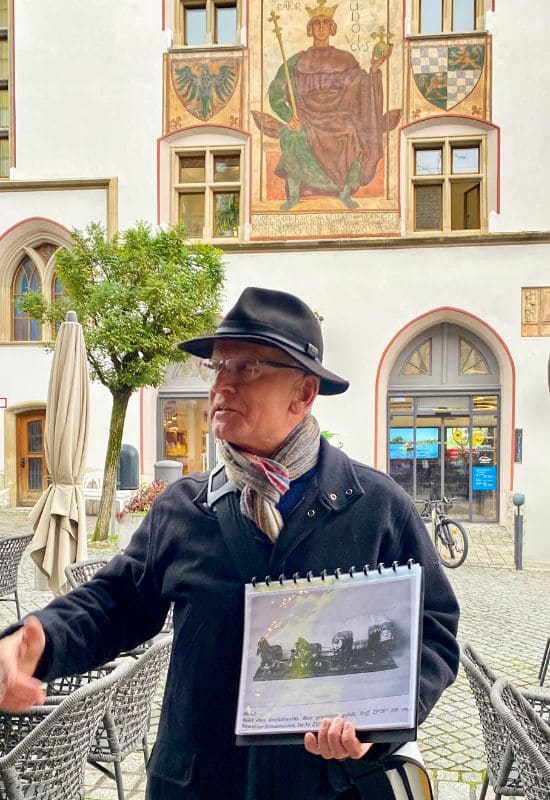
💡 💡Tip: If you would like to discover Murnau for yourself, you can find my personal tips on accommodation, cafés and excursions in the surrounding area below.
Understanding Murnau: Location, Character, and Atmosphere
Who are you, and what brought you to Murnau?
My name is Jac-Peter Tölkes, and I have been working as a guide in and around Murnau for several years. After nearly twenty years of frequent relocations, my family wanted to settle down. We already knew and liked Murnau — and were fortunate enough to find a home here.
What continues to fascinate you about Murnau, even though you know it so well?
Especially the location and the people.
We are located in the foothills of the Bavarian Alps and can see the mountains without being overwhelmed or shaded by them. There are three lakes within walking distance - Staffelsee, Riegsee and Froschhauser See - which, depending on the season, are ideal for swimming, water sports, ice skating or even cross-country skiing.
The population consists of long-established local families as well as newcomers who arrived for very different reasons. This coexistence shapes the town: traditions are carefully maintained, yet there is openness to new ideas. Around 12,000 residents participate in approximately 140 clubs and associations, creating an active and vibrant community life.
How would you describe Murnau to someone who has never been here?
As a small town between Munich and Garmisch-Partenkirchen, it has been located on an important route between Germany and Italy for over 2,000 years.
To the south, your view stretches across the Murnauer Moos toward several mountain ranges; to the west, to Lake Staffelsee; to the east, to the Benediktenwand; and to the north, to wooded hills.
Murnau offers much of what you need to live - often more than you would expect from a place of this size.
What makes Murnau am Staffelsee special
In your opinion, what distinguishes Murnau from other places in the Bavarian Alpine foothills?
A decisive step was the relocation of the federal highway B2 out of the town center. The pedestrian zone that emerged about 25 years ago continues to shape Murnau’s special atmosphere. Another important influence was the beautification project initiated by architect Emanuel von Seidl between 1906 and 1913, which sustainably shaped the townscape.
In addition, Murnau offers excellent infrastructure: the Berufsgenossenschaftliche Unfallklinik (specialized trauma hospital) and numerous medical practices ensure healthcare services, and educational facilities from kindergarten to high school are available locally.
In addition to the townscape and infrastructure, there is something else that characterizes Murnau at least as much - and which cannot be planned or designed: the landscape right on the doorstep. What role do Staffelsee and Murnauer Moos play in the town's identity?
In my view, the Murnauer Moos plays a bigger role than the Staffelsee. Murnau has owned only a small portion of the lakeshore since 1979, although the lake has attracted summer visitors for around 150 years, especially after the railway connection was established in 1879.
The Murnauer Moos, on the other hand, has been used since time immemorial - initially mainly for agricultural purposes. For around 40 years, the focus has been on nature conservation, with the result that the moss is now managed and maintained in a nature-friendly manner. With an area of around 36 square kilometers, it is one of the largest contiguous moorland areas in the region and a habitat for thousands of animal species and around 1,100 plant species.
History That Still Shapes the Town
Which historical developments have had a particular impact on Murnau?
From my perspective, two decisions made by the German king and later emperor Louis IV, Holy Roman Emperor had a lasting impact on Murnau. In 1322, he granted the village market rights - a privilege that continues to this day. Since then, Murnau has been allowed to hold a market four times a year: the Palm Market (Palm Sunday), the Scapular Market (July), the Michaelmas Market (late September) , and Leonhard Market (November 6). These markets attracted people from the surrounding region early on and shaped the town’s economic life.
A second long-lasting decision followed in 1332: Louis the Bavarian purchased the market town of Murnau from the Bishop of Augsburg and transferred it to the monastery he had recently founded, Ettal Abbey. Murnau was given the task of taking over the administration and jurisdiction of the monastery lands - a function that the town exercised until secularization in 1803, i.e. for over 480 years.
And that brings us to the personalities who have shaped Murnau ...
Several personalities played a decisive role in shaping Murnau’s development. Emeran Kottmüller, brewer, businessman, and politician, successfully advocated for the railway connection, which was realized in 1879. The architect Emanuel von Seidl (already mentioned above) settled in Murnau, created what is now known as Seidl Park, and permanently influenced the townscape through his beautification initiatives between 1906 and 1913.
Literary and political history also left its mark here: Writer Ödön von Horváth lived and worked primarily in Murnau between 1924 and 1933. Dr. Leopold Huber, teacher and local politician, resisted National Socialism and served as the model for the first-person narrator in Horváth’s novel Youth without God.
With Christoph Probst, born in Murnau in 1919 and executed in 1943 as a member of the White Rose , the town is closely connected to the history of resistance against the Nazi dictatorship.
Finally, James Loeb and his wife Marie Antonie were patrons and benefactors for Murnau - among other things, the construction of the hospital, which opened in 1932, can be traced back to their work.
Are there places or details that are often overlooked but tell important stories?
Many buildings in Murnau tell a story, even if there are hardly any very old structures. Several major fires have changed the town time and again.
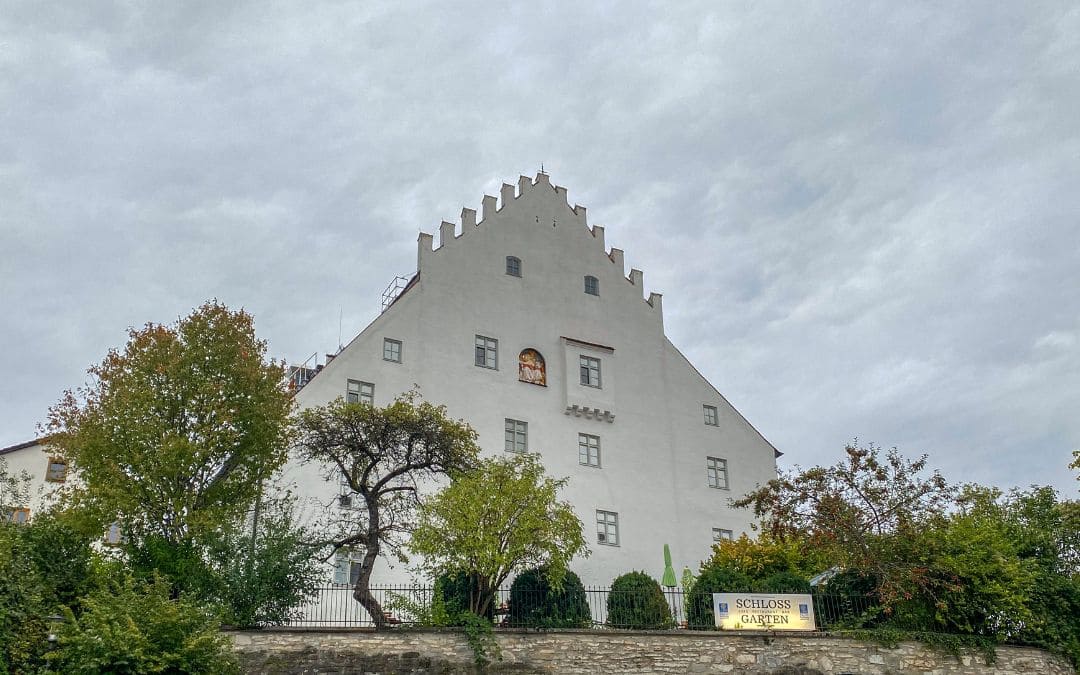
Until 1803, Murnau was also the southernmost market between Munich and Scharnitz, as the Werdenfelser Land was under the jurisdiction of the diocese of Freising. This special location is reflected, among other things, in the eventful history of the Murnau Castle which is still comprehensible today.
Artists’ Town Murnau – More Than the Blue Rider
Many people associate Murnau with art and the „Blue Rider“. What should visitors definitely know about it?
The artists of the „Neue Künstlervereinigung München“ were neither the first nor the last artists to work in and around Murnau. Even before the Expressionists, artists such as Johann Michael Wittmer, Philipp Sporrer, Carl Spitzweg or Waldemar Kolmsperger lived and worked in the region.
After the Blue Rider period, Murnau remained an attractive place for artists. Figures such as Carl and Erna Rabus, Cuno Fischer, and Rudolf Pfefferer continued this tradition. To this day, Murnau is artistically vibrant, with three active artists’ associations in and around town.
While many of us are familiar with Der Blaue Reiter from art lessons and it has a firm place in the history of art in Western Europe, this artists' association is by no means universally known internationally. However, what all visitors notice regardless of this is the special light of the landscape around Murnau - and the multitude of motifs that continue to inspire artistic work to this day.
Before we go any further, it's worth taking a quick look at what many people associate with Murnau first - and which is only part of the story.
The Murnauer Moos – Nature, Use, and Responsibility
Facts about the Murnauer Moos
- Moor, not moss:
In Bavaria, the term Moss refers to a moor landscape, not moss plants. - Largest moor in Central Europe:
At around 32 km² area the Murnauer Moos is considered the largest contiguous moor area in Central Europe. - Formed after the ice age:
The moor developed after the retreat of the Loisach Glacier around 15,000 years ago. - Biodiverse habitat:
It is home to numerous, sometimes rare, animal and plant species and is largely protected. - Important for climate protection:
Morelands store large amounts of carbon and play a significant role in climate regulation.
What do you think makes the Murnauer Moos so special?
For me, the Murnauer Moos is extraordinary in many ways. It has been used by people for centuries - for example by mowing reeds as bedding for stables, collecting berries, roots and herbs or by hunting and fishing. The cutting of peat also played a role, both for heating and for medicinal purposes.
Interestingly, the comparatively short period of stone quarrying in the northern moor hills — the so-called “Köcheln” — left more visible traces than the roughly thousand years of mostly extensive prior use.
Today, the Murnauer Moos is a valuable habitat for numerous animal and plant species. What many people do not suspect: Without targeted human intervention in landscape management, the moss would not look the way we know it today. Nor would it be home to this great diversity of species. People - real experts - create habitats that meet the needs of the respective animal and plant species.
How does the moor change throughout the seasons?
The Murnauer Moos has its own atmosphere in every season.
It is particularly colorful between late April and early August, when many plants are in bloom. But even outside this period, there is much to discover.
From March to October, you are accompanied by the song of numerous bird species, and at the end of September, you can experience a special natural spectacle with the rutting of the stags - from a safe distance, of course. And finally, in winter, the moss radiates a deep, almost contemplative calm.
Which trails or viewpoints do you recommend for first-time visitors?
For a first exploration, the approximately 12-kilometer Moos circular trail is ideal and well signposted. I recommend bringing a picnic and enjoying it at one of the shelters along the boardwalk.
If the „beaver family“ allows it and the path is not impassable due to dammed water, the short Moos circular trail, which is around three kilometers long, is also worth taking. Another nice option is a walk from the Weghaus estate to the west - initially on asphalt paths, later on gravel paths and narrow trails. Simply walk as far as you like and then return along the same path.
For viewpoints I recommend: a pavilion on Kottmüller-Allee, and a point near the Berggeist settlement, reachable from the Ähndl inn in about 30–45 minutes on foot.
Tips from Jac-Peter Tölkes for Visiting the Murnauer Moos
- Please stay on the marked trails.
To protect the sensitive moor landscape — and for your own safety, as you can easily sink into the ground off-trail. - Keep dogs on a leash.
Especially during breeding season, this protects ground-nesting birds and wildlife. - Take everything you bring with you back home.
Even organic waste disturbs the delicate ecological balance. - Observe wildlife respectfully and from a distance.
Observe yes - please do not disturb or startle. - A special note for cyclists:
Not everything lying on the path is dead wood. Occasionally it may be a European adder, which will not survive being run over.
Personal Perspectives & Favorite Places
What should you definitely see in Murnau - and which corners are particularly surprising to visitors?
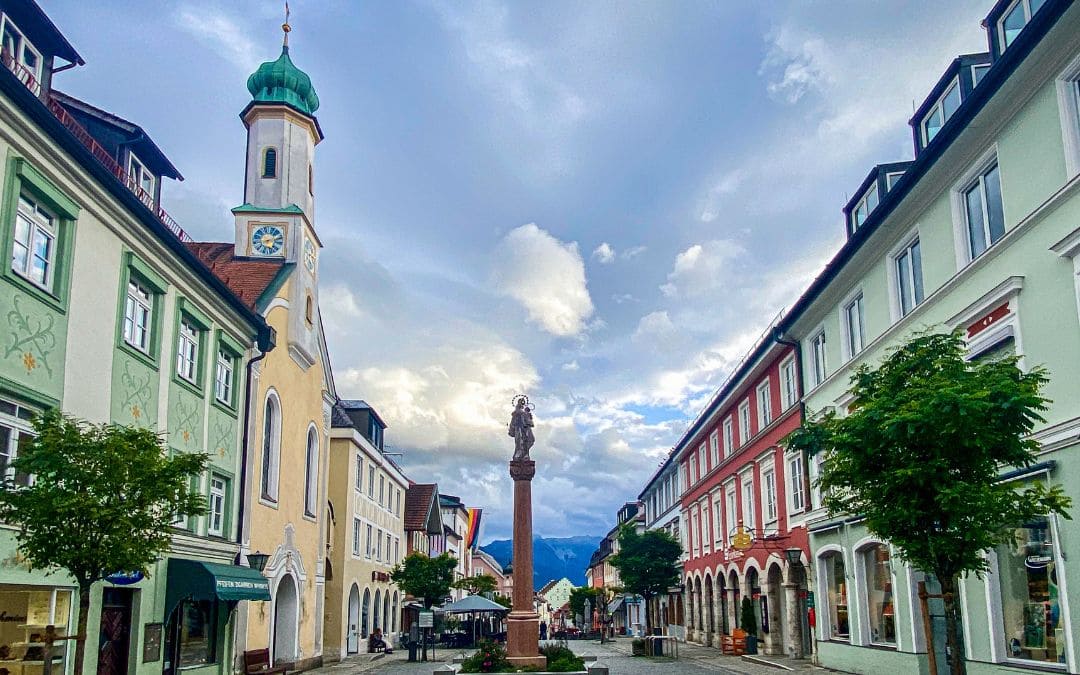
The pedestrian zone with Obermarkt and Untermarkt is definitely worth a visit. It surprises many visitors with its colorful, partly painted house facades, the eight fountains, the decorative trees to the left and right of the street and the so-called „Auslegern“ - artistically designed advertising boards on the house facades that provide information about what is on offer in the respective store, restaurant or doctor's practice.
Other highlights include
- the Schlossmuseum
- The two breweries that still exist today - out of more than ten
- Kottmüller Allee
- The Ähndl inn with its beer garden — special not only for its cuisine, but especially for its view. Right next door stands the Ähndl Church.
Also worth visiting is Seidl Park, as are the three lakes surrounding Murnau (Staffelsee, Riegsee, Froschhauser See) around Murnau.

In Closing: What Stays with You After Visiting Murnau?
Finally, a point that is becoming increasingly important to me when traveling: What would you like visitors to take home with them from Murnau - apart from photos?
Recreation. And the memory of a good time spent here.
If you would like to discover Murnau yourself after reading this conversation, you will find my personal impressions, tips, and recommendations for your stay below.
Personal Thanks to Jac-Peter Tölkes
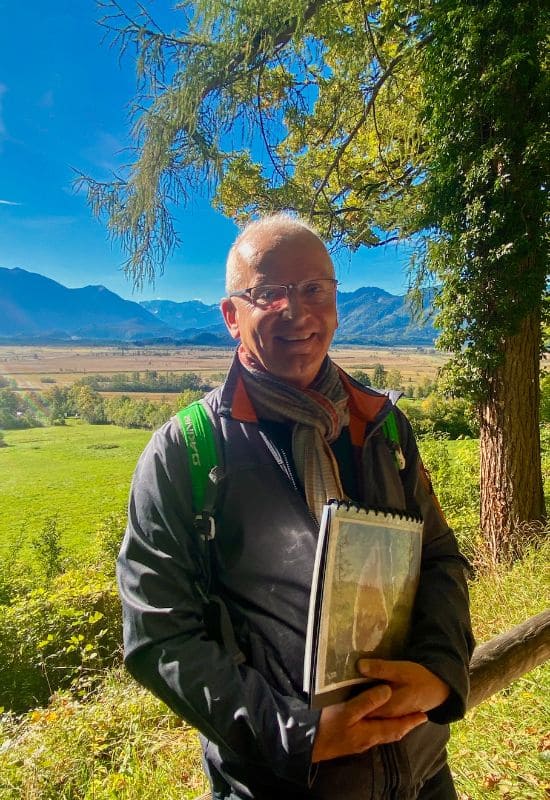
I would like to take this opportunity to thank Jac, whom I was able to accompany several times in Murnau: the day after my arrival on a tour of the town and two days later on a guided tour of the Murnauer Moos. We actually wanted to walk the short circular route in the moss. But the path was impassable due to a beaver lodge. Instead, we walked a little way up the hill to a viewpoint over the moss. From there, there was a wide view over the moorland - on this day with particularly good visibility and a bright blue sky.
After our tour, we visited the Ähndl church, this photogenic little church right next to the moss, and rounded off the tour with a coffee in the beer garden of the Ähndl inn. I'll be back to Murnau in April - hopefully to hike the big loop through the moss.
This mixture of knowledge, flexibility and a feel for special moments has shown me how much difference it makes to be on the road with someone who really knows - and loves - their region.
Guided Tours in Murnau with Jac-Peter Tölkes
If you don't just want to see Murnau, but really understand it, a guided tour with Jac-Peter Tölkes is just the thing for you. As a tour guide with local knowledge, he conveys history, art and landscape not as dry facts, but as a coherent narrative - always with a view to what still characterizes Murnau today. His tours lead through the town center as well as into the Murnauer Moos and show how closely nature, culture and everyday life are connected here.
Many participants particularly appreciate the fact that Jac not only explains the familiar, but also points out connections that are otherwise easily overlooked. Anyone who wants to delve deeper into the history of the market, the significance of the artists' village or the special features of the moorland landscape will find real added value on his guided tours. Information on dates and offers can be found on his website Murnau entdecken.
Many of the places Jac mentions in the interview are easy to explore on your own. To give you an overview, I have put together the most important sights in Murnau here:
The Most Important Sights in Murnau am Staffelsee
You can also explore Murnau am Staffelsee independently. Many sights are located close together and easily reachable on foot.
- Münter-Haus
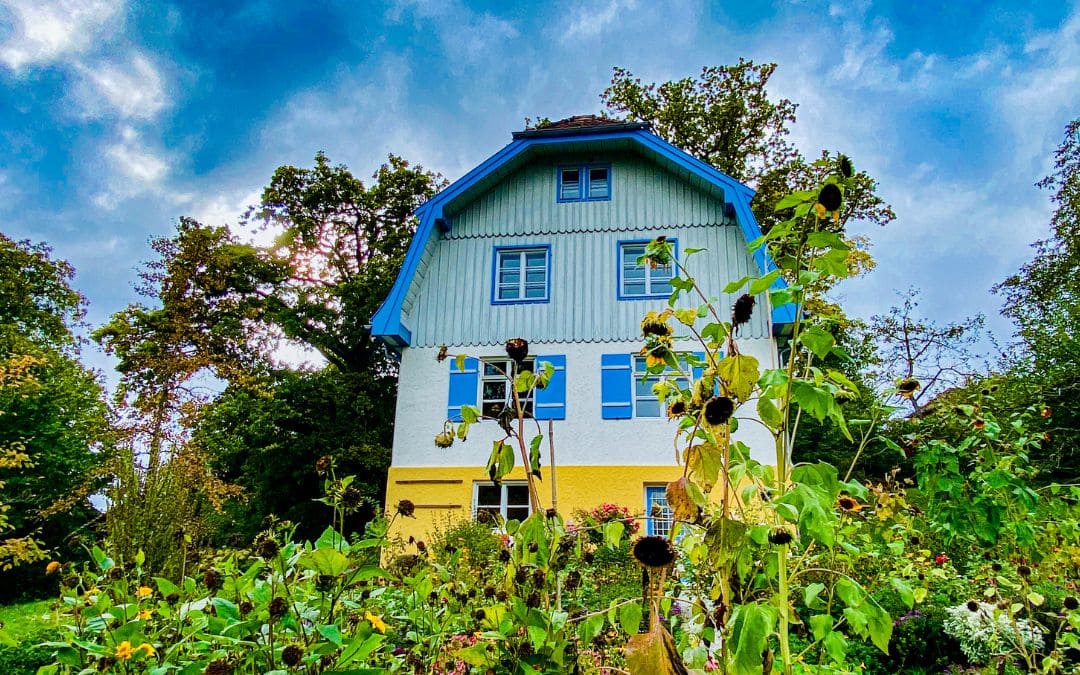
The former home of Gabriele Münter and Wassily Kandinsky and one of the key locations of the Blue Rider movement. Today, the house operates as a museum and offers a very personal insight into the artists’ lives, work, and daily routines. It is considered a key site of modern art history in Germany. - Schlossmuseum Murnau (Murnau Castle Museum)
A museum dedicated to local and art history, located in the historic Murnau Castle. In addition to the development of the town, it presents works and background information on the Blue Rider artists, complemented by temporary exhibitions. - Murnauer Moos
An extensive moor landscape with walking and hiking trails that significantly shapes the scenery around Murnau. As one of the largest contiguous moor areas in Central Europe, it provides habitat for numerous animal and plant species and is a special place for nature observation in every season. - Market Street (Obermarkt & Untermarkt)
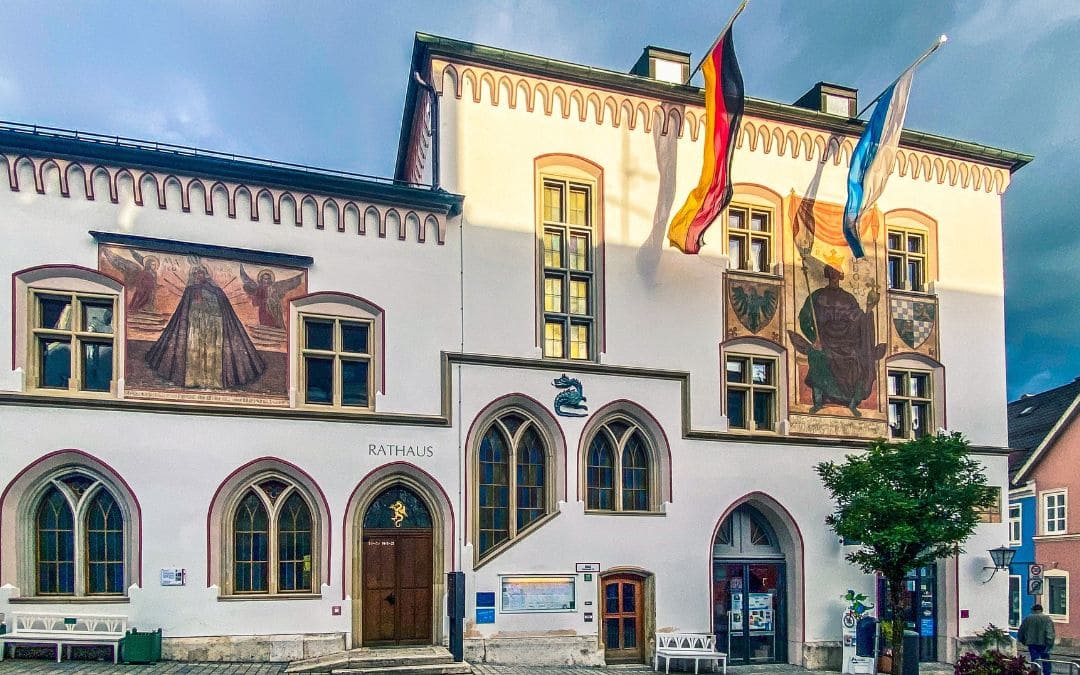
The colorful pedestrian zone forms the heart of Murnau. With the Marian column, fountains, cafés, small shops, and the town hall, it offers beautiful photo opportunities and invites you to enjoy a relaxed stroll. - St. George’s Church (Ramsach Church / Ähndl)
Located on a hill at the edge of the Murnauer Moos, this small church is among the oldest in the region. From here, you have an impressive view across the moor landscape toward the Alps. The neighboring beer garden is particularly popular because of its location and scenery. - Parish Church of St. Nicholas
The Baroque parish church with its adjoining cemetery is significant not only because Gabriele Münter is buried here. On clear days, you also enjoy wide views across the Blue Land and the surrounding landscape. - Lake Staffelsee
The Murnau boat landing at Achele, located in the so-called “Schweinebucht,” lies about one kilometer from the train station. Here you will find a bathing area, boat rental, and a lakeside path ideal for walks with views of the lake and the Alps.
These places provide an excellent foundation for a first visit and can easily be combined — whether for a short stop or a full day in Murnau.
My Personal Impressions of Murnau
During the tours with Jac-Peter Tölkes and my wanderings through Murnau, I was able to experience how closely the landscape and cultural development are interwoven here. Some places particularly surprised me - not necessarily because they are well-known, but because of details that you only notice when you take your time.
The Münter-Haus
does not feel like a traditional museum — it feels personal.
Original furniture is still preserved, and you walk up a staircase that Wassily Kandinsky himself painted. That detail alone makes the visit unusually tangible.
You gain a vivid sense of how people lived, worked, and thought here — and why Murnau was so important for Der Blaue Reiter.
The Schlossmuseum Murnau
At the Schlossmuseum I was particularly surprised by the richness of the collection. I had not expected to see so many works by Blue Rider artists here. In addition, there is a permanent exhibition on the life and work of Ödön von Horváth, as well as an impressive reverse-glass painting collection, where I even discovered a work by Gerhard Richter discovered (Ifrit, 2010). The museum is very well designed, clearly laid out and at the same time provides deep insights into the background - a place where you can easily spend several hours if you get involved with the art. For me, it is one of the highlights of Murnau.
A Scenic Walk: The Königsweg
I would also highly recommend the Königsweg, a four-kilometre circular route through Murnau. It starts at the King Ludwig Monument in the spa gardens, leads through a small wood to Luitpold-Höhe and further up to Ludwigshöhe, from where there is a wonderful view of Lake Staffelsee. Along the way, numerous boards provide information about the history of Murnau and the Wittelsbach family, but also about Christoph Probst, whose parents' house is nearby. Benches and views invite you to linger - a walk that combines exercise, history and landscape in a very pleasant way. You can find more themed trails and hiking tips on the Murnau tourism website.
In the following sections, I have put together some tips to help you plan your own trip to Murnau - from ideas for excursions and accommodation to how to get there.
Practical Tips & Excursions in the Surroundings
Excursions I Have Already Taken
One of the most impressive day trips in the region is a visit to Neuschwanstein Castle, combined with a walk along the Alpsee and a and a stroll through the charming town of Füssen. Füssen itself offers much more than most visitors expect, including the Lechfall waterfall, the Franciscan monastery, and Hohes Schloss (High Castle) .
A visit to the Wieskirche can be realized in one day with Linderhof Palace, and Ettal Abbey three places that show very different facets of Bavarian history.
Another highlight was the cable car ride up Mount Laber with wide views stretching as far as Lake Starnberg, followed by a stroll through Oberammergau.
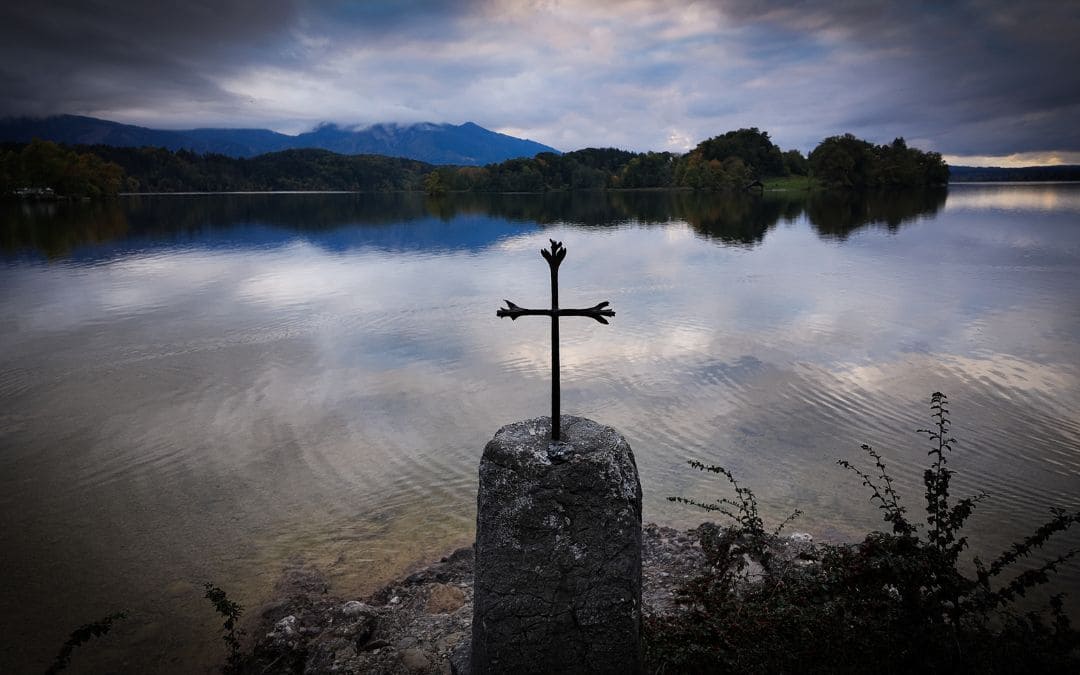
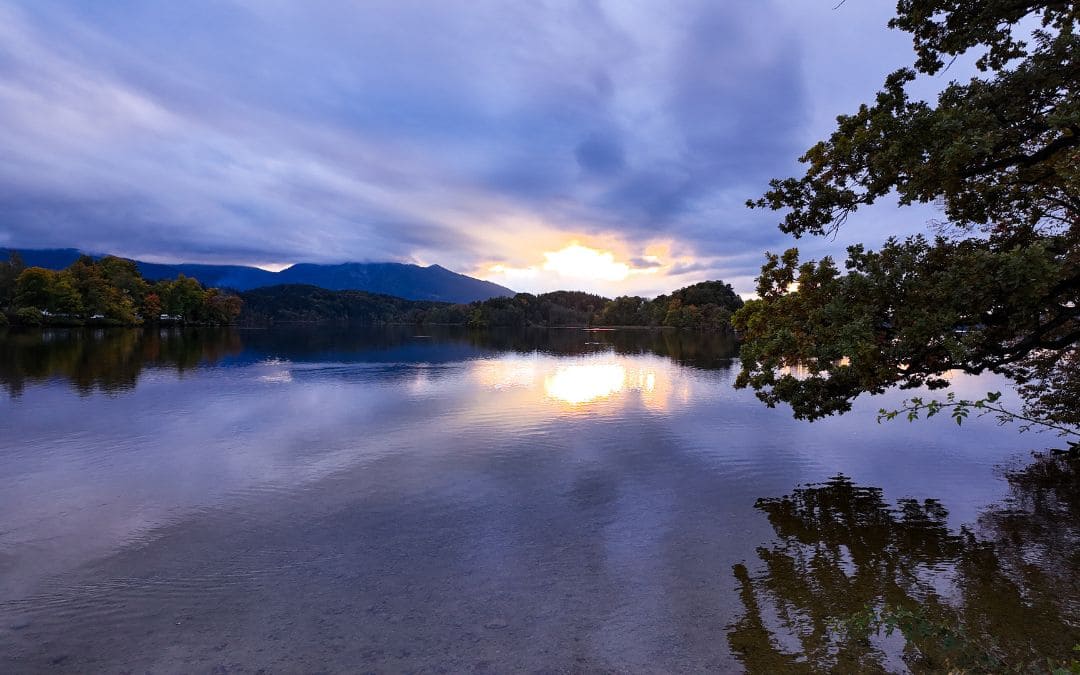
I particularly enjoyed an evening walk along the Staffelsee near Seehausen at sunset, when hardly anyone was out and about, as well as a walk around the Riegsee, which I definitely want to circle on my next visit.
I also visited other wonderful destinations near Murnau, such as Kochelsee, Walchensee, the Franz Marc Museum and the Herzogstand. In my opinion, the excursions deserve their own article - the region has more than enough to offer.
Excursions Planned for My Next Visit
I already have other destinations on my list for my stay in April:
- a boat trip on Lake Staffelsee
- a trip to Garmisch-Partenkirchen with Zugspitze and Eibsee
- a visit to the Glentleiten Open-Air Museum
- and a trip to Bernried on Lake Starnberg to the Buchheim Museum.
Where to Stay in and Around Murnau – My Recommendations
Murnau offers accommodation for different requirements - from comfortable luxury hotels to family-run guesthouses. Depending on whether you value wellness, a central location or peace and quiet, it's worth taking a closer look.
Alpenhof Murnau*
The Alpenhof is the town’s only five-star hotel and is located near the Murnauer Moos in a quiet setting with views toward the Alps.
If you are looking for relaxation, upscale comfort, and a spacious spa area, this is an excellent choice. Its location is particularly suitable if you want to use Murnau as a base for nature walks and excursions.
Hotel Post Murnau garni*
Located in the middle of the pedestrian zone, the Hotel Post is ideal for anyone who likes to stay centrally and stroll through the town in the evening. Historically interesting: King Ludwig II stayed here on his way to Linderhof Palace. Today, the hotel combines tradition with a very good location - perfect for exploring Murnau on foot.
Haus Andre - My personal insider tip
I stayed in Riedhausen, between Murnau and Seehausen, at the small family-run guesthouse Haus Andre — and felt very comfortable there.
The location is quiet, the rooms are bright and furnished with solid wood furniture and balconies. The bathrooms are somewhat dated, but everything was impeccably clean.
Fair prices and a pleasant, personal atmosphere make it a true insider tip — especially suitable for travelers with dogs, and for cyclists.
Cafés & Restaurants in Murnau – My Recommendations
One important note first: In Murnau, it is almost impossible to get a table in the evening - especially at weekends - without a reservation. If you plan to dine out spontaneously, either reserve in advance or arrive early (around 6 p.m. at the latest).
Il Duetto
On the first evening, I was lucky and got a table at the Italian restaurant Il Duetto on the Obermarkt. I opted for a delicious porcini mushroom risotto with a side salad. The service was very friendly and quick, and the menu offers a good selection of pizza, pasta and Italian meat and fish dishes - all at fair prices. A good address for an enjoyable start to the evening.
Karg-Bräustüberl
At the Karg-Bräustüberl on Untermarkt, guests without a reservation often line up outside the door at around 5 p.m. to get a seat - and that's what I did. I was rewarded with a beer goulash from the „Riegseer Weideochs“ with spaetzle and mixed salad. A cozy, typical Bavarian brewery restaurant where you are usually seated at a large table with other guests without a reservation. If you like conviviality, this is the place for you.
Time out in the spa gardens - my favorite place
My personal favorite in Murnau was the Time out in the spa gardens. The restaurant is beautifully surrounded by greenery and combines a modern yet warm ambience with beautiful pictures on the walls. Above all, however, the cuisine here is just right: I opted for a fillet of sea bass on ratatouille with a fried polenta slice - excellently prepared. A place where you'll want to stay longer and enjoy the evening.
Barbara Krönner Konditorei & Kaffeehaus
For a sweet break in between or a leisurely afternoon, a visit to the Krönner patisserie in the pedestrian zone is well worthwhile. When the weather is nice, you can sit outside in the middle of the action and choose from a delicious and very varied selection of cakes and tarts. A classic café, just the way you want it - ideal for observing, lingering and enjoying.
Arrival & Mobility – Tips for Your Trip to Murnau
Murnau is easy to reach - whether you are traveling by car, train or public transport. There are convenient connections from all over Germany and a well-organized local transport network.
By train
One of the most relaxed options is traveling by rail with Deutsche Bundesbahn: From Munich main station there is a regular regional train to Murnau am Staffelsee, the journey time is approx. 45 - 60 minutes. The route itself is scenic and ideal even for a day trip. From the station it is a short walk of 10 - 15 minutes to the pedestrian zone and the sights of the old town.
There are also train connections from other regions of Germany with a change in Munich, making the train an environmentally friendly and stress-free travel option.
By car
If you are coming by car from Munich, the easiest way to reach Murnau is via the Freeway A95 in the direction of Garmisch-Partenkirchen. After a good 50 - 60 kilometers, take the exit Murnau/Kochel. and follow the main road towards the town center.
In the city center I recommend the following Parking lots, which are close to the pedestrian zone:
- Parking lot P3 Utzschneiderstraße/Forstanger
- Underground parking P1 at the Culture & Conference Center (KTM)
By Long-Distance Bus or Regional Bus
Those traveling by long-distance bus usually arrive via Munich, where there are connections to regional bus lines or the train. Within the region, various bus lines connect the town and the surrounding area.
Day trip from Munich
Murnau is also very suitable for a day trip from Munich. The connection by train takes about one hour, and you can spend a wonderful day between lake, art and landscape without having to get up too early.
💡Tip: Overnight guests can travel free of charge in the Blue Land with the digital guest card .
If you would like to visit other places in Bavaria by train, the Bayern-Ticket can be a cost-effective option.
Conclusion: Murnau – Beautiful at First Sight, Layered at Second
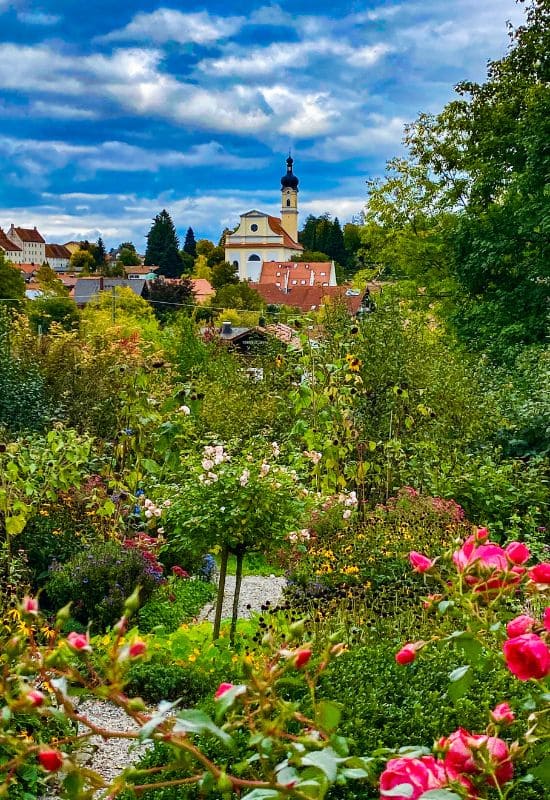
Murnau is a place that appeals straight away. The colorful facades of the pedestrian zone, the proximity to the Staffelsee, the open Alpine foothills and the Murnauer Moos give the market a special lightness. It's a wonderful place to arrive, stroll, enjoy - and simply let yourself drift.
At the same time, the more time you take, the richer Murnau reveals itself. Talking to Jac-Peter Tölkes, strolling through the moss or visiting the museums, you can feel how closely art, landscape and history are connected here. Murnau is therefore not just a pretty destination for a first visit, but a place that arouses curiosity and invites you to return - with ever new perspectives and impressions.
If Murnau and the Blue Land have sparked your curiosity:
In my comprehensive overview of the 52 most beautiful regions in Germany you will find further inspiration - including nearby regions such as the Allgäu, the Ammergau Alps, the Wetterstein Mountains and the Fünfseenland (Five Lakes Region), all of which combine beautifully with a stay in Murnau.
You can also find inspiration for beautiful places in Germany in my large overview article Destination Germany - 100+ selected places by federal state get.
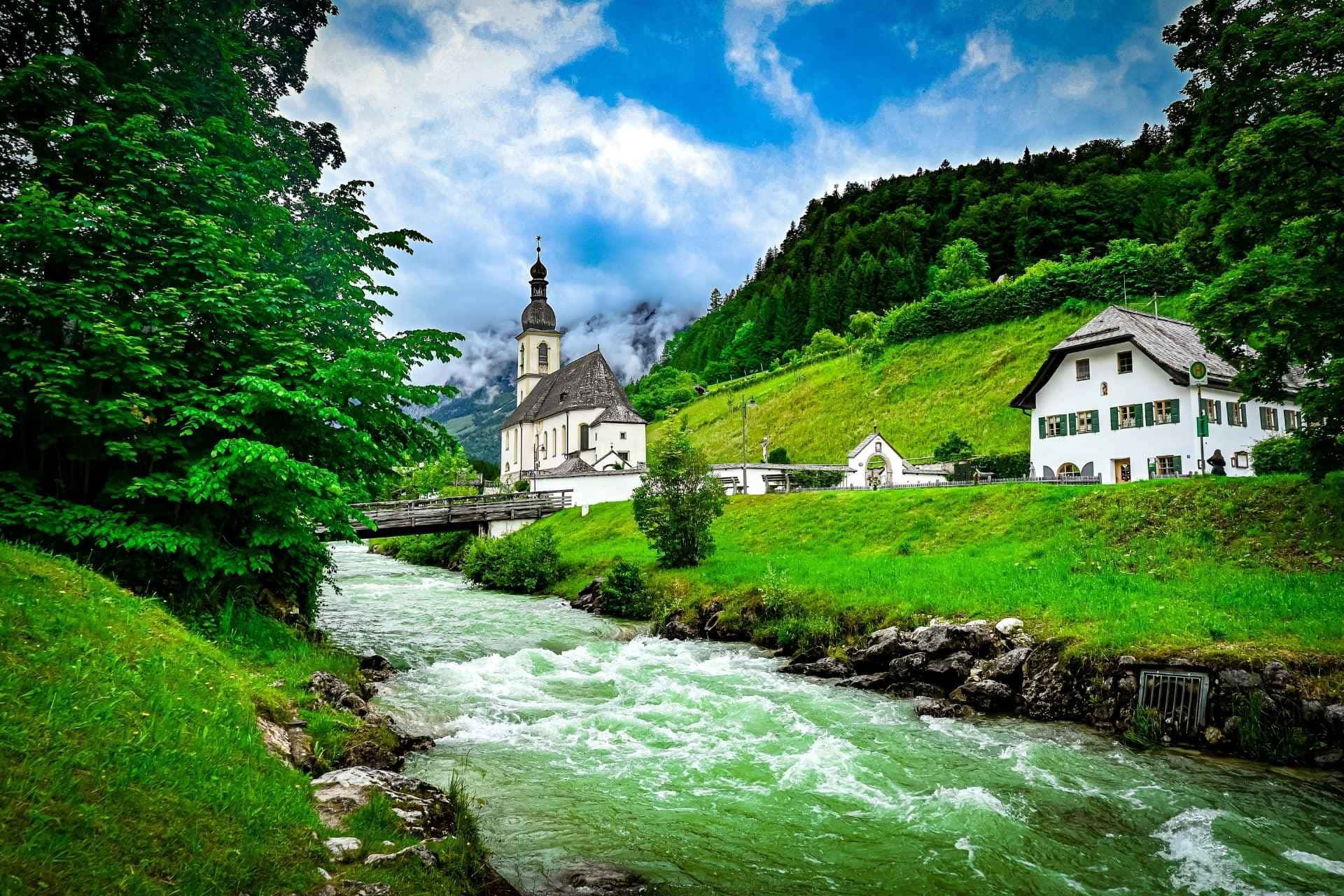
The Berchtesgadener Land impresses with its breathtaking panoramas and, for me, is one of the most beautiful regions in Germany with an abundance of read more
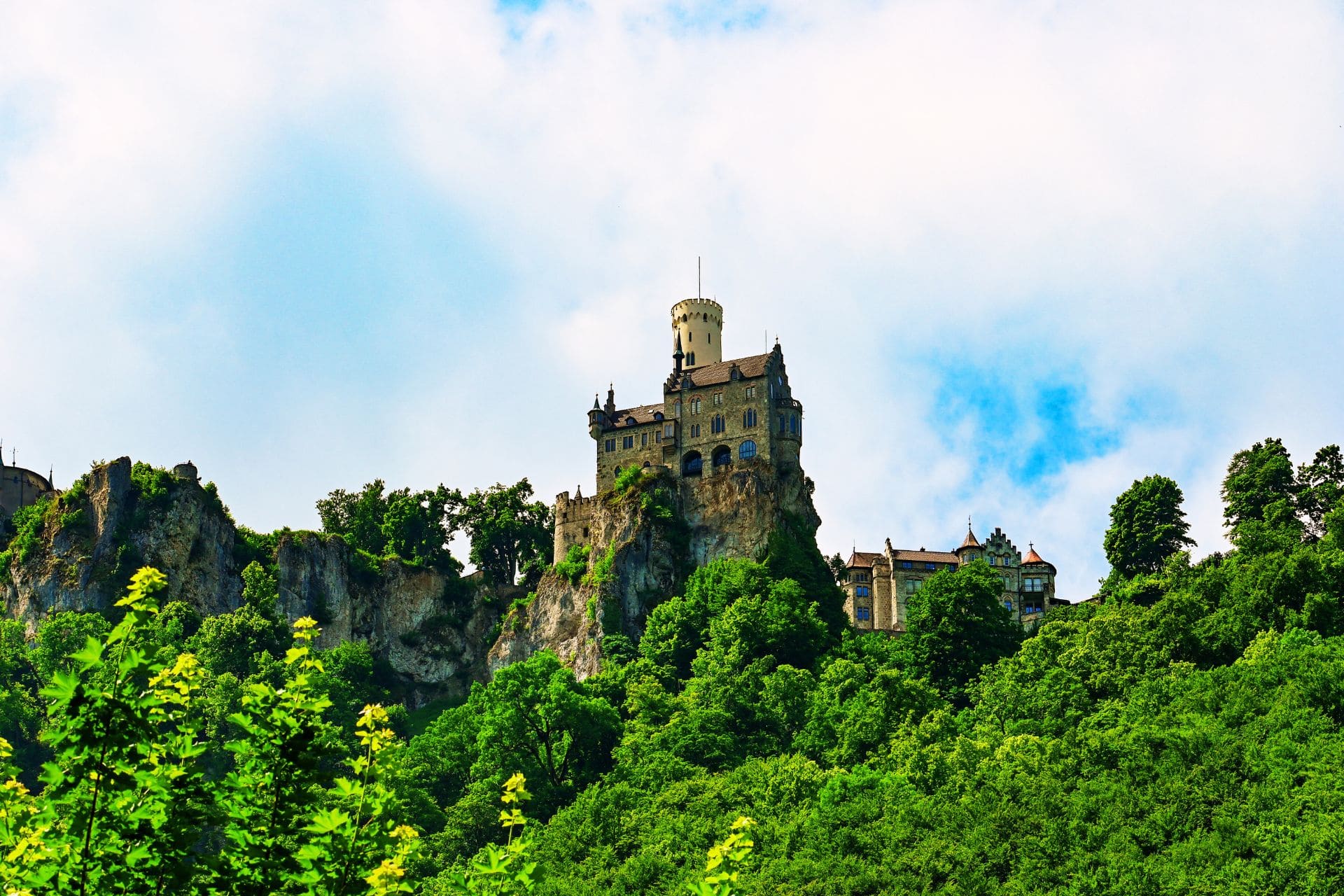
Between Albtrauf, half-timbered houses and World Heritage Site The Swabian Alb is still one of Germany's underrated regions. Yet it combines a read more
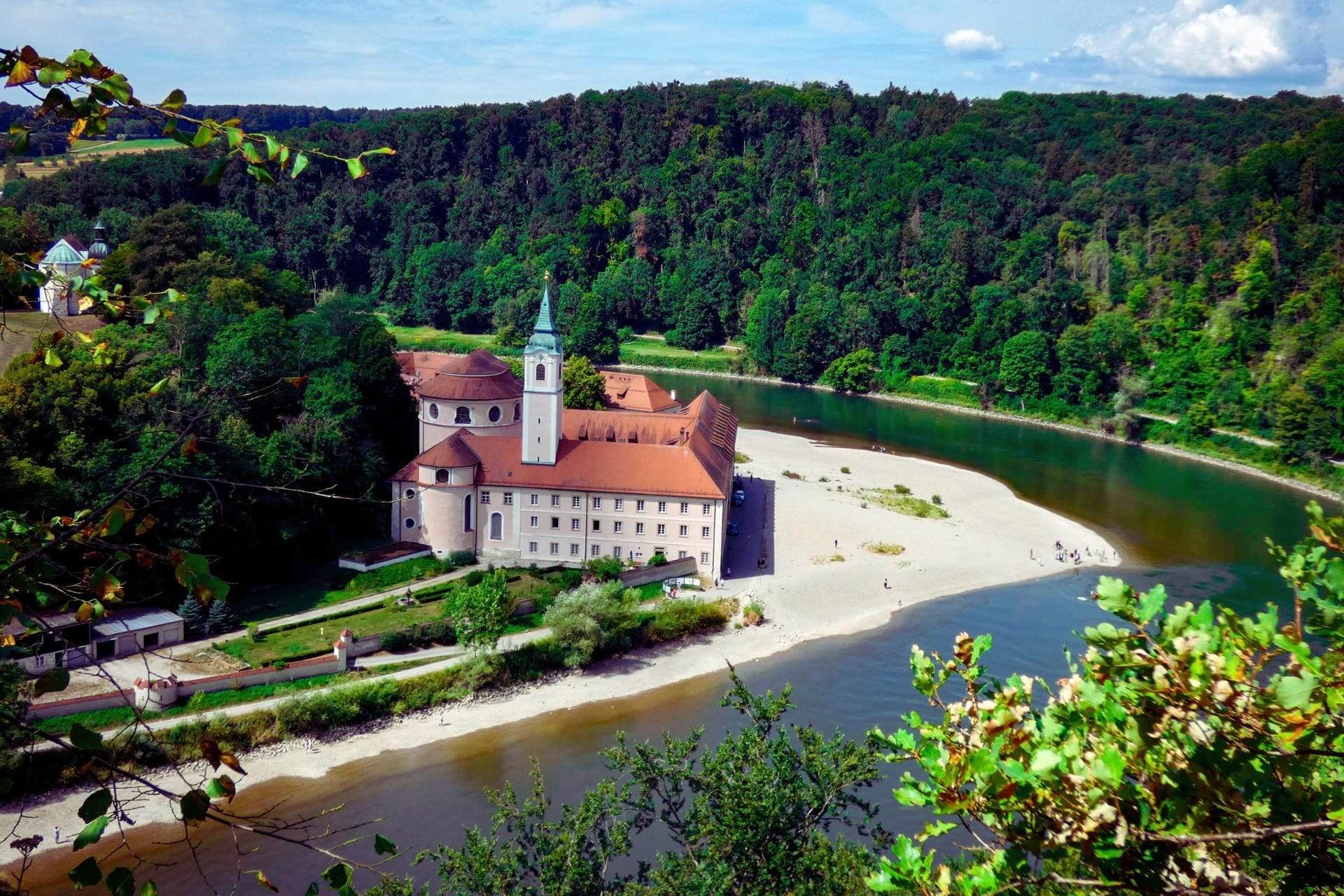
Are you ready to discover Germany's magnificent landscapes? This comprehensive guide takes you to the 52 most beautiful areas of our country read more
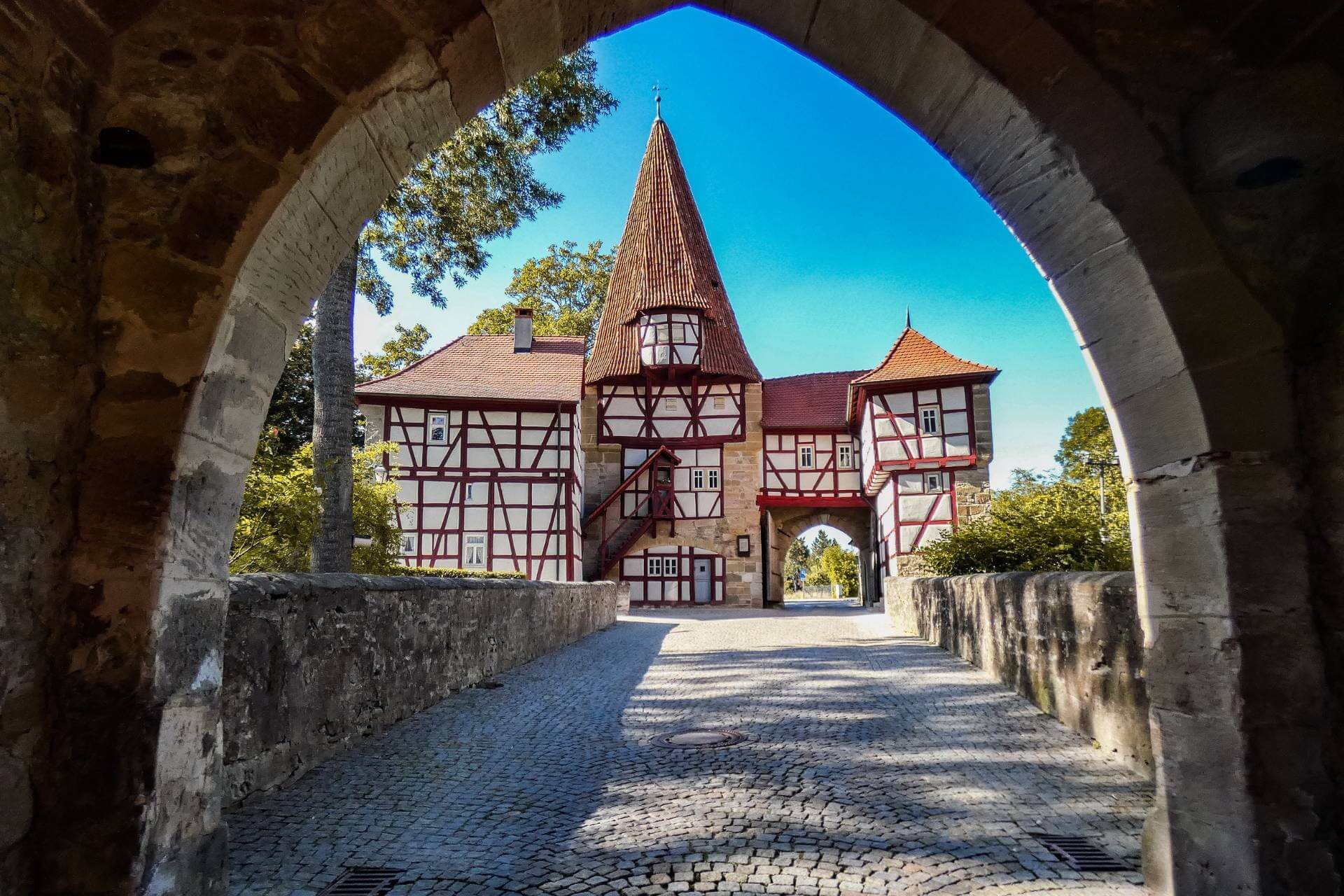
You have more than one weekend to spend in Würzburg? Then take a mini-road trip to see the surrounding area. I read more
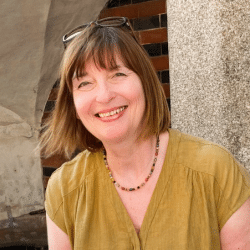
About me: I love to travel, write and photograph - preferably in places where the past is visible. Whether it's half-timbered towns, castles or quiet landscapes - there's something in every place that touches you and inspires you to think further. With my blog Angie's Travel Routes I would like to inspire you to discover Germany on your own. I share my experiences, personal impressions and practical route tips to make your next trip a special experience.
You can find out more about me to my newsletter.
 DE
DE  EN
EN