
[Ad] Before I set out on my road trip through the Saarland, when I set out for the Moselle and the Upper Middle Rhine Valley, I certainly expected to see beautiful river landscapes, castles, and historic towns. But even I was surprised by just how varied, enjoyable, and atmospheric this route turned out to be.
For me, it was one of the most beautiful road trips I’ve ever taken in Germany. Perhaps precisely because so many things come together here: industrial culture and a French-influenced way of life in the Saarland, Roman history and Riesling on the Moselle, plus castles, slate cliffs, and the romantic charm of the Rhine in the Upper Middle Rhine Valley, a UNESCO World Heritage Site.
It takes just a few hours by car to travel from the blast furnaces of the Völklinger Hütte to the Roman monuments of Trier and the castles along the Middle Rhine. And yet, on this route, you’ll journey through more than 2,000 years of history.
I especially loved how culture, scenery, and enjoyment blend together so effortlessly here. One morning you might find yourself surrounded by massive industrial complexes; in the afternoon, you’re gazing out at the Saar Loop from the Cloef; and a few days later, you’re sitting by the Moselle with a glass of Riesling or cruising past castles along the Rhine.
The best part: You don't have to change hotels every day on this road trip. With just a few well-chosen locations, you can explore Saarland, the Moselle, and the Upper Middle Rhine Valley at a leisurely pace on day trips. That leaves plenty of time for old towns, scenic overlooks, boat tours, wine tastings, and spontaneous stops along the way.
In this article, I will show you how to plan a relaxed road trip between the Saar, Moselle and Rhine, which bases work especially well, which highlights you should not miss, and which hotels I can recommend
Disclosure: This trip was partly supported by the participating destinations, including several overnight stays. My recommendations and opinions remain independent.
In a Nutshell: What to Expect on This Route
Route: Saarbrücken – Trier – Koblenz – Rüdesheim am Rhein
Duration: ideally 10 to 14 days
Travel style: independent, relaxed, food- and culture-focused
Perfect for: travelers who love UNESCO World Heritage Sites, historic towns, castles, wine regions and river landscapes
Best time to travel: May/June and September/October; In midsummer, the vineyards and historic old towns can get very hot.
Main highlights: Völklinger Hütte (Völklingen Ironworks), the Saar Loop, Saarbrücken, Trier, Bernkastel-Kues, Eltz Castle, Koblenz, Stolzenfels Castle, the Loreley, Bacharach, and Rüdesheim
Good to know: With three fixed bases, you can plan this route without constantly changing hotels.
Route Overview
Route:
Saarbrücken – Trier – Koblenz – Rüdesheim
Time needed:
10–14 days
Total distance:
about 500 km / 310 miles plus a detours
Perfect for:
Independent cultural travelers , wine lovers, and castle fans
Best time to travel:
May/June and September/October
During these months, boat tours, cable cars, and chairlifts, as well as most castles and attractions, are usually operating. Numerous wine festivals and the grape harvest in September and October make the journey especially appealing, while the vineyards are particularly beautiful in spring and fall.
More Road Trip Ideas
If this route inspires you and you would like to discover more self-drive trips through Germany, take a look at my comprehensive Germany road trip overview. There you'll find tours with different themes—ranging from cultural and historical to scenic routes.
Getting There & Getting Around: Frankfurt as the Best International Airport
This road trip begins in Saarbrücken and ends in Rüdesheim am Rhein. You will be most flexible with a car or rental car, because many castles, viewpoints, wineries and smaller wine villages are time-consuming to reach by public transportation.
If you're traveling from abroad, Frankfurt Airport is the best choice in my opinion. . It offers a large selection of international flights and rental car companies, and you can pick up your car directly in Germany. That usually makes planning easier because you do not have to deal with cross-border rental conditions, different car rental rules or possible environmental regulations in several countries.
From Frankfurt, you can reach Saarbrücken by rental car in just under two hours; the distance is about 170 kilometers / 105 miles. Frankfurt is also ideal for your return trip: Rüdesheim am Rhein is only about 55 kilometers / 34 miles from the airport, and the drive takes around 45 minutes. This allows you to end your road trip peacefully on the Rhine and return your rental car conveniently at Frankfurt Airport.
In theory, you could also start the road trip with a rental car from Luxembourg Airport and return the car at Frankfurt Airport. However, it’s important to note that this option must be booked in advance as an international one-way rental and approved by the rental company. In addition, cross-border fees and one-way surcharges may apply. It’s easier to pick up the rental car directly at Frankfurt Airport and drop it off there after your round trip—especially if you’re flying back from Frankfurt anyway.
If you arrive or depart via Frankfurt, my Frankfurt Airport Guide includes practical tips for onward travel, rental car pickup and return, and possible overnight stays near the airport or in the city.
Arriving via Frankfurt
For international travelers flying into Germany, Frankfurt Airport is often the first major hub. My Frankfurt Airport Guide has everything you need for a smooth arrival and onward journey.
Saarbrücken is also well connected by train. For this particular road trip, however, I recommend a rental car so that you can explore Saarland, the Moselle region and the UNESCO-listed Upper Middle Rhine Valley flexibly and independently.
How to Plan Your Saar, Moselle & Upper Middle Rhine Valley Road Trip
The route connects three of the most beautiful cultural landscapes in western Germany. In Saarland, you’ll find industrial heritage, French charm, and the famous Saar Loop. Along the Moselle, you’ll discover Roman monuments, historic wine-growing villages, and steep vineyards. The grand finale is the Upper Middle Rhine Valley, a UNESCO World Heritage Site, with its castles, palaces, and romantic little towns along the Rhine.
Plan using just a few well-chosen locations
On this road trip, you don't have to change hotels every day. That's exactly what makes this route so enjoyable: You can explore several regions in depth while still traveling at a relaxed pace.
In my view, three well-located sites are more than enough: one in the Saarland, one on the Moselle, and one in the Upper Middle Rhine Valley. I think a combination of Saarbrücken, Trier, and Koblenz—or Bacharach—would make particular sense.
If you prefer to stay in smaller towns, you can replace Trier with Bernkastel-Kues. On the Middle Rhine, I think Bacharach is the nicer choice if you’re looking for a quieter, medieval atmosphere. Rüdesheim, on the other hand, is perfect for a day trip, especially if you want to experience the livelier, internationally renowned wine town.
You'll find a detailed overview of the best locations and alternatives further down in the section Recommended Bases at a Glance.
Do Not Pack Too Much into Each Day
Even though the distances between many sights are manageable, you should not overfill your daily itinerary. Historic old towns such as Trier, Koblenz and Saarbrücken reveal their charm best when you have time to stroll through the streets, stop at an outdoor cafe or end the day with a glass of wine.
For larger attractions like the Völklinger Hütte, the UNESCO World Heritage Site in Trier, or Ehrenbreitstein Fortress, you should plan on spending several hours at each. That way, you’ll still have time along the way for spontaneous stops at scenic overlooks, castles, or wineries. For me, it’s precisely these unplanned discoveries that make a road trip so special.
Consider the Season
In my opinion, the best time for this road trip is May/June and September/October. Then the vineyard slopes appear either lush green or glowing in fall colors. You can take boat trips on the Saar, Moselle or Rhine, visit castles and reach viewpoints in Boppard or Rüdesheim comfortably by cable car or chairlift. In the wine towns, many festivals invite you to linger and enjoy the region.
at sunny viewpoints and in historic old towns. Visiting Trier’s Roman monuments or hiking through the vineyards is considerably less relaxing at 34°C / 93°F.
A road trip during advent. Along the route, you'll find some of Germany's most beautiful Christmas markets—including the Christmas and Medieval Market in St. Wendel, the Trier's Christmas Market against the backdrop of the Hauptmarkt and cathedral square, the Saarbrücken Christkindl-Markt, the underground Moselle Wine Christmas Market in Traben-Trarbach, the romantic markets in Bernkastel-Kues and Koblenz , and the Christmas Market of Nations in Rüdesheim am Rhein. Keep in mind, though, that the vineyards are bare at this time of year and the river valleys have a completely different character from spring, summer or fall.
Keep the Length of Your Trip Flexible
For the full road trip, plan 10 to 14 days . This gives you enough time to explore the main sights in Saarland, along the Moselle and in the Upper Middle Rhine Valley at a relaxed pace.
If you have less time, you can divide the itinerary into three separate trips: spend a long weekend in Saarland, explore the Moselle around Trier, or discover the UNESCO-listed Upper Middle Rhine Valley from Koblenz or Bacharach. That way, you can get to know each region more deeply - and you will have a good reason to return later.
If you have more time, it is worth staying longer in the wine villages, visiting additional castles or adding more hikes and boat trips. Along all three rivers, there are so many appealing places that an extra vacation day always pays off.
Who Is This Road Trip Best For?
This Saarland, Moselle & Upper Middle Rhine Valley road trip is ideal if you:
- want to discover UNESCO World Heritage Sites, castles and historic towns.
- you're interested in history—from the Romans through the Middle Ages to the Industrial Revolution.
- love wine regions with vineyard villages, wineries and regional specialties.
- enjoy exploring river landscapes by boat, cable car, or chairlift.
- prefer independent travel over guided group tours.
- want to combine culture, food and nature.
For this road trip, you do not have to change hotels every day. Instead, I recommend choosing three well-located bases for your day trips. That leaves more time for historic towns, castles, wine villages and relaxed boat trips on the Saar, Moselle and Rhine.
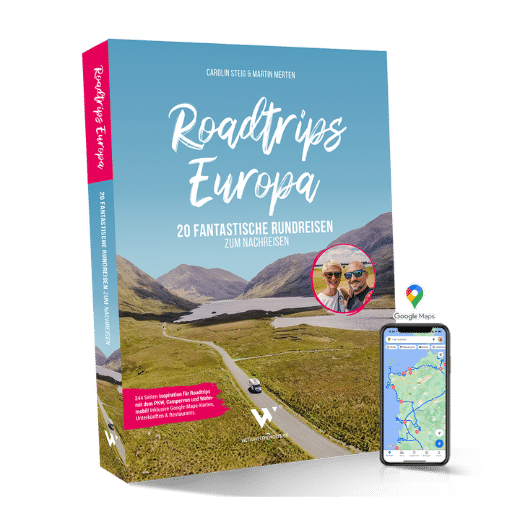
Even more inspiration for your next road trip*
Caro and Martin from WE TRAVEL THE WORLD present in their book Roadtrips Europa* 20 fantastic round trips in the most diverse regions of Europe. Two exciting routes in Germany are also included: one leads through eastern Saxony, the other through northern Baden-Württemberg.
What I like so much about this book is that the routes include many destinations off the beaten track. Only available in German language.
Recommended Bases at a Glance
The best places to stay depend on whether you prefer an urban setting, a romantic atmosphere, or a location close to scenic highlights. For this road trip, I recommend one stop in Saarland, one along the Moselle, and one in the Upper Middle Rhine Valley.
If you enjoy living in larger cities with good infrastructure, Saarbrücken, Trier, and Koblenz are particularly good choices. If you prefer smaller towns with a more romantic wine-growing atmosphere, Bernkastel-Kues and Bacharach are lovely alternatives.
1. Saarbrücken – Where Culture Meets Nature
Saarbrücken Saarbrücken is an excellent base for exploring the whole of Saarland. Thanks to its central location, you can reach the state’s main attractions comfortably on day trips. As the state capital, Saarbrücken also offers the largest choice of hotels, restaurants and cultural attractions.
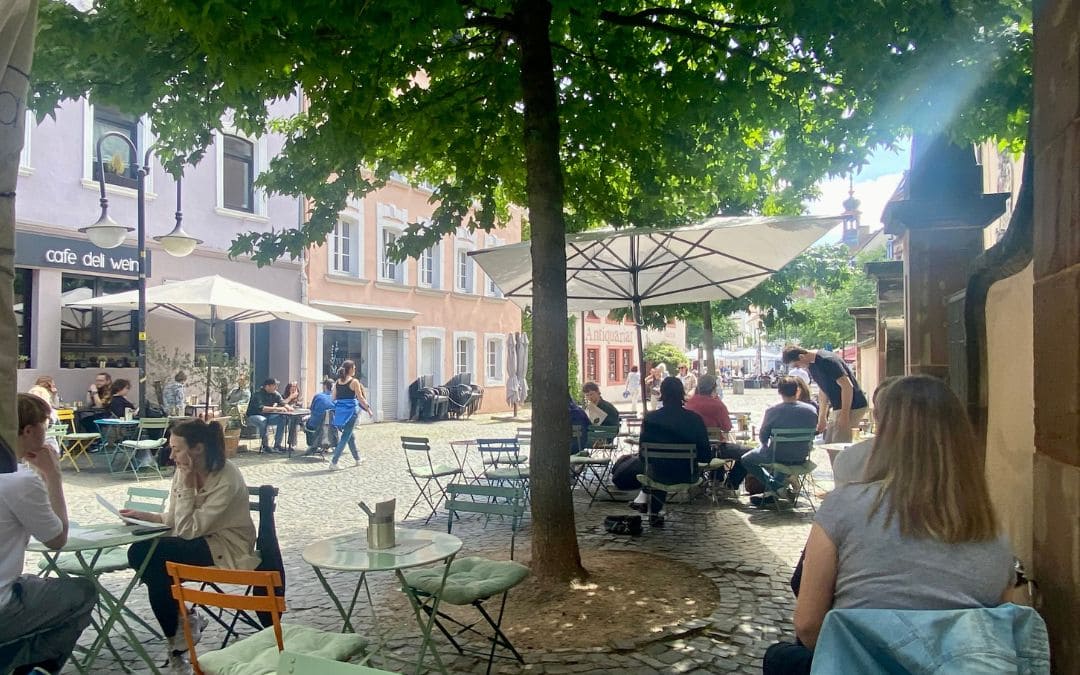
I especially like the city’s French-influenced atmosphere, with its outdoor cafes and excellent food scene. At the same time, the German-French Garden and the Urwald vor den Toren der Stadt (primeval forest at the gates of the city) Two very different ways to experience nature practically right on my doorstep—a combination that makes Saarbrücken the ideal place for me.
2. Trier or Bernkastel-Kues – A Roman city or a romantic wine town
Trier is the ideal base if you want to explore Germany’s oldest city and its UNESCO World Heritage Sites in depth. From here, you can also reach Saarburg, Bernkastel-Kues, Traben-Trarbach and other Moselle wine towns easily by car.
If you prefer a smaller town with special charm, Bernkastel-Kues is a wonderful option. Its historic old town with half-timbered houses, cozy lanes and wine bars makes it one of the loveliest places to stay on the Moselle. At the same time, Trier and many other regional highlights are within easy reach.
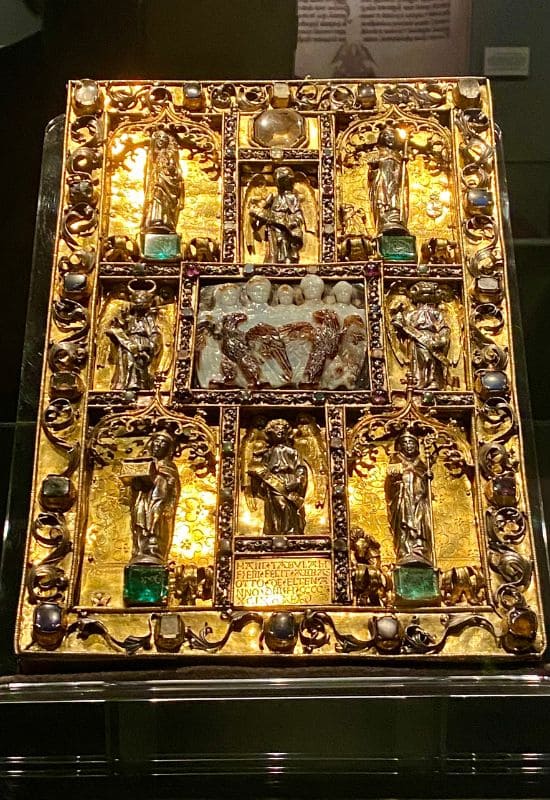
👉 You should plan to spend at least three days in Trier on this itinerary. In addition to the Porta Nigra, the cathedral, and the Imperial Baths, the Scientific Library’s treasure chamber, a boat ride on the Moselle, and the historic wine cellars of the Vereinigte Hospitien are also worth visiting. My detailed guide to the Sights in Trier helps you plan your stay.
3. Koblenz or Bacharach—Two Faces of the Upper Middle Rhine Valley
Koblenz Koblenz is an excellent base for the northern part of the UNESCO-listed Upper Middle Rhine Valley. From here, you can reach the castles as far as the Loreley just as easily as the northern section of the Moselle. Excursions to Eltz Castle in the Eifel, the Geierlay suspension bridge in the Hunsrück or the UNESCO town of Bad Ems. Koblenz also has the best tourist infrastructure in the region.
Bacharach is especially suitable if your focus is the Upper Middle Rhine Valley itself. Thanks to its central location, you can reach both Koblenz and Rüdesheim in less than an hour and explore the region’s most beautiful castles, wine towns and viewpoints with ease. Its medieval old town with half-timbered houses also makes Bacharach one of the most atmospheric places to stay along the Rhine.
And What About Rüdesheim?
Rüdesheim am Rhein is one of the best-known vacation spots on the Rhine and is especially popular with international visitors. If you would like to experience the Upper Middle Rhine Valley in a quieter and more authentic way, I would recommend Bacharach as your overnight base. From there, you can reach both Koblenz and Rüdesheim comfortably by car or ferry. In my view, Rüdesheim is excellent for a day trip.
Which Combination of Bases Suits You?
Depending on whether you want to focus on culture, wine, or nature, you can plan this road trip in many different ways.
🏛 For culture and history lovers
Stay in Saarbrücken, Trier and Koblenz. This combination is ideal if you want to see as many UNESCO World Heritage Sites, castles and historic towns as possible while benefiting from good tourist infrastructure.
🍷For wine lovers and food-focused travelers
Plan more time along the Moselle and in the Upper Middle Rhine Valley, and choose Bernkastel-Kues and Bacharach. In Saarland, Saarbrücken remains the best base for exploring the state flexibly and for enjoying French-influenced cuisine.
🌿 For travelers who want a bit of everything
Combine Saarbrücken, Trier and Bacharach. So profitierst du im Saarland und in Trier von der guten Infrastruktur der größeren Städte und genießt zum Abschluss die besondere Atmosphäre einer mittelalterlichen Kleinstadt im UNESCO-Welterbe Oberes Mittelrheintal.
My Hotel Recommendations for Your Road Trip
For this road trip, I recommend accommodations that either worked well for me on my own trip or stand out because of their especially convenient location. This makes it easy to explore the individual regions while staying close to the main sights.
📍 Saarbrücken
⭐ Hotel am Triller* (my recommendation)
Hotel am Triller is quietly located in a residential villa district above Saarbrücken Castle. St. Johanner Markt, with its many restaurants and outdoor cafes, is about a 15-minute walk away. I particularly liked the quiet location, stylish atmosphere and lovely views over the city. A pool and spa area round off the stay.
💡 Alternative: Motel One Saarbrücken*
If you'd rather stay right in the heart of the Old Town, Motel One is an excellent choice. It's just a few steps from St. Johanner Markt and, as always, impresses with its modern design, very comfortable beds, and good value for the price.
📍 Trier or Bernkastel-Kues
⭐ Deutschherrenhof, Trier* (my recommendation)
The Deutschherrenhof has a pleasantly quiet location between the Moselle and the old town. The main sights are within easy walking distance. The single rooms are quite small and the historic building has no elevator, but the friendly hosts, beautiful breakfast room and good breakfast buffet make up for it. For me, it is a very good choice if you appreciate a personal atmosphere.
💡 Alternatives in Trier
- Romantik Hotel Zur Glocke* – A stylish boutique hotel near the Main Market Square, ideal for anyone looking for something special.
- Best Western Hotel Trier City* – A modern hotel with comfortable rooms and a great location between the train station and the Old Town.
💡 Alternative in Bernkastel-Kues
- Hotel DEINHARD’s* – A modern, top-rated hotel in a prime location right on the Moselle. Stylish rooms, high-quality amenities, and an ideal base for exploring Bernkastel-Kues and the surrounding wine villages.
📍 Koblenz or Bacharach
⭐ Four Points Flex by Sheraton Koblenz* (my recommendation)
Four Points Flex is located directly at the main train station and works very well as a base for the road trip. I found the parking in the train station underground garage especially practical, with direct access to the hotel. The rooms are modern, and the breakfast buffet offers a good selection.
💡 Alternatives in Koblenz
- Sander Hotel* – A modern design hotel in a prime downtown location, ideal for anyone who wants restaurants and attractions right on their doorstep.
- Hotel Morjan* – Located right on the Rhine promenade, with beautiful rooms, some of which offer views of the Rhine, the Moselle, and Ehrenbreitstein Fortress.
💡 Alternative in Bacharach
Hotel am Markt, Bacharach* – A cozy hotel right on the historic market square. If you want to experience the Upper Middle Rhine Valley as authentically as possible, this is an excellent choice right in the heart of the medieval old town.
Note: If you book through one of my accommodation links, I'll receive a small commission. The price stays the same for you. This helps support my work on this travel blog. Thank you so much!
The Route to Follow
With this map, you can navigate your Saar - Moselle - Upper Middle Rhine Valley road trip flexibly and adjust individual stages as you go.
In my article Planning a Route in Google Maps – The Complete Guide and 3 Extra Tips I show you step by step how to save the map to your phone and make adjustments.
Highlights Along the Route
This road trip connects three very different travel regions: Saarland with industrial heritage, French flair and surprising nature; the Moselle region with Roman history, wine towns and romantic river bends; and the Upper Middle Rhine Valley with castles, Rhine Romanticism and spectacular viewpoints.
The following highlight boxes give you an overview of the top sights and experiences along the route. They’re meant to inspire you as you plan your trip. Which places you combine and how much time you spend in each region depends on whether you’re planning a compact 10-day road trip or a more relaxed one with more time.
Saarbrücken
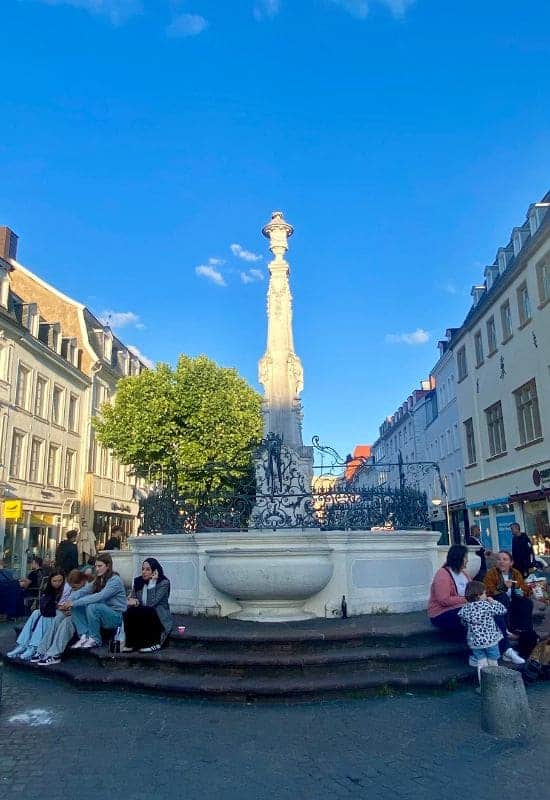
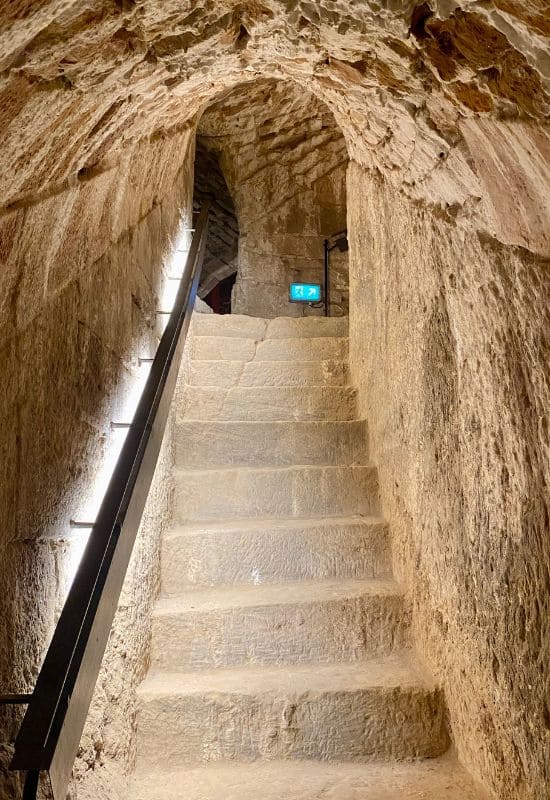
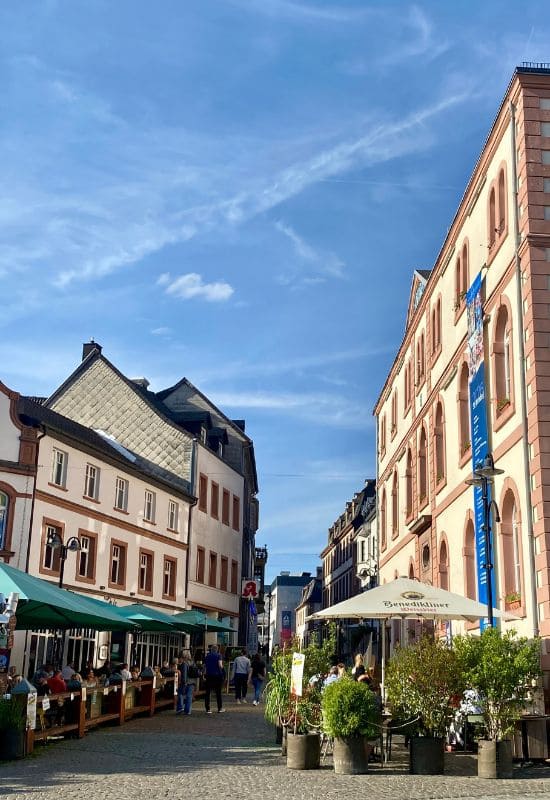
The Saarland state capital is the ideal starting point for your road trip. Its appeal lies in the mix of Baroque architecture, French-influenced lifestyle, lively squares and good food. Around St. Johanner Markt, you can stroll, stop for a meal and enjoy the city’s relaxed atmosphere. Also worth seeing are Ludwigskirche, Saarbrücken Castle and the Saar Historical Museum, where you can visit the underground remains of the medieval castle complex and casemates.
Völklingen Ironworks (Völklinger Hütte)
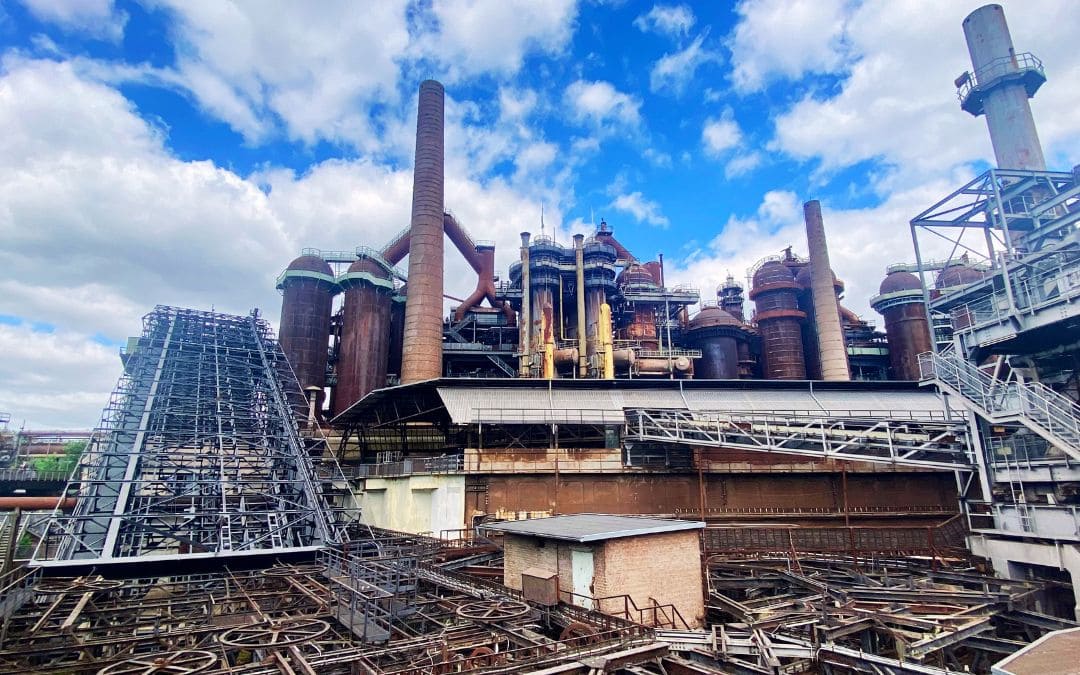
This UNESCO World Heritage Site is one of the most impressive sites of industrial heritage in Germany. Amid the blast furnaces, the blower hall, and the Möller hall, you’ll experience just how massive an ironworks from the heyday of industrialization was. At the same time, the Völklinger Hütte is now an extraordinary cultural venue where high-caliber art and cultural exhibitions are regularly held against an impressive industrial backdrop.
Saarschleife near Mettlach
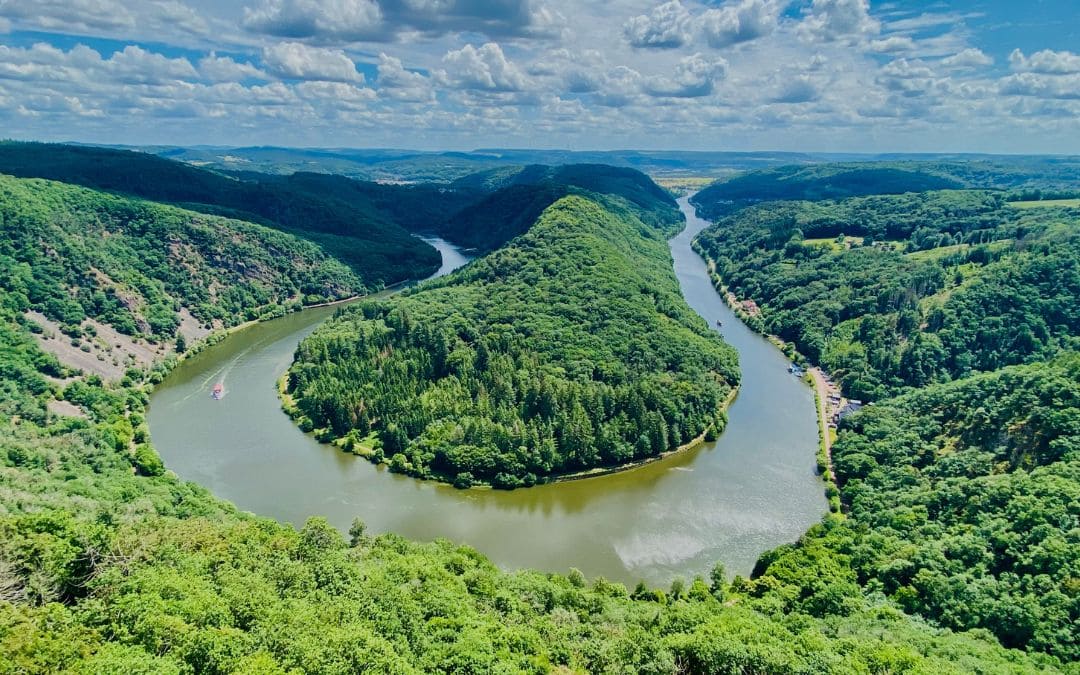
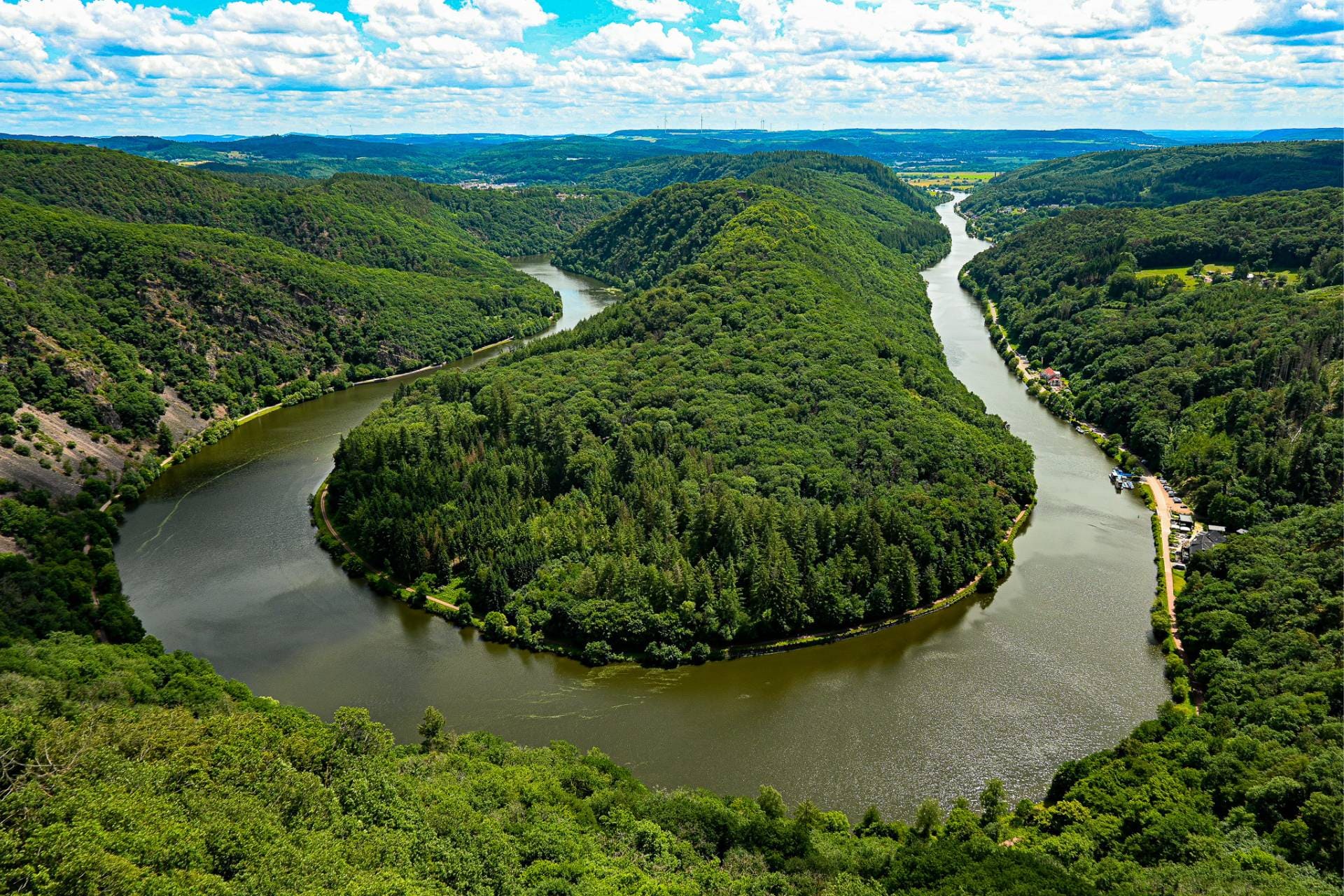
The Saarschleife is Saarland’s best-known natural landmark. The classic view is from the Cloef viewpoint; the treetop walk with its observation tower makes the experience even more spectacular.
Tholey Benedictine Abbey and Schaumberg
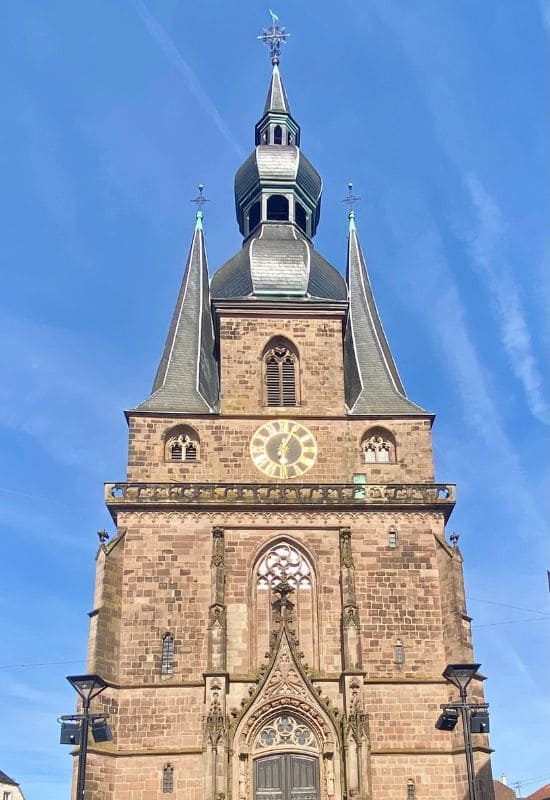
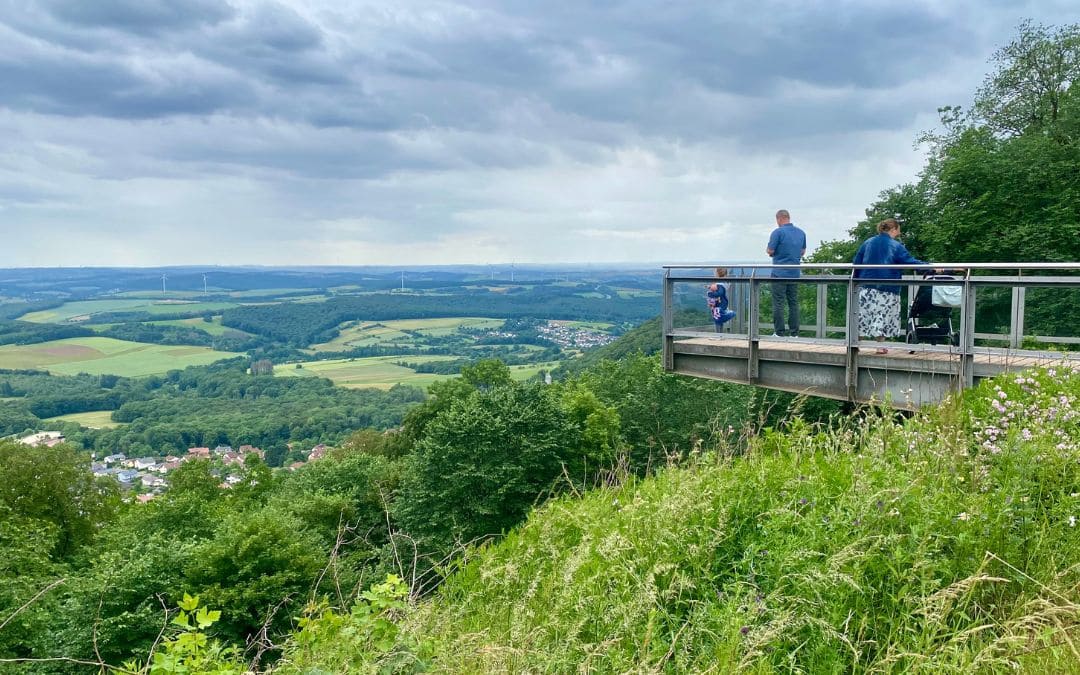
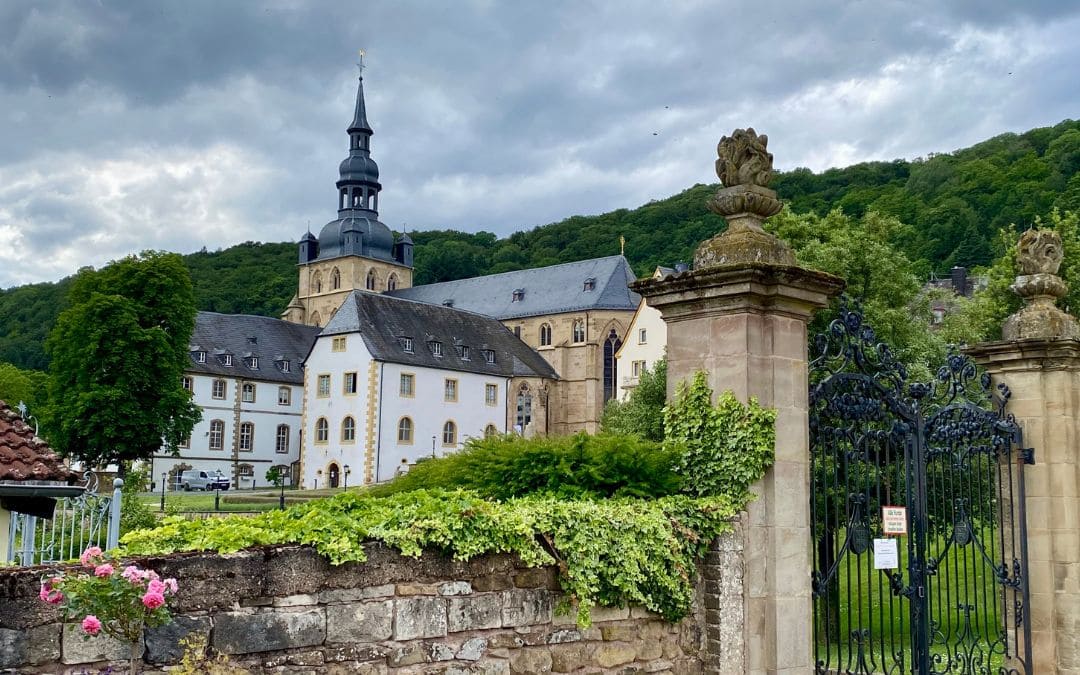
Tholey Abbey is considered the oldest monastery in Germany. The modern stained-glass windows are particularly worth seeing, including the famous choir windows by Gerhard Richter. Nearby stands the Schaumberg, one of the Saarland’s most famous vantage points. From the Schaumberg Tower, with its panoramic elevator, you can enjoy a sweeping view of the surrounding countryside—and on a clear day, even far beyond the borders of the Saarland.
St. Wendel
This charming small town has a historic center, the important Wendelinus Basilica and a lively restaurant scene. Tholey, Schaumberg and St. Wendel combine very well into a day trip from Saarbrücken. In Advent, St. Wendel is also known for one of Saarland’s most beautiful Christmas markets.
German-French Garden in Saarbrücken
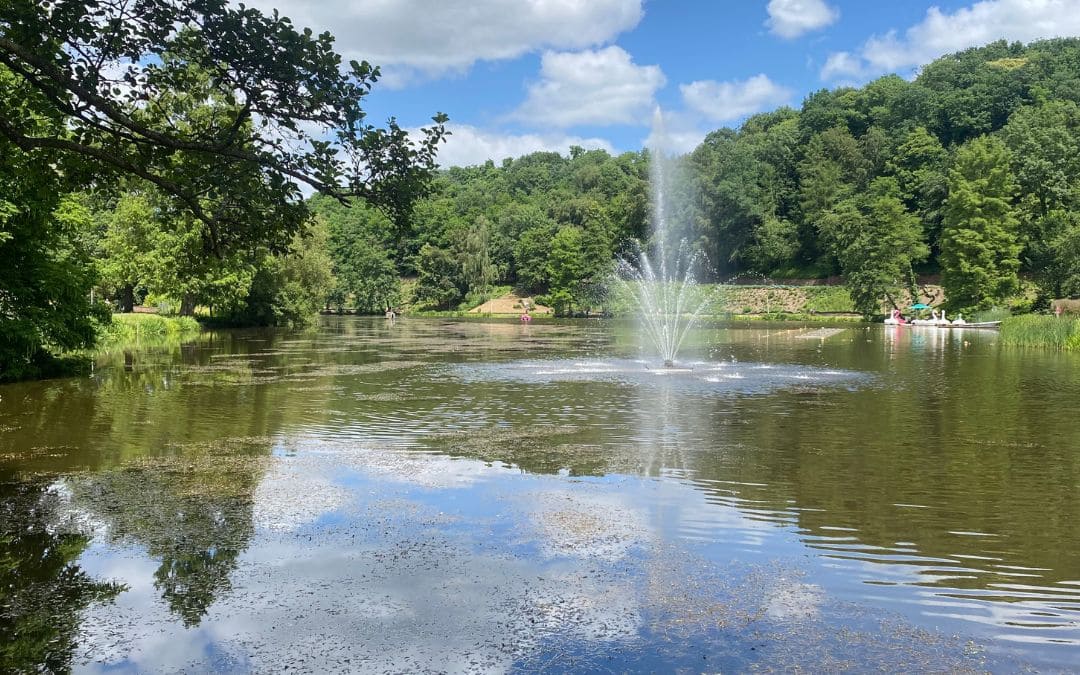
This protected 1960s park is a lovely place for a relaxed break. A cable car, lake and nostalgic swan boats create a small journey into postwar leisure culture.
Saarkohlenwald (Saar Coal Forest) and the Urwald vor den Toren der Stadt (Primeval Forest at the Gates of the City)
North of Saarbrücken lies the Saarkohlenwald, a large forest area closely connected with Saarland’s mining history. Particularly interesting is the “Urwald vor den Toren der Stadt”, where nature is largely left to develop on its own.
Villeroy & Boch World in Mettlach
If you are interested in design, ceramics and industrial history, a detour to Mettlach is worthwhile. Villeroy & Boch World is located in the Old Abbey, a former Benedictine monastery that Jean-François Boch purchased after secularization and turned into the starting point of modern ceramic production in Mettlach.
Schlossberghöhlen (Castle Caves) in Homburg
The Schlossberg Caves, located below the ruins of Hohenburg Fortress, are among the largest red sandstone caves in Europe. They make an unusual and worthwhile detour if you want to add natural and cultural sights beyond towns, industrial heritage and river landscapes.
Saarburg
This picturesque town is already in Rhineland-Palatinate, but it fits beautifully into this stage. Especially worth seeing are the waterfall in the middle of the old town, the castle above the town and the location between the Saar and the vineyards.
More information:
You will find additional inspiration and practical planning tips on the websites of Saarland Tourism* and Saarbrücken Tourism*.
👉 More tips for the Saarland: In my in-depth article about the most beautiful Sights in Saarland You'll find more recommendations for Saarbrücken, the Saar Loop, the Völklinger Hütte, Tholey, St. Wendel, and special places to visit in Germany's smallest state by area.
Trier
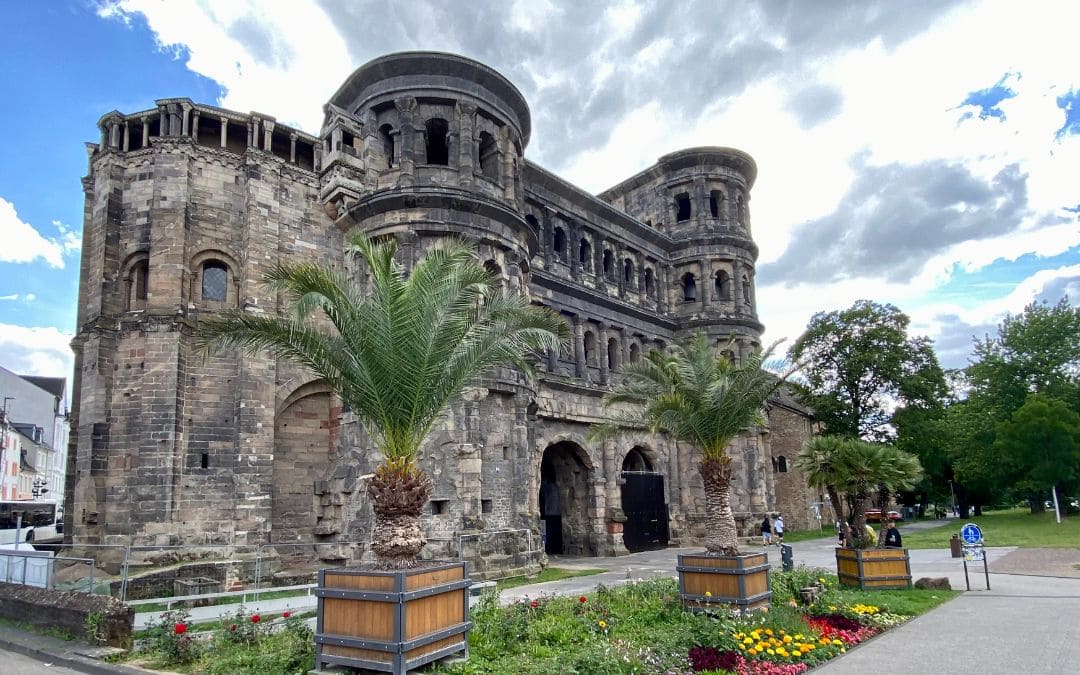
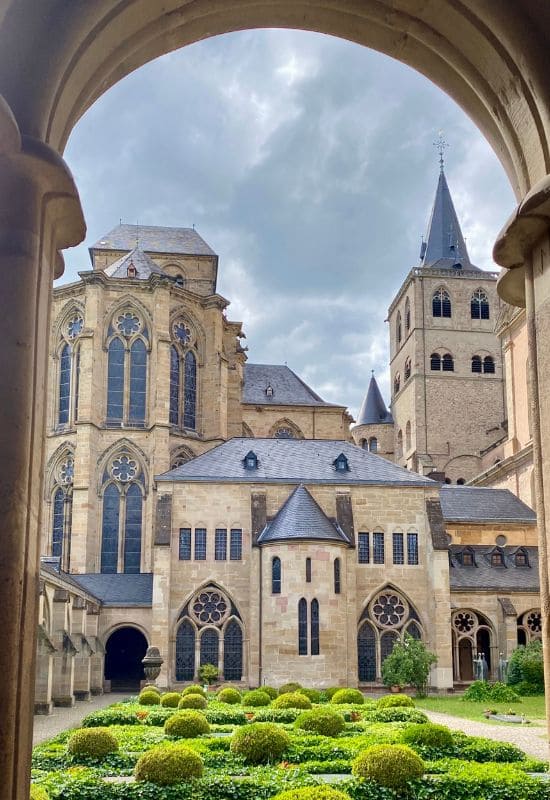
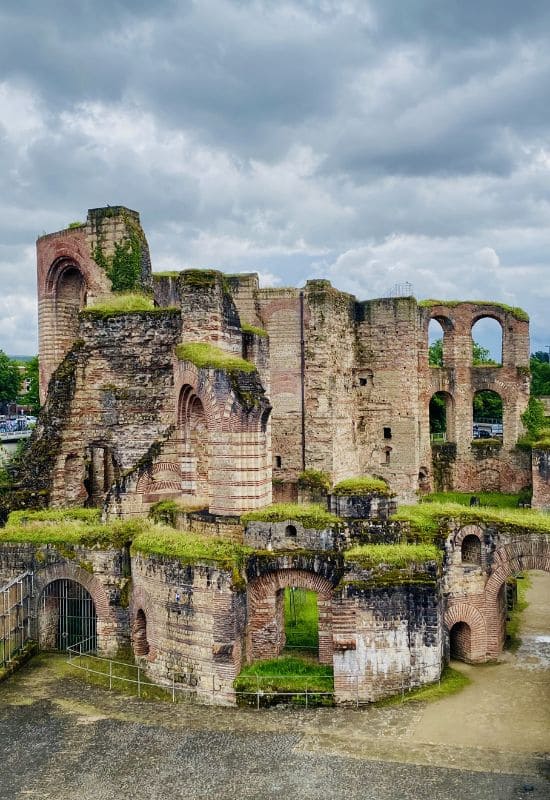
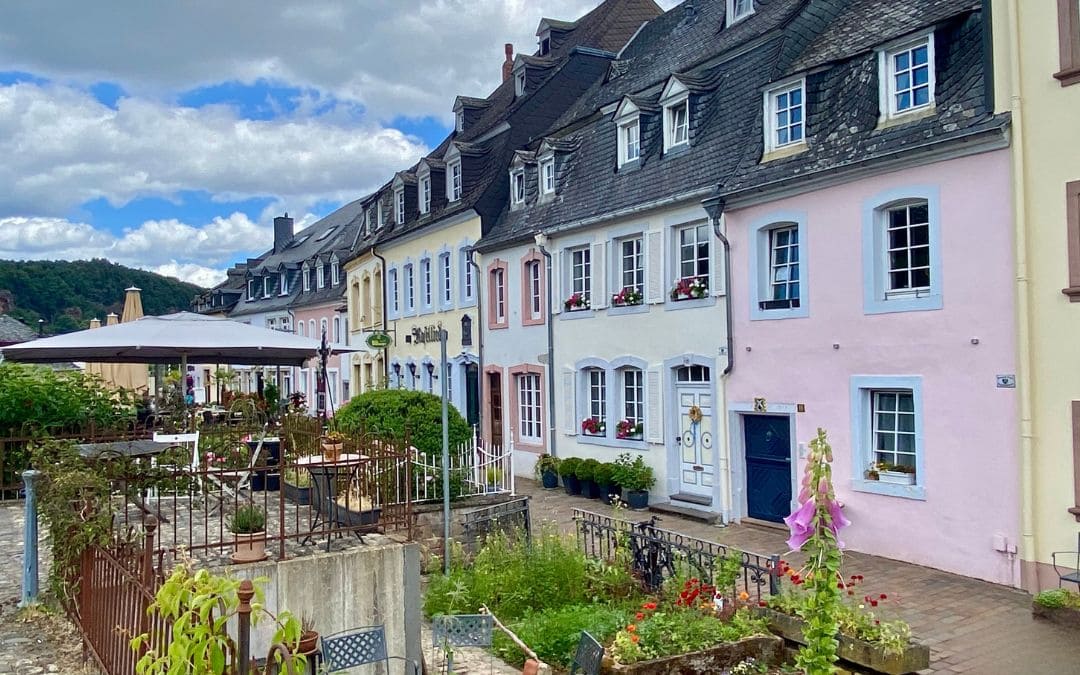
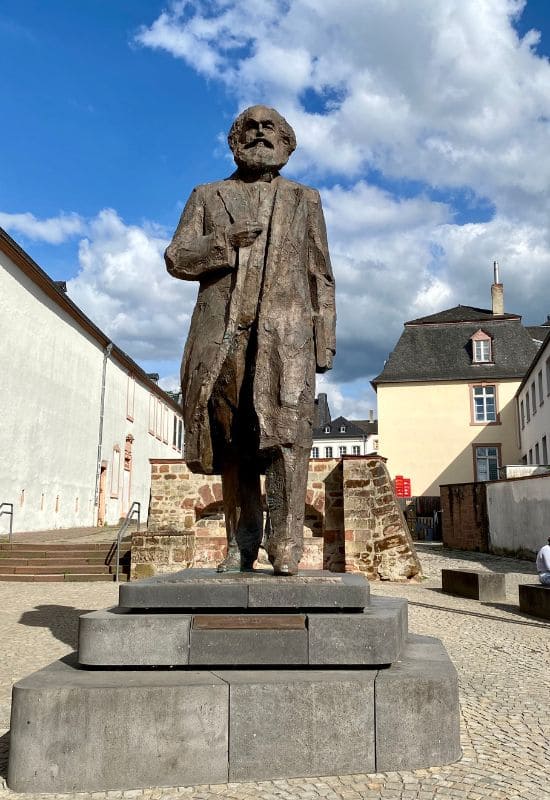
Germany’s oldest city is one of the cultural highlights of this road trip. The Porta Nigra, Imperial Baths, Barbara Baths, amphitheater, Roman Bridge, Basilica of Constantine, cathedral and Church of Our Lady tell the story of Trier’s Roman past and the early history of Christianity. At the same time, Trier is a lively city with a beautiful old town, wine taverns and plenty of atmosphere.
Bernkastel-Kues
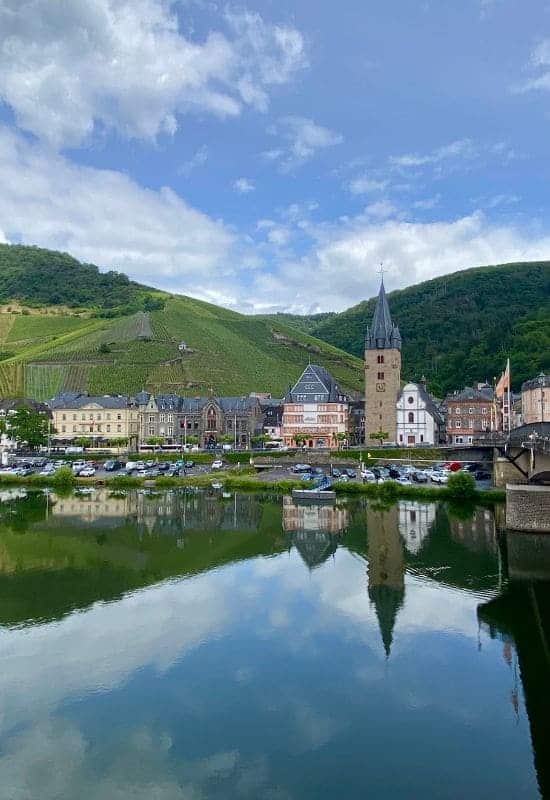
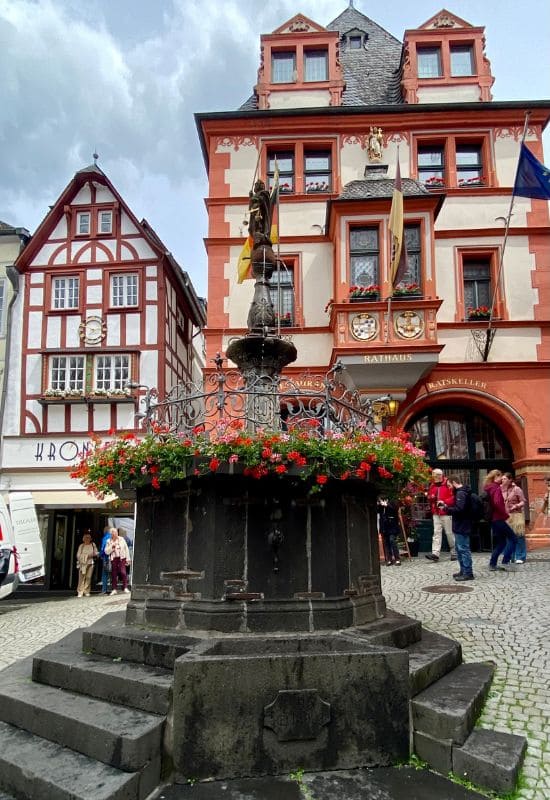
The historic market square, with its half-timbered houses, is one of the most beautiful townscapes on the Moselle. Above the town, the ruins of Landshut Castle offer wonderful views over the Moselle Valley. Bernkastel-Kues is ideal if you want to combine wine romance, old town charm and Moselle panoramas.
Traben-Trarbach
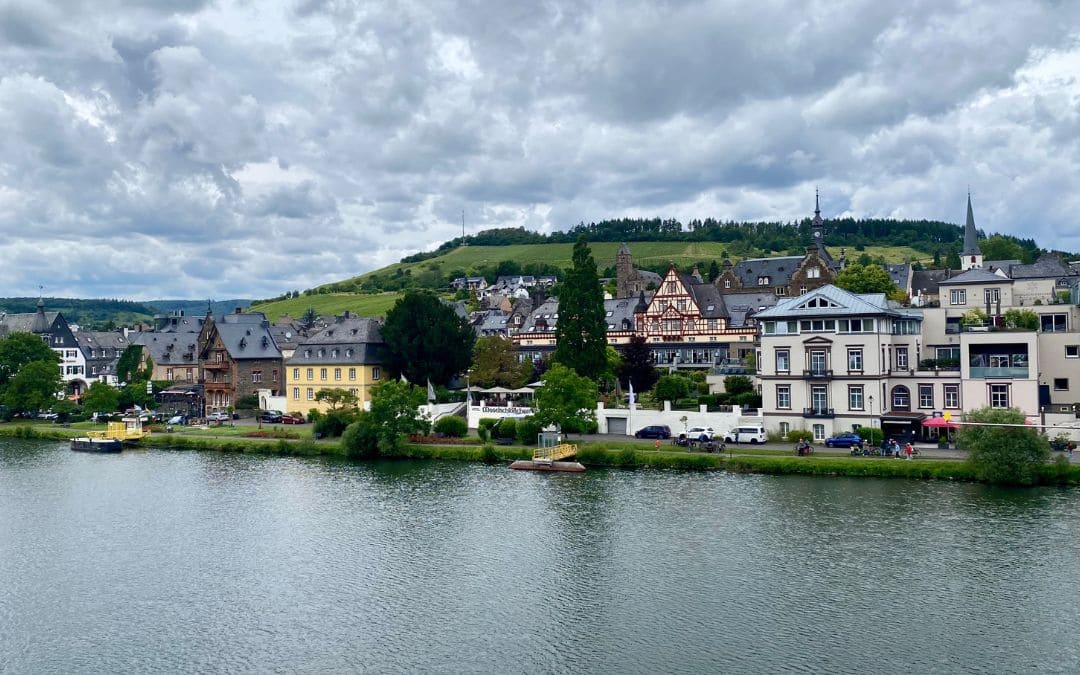
Around 1900, this twin city on the Middle Moselle was one of Europe’s most important wine trading centers. To this day, Art Nouveau villas, historic wine cellars, and its location between the river and the vineyards serve as reminders of this glorious era. The underground Mosel Wine Night Market during Advent is particularly atmospheric.
Cochem and Cochem Imperial Castle
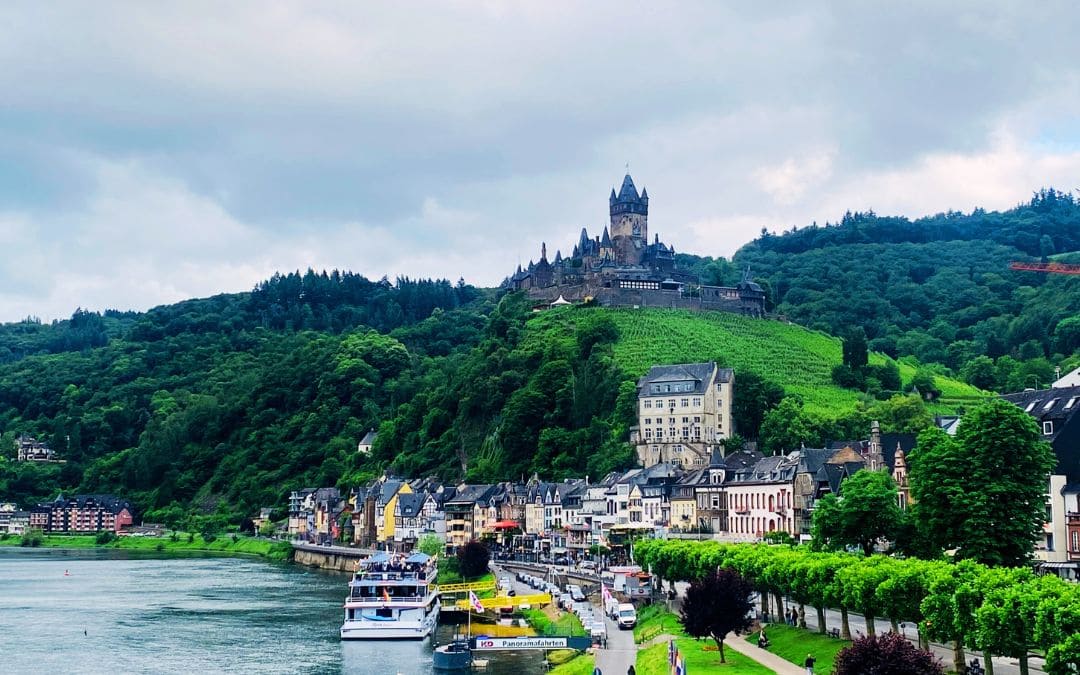
Cochem is one of the best-known towns on the Moselle. Above the old town rises Cochem Imperial Castle, rebuilt in the 19th century in the style of castle Romanticism. Together with the Moselle promenade, half-timbered houses and steep vineyards, Cochem is a classic postcard scene.
Beilstein
This small wine village is often called the “Sleeping Beauty of the Moselle.” Narrow lanes, half-timbered houses, the monastery stairs and Metternich Castle ruins make Beilstein one of the most romantic stops along the Moselle.
Eltz Castle
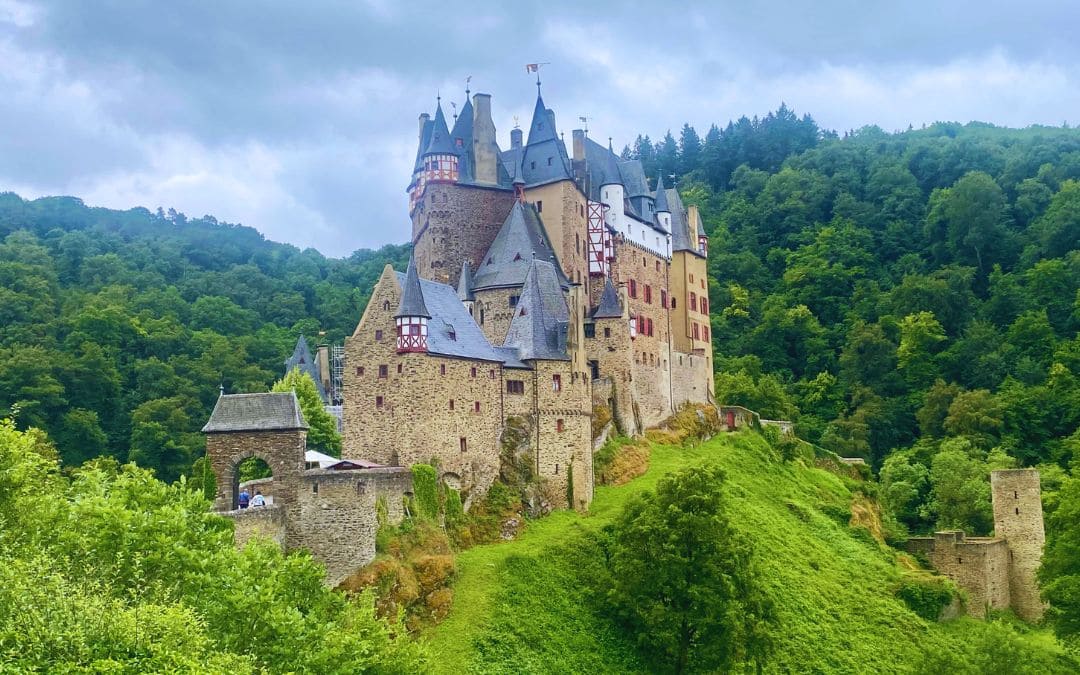
Eltz Castle is one of Germany’s best-known and best-preserved castles. It is not directly on the Moselle, but hidden on a rock spur in the Eltz Valley, and it fits very well into a road trip through the Moselle region. The approach on foot through the forest is especially beautiful.
The Moselle Bend near Bremm and Calmont
The Moselle bend near Bremm is one of the region’s most famous photo motifs. Directly above it rises the Calmont, one of the steepest vineyards in Europe. If you are sure-footed, you can hike the Calmont via ferrata-style trail and will be rewarded with spectacular views of the Moselle.
Moselsteig, Traumpfade (Dream Trails), and Wine Hikes
The Moselle region is excellent for hiking. The Moselsteig trail runs from Perl to Koblenz through vineyards, forests and spectacular viewpoints. In addition, the Traumpfade and Traumpfädchen circular trails in the Rhine-Moselle-Eifel area offer varied walks with views of river valleys, castles and vineyards.
Wine Tastings and Regional Specialties
Riesling, wine estates and seasonal wine taverns belong to the Moselle just as much as the steep vineyard slopes. A wine tasting with a local producer, a glass of Moselle wine overlooking the river, or regional specialties such as Moselle fish or vintner’s steak make the region a culinary highlight of your trip as well.
Geierlay Suspension Bridge
Geierlay isn't located directly in the Moselle Valley, but in the Hunsrück. Still, it makes for a great detour on this road trip—especially if you want to include an unusual nature experience between the Moselle and the Rhine. The suspension bridge near Mörsdorf is an impressive stop, especially for those who aren’t afraid of heights.
More information:
You will find additional inspiration and practical planning tips on the websites of Trier Tourism and Marketing* and mosel.de.
Koblenz
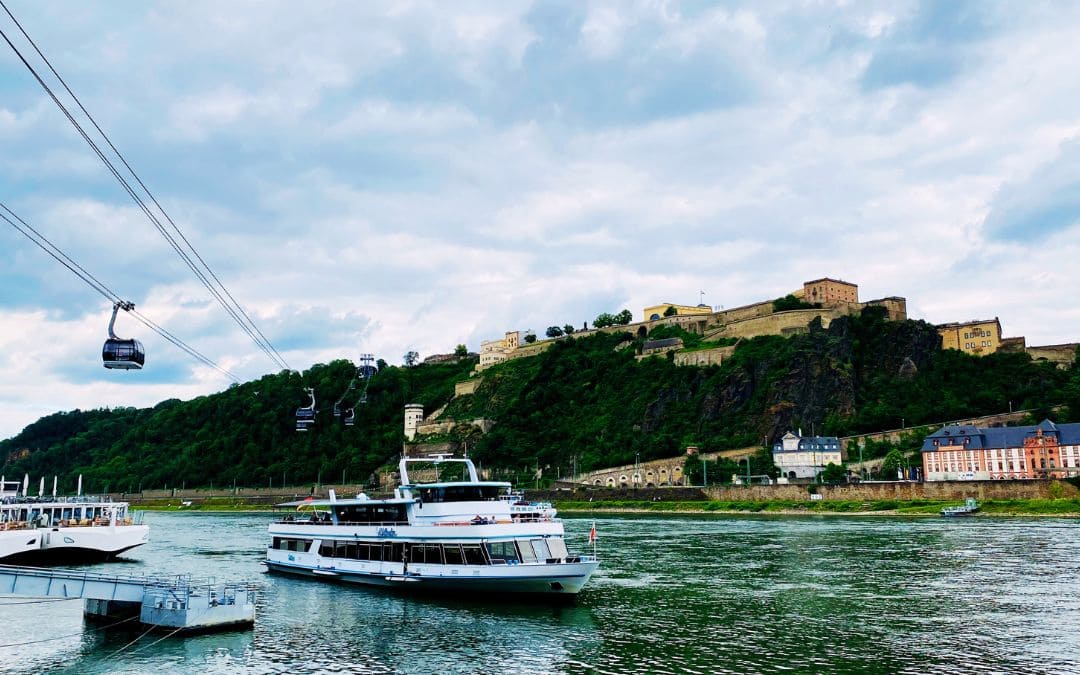
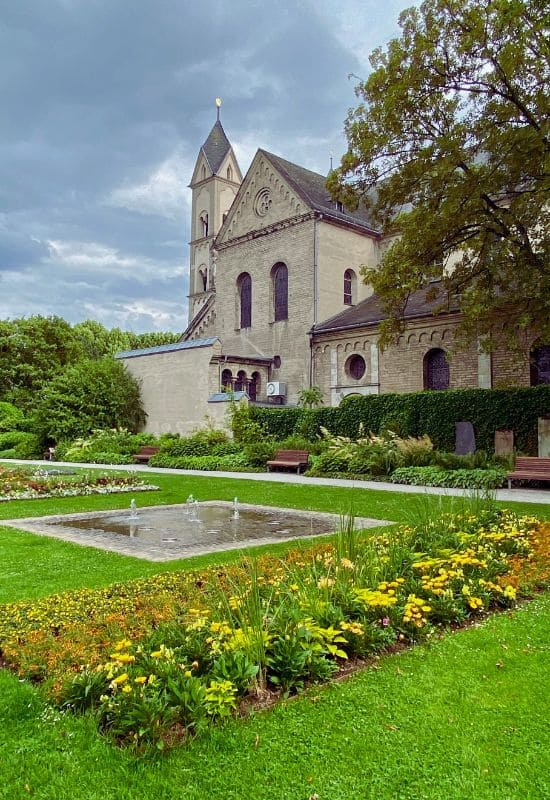
Koblenz marks the northern end of the Upper Middle Rhine Valley UNESCO World Heritage Site and is an ideal starting point for this leg of the journey. The Rhine and Moselle converge at the Deutsches Eck, with Ehrenbreitstein Fortress towering high above it. The cable car ride across the Rhine is particularly beautiful—offering views of the Deutsches Eck, the Old Town, and the two rivers.
Stolzenfels Castle
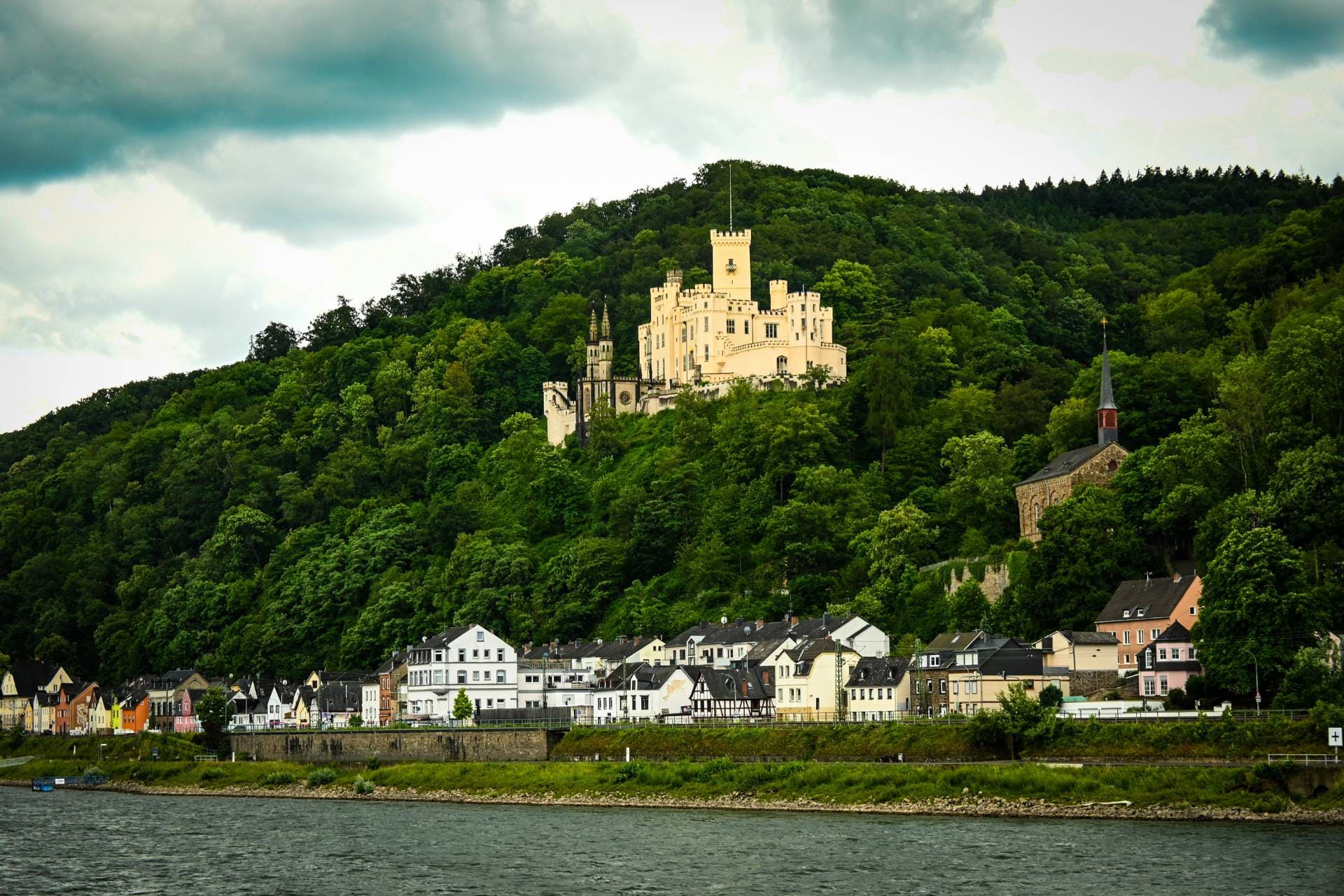
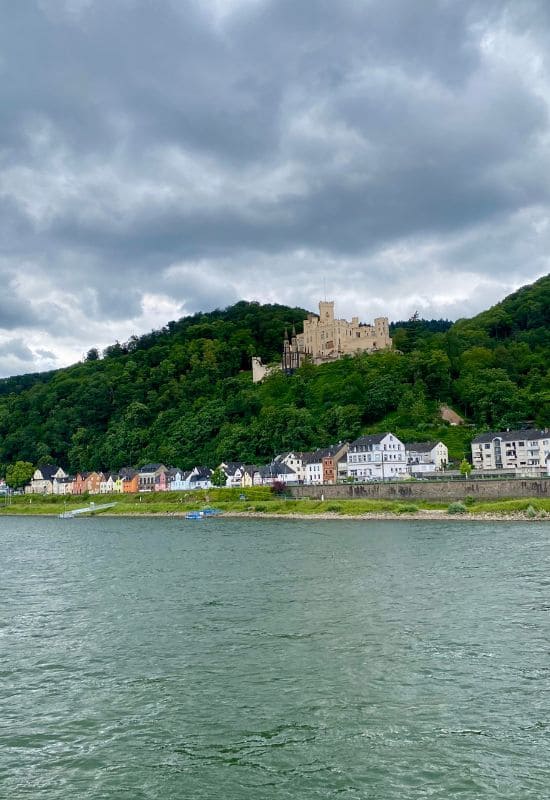
South of Koblenz, Stolzenfels Castle is one of the finest examples of Rhine Romanticism. The former electoral toll station was rebuilt in the 19th century in the Romantic castle style and is closely associated with King Frederick William IV of Prussia. Its location above the Rhine, with views into the valley, is particularly appealing.
Boppard, Gedeonseck, and Vierseenblick
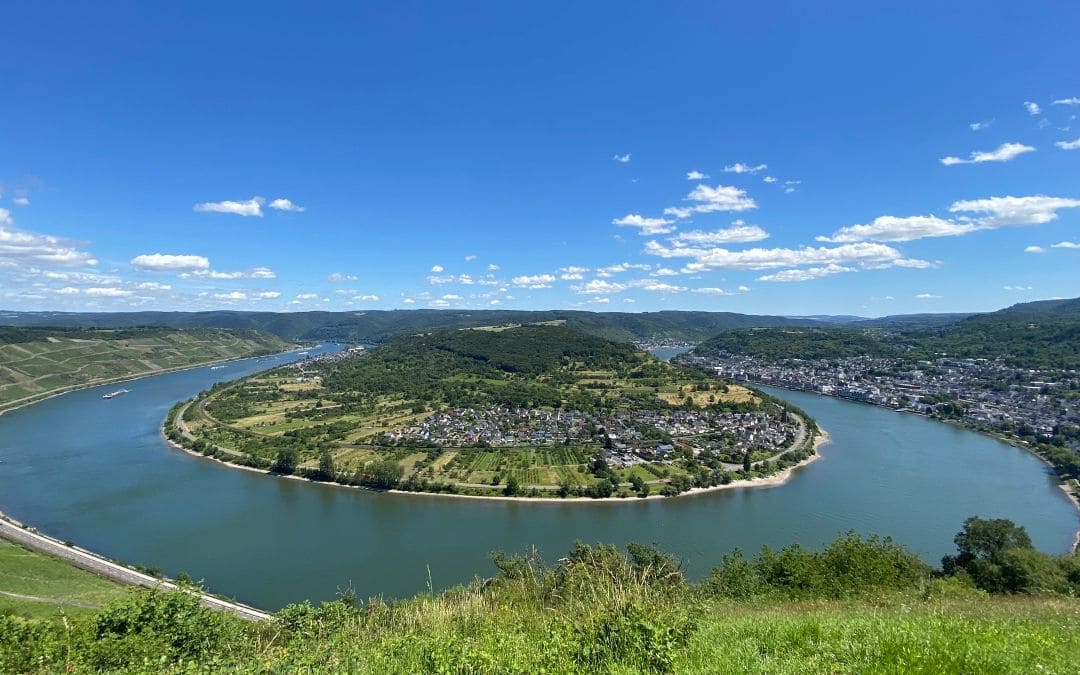
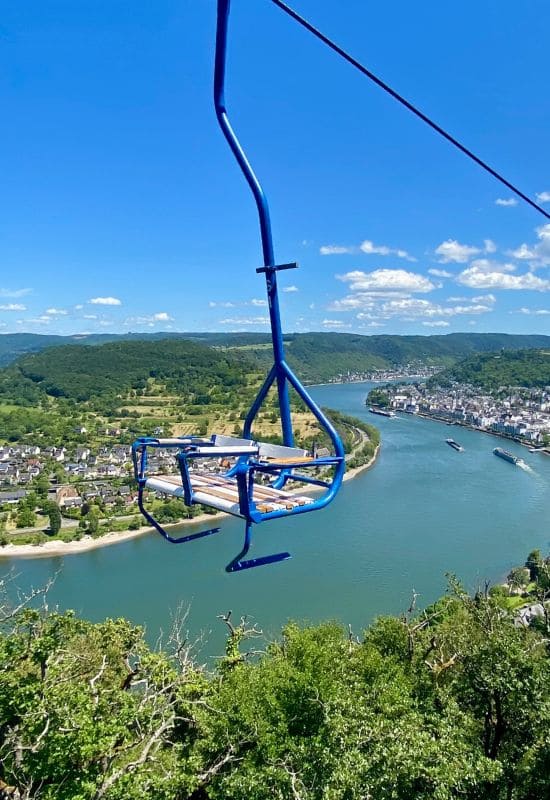
Boppard is one of the loveliest towns on the Middle Rhine. By chairlift, you can reach Gedeonseck and Vierseenblick, two of the best-known viewpoints over the Rhine bend near Boppard. From above, the Rhine almost appears like a chain of lakes between the wooded hills.
Rhens and the Königsstuhl
The charming half-timbered town of Rhens is closely connected with the history of the Holy Roman Empire. In the Middle Ages, the prince-electors met at the Königsstuhl to elect German kings. Today, the reconstructed Königsstuhl is an interesting historical stop along the route.
Marksburg near Braubach
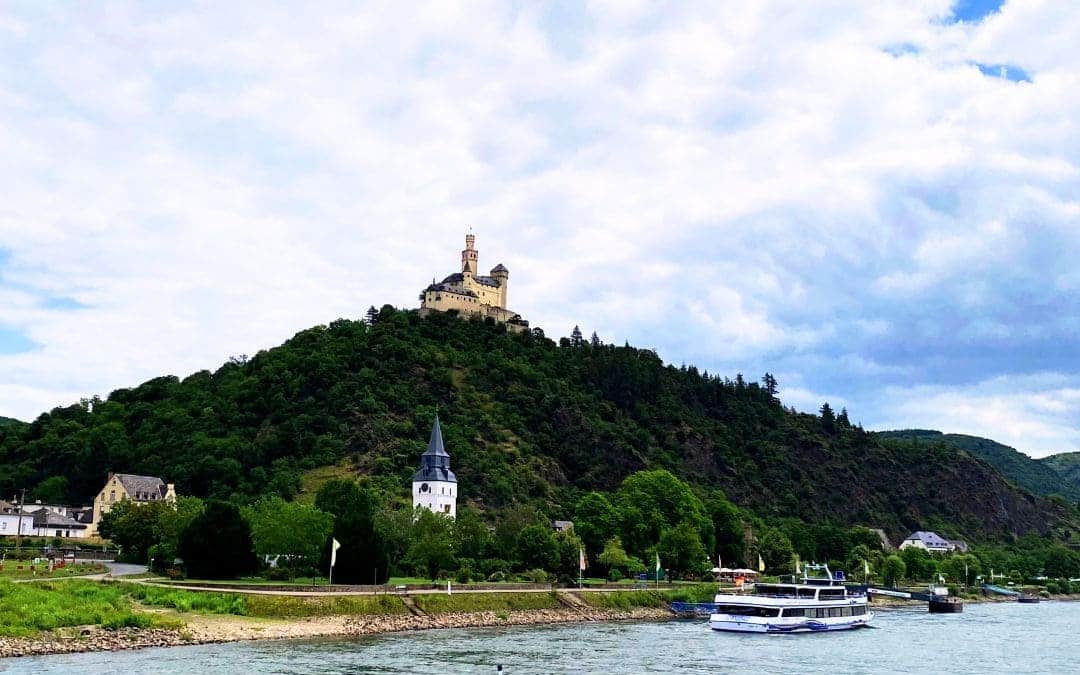
Marksburg is the only hilltop castle on the Middle Rhine that was never destroyed. High above Braubach, it gives a particularly vivid impression of how a medieval castle complex was structured. If you only want to visit one Rhine castle in depth, Marksburg is an excellent choice.
The Loreley
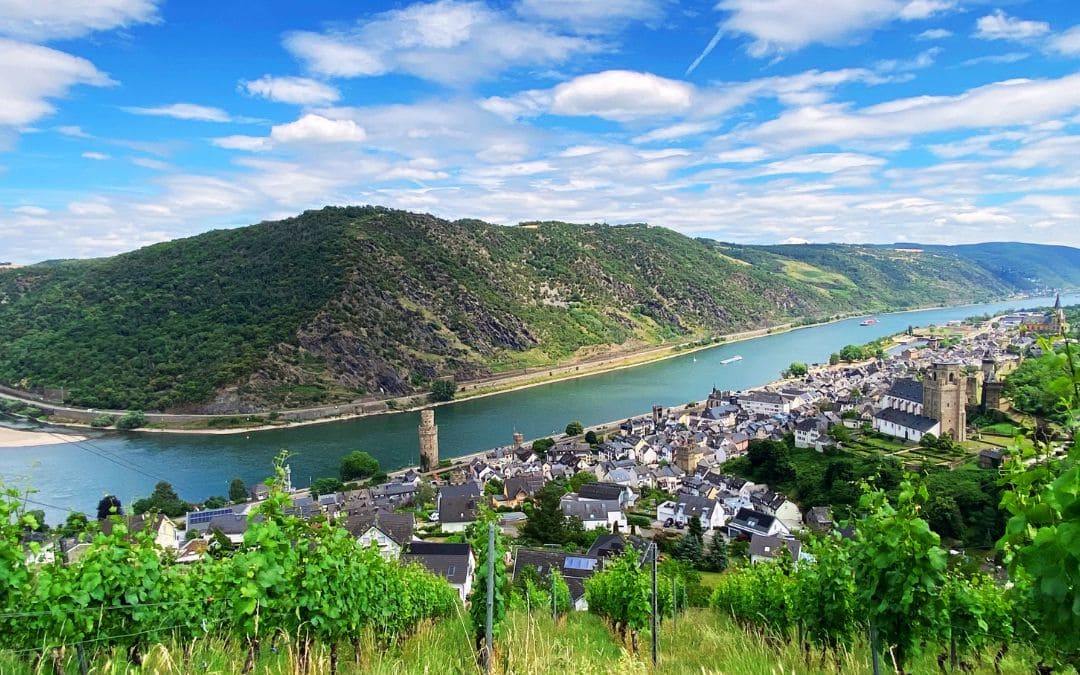
The famous slate rock near St. Goarshausen is one of the best-known places on the Rhine. The view over the narrow Rhine Valley is spectacular, and the legend of the Loreley is inseparable from Rhine Romanticism. Passing the Loreley by boat is also a special moment.
Bacharach
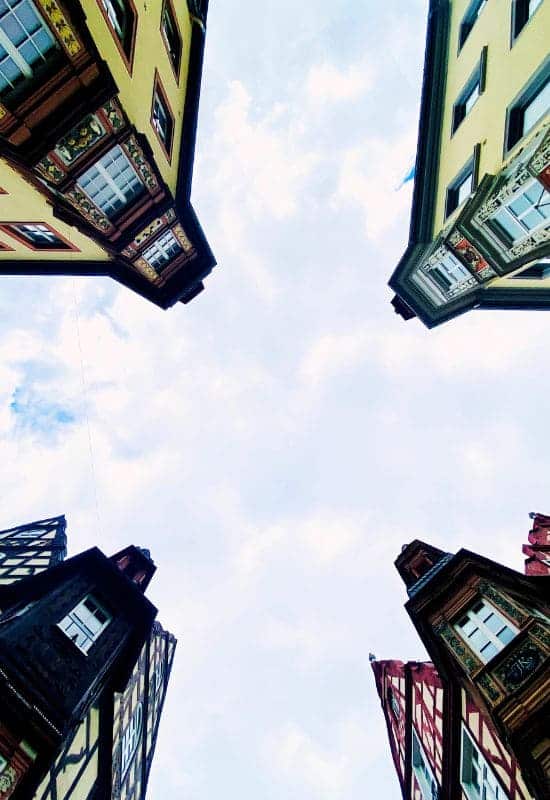
For me, Bacharach is one of the most beautiful places in the Upper Middle Rhine Valley. Half-timbered houses, town walls, towers, wine taverns and Stahleck Castle above the town create a medieval picture. If you want to experience the UNESCO World Heritage area in a particularly atmospheric way, Bacharach is a wonderful place to stroll, stay overnight and enjoy. Nearby Oberwesel with the best-preserved town fortifications on the Middle Rhine, is also well worth seeing.
Rüdesheim am Rhein
Rüdesheim is one of Germany’s best-known wine towns and is especially popular with international visitors. Drosselgasse, the cable car to the Niederwald Monument and the vineyards above the Rhine are classic sights in the southern part of the Upper Middle Rhine Valley. Although Rüdesheim is very touristy, it is worth a day trip.
Castles and Palaces Along the Rhine
Few river landscapes in Germany have such a high density of castles, palaces and ruins as the Upper Middle Rhine Valley. In addition to Stolzenfels Castle and Marksburg, Rheinstein Castle, Sooneck Castle, Pfalzgrafenstein Castle and many others are impressive witnesses to Rhine Romanticism.
Rheinsteig, Boat Trips, Wine Tastings and William Turner Views
There are many ways to experience the Upper Middle Rhine Valley: on foot along the Rheinsteig trail, at a leisurely pace on a boat cruise, or while enjoying a wine tasting. It’s especially beautiful to see the castles and vineyards from the water—that’s when the dramatic landscape of the Rhine Valley reveals itself from a completely different perspective. If you’re interested in art and the “Romance of the Rhine,” the William Turner Route is also worth checking out: it leads to viewpoints that inspired the English painter during his travels along the Rhine.
More information:
You will find additional inspiration and practical planning tips on the websites of Koblenz Tourism*, Loreley Tourism, Bacharach and Rüdesheim.
Festivals & Events Along the Route
If you’re planning a road trip through Saarland, the Moselle region, and the Upper Middle Rhine Valley, it’s worth checking out the event calendars. Throughout the year, city festivals, wine festivals, cultural festivals, Christmas markets, and special events along the waterfront take place along the route. Some events are very popular—so be sure to book your accommodations as early as possible if you want to travel on a specific date.
Saarbrücken Old Town Festival
A large summer festival around St. Johanner Markt with music, food, an arts market and events throughout the city center.
Saar Spectacle, Saarbrücken
When it takes place, Saar-Spektakel turns the banks of the Saar into a festival area with music, water sports, food and a lively atmosphere.
WeinZeit
At WeinZeit Wine is celebrated outdoors—with winemakers, food and drink stands, music, and a relaxed summer atmosphere. The event in Saarbrücken date at the Staden, directly on the Saar, is especially convenient. Depending on the year, there may be additional WeinZeit dates, for example in Saarlouis. It's best to check the current dates directly on the organizer's website.
Festival Perspectives
A German-French festival of contemporary performing arts in Saarbrücken. It is especially interesting if you want to experience culture and the cross-border character of the region.
Saarbrücken Christkindl Market
A classic Christmas market in Saarbrücken’s city center with festive stalls, mulled wine, regional specialties and the well-known flying Santa Claus.
Christmas Market and Medieval Market in St. Wendel
One of Saarland’s most atmospheric Christmas markets. The combination of classic Christmas market, medieval market, nativity scenes and festive old town atmosphere is particularly beautiful.
Trier Old Town Festival
A large city festival in Trier’s historic center with live music, stage programs and many stalls between Porta Nigra, Hauptmarkt and Viehmarkt.
Middle Moselle Wine Festival in Bernkastel-Kues
One of the best-known wine festivals on the Moselle, with wine stalls, music, a parade, fireworks and plenty of Moselle atmosphere.
Wine Festivals Along the Moselle
Between Trier, Bernkastel-Kues, Traben-Trarbach, Cochem and Koblenz, numerous small and large wine festivals take place from spring to fall. The atmosphere in the decorated wine villages is especially lovely.
Trier's Christmas Market
An atmospheric Christmas market against the backdrop of the cathedral, Hauptmarkt and medieval old town. It is especially beautiful if you plan your road trip in Advent.
Bernkastel-Kues Christmas Market
A romantic Christmas market in the historic old town with half-timbered houses, Riesling mulled wine, an Advent calendar and festive Moselle atmosphere.
Moselle Wine Night Market in Traben-Trarbach
A special Christmas market in former wine cellars beneath the town. The combination of wine, food, culture and underground atmosphere makes it one of the most unusual Advent experiences on the Moselle.
Koblenz Wine Festival
The Koblenz Wine Festival brings together numerous spring and summer events centered on wine, music and food. The focus is on the wine culture of Koblenz and the surrounding wine regions of Moselle, Middle Rhine, Ahr and Rheinhessen. A modern highlight is Electronic Wine at the Deutsches Eck, where electronic music, regional wines and the special setting at the meeting point of Rhine and Moselle come together.
Koblenz Oktoberfest
A multi-week festival tent event at the Koblenz exhibition grounds with music, stage programs and Oktoberfest atmosphere on the Rhine.
Koblenz Christmas Market
This Christmas market spreads across several historic squares in the old town and combines half-timbered houses, lights, mulled wine and winter atmosphere between the Rhine and Moselle.
Christmas Garden Koblenz
At Ehrenbreitstein Fortress, light installations, soundscapes, and a walking tour through the fortress grounds transform the evening into a special winter experience.
Rhein in Flammen (Rhine in Flames)
The Rhein in Flammen (Rhine in Flames) event series is one of the most spectacular experiences in the Middle Rhine Valley. On several dates during the year, the Rhine becomes a stage between castles, vineyards and historic towns, with fireworks, illuminated boats and atmospheric riverside celebrations. If you plan your road trip around one of these dates, you can experience Rhine Romanticism, castle scenery and fireworks in a particularly impressive way.
Rüdesheim Christmas Market of Nations
In the southern part of the Upper Middle Rhine Valley, the Christmas Market of Nations in Rüdesheim is a classic. It combines international stalls with the special atmosphere of this Rhine wine town.
Conclusion: Why This Road Trip Is Worth Taking
This road trip was one of the most varied routes I’ve ever driven in Germany. Over a relatively short distance, you’ll experience several different cultural landscapes: the Saarland with its industrial heritage, French flair, and a surprising amount of nature; the Moselle region with its Roman history, wine-growing villages, and romantic river bends; and the Upper Middle Rhine Valley with its castles, scenic overlooks, and the romantic charm of the Rhine.
What I particularly like is how effortlessly culture, food and landscape come together on this route. In the morning, you might be standing between the blast furnaces of Völklingen Ironworks; in the afternoon, you could be looking down from the Cloef viewpoint onto the Saar Loop. A few days later, you may be walking through Roman Trier, tasting Riesling on the Moselle or cruising past the castles of the Middle Rhine.
If you enjoy exploring Germany independently, at a relaxed pace and with a sense of history, this road trip is a wonderful choice. Allow enough time, stay in a few well-chosen bases and leave room for spontaneous stops, viewpoints and a glass of wine in the evening. That is when this route shows just how much variety Germany can offer within only a few miles.
Where to go next long weekend?
My free guide Germany. 12 Escapes. takes you through 12 travel regions in Germany — from the North Sea coast to the Alps. For each region: the best time to visit, 5 concrete highlights, and my personal tip from first-hand experience.
No research rabbit hole, no endless browser tabs — just get in the car and go.
I had planned to spend three days in the Saarland. At first, that sounded reasonable: the distances are short, Saarbrücken is centrally located, and read more
Are you ready to discover Germany's magnificent landscapes? This comprehensive guide takes you to the 52 most beautiful areas of our country read more
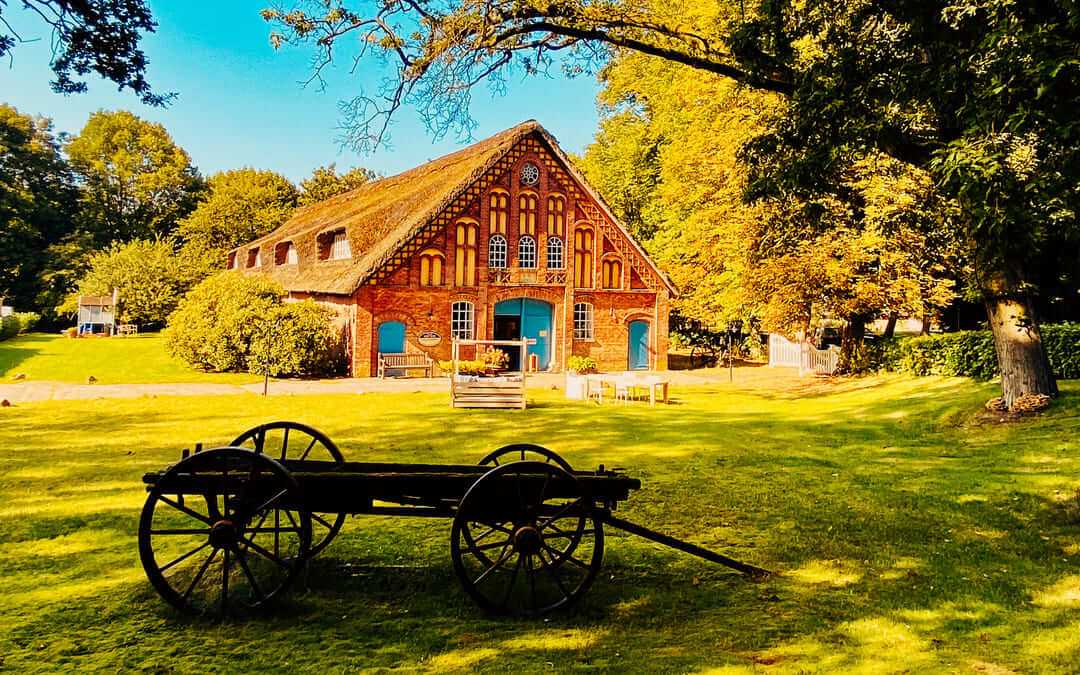
Germany is perfect for a road trip: well-maintained roads, a variety of landscapes, exciting cities and plenty of culture and cuisine read more
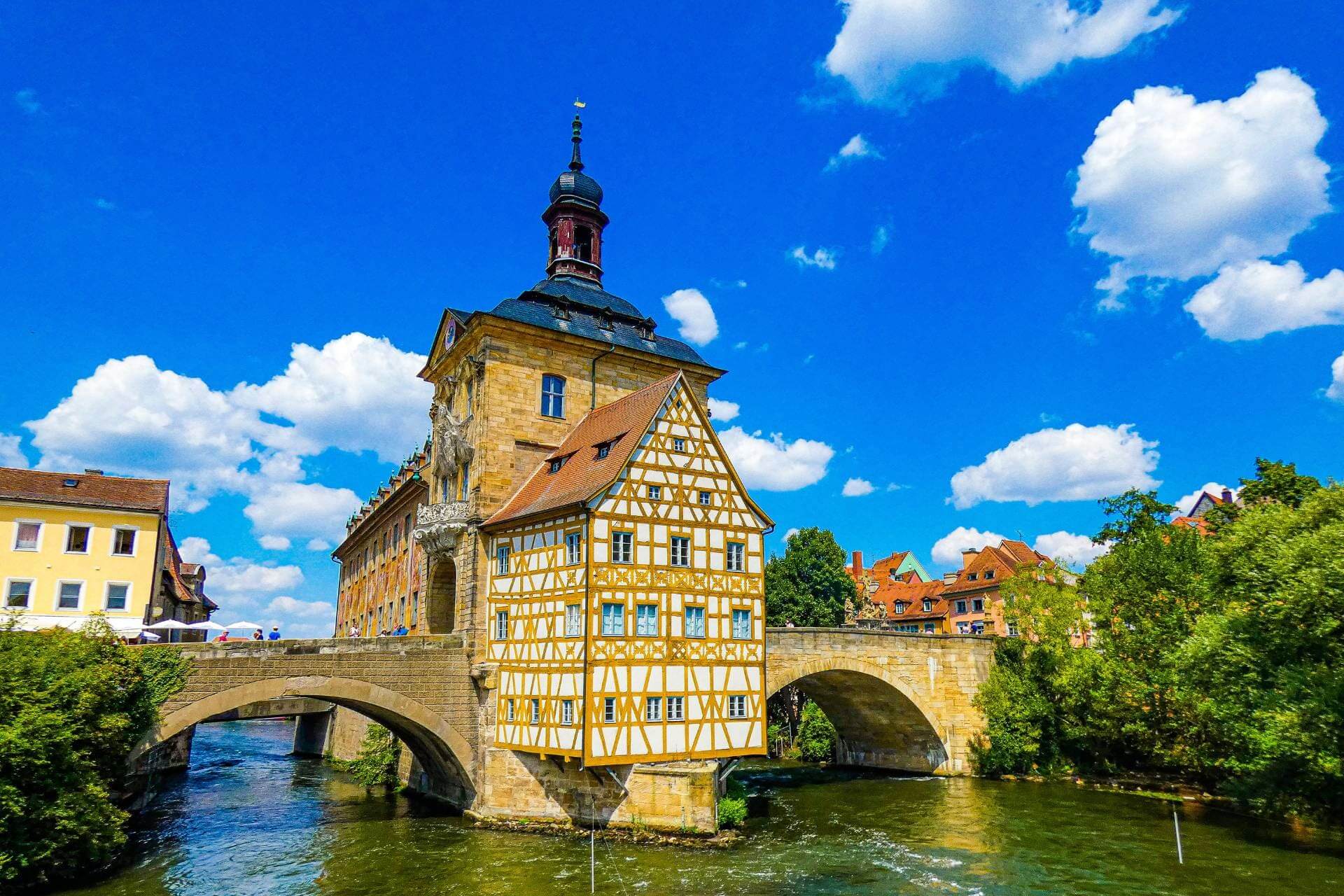
UNESCO World Heritage Sites are places of outstanding universal value—significant testaments to history and culture, as well as unique natural landscapes. When the read more

About me: I love to travel, write and photograph - preferably in places where the past is visible. Whether it's half-timbered towns, castles or quiet landscapes - there's something in every place that touches you and inspires you to think further. With my blog Angie's Travel Routes I would like to inspire you to discover Germany on your own. I share my experiences, personal impressions and practical route tips to make your next trip a special experience.
You can find out more about me to my newsletter.

 Deutsch
  English
… not to mention the wonderful exhibitions at the Völklinger Hütte, which are creatively integrated into the halls. We visited “X-Ray: The Power of the X-Ray Gaze,” which runs through September 6 and is definitely worth a visit!
Best regards, Doris—with a thank you for your consistently inspiring insights
Dear Doris,
Thank you so much for your kind and constructive feedback. You're absolutely right! I went ahead and added this point to the section on the Völklinger Hütte in the "Highlights" box for the Saarland. I thought the X-Ray exhibition was great, too.
Love,
Angelika