
[Ad] I had visited Trier twice before and had mainly come to know it as an important Roman city. The Porta Nigra, Imperial Baths, amphitheater, and Roman Bridge shape the cityscape so strongly that it is easy to forget how many other facets lie beyond its ancient walls.
On my third stay, Trier revealed yet another side of itself. Alongside the famous UNESCO World Heritage monuments, I discovered special places and experiences that are easy to overlook on a short city walk: a centuries-old wine cellar whose winemaking still supports social institutions today, a treasury filled with precious medieval manuscripts, a cruise on the Moselle in the footsteps of the Romans, and an immersive tour that briefly transformed the amphitheater back into an arena.
It became clear to me just how closely history, culture, and wine are intertwined in Trier. Roman monuments stand beside medieval churches, Baroque palaces, and lively squares. Ancient cellars and burial grounds lie beneath the city, while along the Moselle and in the surrounding vineyards, a wine culture is cultivated whose roots reach back to Roman times.
In this article, I’ll do more than just introduce you to Trier’s top sights. I’ll also take you to extraordinary tours, distinctive cultural sites, and enjoyable experiences that shaped my stay. You'll also learn how much time to allow for Trier and how best to explore this Roman city on the Moselle independently.
- Porta Nigra, Cathedral, and Roman UNESCO World Heritage: Trier has an extraordinary concentration of buildings from Roman times and early Christianity. The Porta Nigra and the Cathedral of St. Peter, Germany’s oldest episcopal church, are especially impressive. Both are part of the UNESCO World Heritage Site and exemplify the city’s historical importance.
- Guided tour through the historic city center: From the Porta Nigra, the tour leads across the main market square and past the Basilica of Constantine and the Electoral Palace to the central squares of the Old Town.
- "Gladiator Valerius" immersive tour: At the amphitheater, an actor takes visitors into the world of gladiatorial combat and brings the site’s history vividly to life.
- Treasury of the Academic Library: Precious medieval manuscripts, a Gutenberg Bible, and historic globes make the Treasury one of the city’s most extraordinary cultural sites.
- Cellar Discovery Tour at the Vereinigte Hospitien: In Germany's oldest wine cellar, Roman history, winemaking, and social commitment come together in a remarkable way.
- Moselle cruise in the footsteps of the Romans: From the water, you gain new perspectives on the Roman Bridge, the historic Moselle cranes, the red cliffs near Pallien, and the vineyards along the river.
- Main Market Square and Wine Stand: The Hauptmarkt is not only the city’s most beautiful square, but also a lively meeting place for locals and visitors thanks to its popular wine stand.
Your City Trip to Trier at a Glance
Trier’s Most Important Attractions in One Day
On the map, you'll find the main sights in Trier's Old Town, as well as other places I'll introduce to you in this article. Many of the main highlights are close to one another and can easily be visited on a walking tour of the city. My suggested route takes you From the Porta Nigra, through the Main Market Square, the Cathedral Courtyard, and the Basilica of Constantine, to the Imperial Baths.
If you have only one day in Trier, you can use this route as a guide. Early risers can visit the interior of the Porta Nigra before the first city tour begins. The approximately 90-minute tour organized by Trier Tourism and Marketing starts at the Porta Nigra and ends at the Electoral Palace.
For the afternoon, choose either the Imperial Baths with their underground passageways or the nearby Rhineland State Museum. There is not enough time for both if you want to explore them properly. Other attractions, cultural sites, wine experiences, and destinations outside the center are also marked on the map.
👉 Tip: Save this map to your phone for your trip to Trier. You can find out how to do that in my article How to Plan a Route with Google Maps - the Complete Guide and 3 Extra Tips.
Discover Trier on a Guided City Tour
A guided city tour is a great introduction to Trier. Within a relatively short distance, it provides an overview of the main sights in the city center and shows how closely Roman antiquity, the Middle Ages, and the Baroque era are intertwined here.
Organized by Trier Tourism and Marketing, the tour begins at the Porta Nigra and continues along Simeonstraße to the Main Market Square. From there, it proceeds to Trier Cathedral and the Church of Our Lady, followed by the Constantine Basilica and the Electoral Palace.
I especially enjoyed the striking architectural contrasts along the route: the monumental Roman city gate, the medieval townhouses on the Main Market Square, the imposing cathedral, and finally the austere Constantine Basilica beside the playful Rococo façade of the Electoral Palace.
The tour offers an excellent first overview, but it does not replace more in-depth interior visits. Try to take it near the beginning of your stay, then decide which churches, Roman monuments, and museums you would like to explore in greater detail.
Trier City Tour at a Glance
Trier in the Footsteps of the Romans and UNESCO World Heritage
The Romans founded Augusta Treverorum, the „City of Augustus in the Land of the Treveri,“ probably around 17 B.C. The settlement developed into an important trading city and, toward the end of the 3rd century, one of the residences of the Roman Empire. From Trier, Roman emperors ruled large parts of the empire and commissioned monumental palaces, bath complexes, and entertainment venues.
Since 1986, the „Roman Monuments, Cathedral of St. Peter and Church of Our Lady in Trier“ have been listed as a UNESCO World Heritage Site. The site comprises nine monuments: seven Roman structures as well as Trier Cathedral and the Church of Our Lady. The first five are on or near my suggested city-center walking route; the amphitheater, Barbara Baths, and Roman Bridge require additional walking. The Igel Column stands outside Trier.
Porta Nigra: Trier’s Monumental Landmark
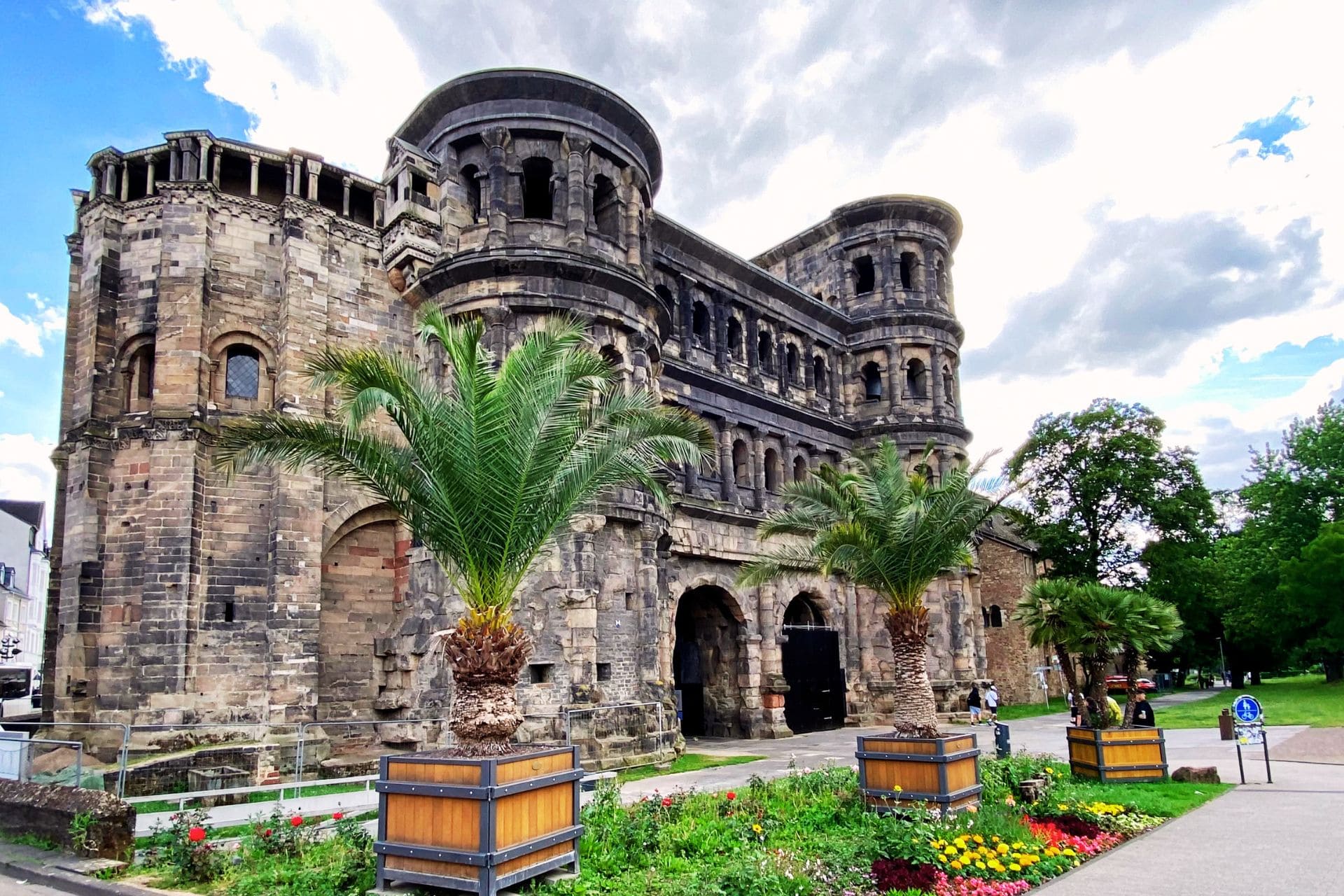
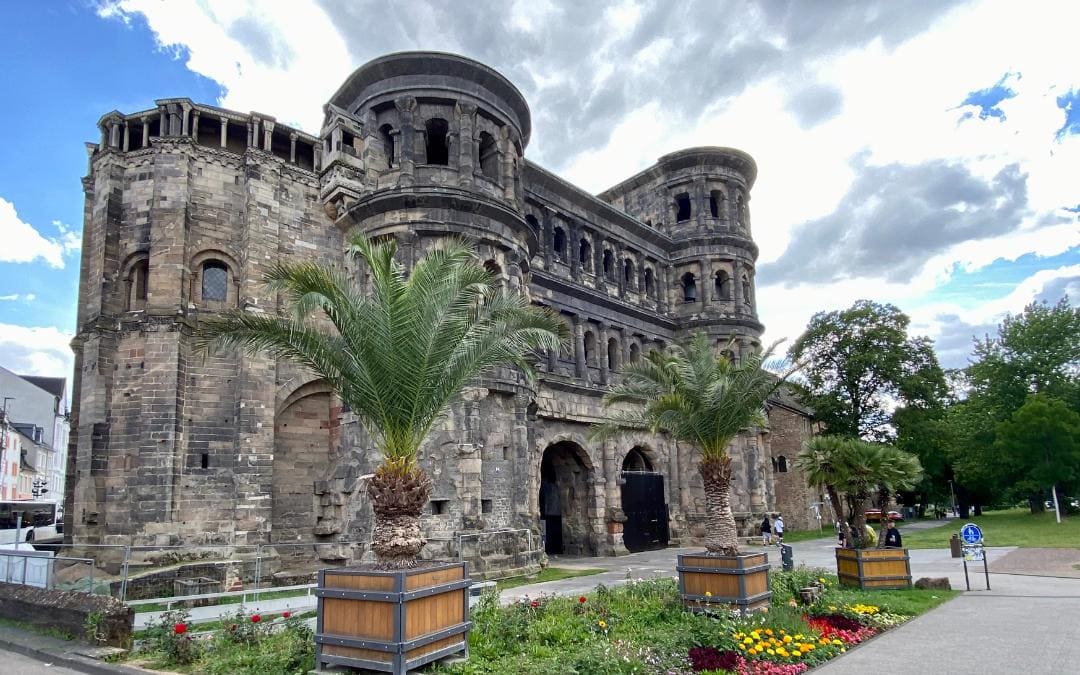
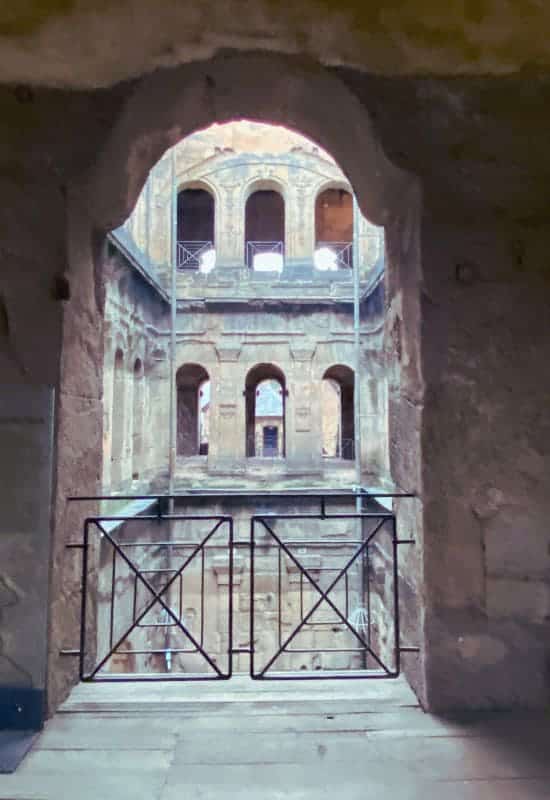
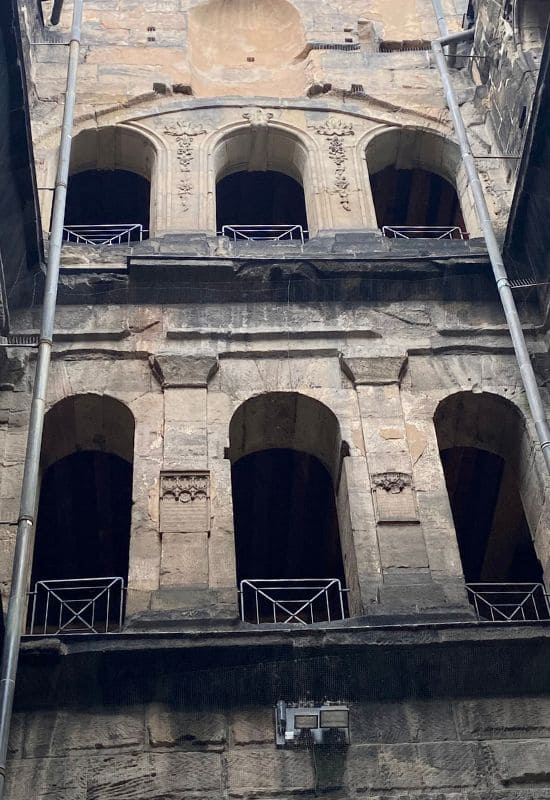
No other structure symbolizes Trier quite like the Porta Nigra. The „Black Gate“ was built around 170 AD as the northern city gate. Approximately 7,200 sandstone blocks were stacked without mortar and connected with iron clamps. The stone darkened only over the centuries, giving the gate its present name.
The Porta owes its exceptionally good state of preservation to an unusual turn of events: In the 11th century, the monk Simeon settled in the Roman gate. After his death, the Porta Nigra was converted into a double church. Under Napoleon, most of the medieval additions were removed in order to largely restore its Roman appearance.
Porta Nigra at a Glance

Trier Cathedral: 1,700 Years of Architectural and Church History
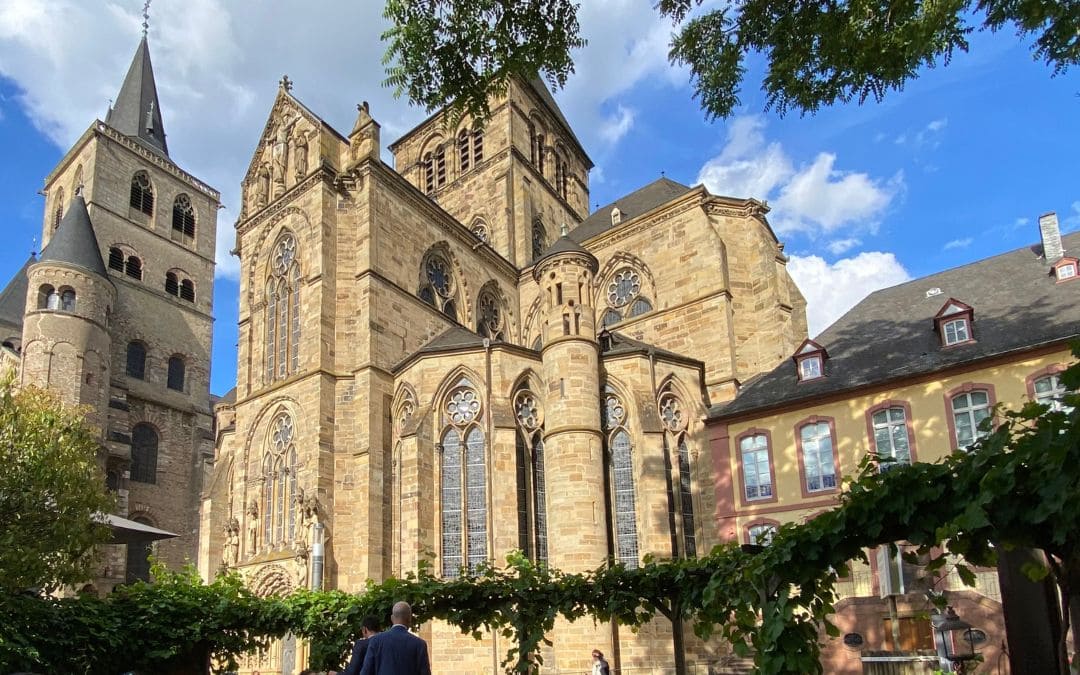
The High Cathedral of St. Peter is considered Germany’s oldest episcopal church. Its origins date to the early fourth century, when a monumental church complex was built over a Roman residential and palace complex. After repeated destruction, reconstruction, and expansion, the cathedral now combines Roman, Romanesque, Gothic, and Baroque elements.
The cathedral’s most important relic is the Holy Robe, traditionally venerated as Christ’s garment. It is not permanently on display, but is kept in a wooden shrine in the Chapel of the Holy Robe.
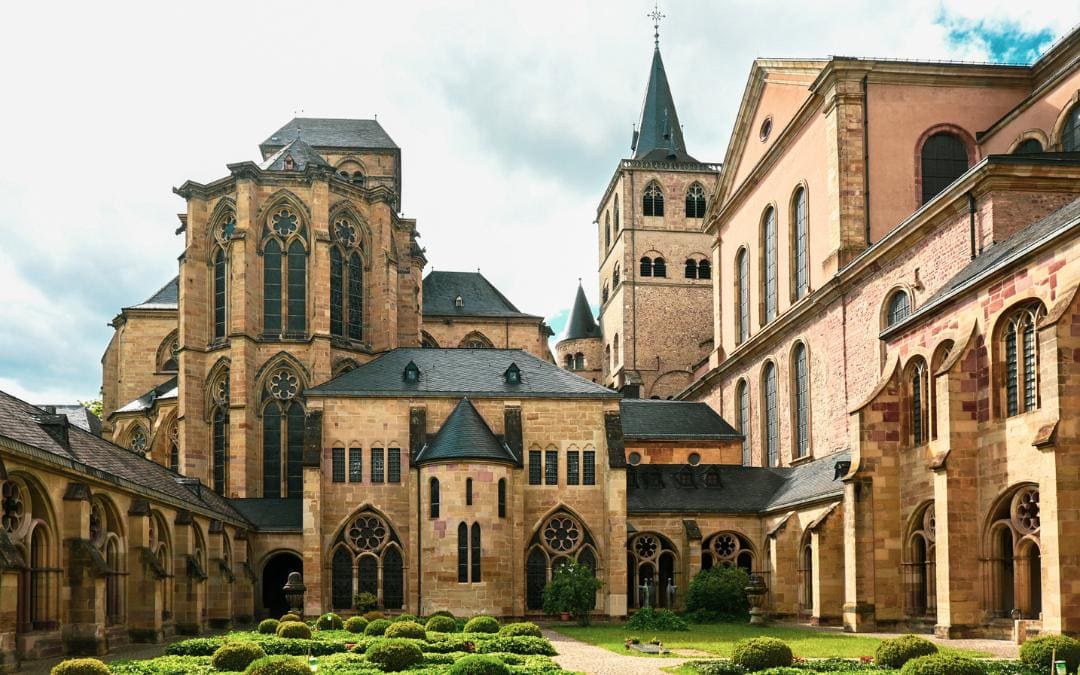
The Gothic cloister lies between the cathedral and the Church of Our Lady. Its traceried windows offer beautiful views of the two neighboring churches, which are architecturally very different.
Trier Cathedral of St. Peter at a Glance
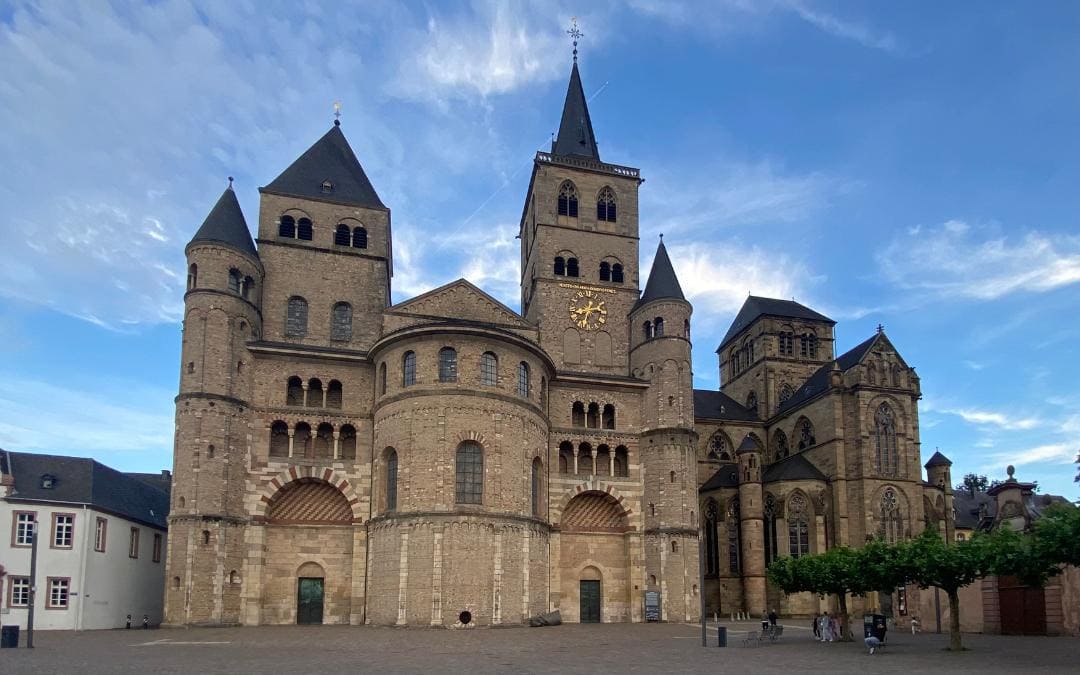
Church of Our Lady: Gothic Lightness Beside the Mighty Cathedral
Built in the 13th century, the Church of Our Lady is one of Germany’s earliest Gothic churches. With its tall windows, slender columns, and delicate tracery, it appears much lighter than the massive cathedral beside it.
Its nearly circular central plan, shaped like a twelve-petaled rose, is unusual. The twelve supporting columns symbolize the apostles, while the vaults and chapels are oriented toward the center of the light-filled space.
Church of Our Lady in Trier at a Glance
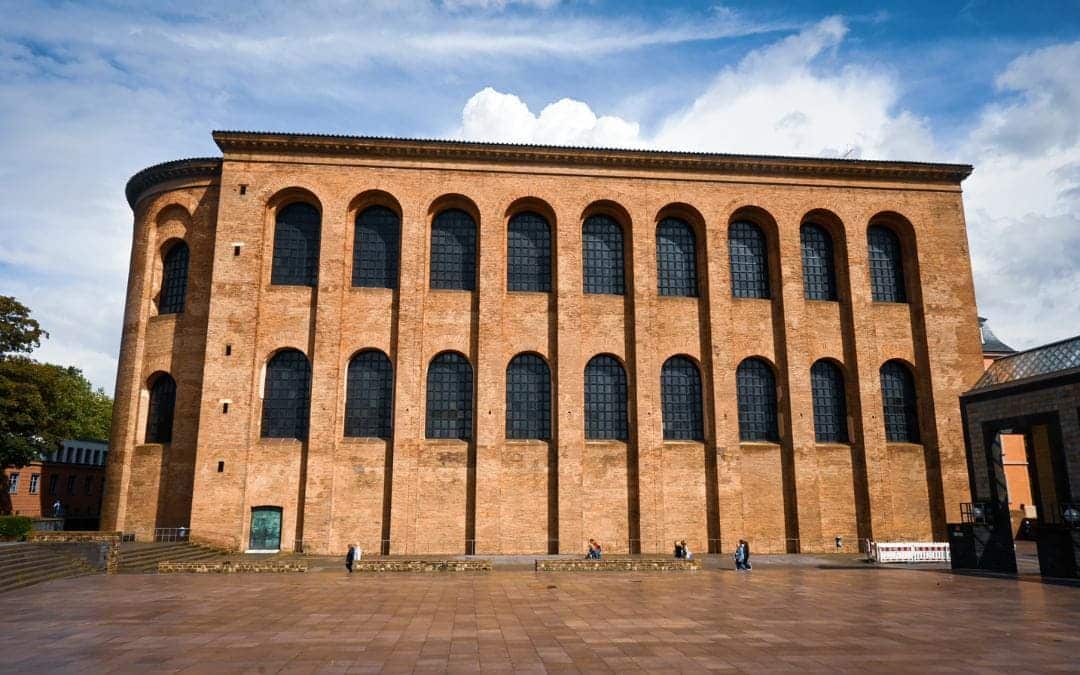
Constantine Basilica: The Throne Hall of the Roman Emperors
The Constantine Basilica was built in the early fourth century as the palace audience hall and throne room of the Roman imperial palace. Its column-free interior rises more than 98 feet and is one of the largest surviving single rooms from Roman antiquity.
Its current simplicity gives little hint of how magnificently the Aula Palatina was once adorned with marble, murals, underfloor heating, and a gilded coffered ceiling. It has been used as a Protestant church since the 19th century. The building immediately adjacent to it provides a striking contrast: Electoral Palaces with its ornate Rococo facade.
The Basilica of Constantine at a Glance
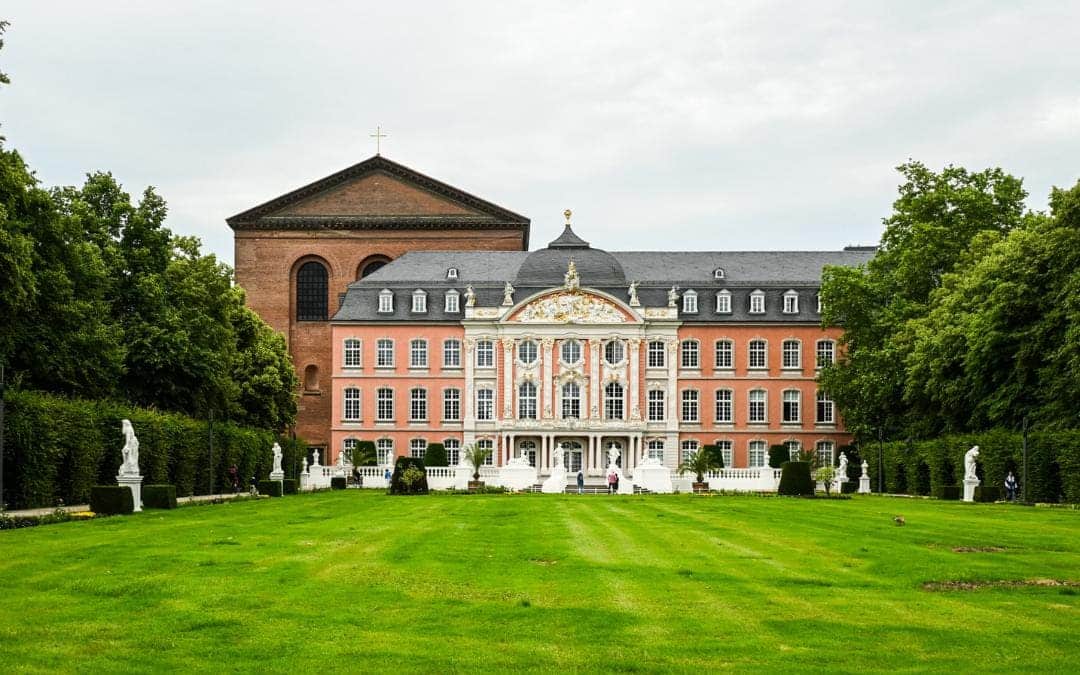
Imperial Baths: Monumental Bath Architecture Without a Bathing Operation
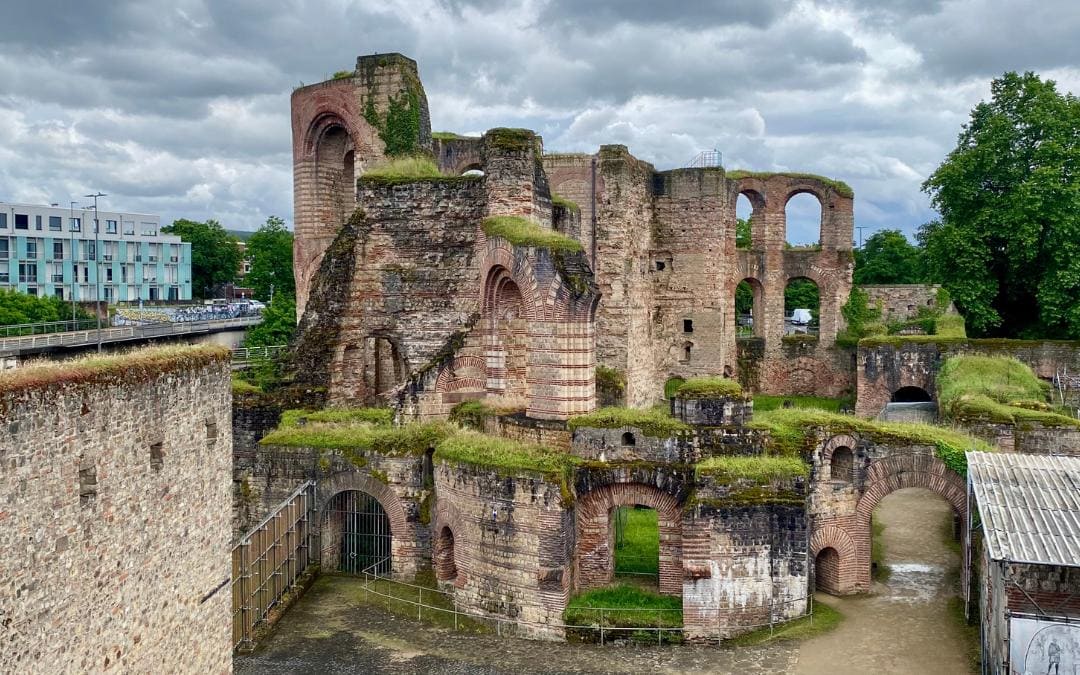
The Imperial Baths were built in the early fourth century as part of the imperial palace district. Although the complex was planned as a prestigious public bath, it was probably never completed or used in that form. Parts of it may later have served as barracks, and in the Middle Ages the massive walls were incorporated into the city fortifications.
Above ground, the tall remains of the hot-bath section give the clearest sense of the complex’s enormous scale. Beneath the site runs an extensive system of service passageways that would have allowed staff, fuel, and water to move through the baths.
Imperial Baths at a Glance
The monuments presented so far are located on or near the walking tour through downtown Trier that I have suggested on my map. Other Roman structures within the UNESCO World Heritage Site are located outside this compact route.
Amphitheater: Site of Roman Gladiatorial Combat
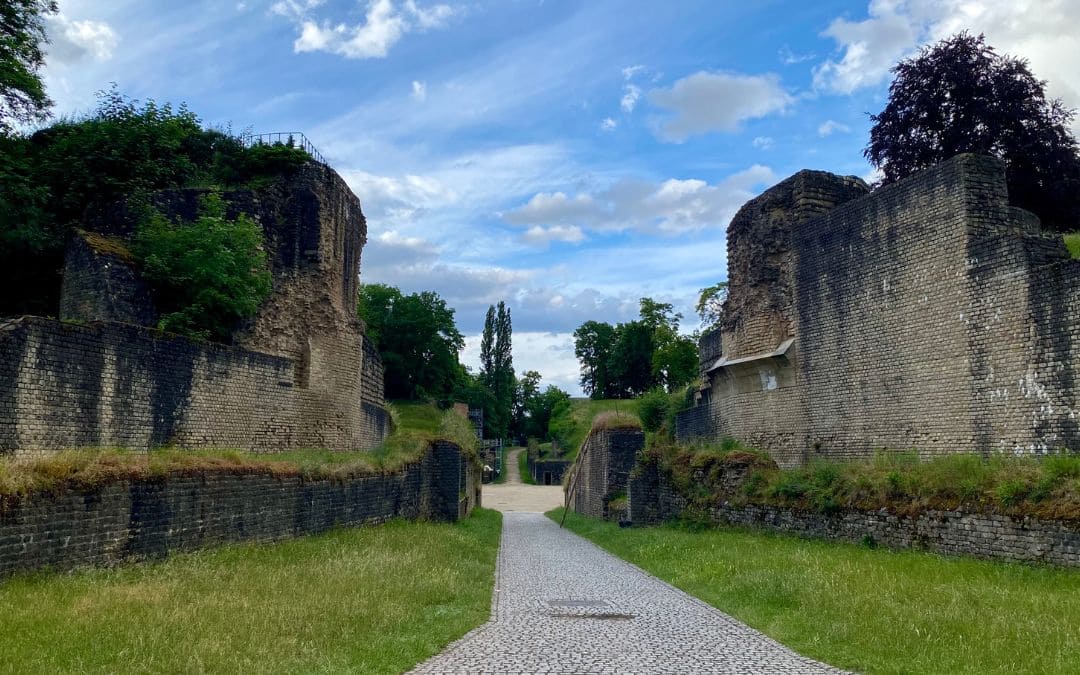
The amphitheater was built at the foot of Petrisberg toward the end of the second century and was integrated into the Roman city wall. Its stands held around 18,000 spectators who watched gladiatorial combat, animal hunts, and other public events.
The chambers beneath the arena are especially impressive. People and animals waited there before entering, while lifting devices created dramatic appearances. When you walk today from the dark underground area through one of the narrow passageways into the bright arena, you can at least imagine the theatrical impact of that moment.
Amphitheater at a Glance
Barbara Baths: One of the Largest Bath Complexes in the Roman Empire
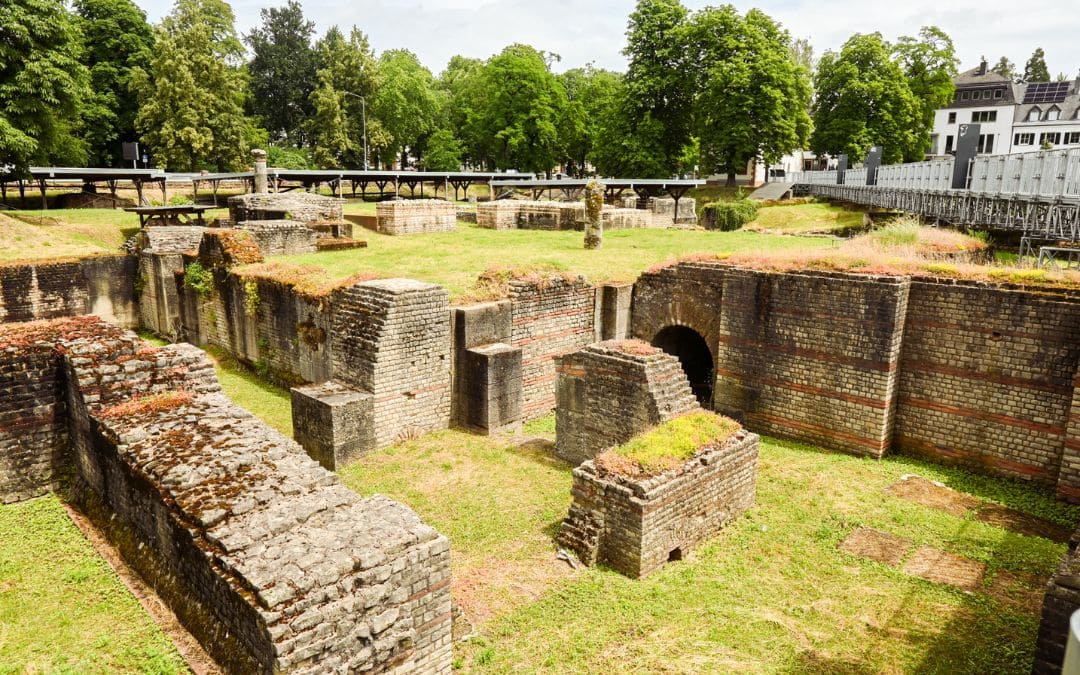
Built in the second century, the Barbara Baths were among the largest bathing complexes in the Roman Empire. In addition to cold, warm, and hot baths, the extensive complex included exercise and social areas, making it an important gathering place.
Today, mainly foundations and wall remains survive. An elevated walkway crosses the site, while information panels and reconstructions help visitors understand the original scale of the complex.
Barbara Baths at a Glance
Römerbrücke (Roman Bridge): Ancient Piers Carry Modern Traffic
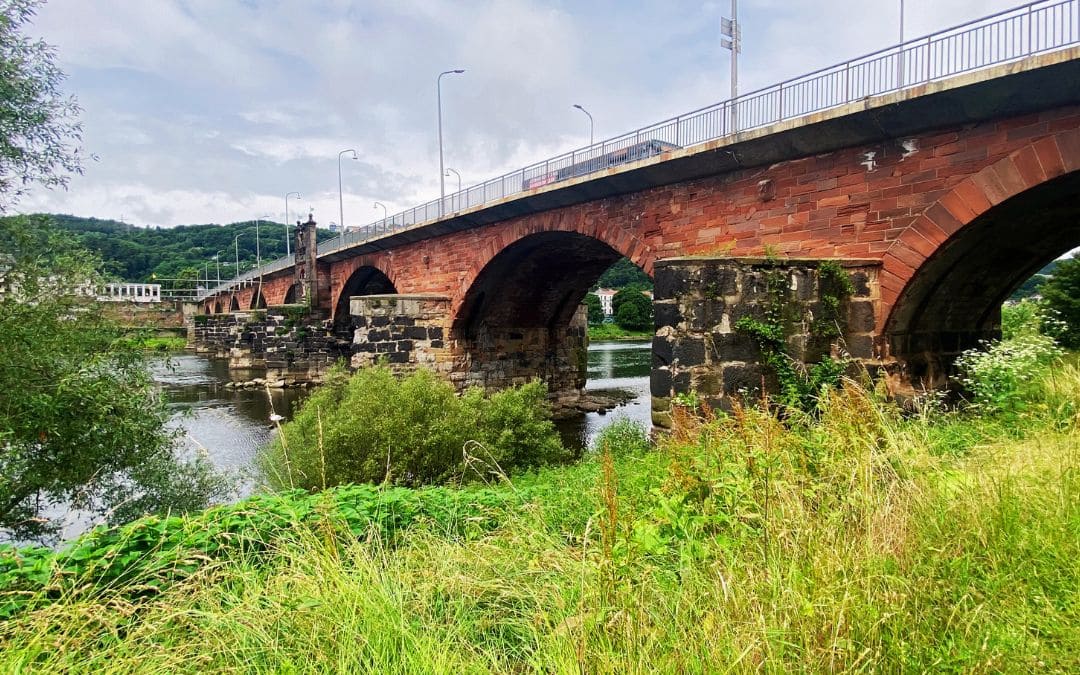
The Roman Bridge stands where an earlier bridge crossed the Moselle shortly after Trier was founded. Its seven surviving basalt piers date from the second century, while the bridge deck, rebuilt several times, still carries road traffic today.
It is precisely this connection between antiquity and the present that makes the Roman Bridge so special. You can get a good view of the massive piers from the banks of the Moselle or during a boat tour on the Moselle.
The Roman Bridge at a Glance
Igel Column: Roman Funerary Monument of a Merchant Family
The approximately 75-foot-tall Igel Column stands about six miles southwest of Trier. The richly decorated funerary monument was erected in the third century by the wealthy Secundinii family, who were probably involved in the textile trade. Its reliefs depict mythological motifs as well as scenes from professional and family life.
Igel Column at a Glance
More Places to Experience Roman Trier
Forum Baths: Roman History Under Glass
The Forum Baths were discovered in 1987 during preparations to build an underground parking garage. Because Trier’s UNESCO World Heritage Site had been inscribed one year earlier, the baths are not among its nine monuments despite their historical significance.
The excavations uncovered a Roman bath complex from the first century as well as traces from later periods. A striking glass structure by architect Oswald Mathias Ungers now protects the foundations and reveals around 2,000 years of Trier’s urban history beneath the Viehmarkt square.
Forum Baths at a Glance
Rhineland State Museum: The Treasures of Roman Trier
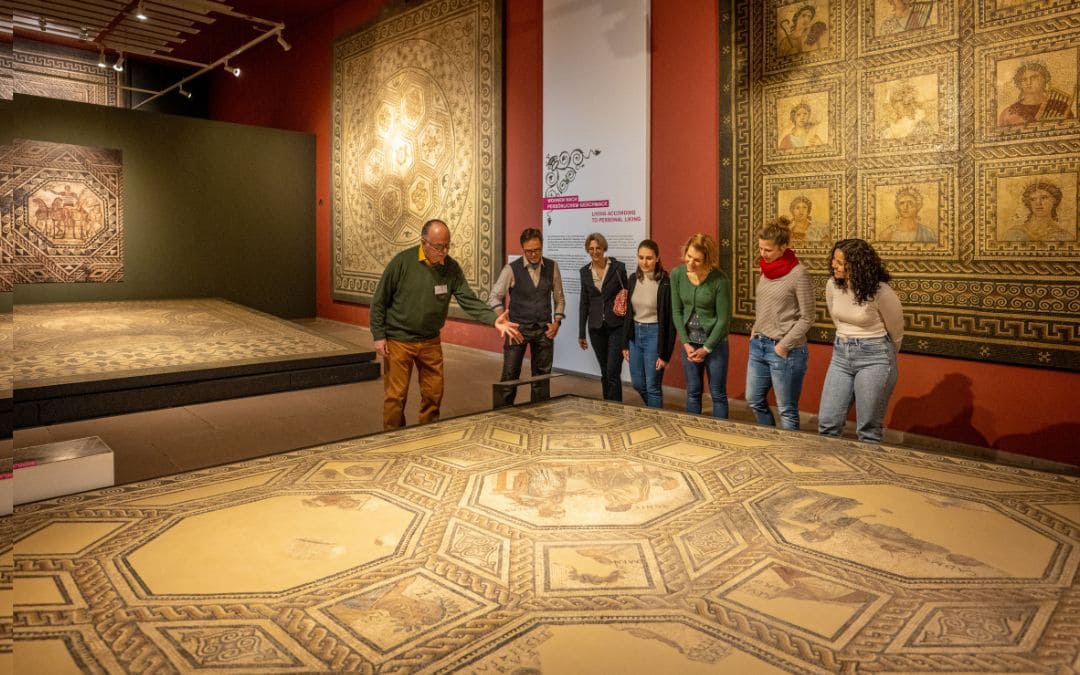
While the monuments reveal the scale of Roman Trier, the finds in the Rhineland State Museum offer insight into the lives of its inhabitants. The museum covers around 200,000 years of regional history, and its Roman collection is among the most important in Germany.
I was especially impressed by the magnificent mosaics—the museum has the largest collection of Roman mosaics north of the Alps—and the monumental Neumagen funerary monuments. Their reliefs depict trade, banquets, schooling, and viticulture. One of the best-known objects is the Neumagen Wine Ship, which once formed part of a wine merchant’s tomb.
Another highlight is the Trier Gold Hoard. More than 2,600 gold coins with a total weight of approximately 41 pounds were discovered during construction work in 1993 and form the largest surviving Roman gold coin hoard in the world.
Rhineland State Museum (Rheinisches Landesmuseum) Trier at a Glance
„Gladiator Valerius“: An Impressive Journey Through Time in the Amphitheater
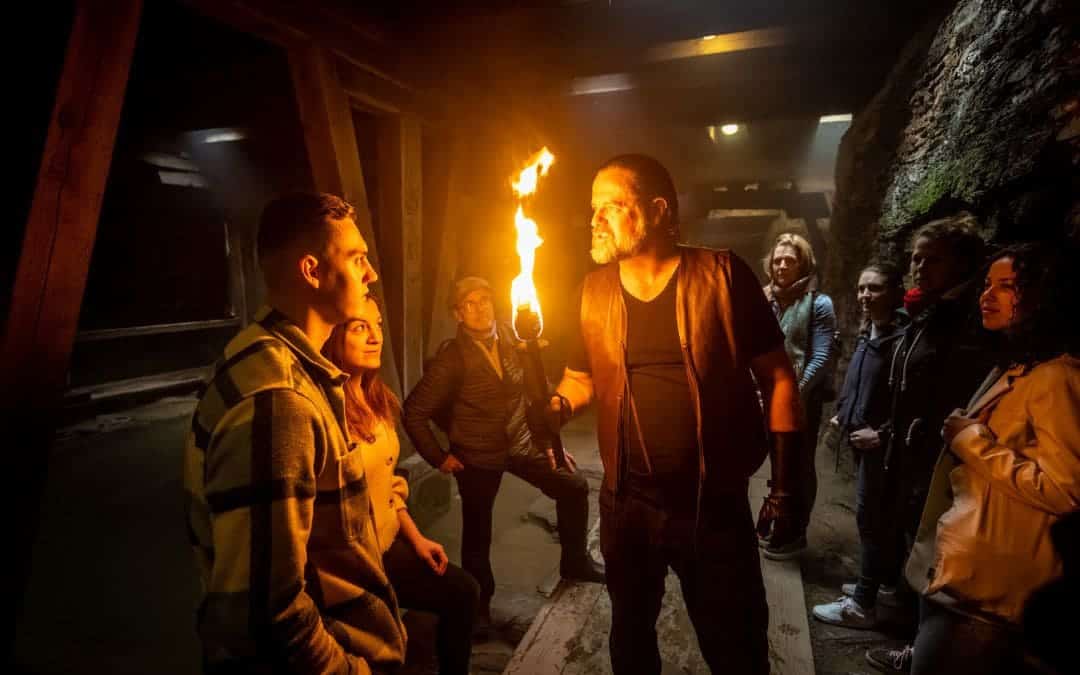
The Gladiator Valerius immersive tour was one of my most impressive experiences in Trier. After a short introduction at the amphitheater entrance, we met Valerius, who led us through the amphitheater and into the dark chambers and passageways beneath the arena. Driven by his memories, he spoke about his life, his training, and the fights he had to survive at this site around 1,800 years ago. This is not a romanticized heroic story, but an account of the harsh daily life of a man whose supposed glory could end at any moment in injury or death.
Our Valerius was played by Guillaume Karl, who delivered a gripping and impressive performance. We followed him through the arena and down into the underground chambers of the amphitheater. Through the interplay of the historical setting, the acting, and the narration, the often tragic fate of a gladiator became tangible in a way that a traditional guided tour could hardly achieve.
The approximately 75-minute performance leads over uneven ground and partly steep stairways through different areas of the amphitheater. You should therefore be steady on your feet and wear sturdy shoes
„Gladiator Valerius“ Immersive Tour at a Glance
Moselle Cruise: „In the Footsteps of the Romans“
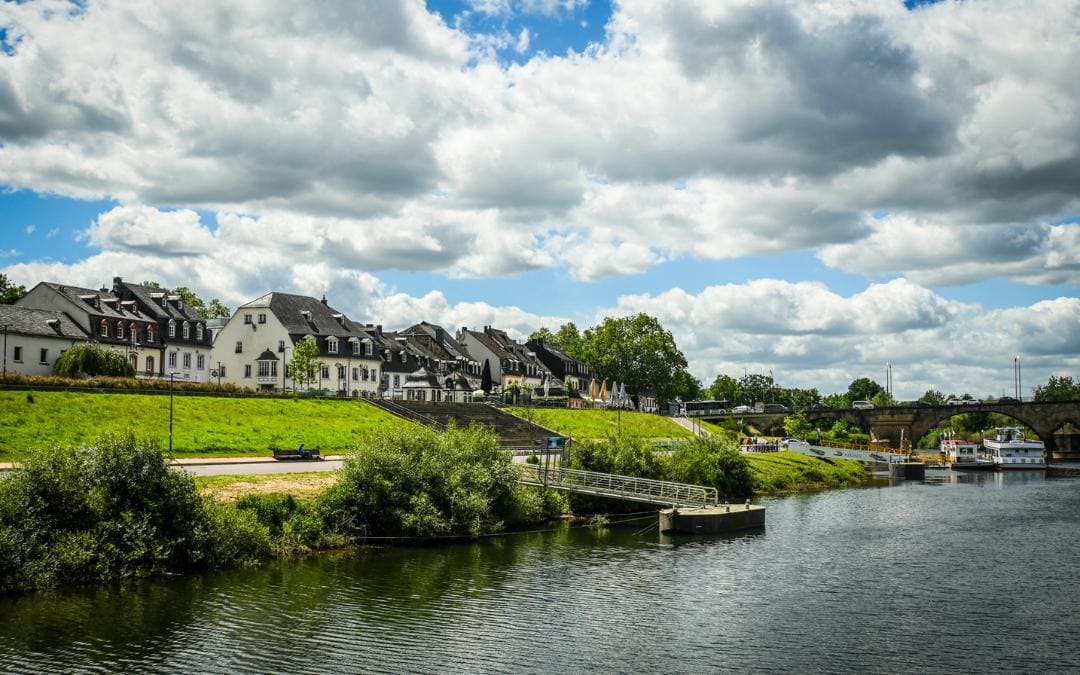
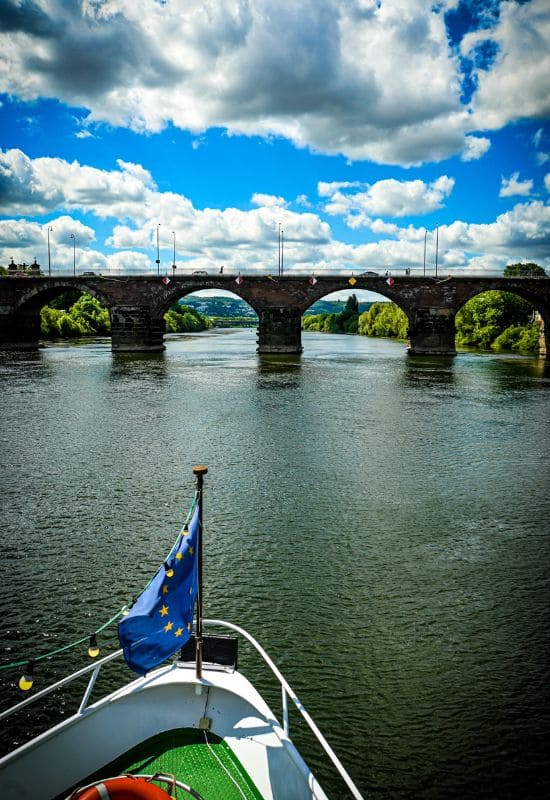
The In the Footsteps of the Romans cruise shows Trier from a perspective you cannot experience on a walk through the city center. From the Zurlauben landing, the boat first travels upstream to the Trier lock and then downstream past Pfalzel to the mouth of the Ruwer.
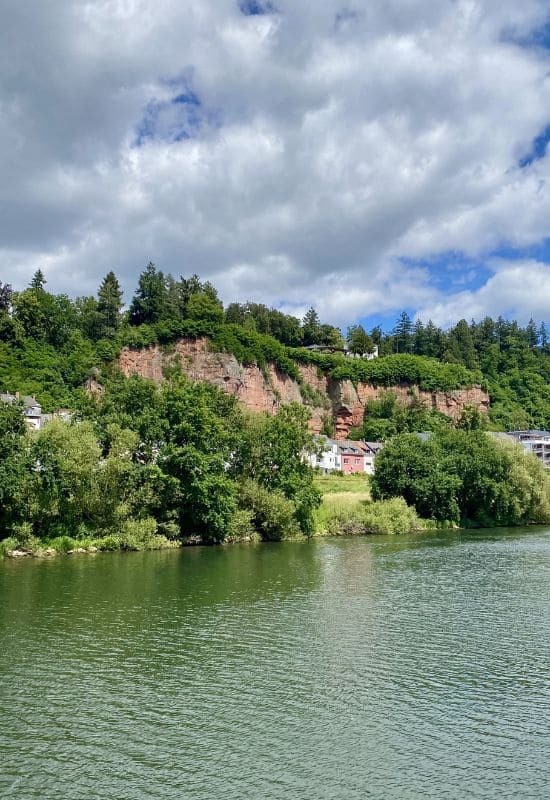
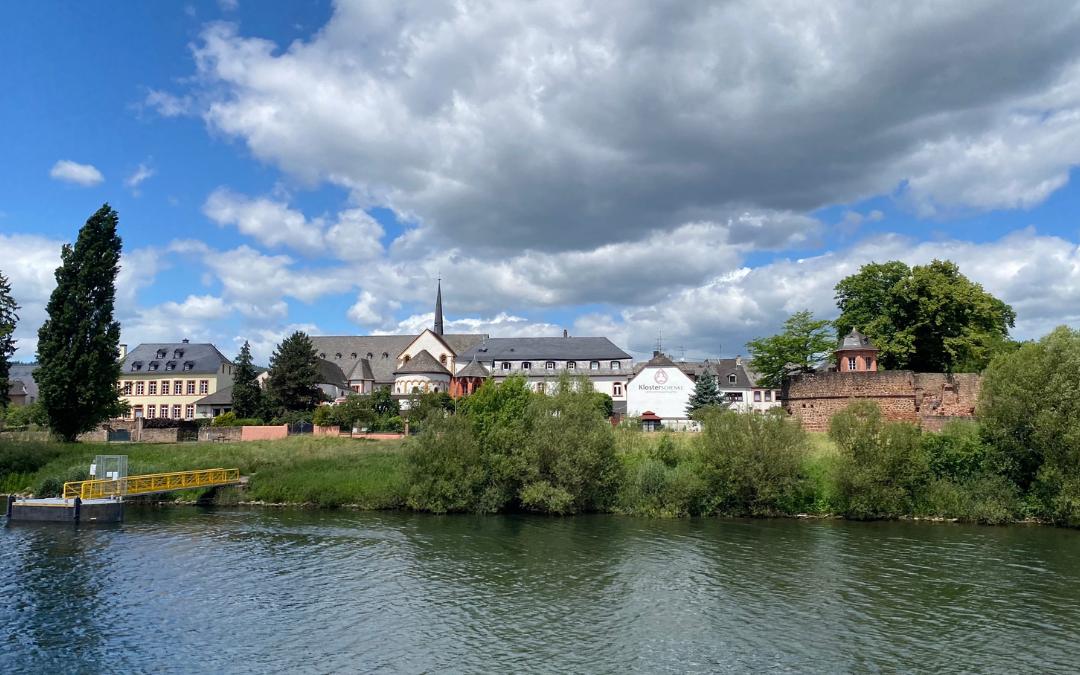
On the southern section, you can see the Marian Column, the red sandstone cliffs near Pallien, and the historic Moselle cranes from the water. I found the passage beneath the Roman Bridge especially impressive, as its ancient piers tower above the boat from this low viewpoint. Farther south, the route passes St. Matthias Benedictine Abbey.
To the north, vineyards line the Moselle. The boat passes the Nordbad outdoor pool on its way to Pfalzel and the mouth of the Ruwer. The historic district is also worth a separate excursion: its attractions include remains of a Late Roman palace complex, the collegiate church, and sections of the historic fortifications.
Moselle Cruise „In the Footsteps of the Romans“ at a Glance
Medieval Books and Extraordinary Cultural Treasures
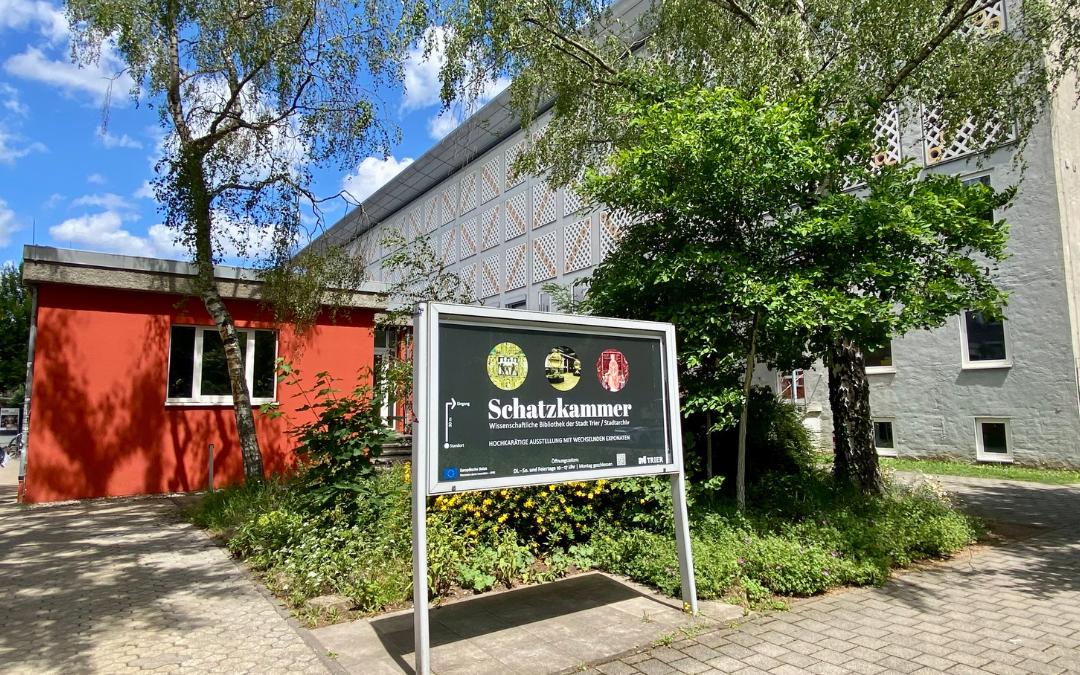
Treasury of the Academic Library: Masterpieces of Book Art
The Treasury of the Academic Library was high on my wish list even before my trip. Books and their history have always fascinated me, and after reading about the Ada Gospels and the Codex Egberti, I was eager to see these extraordinary examples of medieval book culture for myself.
A highly dedicated volunteer, a retired Latin teacher, guided me through the exhibition. His enthusiasm and extensive knowledge turned the tour into an engaging journey through the world of medieval manuscripts. The focus was not only on elaborate illumination, but also on the people who made, used, and preserved these books over many centuries.
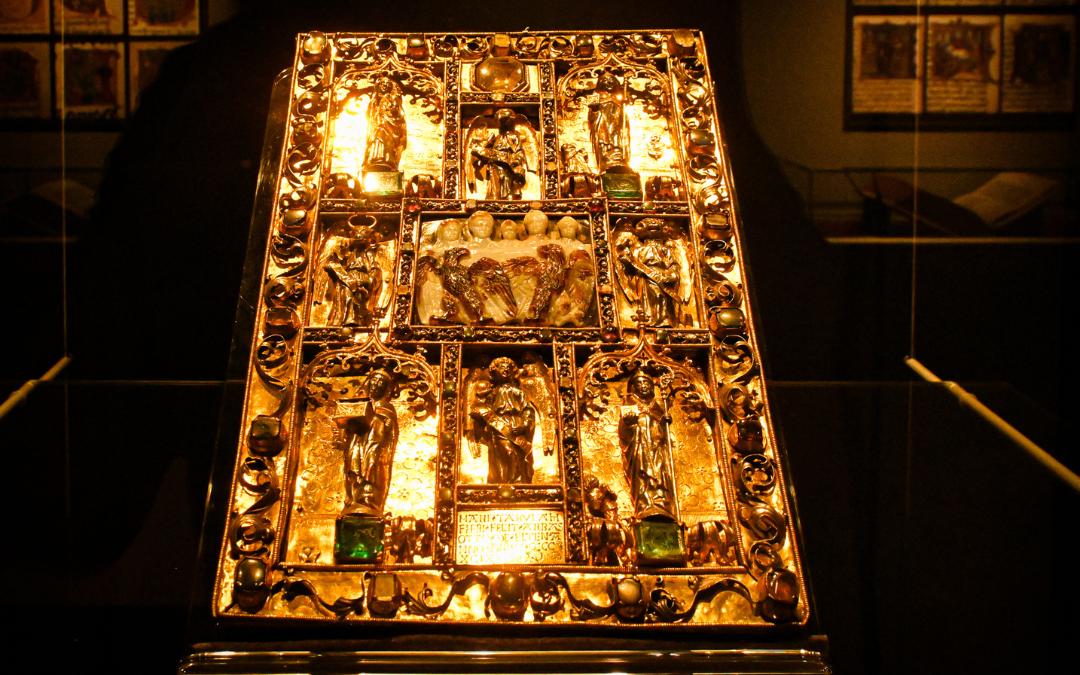
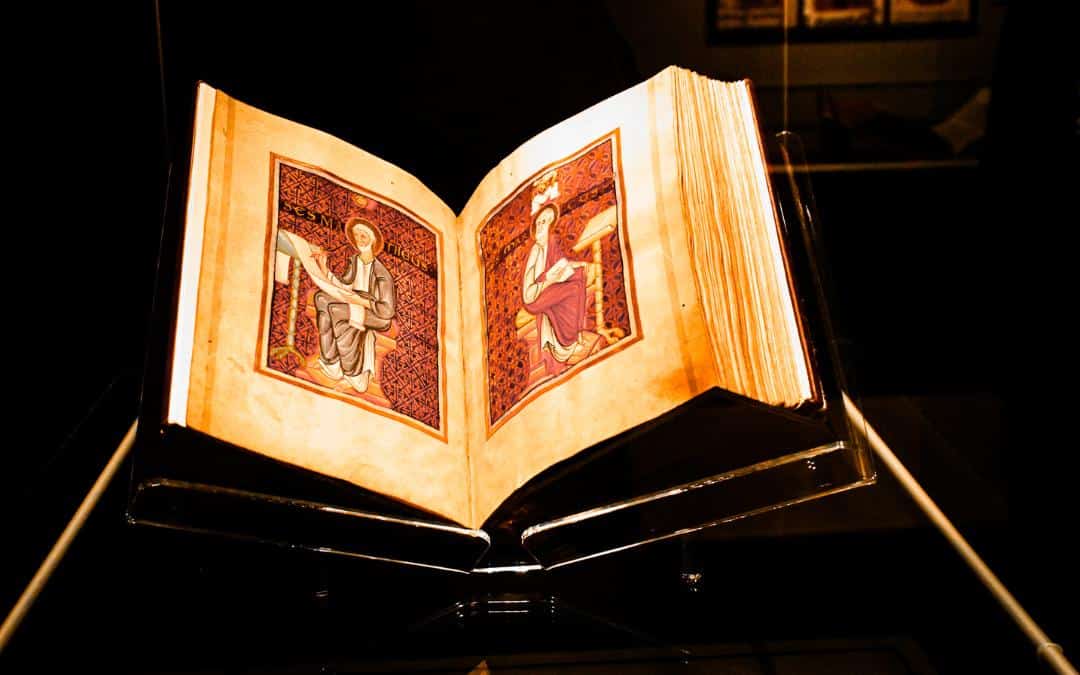
Among the most important treasures are the Ada Gospels and the Codex Egberti . Both are listed in UNESCO’s Memory of the World Register. The Ada Gospels are considered a masterpiece of Carolingian book art, while the Codex Egberti contains one of the earliest extensive pictorial cycles of the life of Jesus. During my visit, the light-sensitive manuscript of the Ada Gospels itself was not on display, but its magnificent gold cover with a cameo from the time of Emperor Constantine was.
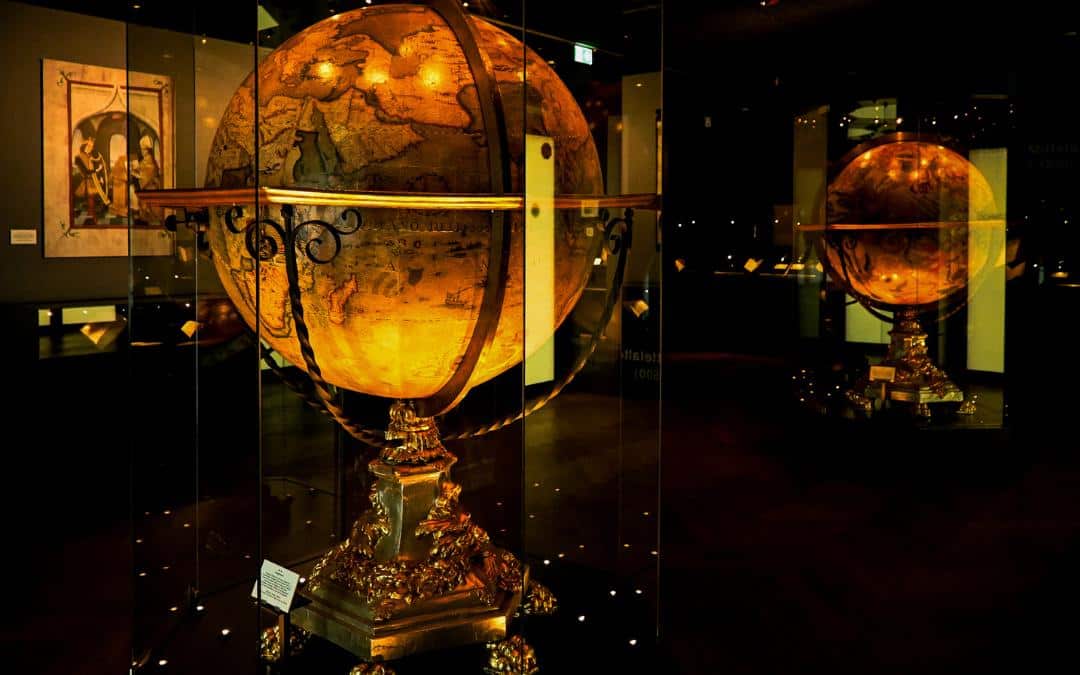
Other highlights include Trier's Gutenberg Bible from the early days of printing and two large Coronelli Globes from the late 17th century. Together, the manuscripts, early printed books, and terrestrial and celestial globes trace a path from medieval knowledge culture to the early modern era.
Treasury of the Academic Library at a Glance
Cathedral Treasury: Precious Witnesses to Christian Trier
The Cathedral Treasury preserves works of art and reliquaries from many centuries of Trier’s church history. Its outstanding object is the portable St. Andrew’s Altar, created around 980 and considered one of the most important works of Ottonian goldsmithing.
Also worth seeing are the reliquary of the Holy Nail, decorated with gemstones and enamel, the Romanesque Gozbert censer, and a Late Antique ivory panel depicting a relic procession.
Trier Cathedral Treasury at a Glance
Museum am Dom: Christian Art from Late Antiquity to the Present
The Museum am Dom (Museum at the Cathedral) displays archaeological finds and Christian art from the Diocese of Trier. Its collection ranges from Late Antiquity through the Middle Ages to contemporary works.
The highlight of the permanent exhibition is the remains of a Constantinian ceiling painting from the early fourth century. More than 30,000 fragments discovered during excavations beneath the cathedral have been partially reassembled into image panels with life-size figures. They probably belonged to the decoration of a Roman palace that stood here before the first large church complex was built.
Museum am Dom Trier at a Glance
Experience Trier as a Wine City
Trier, One of Germany’s Oldest Wine Cities
Wine trading and wine culture in Trier reach back to Roman times. Evidence includes the Neumagen Wine Ship in the Rhineland State Museum and the Roman walls in the cellar of the Vereinigte Hospitien.
Wine still shapes the city and its surroundings today. Vineyards extend into the urban area, several wineries are based in the Olewig district, and long-established church and social institutions cultivate their own sites on the Moselle and Saar. Riesling in particular is closely associated with the region.
Trier’s wine culture is not limited to traditional tastings. You can tour historic cellars, pair regional cuisine with local wines, or easily strike up conversations with winemakers and residents at the wine stand on the Main Market Square.
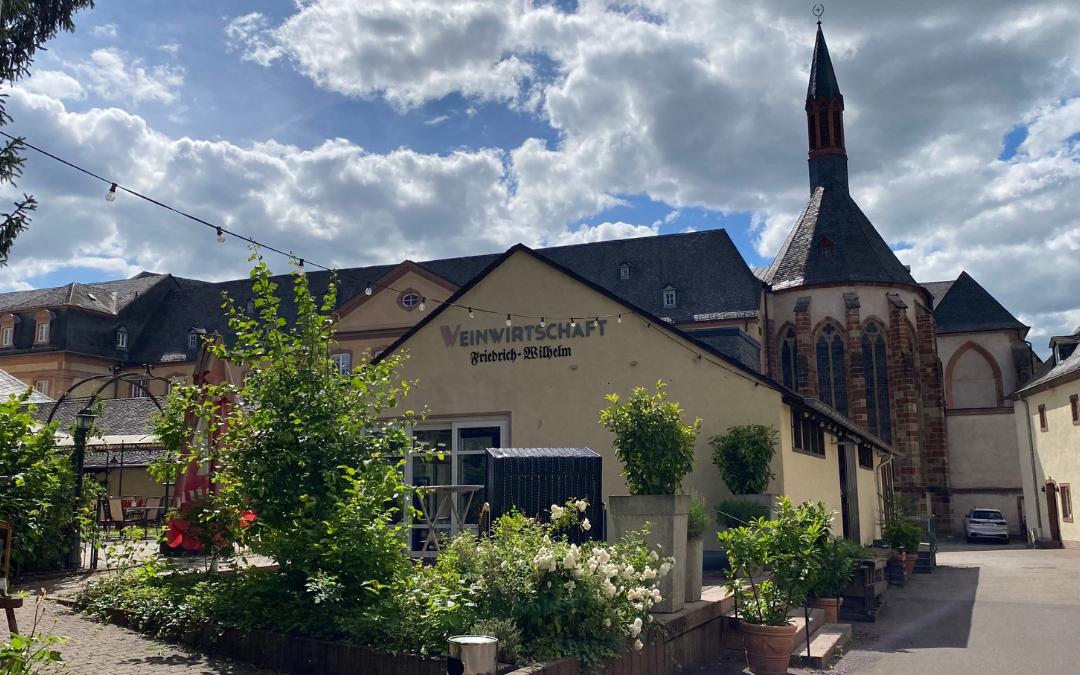
An Enjoyable Evening at Weinwirtschaft Friedrich-Wilhelm
On my first evening in Trier, I met with a staff member from Trier Tourism and Marketing at Weinwirtschaft Friedrich-Wilhelm. After a rainy and unusually cool day in June, we didn’t sit on the terrace but in the cozy dining room. Over dinner, I received some tips for the coming days and was able to get a taste of Trier’s culinary scene at the same time.
The Weinwirtschaft is located in the former premises of the Friedrich-Wilhelm-Gymnasium, one of Germany’s oldest schools. Karl Marx graduated here in 1835. Today, the restaurant pairs modern cuisine with wines from Trier and the Moselle region.
I chose homemade gnocchi in sage-garlic butter with cherry tomatoes, Parmesan, and pine nuts. For dessert, we had a trio of sorbets with fresh fruit. We drank a DOM Rosé brut sparkling wine as an aperitif, and three regional wines were served with the meal.
I especially appreciated the friendly and attentive service. With each wine, we learned about the winery, its origin, and the vineyard site. The dinner therefore also became a brief introduction to the diversity of regional wines.
Weinwirtschaft Friedrich-Wilhelm at a Glance
Cellar Discovery Tour in Germany’s Oldest Wine Cellar
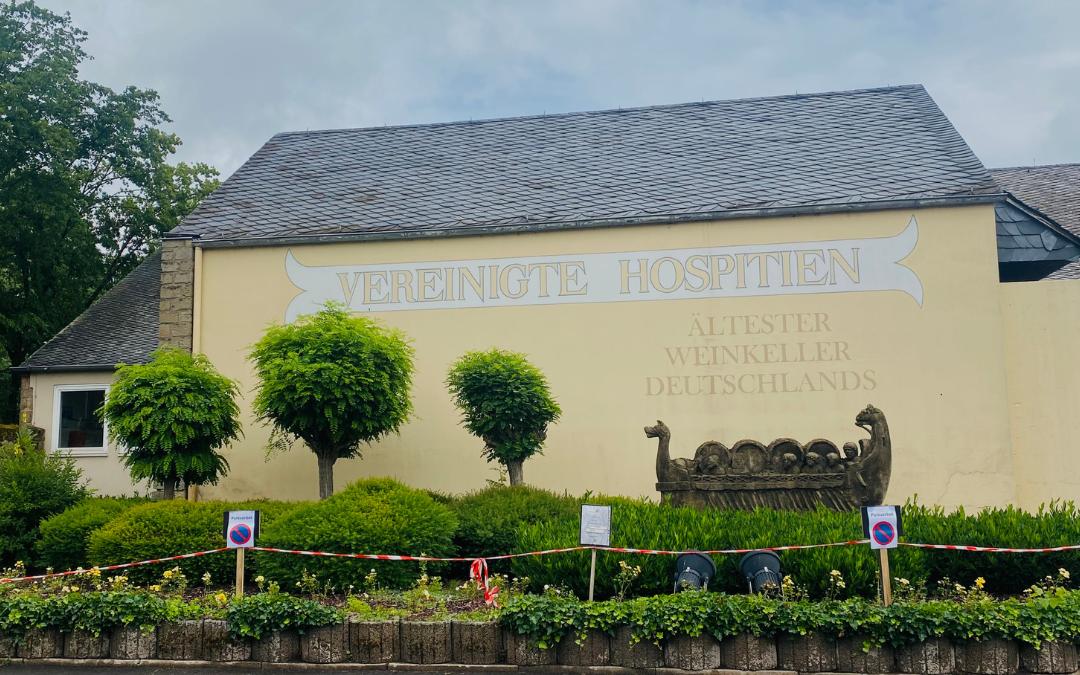
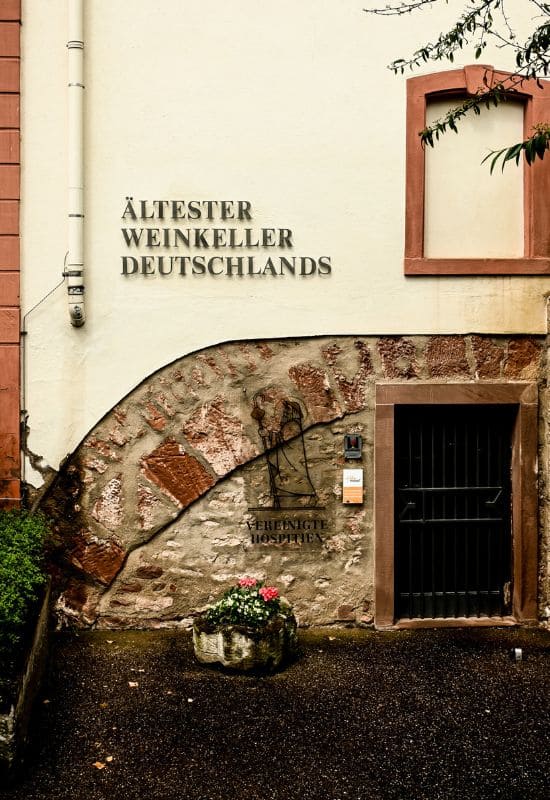
One of my most impressive wine experiences in Trier was the Cellar Discovery Tour at the Vereinigte Hospitien. Marc Neumann led us down into a wine cellar whose oldest walls once belonged to two large Roman granaries. These horrea were built around AD 330 under Emperor Constantine. In the early Middle Ages, a colonnaded hall with groin vaults was inserted into the Roman masonry.
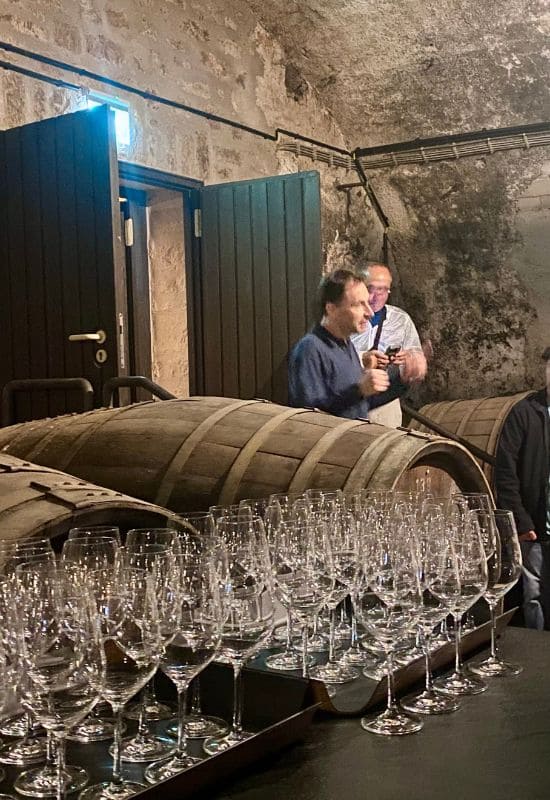
Wine is still made today among the ancient walls, medieval vaults, wooden barrels, and modern stainless-steel tanks. Germany’s oldest wine cellar is therefore not a museum, but an active part of the winery.
I found the connection between winemaking and social commitment especially interesting. The Vereinigte Hospitien were established in 1804 at Napoleon’s instigation by merging several Trier hospitals and social institutions. Today, the foundation primarily supports services for older adults and health care. Part of this work continues to be financed by income from the winery.
The winery cultivates vineyards on the Moselle and Saar, many of them on labor-intensive steep slopes. An account book from the former St.-Jakobs-Hospital also contains the oldest documentary evidence of Riesling cultivation on the Moselle.
During the tour, we tasted a Pinot Gris and a Riesling from the Piesporter Goldtröpfchen vineyard. Marc Neumann explained not only the wines and their origins, but also the history of the cellar and the foundation’s unusual model. This combination of Roman history, winemaking, and social commitment made the tour exceptional for me.
Cellar Discovery Tour at the Vereinigte Hospitien at a Glance
Hospitienpark and the Rococo Church of St. Irminen
After the cellar tour, take a walk through the adjoining Hospitienpark. A spacious green area with mature trees, rare plant species, and a rose garden stretches between the historic buildings.
While you're there, also step inside the Rococo Church of St. Irminen. Its bright, richly decorated interior creates an appealing contrast with the Roman walls and medieval vaults of the wine cellar.
Wine Stand on the Main Market Square: A Popular Local Meeting Place
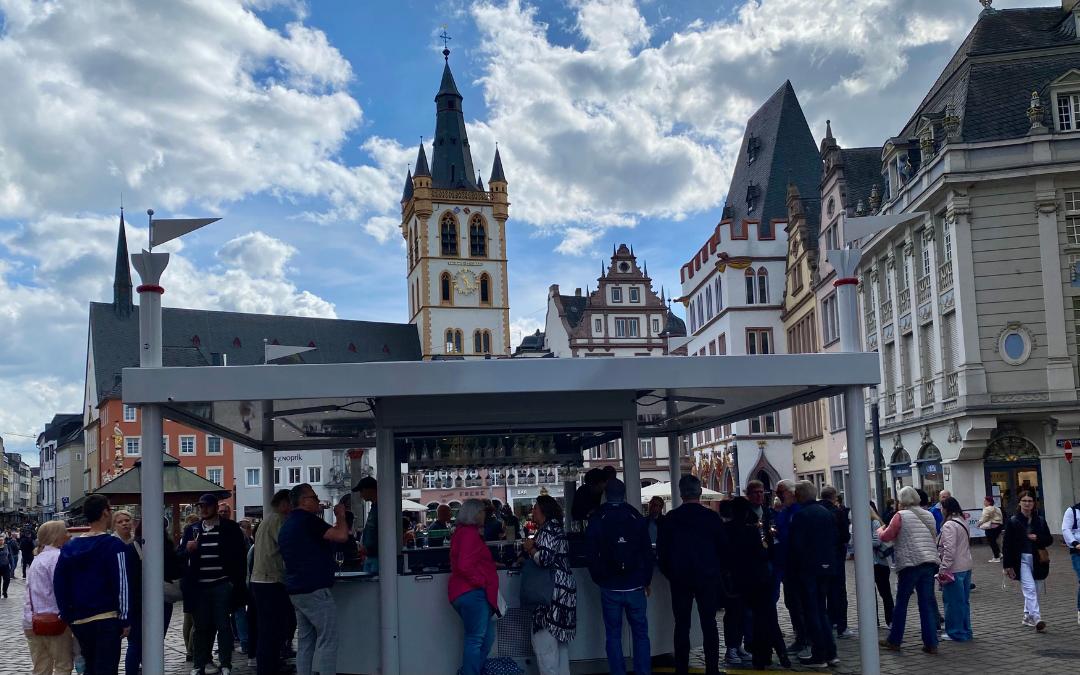
During the wine season, rotating wineries from Trier and the Moselle, Saar, and Ruwer regions serve their wines at Trier’s wine stand on the Main Market Square. On repeat visits, you can therefore discover different producers and wines.
Because the winemakers themselves serve the wines, you often have the chance to learn more about grape varieties, vineyard sites, and the wineries. Alongside Riesling, the selection includes Pinot varieties, sparkling wine, and other regional specialties
Among the historic façades, Trier’s sociable and pleasure-loving way of life becomes especially tangible. Locals and visitors meet here after work, during a shopping trip, or on weekends for a glass of wine.
Trier Wine Stand at a Glance
Trier Beyond the Romans: The Old Town, Museums, and Famous Figures
Main Market: A Kaleidoscope of Eras
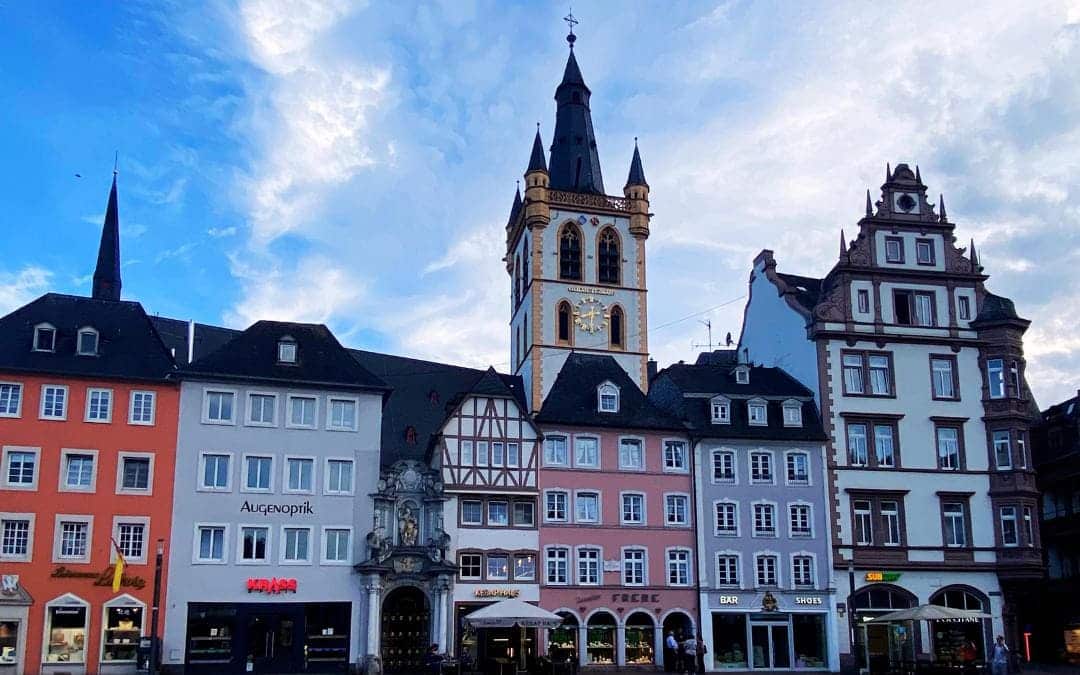
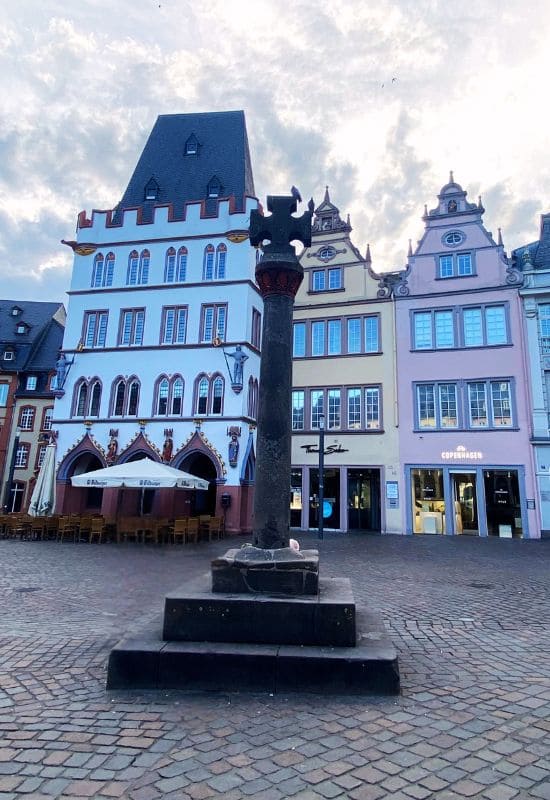
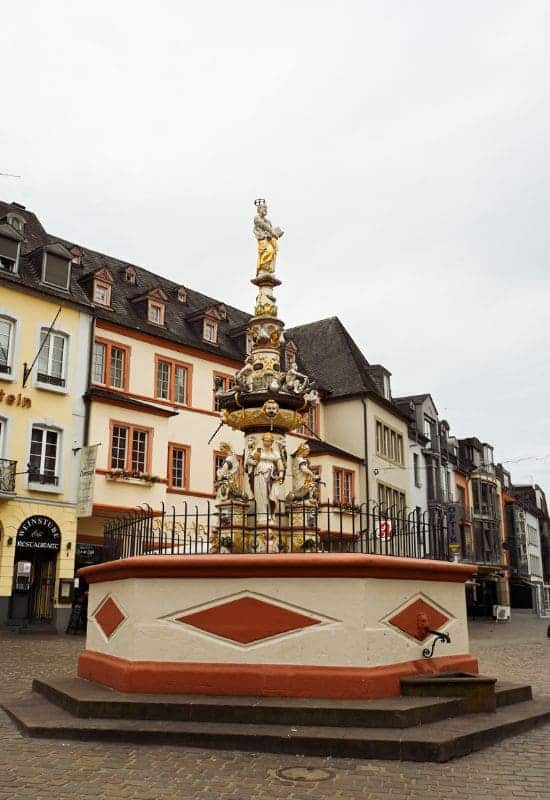
Trier’s Main Market Square is one of the most beautiful historic squares in Germany, in my opinion. Medieval townhouses, half-timbering, Renaissance and Baroque façades stand close together yet form a harmonious ensemble.
Its history as a market and trading place dates to 958. That year, Archbishop Henry I had the market cross erected as a symbol of both market peace and archiepiscopal authority. The original is now preserved in the Simeonstift City Museum; a replica stands on the square.
The Gothic Steipe, the neighboring Red House and St. Peter's Fountaincrowned by the figure of the city’s patron saint are especially eye-catching. Behind the façades is the market church of St. Gangolf, entered through a Baroque gateway on the south side of the square. Another special feature is the Löwen Pharmacy, first documented in 1241 and considered Germany’s oldest pharmacy still in operation.
Trier Main Market at a Glance
Simeonstift City Museum: Trier History Beside the Porta Nigra
Directly beside the Porta Nigra, the Simeonstift City Museum occupies a Romanesque collegiate building around 950 years old. The cloister and quiet fountain courtyard alone make a visit worthwhile. Inside, works of art, historic objects, and multimedia stations tell Trier’s urban and cultural history from the Middle Ages to the present.
Among the best-known exhibits are the original market cross and medieval figures from the Main Market Square, where replicas now stand. Also worth seeing are Napoleon’s golden wine cup and a section of the ancient and medieval city wall integrated into the museum’s lower level.
Simeonstift City Museum at a Glance
Karl Marx House: Life, Work, and Global Influence
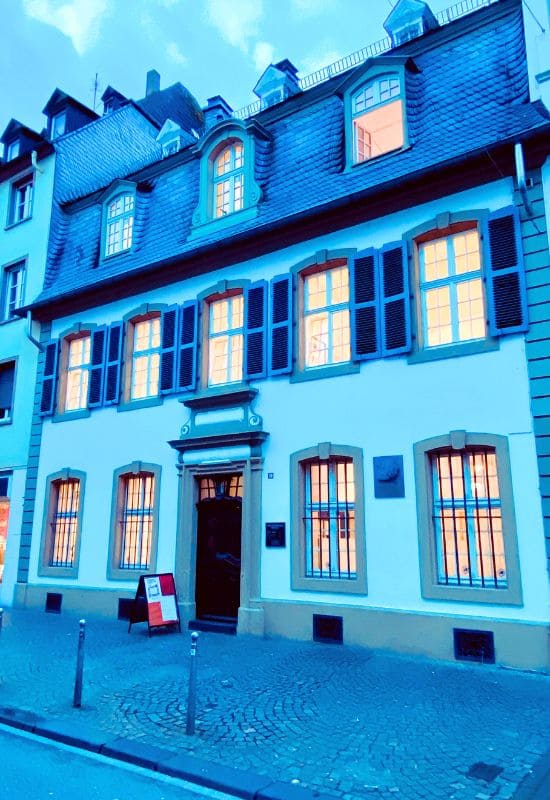
Karl Marx was born in Trier on May 5, 1818. His birthplace on Brückenstraße is now a museum operated by the Friedrich Ebert Foundation. The family lived in the Baroque townhouse only until 1819; the Social Democratic Party acquired it in 1928, and the foundation has operated it as a museum since 1968.
The permanent exhibition „From Trier to the World“ presents Marx as a philosopher, economist, and critic of capitalism, while also showing the person behind the work. It covers his childhood, family life, years in exile, and collaboration with Friedrich Engels.
I found the critical examination of the worldwide impact of his ideas especially interesting. The exhibition shows how Marx’s writings were interpreted, developed further, and appropriated by political systems. It distinguishes between his own analyses and what later governments and movements made of them.
Karl Marx House at a Glance
Karl Marx Statue and the Family’s Later Home
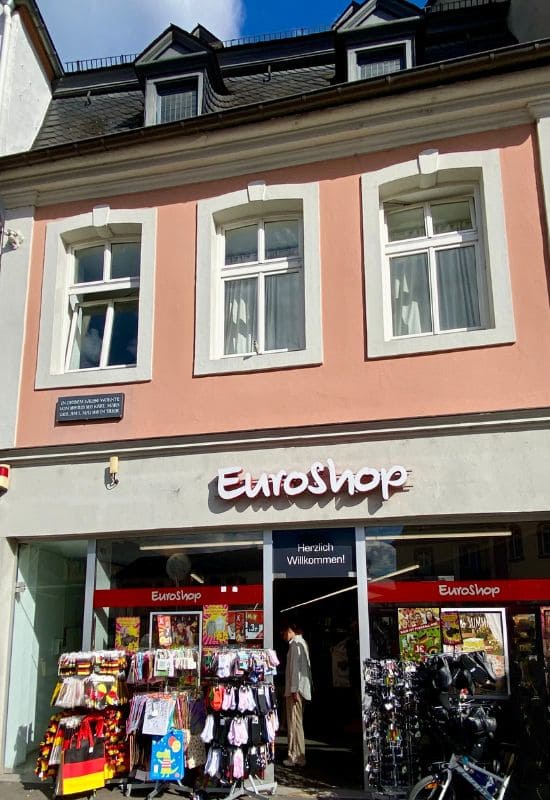
Fifteen months after his birth, Karl Marx moved with his family to a house on Simeonstraße, where he spent much of his childhood and youth. Today, of all things, a one-euro discount store occupies the ground floor of the former family home.
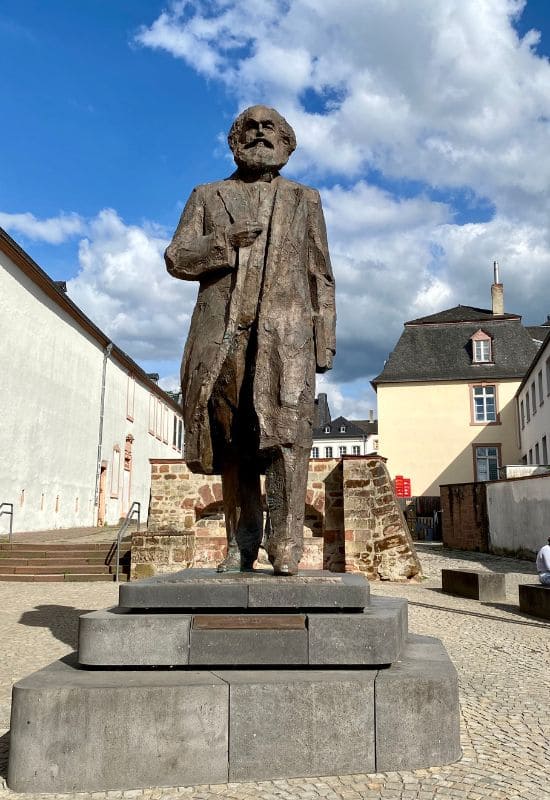
A monumental bronze statue by Chinese sculptor Wu Weishan has stood in plain sight since 2018. The gift from the People’s Republic of China to mark the 200th anniversary of Karl Marx’s birth was controversial due to the human rights situation in China and the political co-opting of his ideas. As a result, the statue is not only a monument but also a catalyst for debates about the culture of remembrance.
Other Attractions in Trier's Old Town
Kornmarkt and St. George’s Fountain
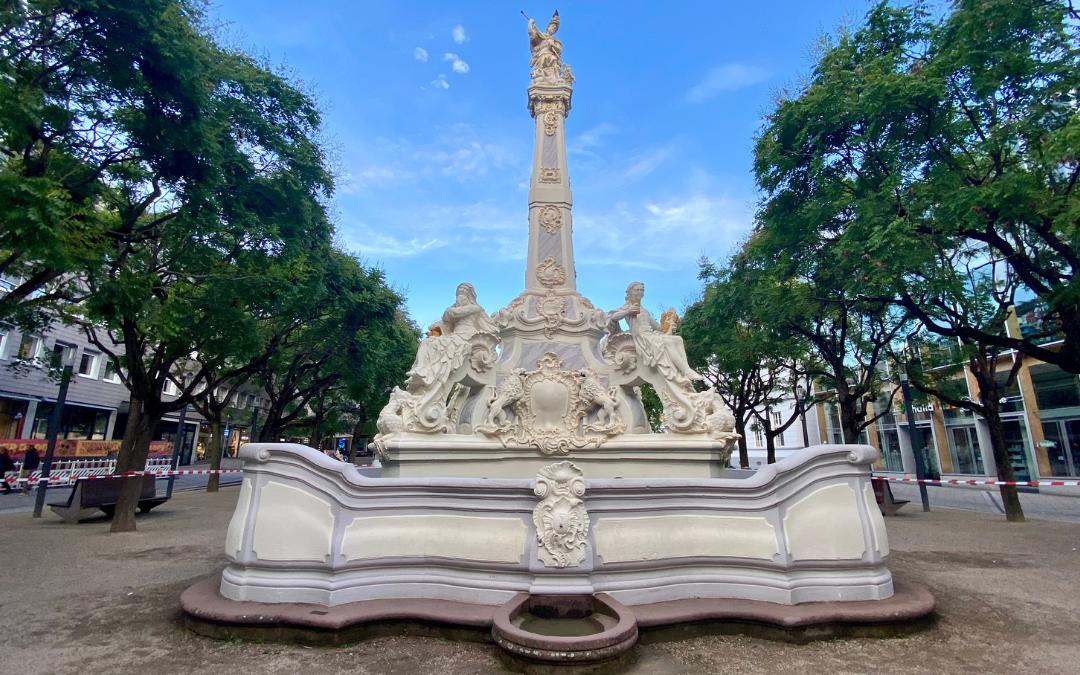
The Kornmarkt seems quieter and more spacious than the nearby Hauptmarkt. Its centerpiece is the eleven-meter-high St. George's Fountain from the 18th century. At the top, St. George defeats the dragon, while figures around the base represent the four seasons.
Posthof
A passage on the west side of Kornmarkt leads into the Posthof, a protected historic complex centered on the former regional post office headquarters. Its historic façades, courtyards, shops, and dining options make it worth a brief detour.
Judengasse (Jew's Alley)
A small Jewish gateway leads from the Main Market Square into the medieval Jewish quarter. House No. 2 is considered Germany’s oldest surviving Jewish residence. Information panels also commemorate the 1349 pogrom and the expulsion of Trier’s Jewish community in 1418.
Dreikönigenhaus (House of the Three Magi) and Frankenturm: Fortified Medieval Residences
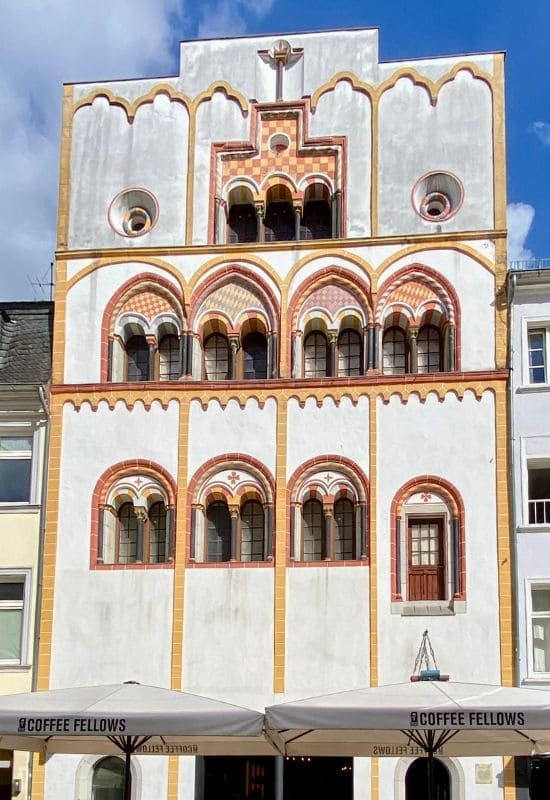
The colorful House of the Three Magi on Simeonstraße originally had an entrance several feet above street level that could be reached only by ladder. This design was intended to protect the wealthy residents from intruders.
Another example is the 11th-century Frankenturm. The surviving residential tower was built partly from reused Roman stone.
Walderdorff Palace
Walderdorff Palace on Domfreihof incorporates elements from several centuries and is one of the city’s most representative historic buildings. If you are already visiting the cathedral and Church of Our Lady, it is worth taking a look into the courtyard.
Important Churches Beyond the Classic Old Town Route
St. Matthias Benedictine Abbey: Pilgrimage Site at an Apostle’s Tomb
St. Matthias Benedictine Abbey lies in southern Trier and has a history reaching back to Late Antiquity. The Romanesque basilica centers on the tomb of the Apostle Matthias. According to tradition, Helena, the mother of Emperor Constantine, brought his remains to Trier in the fourth century. The apostle’s tomb has been venerated here since the 12th century, and pilgrims have traveled to St. Matthias for more than 800 years.
The shrine containing the apostle’s tomb is in the crypt. The basilica also venerates Trier’s first bishops, Eucharius and Valerius. The bright Romanesque interior feels calm and restrained, distinctly different from the city’s richly decorated Baroque churches.
A Benedictine community still lives and works at the abbey. The monks welcome pilgrims and guests and invite visitors to attend their public prayer services.
St. Matthias Benedictine Abbey at a Glance
St. Maximin: Late Antique Burial Ground Beneath the Former Imperial Abbey
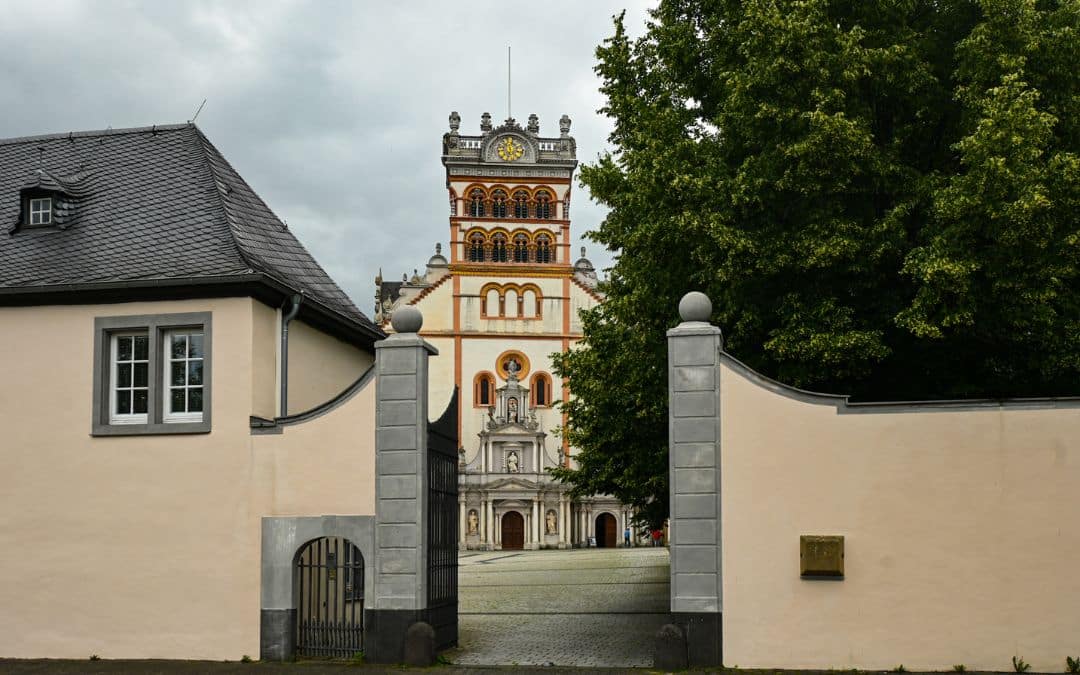
St. Maximin was once one of Trier’s most important Benedictine monasteries and ranks among the oldest monastic foundations in Western Europe. The present former abbey church was built in the late 17th century, used as barracks after secularization, and now serves as a sports and events hall.
Its true distinction lies beneath the building: a Late Antique burial ground with several hundred graves and around 1,000 sarcophagi. The oldest date from the second century. This extraordinary archaeological site can be visited only on a guided tour.
St. Maximin at a Glance
St. Paulin: A Baroque Masterpiece in the North of Trier
The present St. Paulin Church was built in the 18th century over a Late Antique burial ground. Johann Georg Seitz and Balthasar Neumann were among those involved in its design and decoration. The magnificent interior is strongly influenced by southern German Baroque style.
The high altar and the large ceiling fresco by Christoph Thomas Scheffler are especially impressive. The painting tells the story of St. Paulinus and the martyrdom of the Theban Legion. An ancient crypt lies beneath the church, but it is accessible only on special occasions.
St. Paulin at a Glance
Trier on Foot: Promenades, Green Walkways, and Viewpoints
Along the Moselle to the Historic Cranes
Before and after my cellar tour at the Vereinigte Hospitien, I used the time for a walk along the Moselle. Behind the busy Krahnenufer road, a footpath runs through a green strip directly beside the river, allowing you to walk in either direction away from traffic.
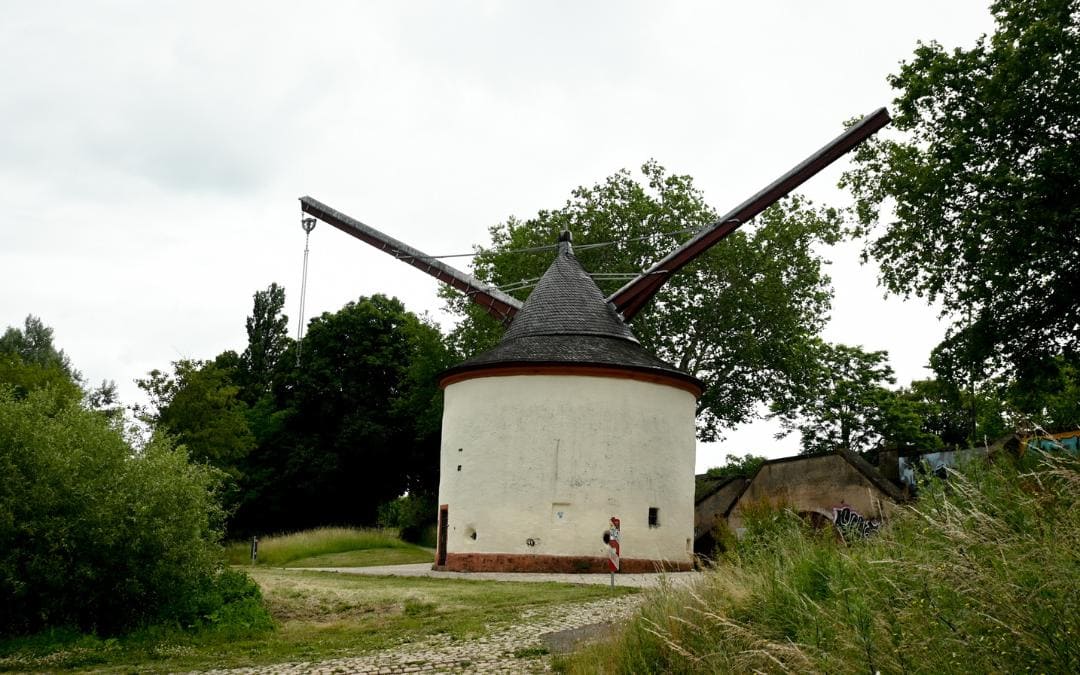
Just a few steps away from the Vereinigte Hospitien stands the Old Crane, built in 1413. Freight boats were loaded and unloaded here for around 500 years. Large treadwheels powered its mechanism, and wine was among the most important goods handled.
Heading south, the riverside path passes the 18th-century Customs Crane from the 18th century on through to the Römerbrücke. If you go in the opposite direction, you'll end up at Zurlauben with its restaurants and on to the Nordbad. In the summer, Moselperle below the pool offers a sandy beach, loungers, drinks, and light food.
Trier Riverside Walk at a Glance
Trier’s Green Promenade Ring: Leafy Paths Around the Old Town
The green promenade ring offers a peaceful alternative to the busy shopping streets. It runs parallel to Nordallee, Ostallee, and Südallee around much of the city center.
Parts of the parkland follow the former city fortifications. Along the way, you will encounter remnants of the medieval city wall and early modern defensive structures such as the bastion on Südallee.
The promenade ring also provides a green connection between several attractions. From the Moselle, for example, the landscaped strip along Nordallee leads directly to the Porta Nigra.
Trier from Above: Petrisberg and the Marian Column
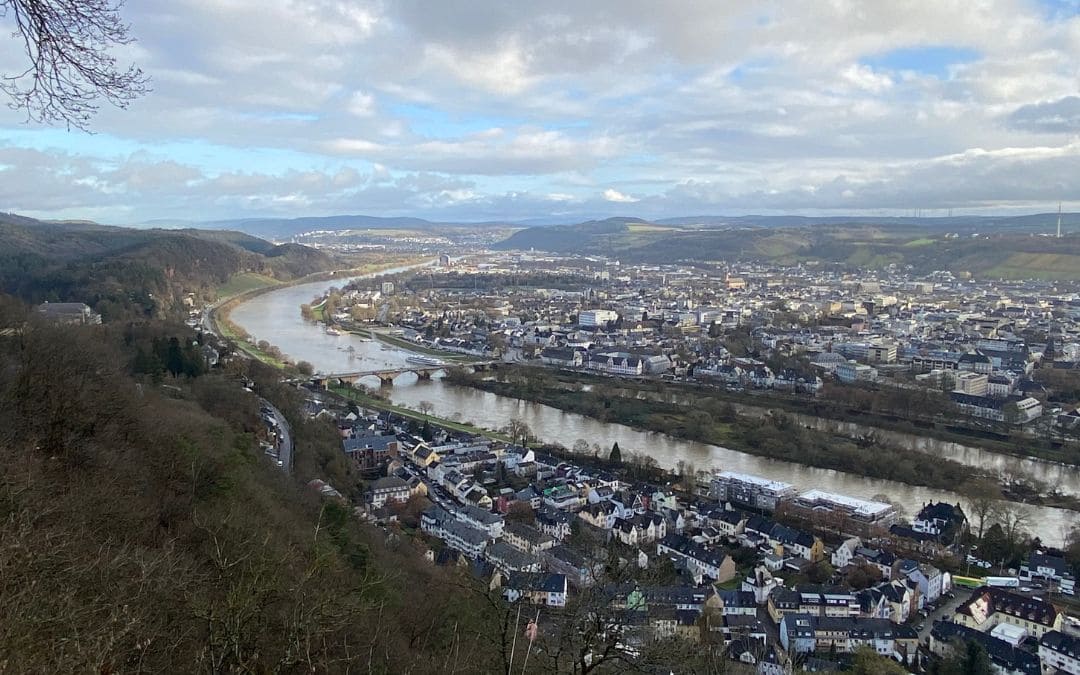
The Petrisberg, east of the city center, offers expansive views over Trier. The former military site was redeveloped for the 2004 State Garden Show and is now a large residential, academic, and recreation area. The partner gardens and accessible Luxembourg Tower are among the features that remain from the garden show.
Several walking routes cross the area. The nature discovery trail covers about five miles, while Trier’s Wine Culture Trail begins above the amphitheater and runs through the vineyards to the winegrowing district of Olewig.
The classic Panoramic view of the city and the Moselle Valley Have you heard about the Marian Column on the western side of the river. I visited the viewpoint in winter during a trip to Trier's Christmas Market. The view was already beautiful then; with green vineyards, it must be even more impressive.
You can hike up to the Marian Column or drive most of the ascent. The final section is uphill on foot in either case. The viewpoint is freely accessible.
Trier Viewpoints at a Glance
Practical Information for Your City Trip to Trier
Best Time to Visit Trier
Trier is worth a visit any time of year. However, I find spring and early fall particularly pleasant. During those seasons, the temperatures are usually ideal for long walks around the city, strolls along the Moselle, and through the vineyards.
From mid-March through early November, the wine stand on the main market square is also open. In the spring, the squares and terraces come to life, while in late summer and fall, grape harvests and wine festivals define the region. These months are particularly appealing to wine lovers.
Many open-air concerts and city festivals take place in midsummer. Trier can become very hot, however, and many squares and Roman monuments offer little shade. Plan museums, churches, and cellar tours for midday whenever possible, and explore the city in the morning or later afternoon.
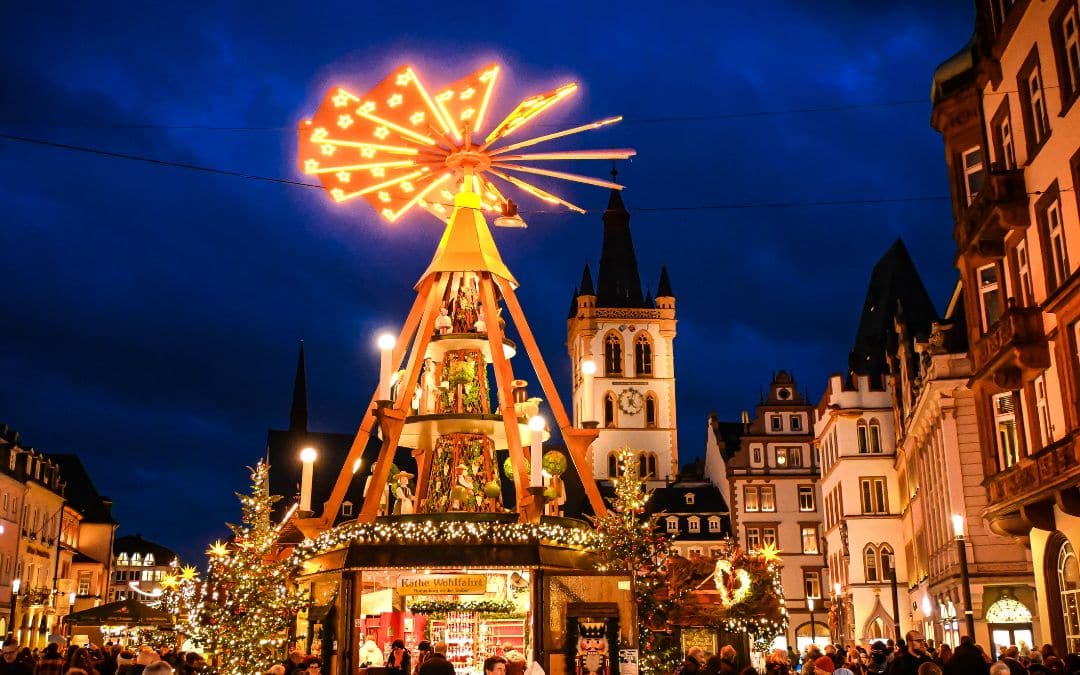
It's also worth a visit during Advent. The Trier's Christmas Market on the Main Market Square and Domfreihof is among the most atmospheric Christmas markets I have visited in Germany. In winter, however, expect shorter opening hours and fewer cruises and wine events.
Festivals & Events in Trier at a Glance
- Trier Carnival: On Women's Carnival Thursday and during the Rose Monday parade, Trier demonstrates its long Carnival tradition.
- Wine in the City: This spring festival celebrating the new vintage combines a wine village on the Main Market Square with a wine garden on Domfreihof.
- Brückenglück: For a weekend in early June, the Roman Bridge becomes a traffic-free festival venue with music, dancing, wine, and food directly above the Moselle.
- Porta³: At the open-air festival in mid-June, the Porta Nigra provides impressive backdrop for concerts in a variety of musical genres.
- Trier Old Town Festival: On the final weekend in June, stages, live music, and numerous stands transform the city center into one large festival.
- Moselle Music Festival: From summer through fall, concerts take place in Trier and at other venues along the Moselle, including churches, monasteries, palaces, and wineries.
- Illuminale and the Underworlds of Trier: Every two years, Illuminale illuminates parts of the city with light art. During Trier Underworlds in the fall, cellars, baths, burial sites, and other underground places open for tours and performances.
- Trier Christmas Market: From late November until shortly before Christmas, the Main Market Square and Domfreihof provide the historic setting for the Christmas market.
💡 My tip: Check the current calendar of eventsbefore booking. Dates and venues may change, and some events do not take place every year. Reserve accommodations early for Brückenglück, Porta³, the Old Town Festival, and the Christmas market.
Getting to Trier
By Train
Trier does not have regular high-speed ICE service, but it is well connected by regional trains. Direct services include Koblenz, Saarbrücken, Luxembourg, and Mannheim. You can connect to Germany’s long-distance rail network in Koblenz, Mannheim, or Saarbrücken.
The main train station is about a ten-minute walk from the Porta Nigra and the northern old town. With a centrally located hotel, you can therefore arrive easily without a car.
By Car
Trier is easy to reach via several highways. Because large parts of the historic center are pedestrianized, it is best to leave your car at your hotel or in one of the parking garages near the city center.
The Parking Guidance System shows available spaces in parking garages and underground lots. Park-and-ride lots are also available on the edge of the city, with buses into the center.
By Plane
The nearest international airport is Luxembourg. From there, you can reach Trier by car or public transportation.
Other options include Frankfurt-Hahn and Saarbrücken airports. Buses run from Frankfurt-Hahn to Trier, while the journey from Saarbrücken Airport by public transportation is somewhat less convenient.
Arriving via Frankfurt
For international travelers flying into Germany, Frankfurt Airport is often the first major hub. My Frankfurt Airport Guide contains all the essential information for arrival and onward travel. By train, you can travel to Trier via Koblenz, Mannheim, or Saarbrücken.
Getting Around Trier
Exploring the City Center on Foot
The historic city center is compact, and most central attractions are easy to reach on foot. From the Porta Nigra, you can walk via the Main Market Square, cathedral, and Constantine Basilica to the Imperial Baths.
Even so, a full day of sightseeing adds up to many steps. Cobblestones, steep stairs, and uneven passageways in some Roman monuments make comfortable, sturdy shoes especially important.
By Bus
City buses are practical for destinations farther out, such as the amphitheater, St. Matthias, and Petrisberg. I particularly recommend taking the bus to the amphitheater because parts of the walk from the city center follow busy roads and are not very appealing.
Current routes and departure times are available in the electronic journey planner. Buses may run less frequently in the evening and on Sundays and public holidays.
Parking in Trier
You generally do not need a car within the old town. The most practical option is to park once in a central garage and then explore the city on foot or by bus. The Parking Guidance System shows available spaces in garages and underground lots.
My tip: Choose a parking garage based on where your walk begins or ends. For the northern old town around the Porta Nigra and Main Market Square, use a garage in that area; for Viehmarkt, the Karl Marx House, and the southern old town, choose one farther south.
Where to Stay in Trier
Hotel Deutschherrenhof: Quiet and Affordable Near the Old Town
This time in Trier, I stayed at Hotel Deutschherrenhof*. This small, owner-managed hotel is quietly situated on Deutschherrenstraße, yet central enough for you to walk easily to the Porta Nigra, Main Market Square, and many other attractions.
My single room was very small but adequate for a short stay. I found the queen-size bed very comfortable. The double rooms are more spacious and may also be worth considering for solo travelers who would like a little more room.
I also appreciated the friendly service, attractive breakfast room, and good breakfast. Keep in mind, however, that the hotel has no elevator and the stairs to the upper floors are fairly steep.
Parking: Paid spaces on Deutschherrenstraße and in the nearby Hauptmarkt parking garage can be reserved through the hotel at a reduced daily rate.
Best for: Budget-conscious travelers seeking a quiet, central hotel who do not mind stairs.
ibis Styles Hotel Trier: Modern Design in the Historic Posthof
The ibis Styles Hotel Trier is located in the heart of the old town in the historic former post office building. The Main Market Square, Cathedral, Forum Baths, and Karl Marx House are only a few minutes away on foot. Even the approach through the Posthof, with its historic façades and courtyards, gives the hotel a distinctive atmosphere.
The modern rooms use colors and motifs inspired by Trier’s Roman history. Some have unusually high ceilings because of the historic architecture. A breakfast buffet can be added.
Only a limited number of paid parking spaces are available at the hotel. Alternatively, you can use one of the nearby parking garages.
Best for: Travelers looking for modern design, more spacious rooms, and an especially central old-town location.
Romantik Hotel zur Glocke: Historic Atmosphere in the Heart of the Old Town
The Romantik Hotel zur Glocke occupies a historic building dating from 1567 in the middle of the pedestrian zone. Its individually designed rooms combine the character of the old building with modern comfort, and many offer a view of Trier Cathedral.
The hotel includes the traditional Wirtshaus zur Glocke, which serves regional cuisine in a historic setting. Because the hotel is in the pedestrian zone, you cannot park directly at the property. Public parking is available nearby, however.
Best for: Travelers who value an individual boutique hotel, historic atmosphere, and an exceptionally central location.
Restaurant and Café Recommendations for Trier
For me, a city trip also includes relaxing coffee breaks and a good dinner. I’ve visited the following restaurants, wine bars, and cafés myself, so I can recommend them to you based on my own experience.
Weinwirtschaft Friedrich-Wilhelm
Weinwirtschaft Friedrich-Wilhelm combines regional cuisine with Mediterranean and Middle Eastern influences and a large selection of wines. I thoroughly enjoyed both my meal and the accompanying wines. In warm weather, the terrace is especially pleasant, and wine tastings with tapas are also offered regularly. You can read more about my evening there in the section on Trier as a wine city above.
Address: Weberbach 75, 54290 Trier
Website: Weinwirtschaft Friedrich-Wilhelm
Weinstube Kesselstatt
is directly opposite the cathedral and Church of Our Lady. Its summer garden beneath mature trees is especially attractive, right in the historic center yet slightly removed from the bustle. The menu includes regional dishes and a large selection of wines from the VDP estate Reichsgraf von Kesselstatt.
The summer garden is self-service: You order and pay at the counter, take your drinks with you, and collect your food later from the pickup area.
Address: 10 Liebfrauenstraße, 54290 Trier
Website: Weinstube Kesselstatt
Wirtshaus Zur Glocke
Wirtshaus Zur Glocke is a Trier institution and is considered the city’s oldest continuously operating restaurant. I especially liked the rustic historic setting and cozy atmosphere, and I was also very pleased with my meal. The menu features regional Trier dishes, seasonal specialties, and wines and beers from the area.
Address: Glockenstraße 12, 54290 Trier
Website: Wirtshaus Zur Glocke
Café Mohr
The traditional Café Mohr is located on Fleischstraße between the Main Market Square and the Karl Marx House and makes a good stop during an old-town walk. The elegant café serves cakes, pastries, and other confectionery specialties and is also a recommended breakfast spot.
Address: 55 Fleischstraße, 54290 Trier
Website: Café Mohr
Café Konditorei Raab
Café Konditorei Raab lies slightly off the main tourist route but only a few minutes’ walk from the Karl Marx House. During my coffee break, I had the impression that it is especially popular with locals. The pastry shop is now run by the fourth generation and is known for its delicious handmade cakes, pastries, chocolates, and Baumkuchen.
Address: 14 Karl-Marx-Straße, 54290 Trier
Website: Café Konditorei Raab
Café Zeitsprung
Café Zeitsprung is directly beside the Rhineland State Museum and Palace Garden, making it ideal for a relaxed coffee break before or after a museum visit. In good weather, the terrace beside the water feature is particularly appealing, with views of the Palace Garden and Electoral Palace.
Address: Weimarer Allee 1, 54290 Trier
Website: Café Zeitsprung
Tickets, Discount Cards, and Information
AntikenCard Trier
If you plan to visit several Roman monuments and the Rhineland State Museum, the AntikenCard Trier may be worthwhile. Depending on the version, it includes selected monuments or all four paid Roman sites operated by the Center of Antiquity, as well as the State Museum.
Which version offers the best value depends on your itinerary. Current benefits, validity periods, and prices are listed on the Center of Antiquity website.
Trier Card for Buses and Discounts
The Trier Card is especially useful if you expect to use city buses frequently. In addition to free travel on local bus routes, it offers discounts at various attractions, museums, and tours.
As a rule of thumb:
- The AntikenCard is generally the better choice for several paid Roman sites and the State Museum.
- The Trier Card is more attractive for a stay that includes multiple bus rides and a varied sightseeing program.
Before purchasing, compare the current benefits with the individual admissions and rides you actually plan to use.
Tours and Admission Tickets
Reserve popular immersive tours such as „Gladiator Valerius“ or „The Secret of the Porta Nigra“ as well as the Cellar Discovery Tour at the Vereinigte Hospitien as early as possible. Conventional city tours can also sell out on busy weekends and during major events.
Before visiting churches, museums, and seasonal attractions, also check current opening hours. Tickets for the Roman monuments and the AntikenCard can sometimes be purchased online in advance.
Tourist Information at the Porta Nigra
The Tourist Information office is directly beside the Porta Nigra. Here you can obtain city maps and information materials, book tours and special experiences, and get advice on events, discount cards, and excursions.
Address: Simeonstraße 60, 54290 Trier
Website: Trier Tourism and Marketing
My tip: Visit the Tourist Information office near the beginning of your stay. You may learn about current dates, last-minute changes, and additional tours that were not yet available when you planned your trip.
My Conclusion: Trier Delights with Roman Monuments, Cultural Treasures, and Wine Experiences
Trier impressed me once again on my third visit. The Porta Nigra, Imperial Baths, amphitheater, and other UNESCO World Heritage monuments are undoubtedly the major historic highlights. Yet it was the experiences beyond the famous monuments that showed me just how varied the city is.
The Treasury of the Academic Library, the gripping “Gladiator Valerius” immersive tour, and the Cellar Discovery Tour at the Vereinigte Hospitien remain especially memorable. The Moselle cruise, the enjoyable evening at Weinwirtschaft Friedrich-Wilhelm, and the smaller discoveries between the Main Market Square, Domfreihof, and the riverfront also shaped my stay.
In Trier, more than 2,000 years of history come together within an unusually compact area. Roman monuments stand beside medieval churches, Baroque palaces, and lively squares. At the same time, Trier is a traditional wine city where you can tour historic cellars, sample Moselle wines, and end the day at a cozy wine restaurant or the wine stand on the Main Market Square.
Allow at least three days for the most important attractions and selected experiences. Four days are ideal if you also want to enjoy museums, tours, and Trier’s culinary side without rushing. Trier is not a city to check off as quickly as possible. It reveals itself best when you take time for its history, cultural treasures, and distinctive atmosphere.
Disclosure: This article was written as part of a collaboration with Trier Tourism and Marketing. Some of the services described were provided to me free of charge. The collaboration had no influence on my personal impressions or recommendations.
Have you discovered my e-book “Old Town Magic in Germany” yet?
Inside you'll find:
- 5 historic old town walks
- concise information on the most important stops
- Interactive maps for on the go (with QR code!)
[Ad] Before I set off on my road trip through the Saarland, along the Moselle, and into the Upper Middle Rhine Valley, I had definitely expected read more
UNESCO World Heritage Sites are places of outstanding universal value—significant testaments to history and culture, as well as unique natural landscapes. When the read more
I had planned to spend three days in the Saarland. At first, that sounded reasonable: the distances are short, Saarbrücken is centrally located, and read more
Aachen Cathedral is one of the few buildings in Europe that has retained its political and spiritual significance for more than a read more
About me: I love to travel, write and photograph - preferably in places where the past is visible. Whether it's half-timbered towns, castles or quiet landscapes - there's something in every place that touches you and inspires you to think further. With my blog Angie's Travel Routes I would like to inspire you to discover Germany on your own. I share my experiences, personal impressions and practical route tips to make your next trip a special experience.
You can find out more about me to my newsletter.

 Deutsch
  English
0 Comments