
I had planned three days for the Saarland. At first, that sounded reasonable: distances are short, Saarbrücken is centrally located, and I already knew places such as St. Wendel and Tholey Abbey from an earlier visit during the Christmas market season.
Once I arrived, however, I quickly realized that a small state does not automatically mean a small sightseeing program.
The Völklingen Ironworks, the Saarschleife, Saarbrücken’s Baroque squares, and the modern stained-glass windows in Tholey are all only a short drive apart. Yet in terms of history, they span entire eras: Roman heritage, medieval monastic culture, Baroque urban planning, industrialization, and contemporary art. Add forest landscapes, viewpoints, and a way of life with a distinctly French influence.
It was precisely this combination that surprised me. I had not expected the underground remains of Saarbrücken Castle, nor the monumental effect of the Völklingen blast furnaces as a setting for major international exhibitions. I had deliberately come to Tholey Abbey to see Gerhard Richter’s windows, but I found their interaction with the intensely colorful windows by German-Afghan artist Mahbuba Maqsoodi especially fascinating.
Saarbrücken proved to be the right base for my trip. From there, I could comfortably reach the main sights by car and dine around St. Johanner Markt in the evening. Even so, three days felt rushed. Four full days would have been ideal for my itinerary; for a relaxed Saarland trip with additional time for nature and recreation, I recommend at least one week.
In this article, I will take you to the places that impressed me most. I will also show you which destinations combine well on a day trip and what is still on my list for my next stay.
- Explore Saarbrücken: St. Johanner Markt, Saarbrücken Castle, Ludwigskirche, and the underground castle complex in the Historical Museum Saar reveal the many facets of the state capital.
- Experience the Völklingen Ironworks: This UNESCO World Heritage Site combines monumental industrial heritage with contemporary art and world-class exhibitions.
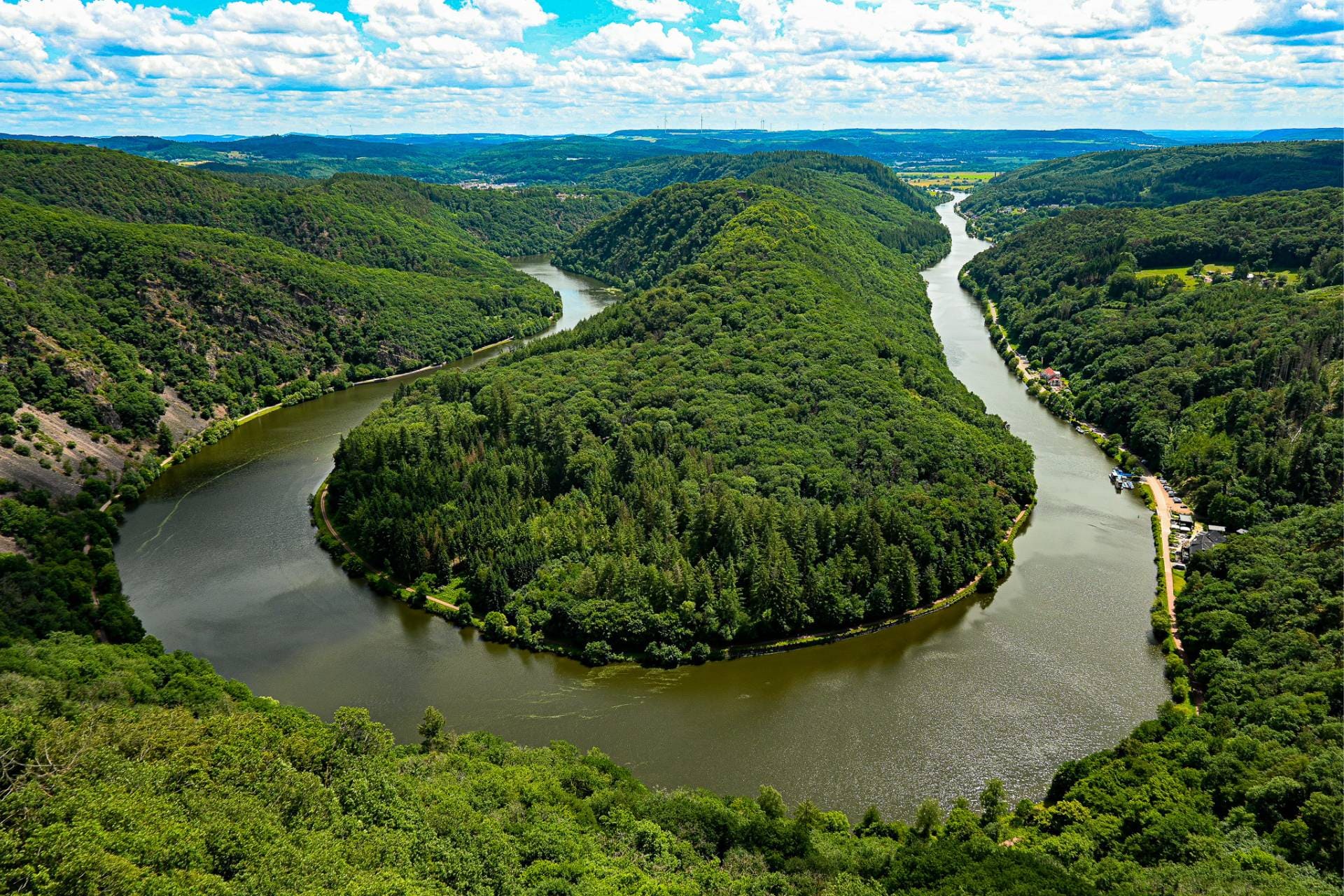
- See the Saarschleife (Saar Bend) from above: The accessible treetop walk and its observation tower offer the most complete view of the Saarland’s best-known landscape.
- Combine Tholey Abbey and the Schaumberg: Inside the abbey church, Gerhard Richter’s abstract choir windows meet Mahbuba Maqsoodi’s depictions of biblical scenes; from the Schaumberg Tower, the view extends far across the region.
- Visit St. Wendel: The Basilica of St. Wendelin and the historic center with its cafés, restaurants, and small shops make the town a pleasant destination for a few hours.
- Explore the Saarkohlenwald (Saar Coal Forest): A short hike through the “Primeval Forest at the Gates of the City” (Urwald vor den Toren der Stadt) combines well with a meal at Forsthaus Neuhaus.
Disclosure: This trip was organized in collaboration with the Saarland Tourismus Zentrale (Saarland Tourism Board). My accommodations in Saarbrücken were covered. The cooperation had no influence on the places I chose to feature or on my personal opinions and recommendations.
Your Trip to Saarland at a Glance
In Brief: Why the Saarland Feels So French
The history of the Saarland is closely tied to its location on the German-French border. Over the centuries, the areas that make up today’s state belonged to different territories and were at times under French rule. After the Congress of Vienna in 1815, most of the region became part of Prussia or Bavaria.
After World War I, the Saar Territory was placed under the administration of the League of Nations for 15 years, while France received economic control of the coal mines. In a 1935 referendum, a clear majority voted to return to the German Reich. By then, the National Socialists had already been in power in Germany for two years.
After World War II, the Saarland once again received a special status and was closely tied to France politically and economically. In 1955, voters rejected the proposed European Saar Statute in another referendum. As a result, the Saarland became the tenth state of the Federal Republic of Germany on January 1, 1957. Economic integration followed in 1959 with the introduction of the Deutsche Mark
This eventful history still shapes the region today: its identity, cuisine, language, and everyday interaction with neighboring France.
The Best Saarland Attractions on the Map
This map includes all the places I visited during my trip as well as additional destinations I would like to explore on my next stay in the Saarland. You can open the map, save it on your smartphone, and use it to plan your own trip. I explain exactly how this works in my article How to Plan a Route with Google Maps - the Complete Guide and 3 Extra Tips.
Saarbrücken is an excellent central base: most attractions can be reached from there in less than an hour by car. Tholey Abbey, the Schaumberg, and St. Wendel combine particularly well on a day trip. Depending on your plans, allow one or two days for the Saarschleife, Mettlach, and the Roman sites near Perl.
Saarbrücken: Baroque Architecture, History, and French Savoir-Vivre
For me, Saarbrücken was more than a practical starting point. The state capital is one of the Saarland’s major attractions in its own right and deserves at least one full day.
At first glance, Saarbrücken may seem less uniformly historic than many traditional German old towns. That is precisely what makes it interesting: Baroque squares and churches stand alongside traces of World War II, underground remains of a medieval castle, memorial sites connected with German-French history, and a lively city center filled with restaurants and sidewalk cafés.
I especially liked the relaxed atmosphere around St. Johanner Markt. At the same time, I was surprised by how much history there is to discover around Saarbrücken Castle and inside the Historical Museum Saar.
St. Johanner Markt, the Basilica, and City Hall: Saarbrücken’s Lively Center
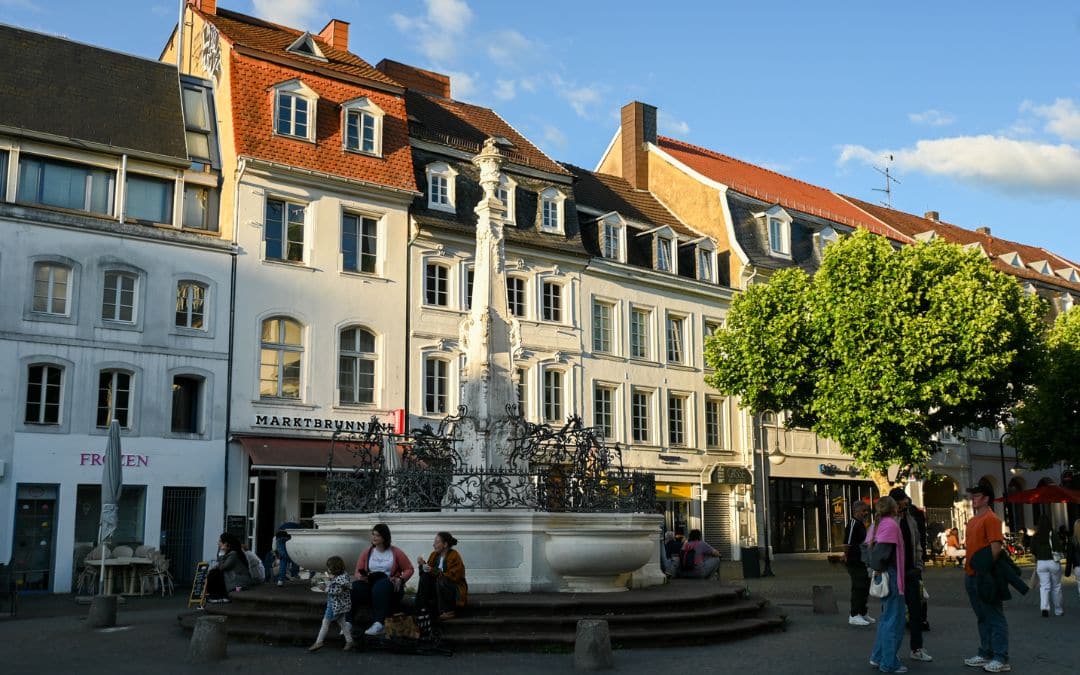
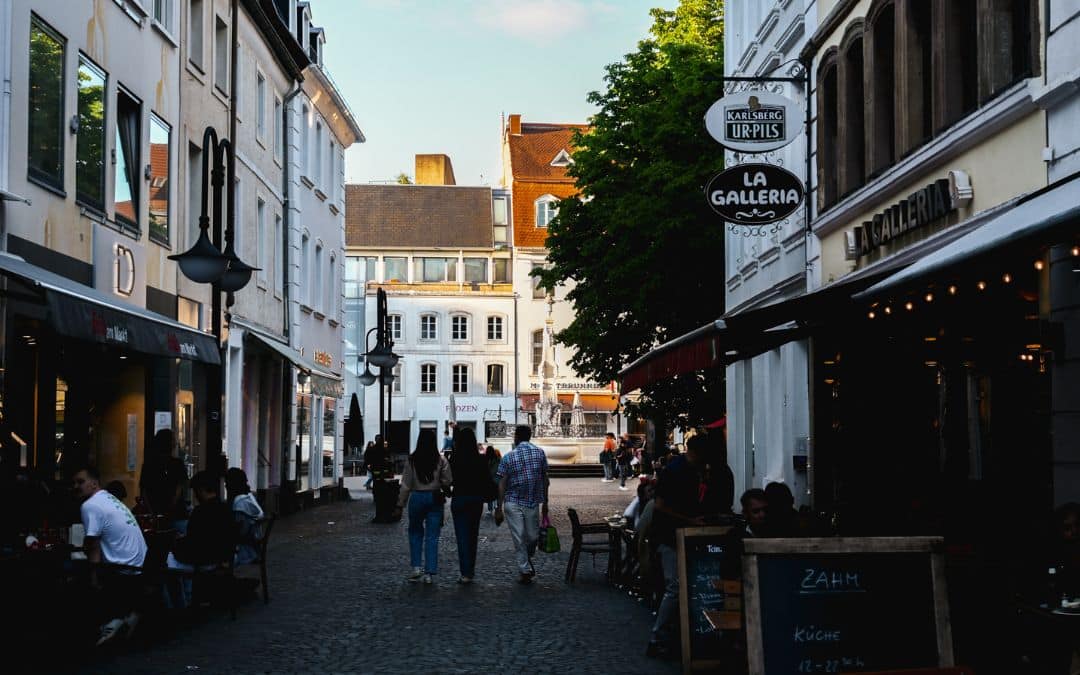
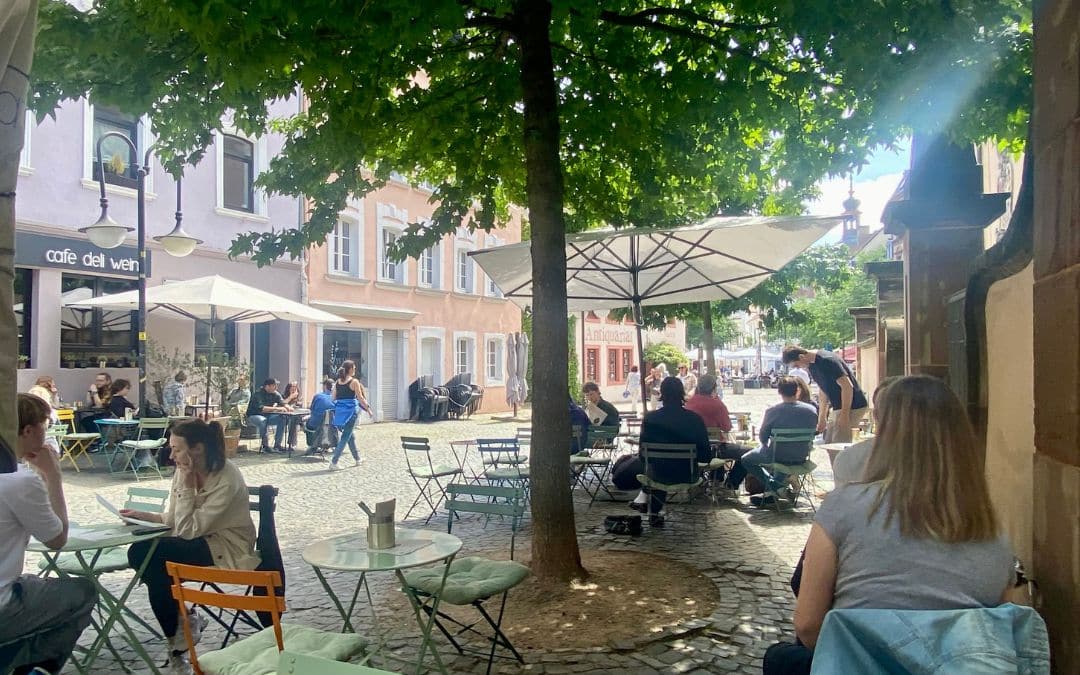
St. Johanner Markt is the heart of Saarbrücken’s old town. Restaurants, sidewalk cafés, and small shops surround the Baroque Stengel Fountain. The fountain was designed by Friedrich Joachim Stengel, the architect who decisively shaped Saarbrücken’s appearance in the 18th century.
Together with Saarbrücken Castle and Ludwigskirche, the market square forms what is known as the Stengel Triangle. The three sites are linked by sightlines and show that Stengel did not merely design individual buildings. He planned the city as a coherent Baroque ensemble.
I returned here repeatedly during my stay. After long days of sightseeing, St. Johanner Markt is a pleasant place to dine outdoors and wind down in the evening. Saarbrücken’s French flair is particularly noticeable here.
Just a few steps away stands the Basilica of St. John (Basilika St. Johann), also built according to Stengel’s plans. Behind its Baroque façade, you will find a bright and richly decorated interior.
The Neo-Gothic St. Johann City Hall is also worth seeing. In the staircase, a bust commemorates Willi Graf, who spent much of his youth in Saarbrücken and was executed in 1943 as a member of the White Rose resistance group.
Further memorial sites can be found at the Old Cemetery of St. Johann, where Willi Graf is buried in an honorary grave, and at the eli.ja youth church. There, the Willi Graf Bell rings every day at 5 p.m. I was unable to visit these places during this trip, but I would like to include them during a future stay.
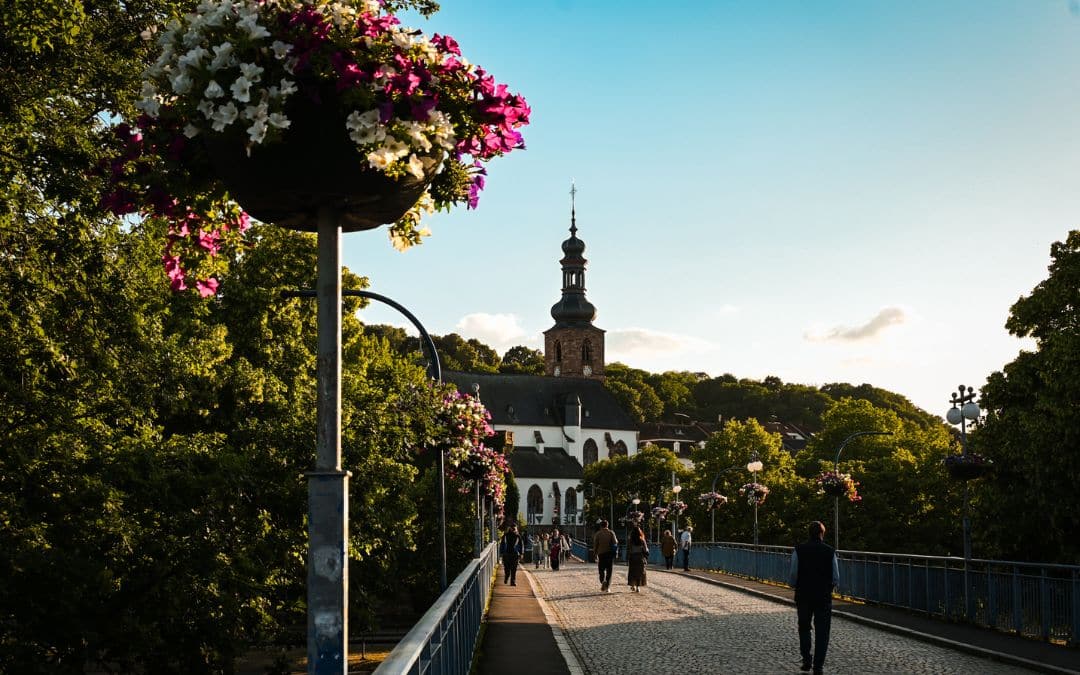
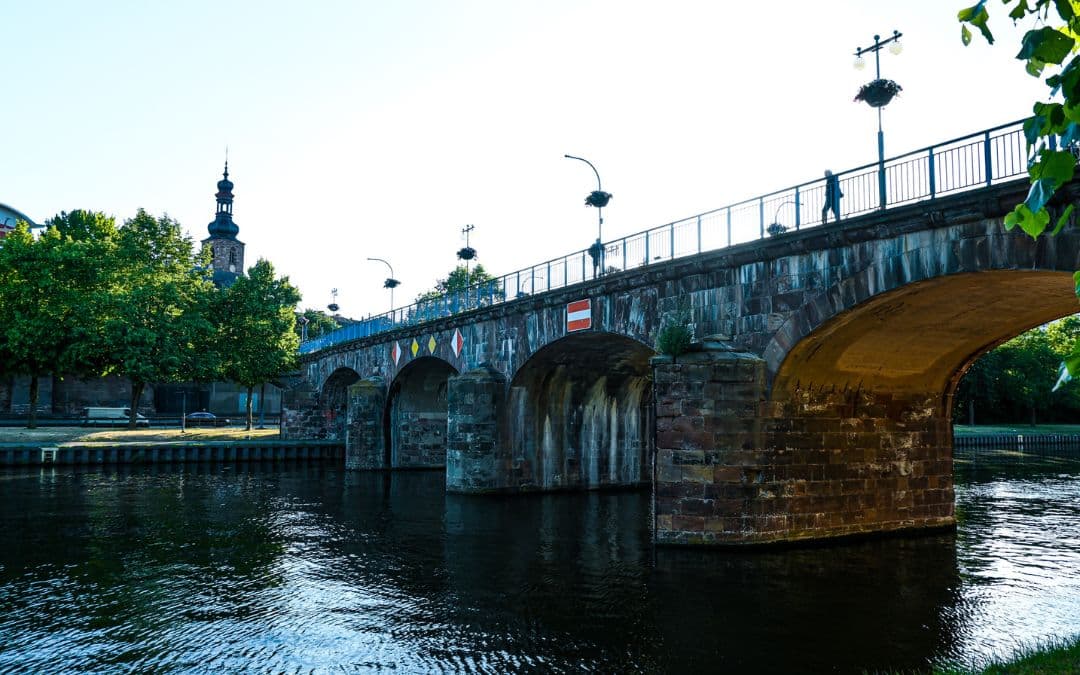
Many other attractions are within walking distance of St. Johanner Markt. Cross the Old Bridge to reach Saarbrücken Castle and the Historical Museum Saar; Ludwigskirche is also only a short walk away.
💡 My tip: Do not come to Saarbrücken only for dinner. The area around St. Johanner Markt, the castle, and Ludwigskirche makes for a varied city walk. Combined with the Historical Museum Saar, it can easily fill an entire sightseeing day.
Saarbrücken Castle and Schlossplatz
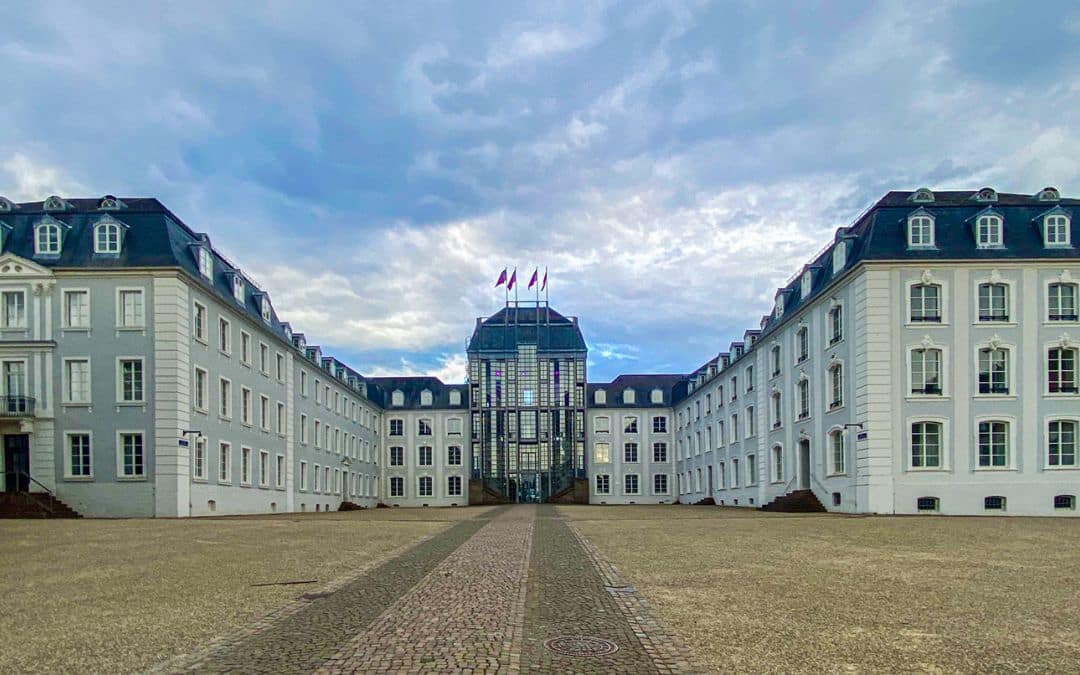
Saarbrücken Castle stands on a sandstone cliff above the left bank of the Saar in the historic Alt-Saarbrücken district. Several castles and palaces had occupied this site since the Middle Ages before Friedrich Joachim Stengel built a Baroque residence for the Princes of Nassau-Saarbrücken in the 18th century.
Only part of the original Baroque palace has survived. Following destruction and numerous alterations, the central section received its distinctive glass façade in the 1980s, based on designs by architect Gottfried Böhm. Today, the castle houses the administrative offices of the Saarbrücken Regional Association.
My first impression of Schlossplatz was that of a vast, almost deserted expanse of white. The castle’s facade, the surrounding buildings, and the light-colored cobblestones give the square an unusually crisp, almost austere appearance. Only upon closer inspection do you discover that one of Saarbrücken’s most impressive memorial sites is hidden in its center.
The Invisible Memorial commemorates Jewish cemeteries destroyed and desecrated during the National Socialist era. Students at the Saar College of Fine Arts secretly carved the names of 2,146 Jewish cemeteries into the dark paving stones of the central strip. The stones were then placed back into the ground with the inscribed sides facing downward. The memorial is therefore literally invisible. Yet knowing it is there changes the way you perceive the apparently empty square.
A little below the castle, on Schlossberg toward the Old Bridge, stands the late-Gothic Castle Church. From the 17th century onward, it served as the burial church of the Princes of Nassau-Saarbrücken. Today it forms part of the Saarland Museum’s Old Collection. The church interior displays princely Baroque tombs, medieval sculptures, and other works of sacred art.
Several museums and cultural institutions are located near Schlossplatz, including the Historical Museum Saar and the Museum of Prehistory and Early History. The castle garden at the rear offers a broad view across the Saar and the city center.
Historical Museum Saar: Underground Castle Remains and an Eventful Regional History
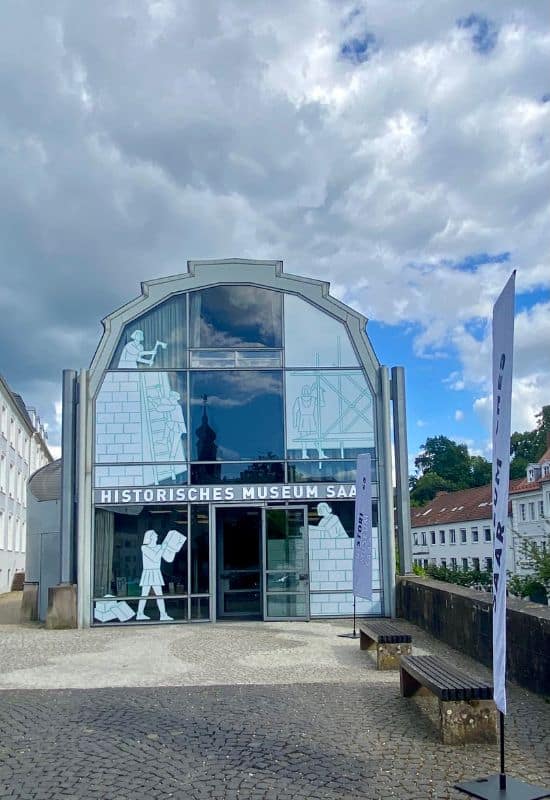
My main focus was not the castle itself, but the Historical Museum Saar on Schlossplatz.It combines the underground remains of the medieval castle complex with an extensive exhibition on the history of the Saar region from 1870 to 1959.
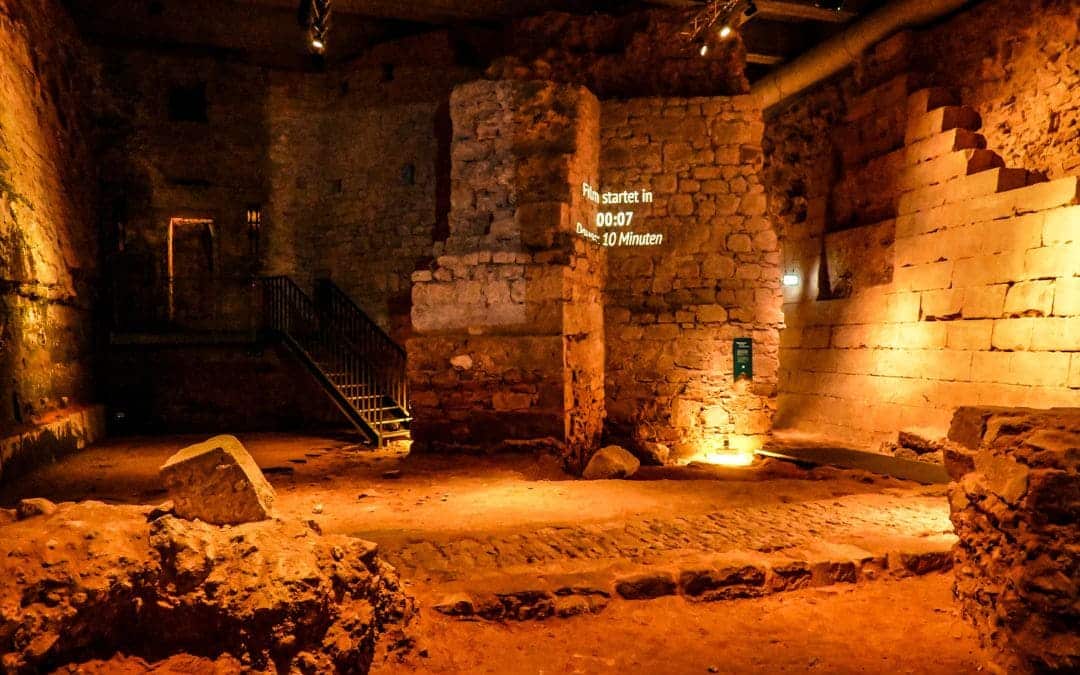
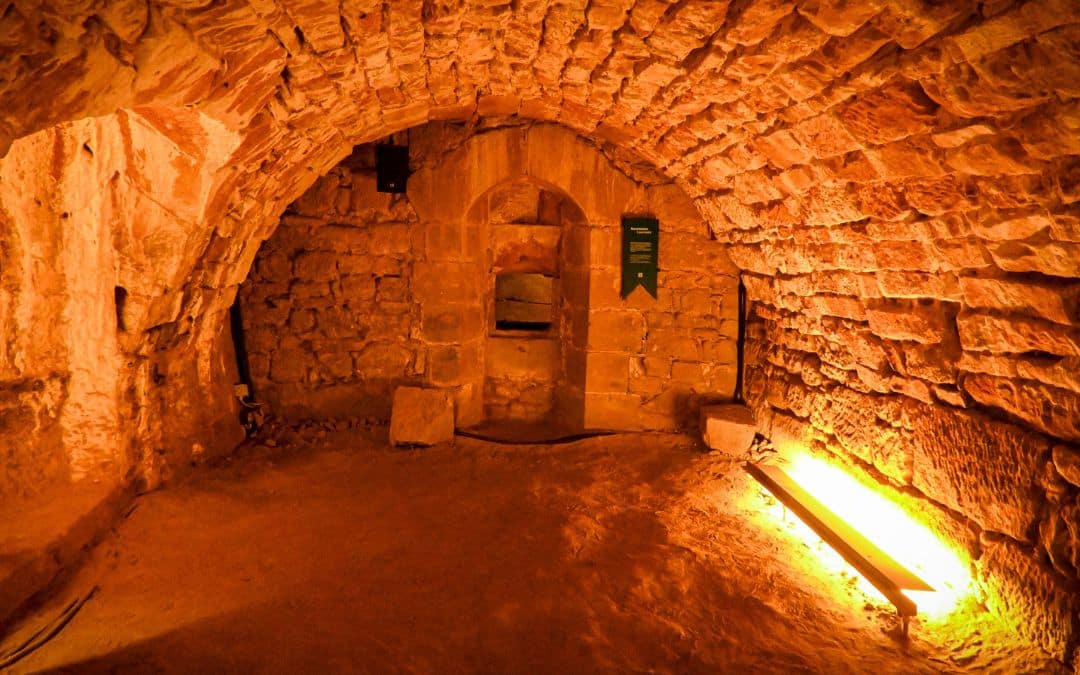
The first underground walls were rediscovered during construction work in the 1930s; the historic moat was not uncovered until the 2000s. Today, the museum tour takes you up to 14 meters below Schlossplatz. There you’ll see, among other things, defensive walls, bastions, casemates, a firing chamber, and a former dungeon.
The area is modern and interactive. Projections on the historic red sandstone explain individual parts of the complex, while a large animated film traces its development from an early medieval tower castle to the palace you see today. This makes the excavated walls much easier to understand.
I found the permanent exhibition on the Saarland’s more recent history at least as compelling. It shows how strongly this border region was shaped by industrialization, wars, political upheaval, and its changing relationship with Germany and France.
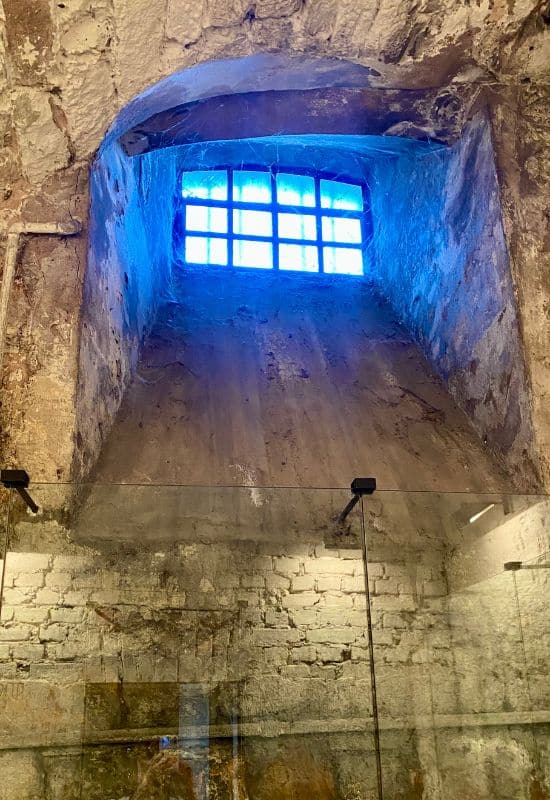
The section on the National Socialist period affected me most. At that time, Saarbrücken Castle served as Gestapo headquarters. The original detention cell, with inscriptions left by prisoners, brings the history painfully close. The 1935 referendum and its political background are also explained in detail.
For me, the Historical Museum Saar was one of Saarbrücken’s greatest surprises. Allow enough time to explore both the underground castle and the permanent exhibition at a relaxed pace.
Historical Museum Saar at a Glance
Ludwigskirche and Ludwigsplatz: Baroque Architecture as a Total Work of Art
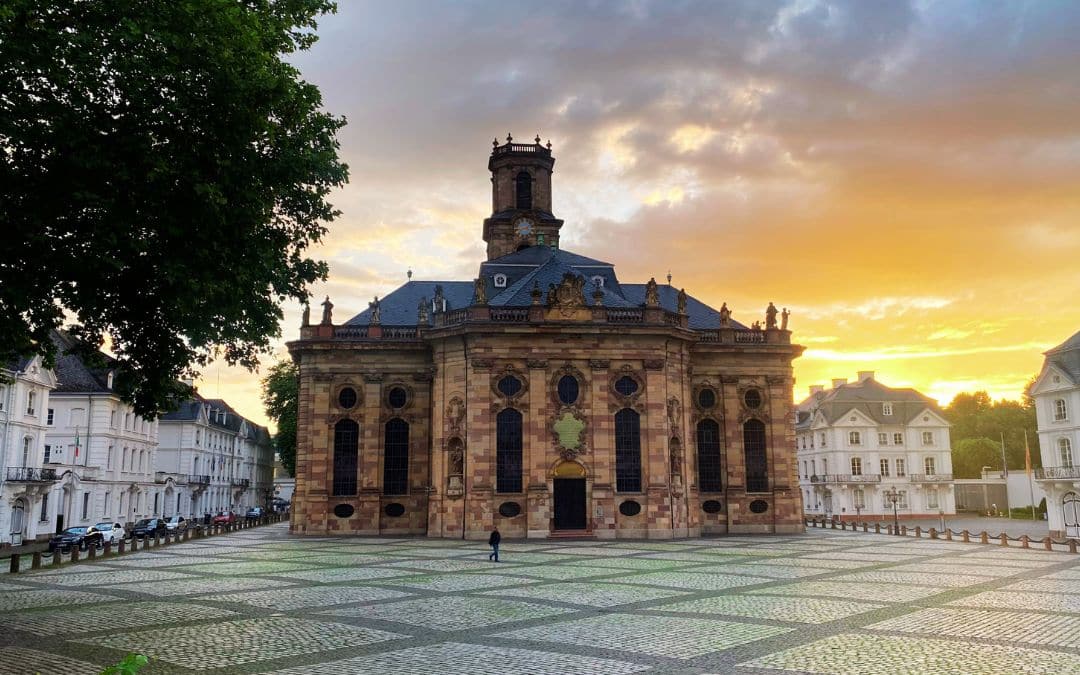
Only a few minutes on foot from the castle, Ludwigskirche forms the most important Baroque ensemble in Saarbrücken. Friedrich Joachim Stengel designed not only the church, completed in 1775, but also Ludwigsplatz with its surrounding palaces and officials’ residences as a unified composition.
The church stands alone in the center of the rectangular square. Its facade of light brown and reddish stones, curving forms, and slender tower look slightly different from every angle. Stengel’s concept becomes clearest when you walk all the way around the square and pay attention to the adjoining streets and sightlines.
Ludwigskirche and large parts of the square were almost completely destroyed during World War II. Reconstruction took several decades and largely followed the historical appearance.
The interior is also bright and clearly structured. Galleries encircle the space and direct your view toward the pulpit, altar, and organ. For me, however, the particular appeal of Ludwigskirche lies above all in the interaction between the church, the square, and the surrounding architecture.
Ludwigskirche at a Glance
German-French Garden: A Park with History
The German-French Garden lies just outside Saarbrücken’s city center and offers a pleasant contrast to the museums and Baroque buildings downtown. Covering around 123 acres, it is the city’s largest green space.
The park grew out of the 1960 German-French Garden Show, held only a few years after the Saarland joined the Federal Republic of Germany. The show was far more than a leisure project. After decades marked by wars, shifting borders, and political tension, it was intended as a visible symbol of German-French reconciliation.
The park still carries this history in its name. Since 2001, it has also been protected as a characteristic example of 1950s and 1960s landscape architecture
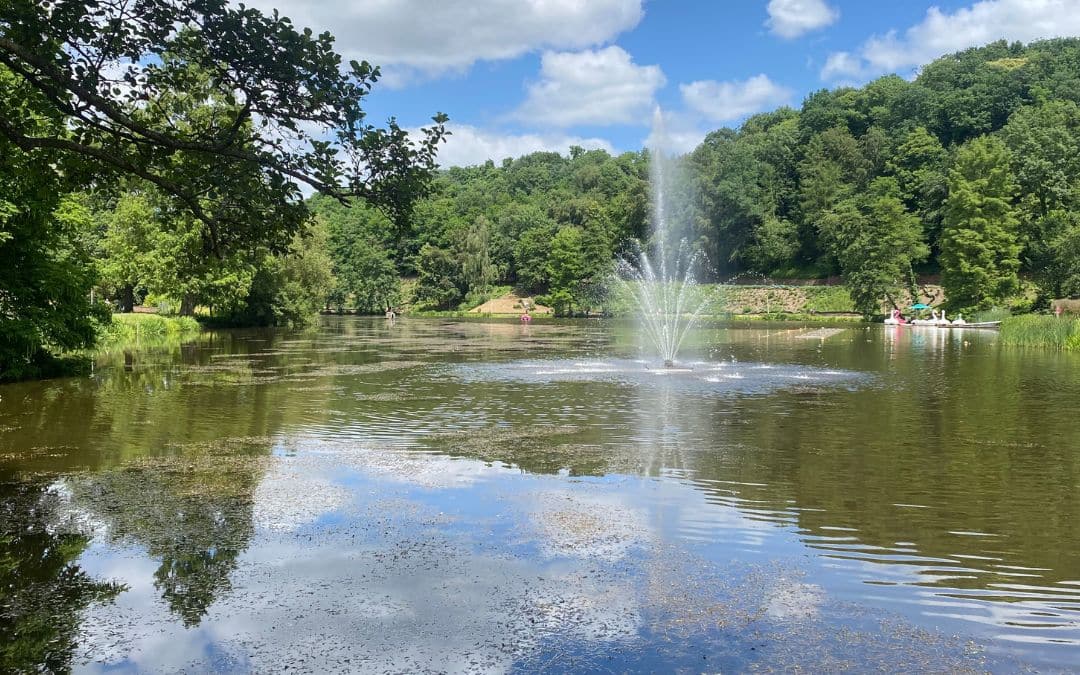
At its center lies the Deutschmühlenweiher pond, surrounded by walking paths, lawns, themed gardens, and mature trees. In places, the park has a certain retro charm that suits the era in which it was created. During my visit, it was above all a peaceful place for a walk away from the city center.
Recreational facilities include pedal boats, a miniature railway, and a cable car that gives you an overview of the spacious grounds. There are also restaurants, cafés, and broad lawns.
For me, the German-French Garden is particularly interesting because of its symbolic meaning. It connects recreation with the Saarland’s recent history and shows how consciously the postwar rapprochement with France was made visible in public space.
German-French Garden at a Glance
Völklinger Hütte: Industrial Heritage and Art at a UNESCO World Heritage Site
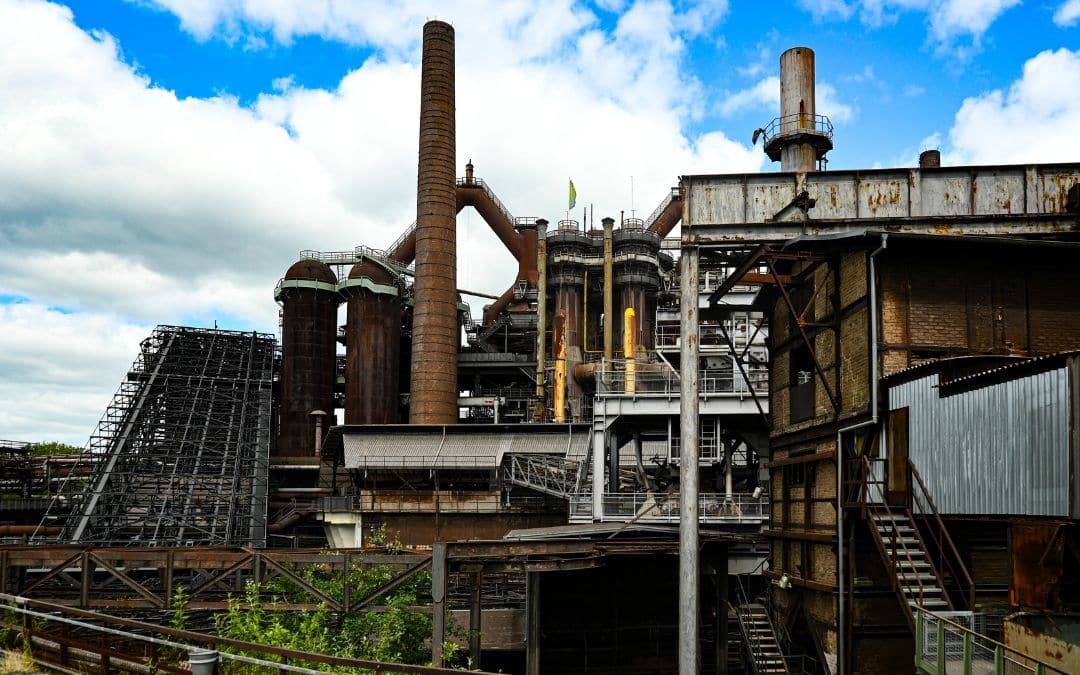
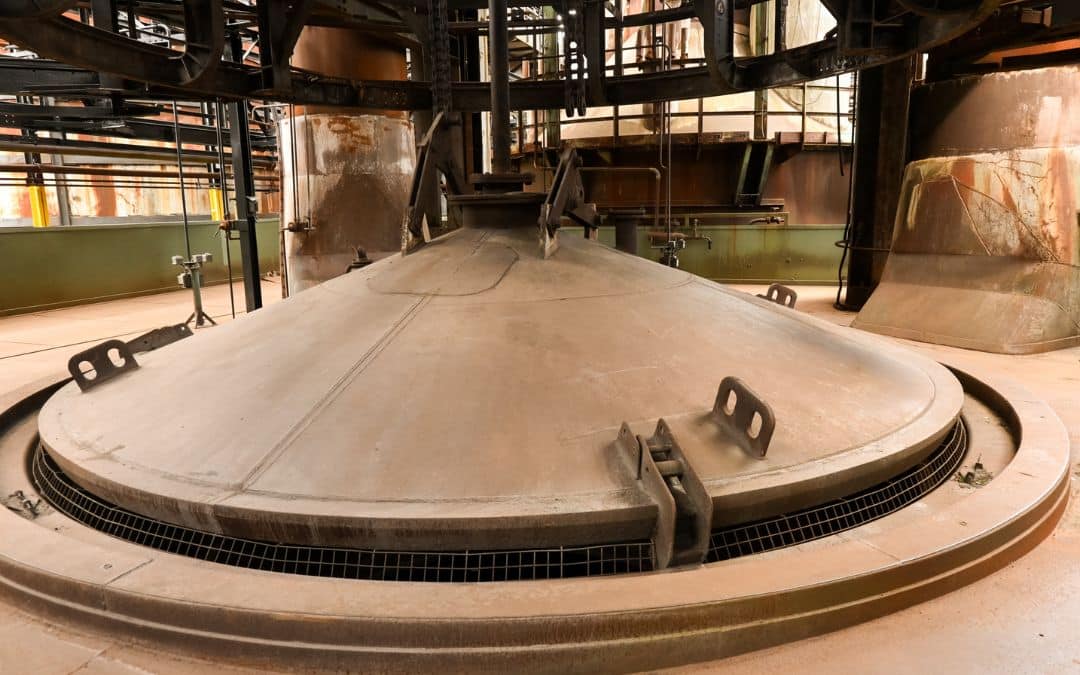
The Völklingen Ironworks (Völklinger Hütte) was the first industrial monument from the heyday of industrialization to be declared a UNESCO World Heritage Site . The former ironworks survives almost completely, including its blast furnaces, blower machines, conveyor systems, and miles of pipes. Today it is simultaneously a museum, exhibition venue, event site, and impressive testimony to the Saarland’s industrial history.
I visited the Völklinger Hütte on Germany’s UNESCO World Heritage Day, held every year on the first Sunday in June, and joined a guided tour. I would recommend the same to anyone visiting for the first time. The site is enormous and so intricate in places that it is easy to lose your bearings. A tour also explains how the individual installations worked together and under what conditions iron was produced here.
Even the entrance is unusual: you enter the works through the monumental elevated water tank, which now houses the reception area, museum shop, and a café. The route then leads through halls, across outdoor areas, and through a nearly bewildering network of pipes, rails, and steel structures.
Hard hats are mandatory in certain areas. You collect one at the helmet station and return it there after your tour.
One of the most impressive experiences is the climb to the charging platform and the observation deck above the blast furnace group. Narrow and sometimes steep metal-grate stairs take you up to a height of 148 feet. A small elevator is available for visitors with limited mobility and covers part of the vertical distance.
Upstairs, the guide used Blast Furnace 5 as an example to explain how the plant was fed with ore and coke and how the molten pig iron was tapped during the blast furnace tapping process. Standing right in front of these massive structures, the sheer scale of iron production becomes very clear.
The inclined ore lift illustrates just how closely the individual areas were interconnected. Raw materials were transported up to the charging platform and then distributed among the six blast furnaces.
Art, Exhibitions, and Remembrance
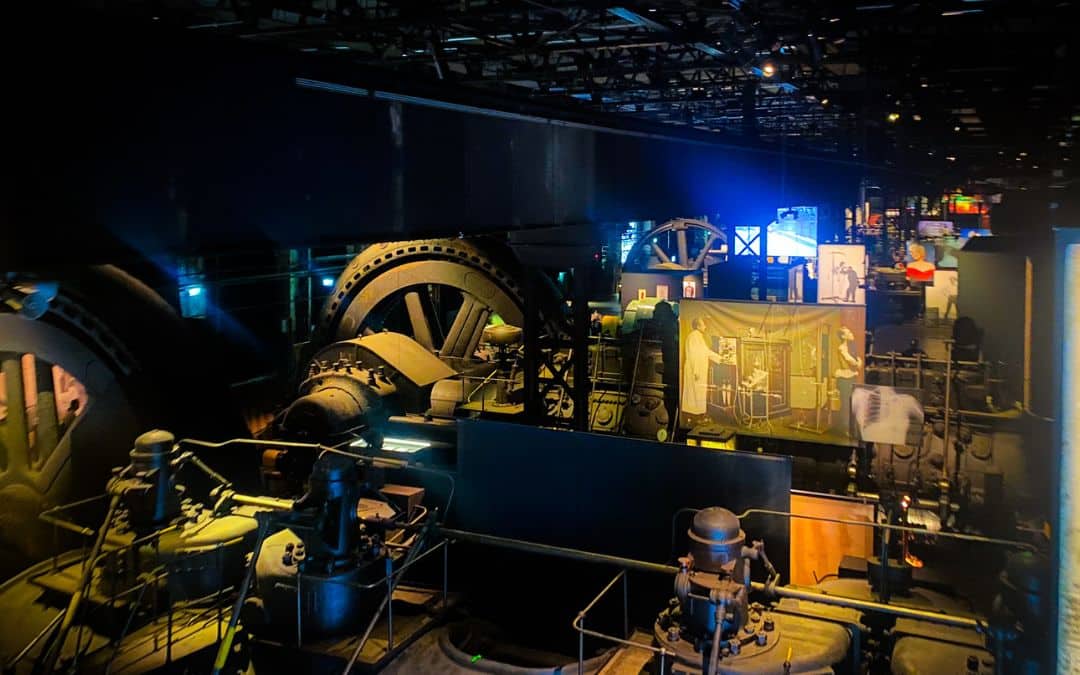
The monumental blower hall now provides an extraordinary setting for international exhibitions, concerts, and events. Art and industrial heritage do not compete here. Instead, the scale of the hall, the historic machines, and the works on display intensify one another’s impact.
The history of the people who worked at the Völklingen Ironworks is not ignored either. In the former sintering plant, Christian Boltanski’s permanent installation Forced Laborers commemorates the men and women compelled to work at the Röchling works during World War II.
The installation consists of a wall several yards high filled with archive boxes and a narrow passageway. On the lower level, a permanent exhibition also examines the Röchling industrial family and its role in the history of the plant.
Paradise: When Nature Reclaims the Industrial Site
Another contrast to the heavy industry is the area known as the Paradise on the grounds of the former coking plant. Between steel, concrete, and remnants of walls, a wild garden has developed. Nature is gradually reclaiming the abandoned industrial grounds and reveals an entirely different side of the Völklinger Hütte.
Allow at least half a day for the Völklingen Ironworks. Anyone joining a tour, visiting the exhibitions, and climbing to the observation platform can easily stay longer. Comfortable, sturdy shoes are essential because of the long distances, metal stairs, and open-grid walkways.
Völklinger Hütte at a Glance
Saarschleife: The Saarland's Most Famous View
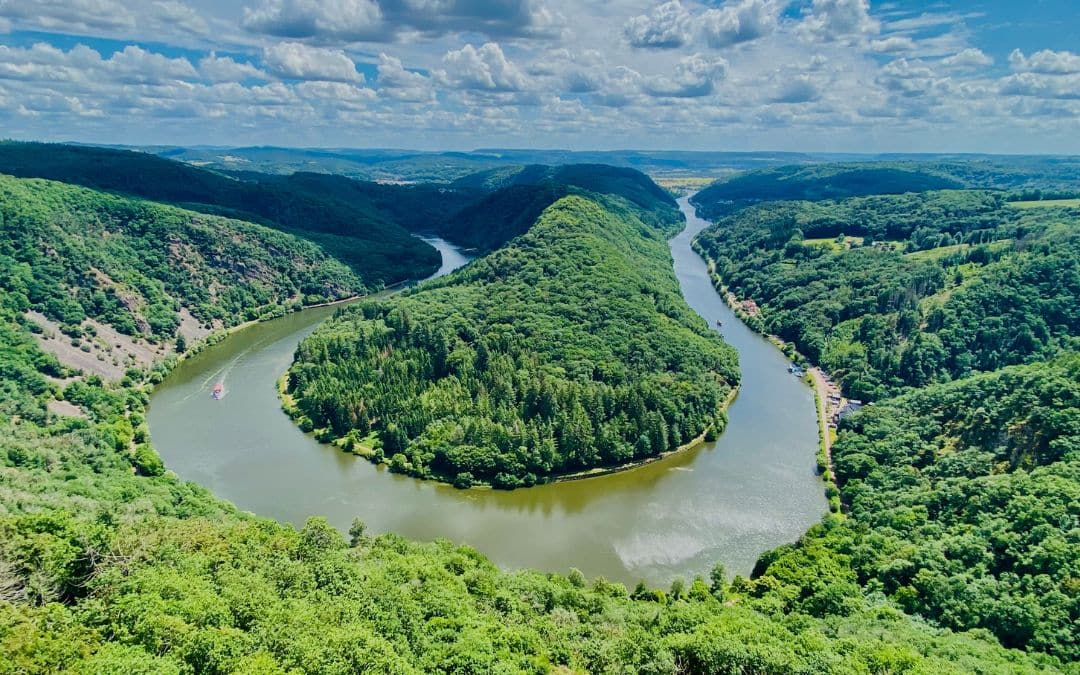
The Saarschleife near Mettlach is the Saarland’s best-known landscape. From the wooded ridge near Orscholz, you look down on the Saar as it curves in a tight loop around the mountain. The contrast between the calm river, dense forest, and steep slopes is particularly striking.
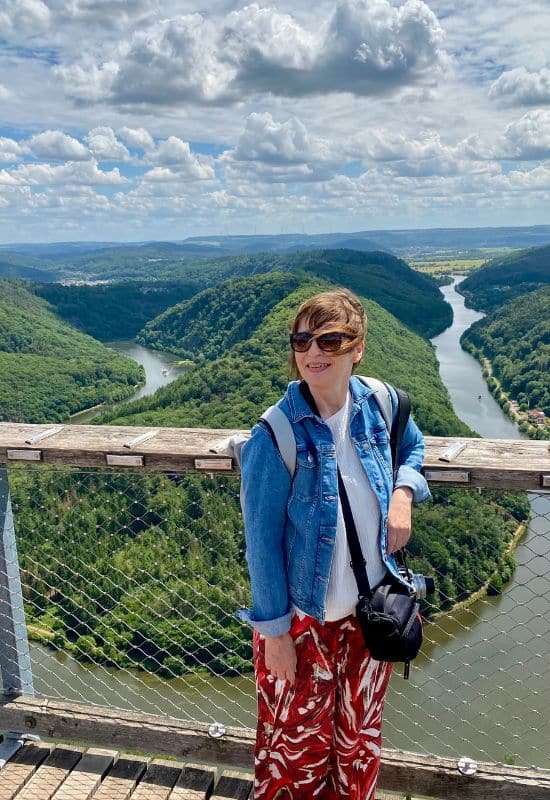
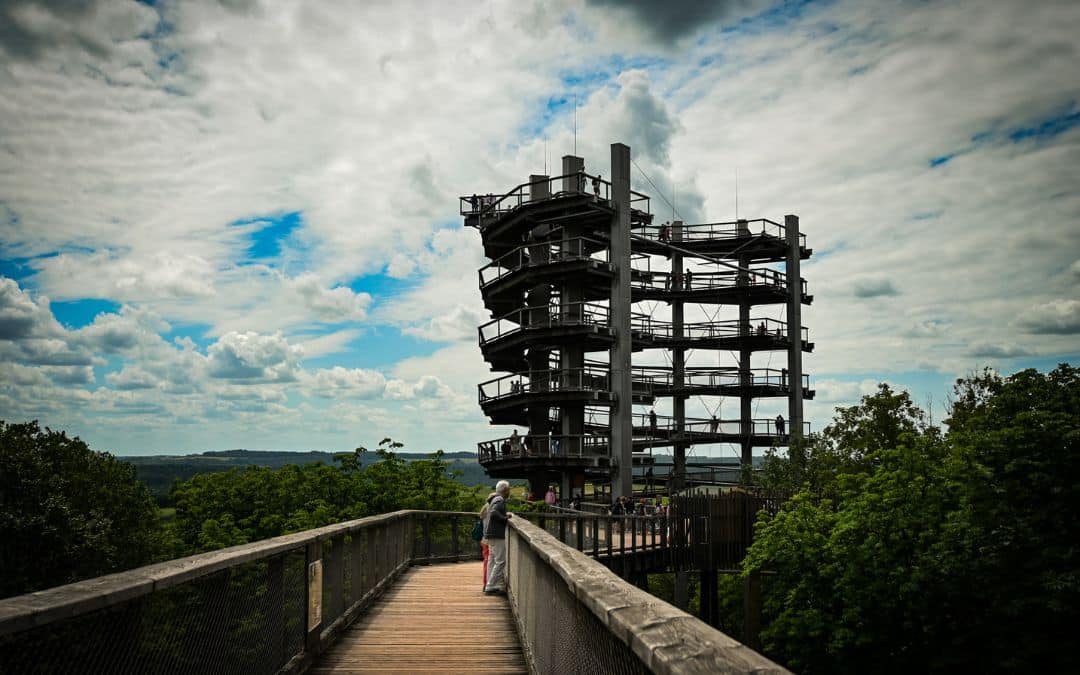
I chose the Treetop Walk Saarschleife. The easy, nearly level route leads through the forest and rises only gradually inside the large observation tower. At the top, the view opens across the Saarschleife and the surrounding landscape.
The treetop walk is especially suitable if you would like to experience the Saarschleife without a long hike. The paths are wide and have no stairs, and the observation tower is reached via a gently rising ramp. Along the way, interactive stations provide information about the forest and its wildlife.
Right below the tower is the free Cloef viewpoint. It also offers the classic view of the Saarschleife, though from a lower perspective. The Cloef is particularly convenient if you would like to include the viewpoint in a hike or skip the paid treetop walk. From the higher tower, however, you can appreciate the shape of the river loop more fully.
Hiking Around the Saarschleife
Several premium circular trails known as Traumschleifen and shorter Traumschleifchen lead through the forests and across the ridges around the Saarschleife to additional viewpoints.
Check the length, elevation gain, and trail conditions before setting out. Alongside easy walking paths, there are more demanding routes with steep and sometimes uneven sections. The shorter "Traumschleifchen" trails are a good option if you have only a few hours.
Experience the Saarschleife by Boat
Another option is a boat trip from Mettlach. Instead of seeing the Saarschleife from above, you experience it from the water as the boat travels between the wooded slopes.
I would like to add this perspective on my next trip. The observation tower shows the characteristic form of the loop especially clearly, whereas the boat reveals the narrowness of the river valley and the wooded banks at close range.
One or Two Days Around the Saarschleife?
Several additional cultural attractions and excursion destinations lie near the Saarschleife. They include the Villeroy & Boch World in Mettlach, as well as the Roman Villa Borg and Villa Nennig on the Upper Moselle near Perl.
For a single day, you will need to set priorities:
- Nature and activity: Hike to the Cloef viewpoint or the treetop trail, followed by a visit to Mettlach
- Culture and history: Treetop Walk, Villeroy & Boch World, and either Villa Borg or Villa Nennig
- River Experience: Treetop walk or Cloef in the morning and a boat trip from Mettlach in the afternoon
To hike, take a boat trip, visit Mettlach, and see both Roman sites, allow two days for the region. I describe the Villeroy & Boch World and the Roman villas in more detail farther below among the places still on my personal Saarland list.
Saarschleife and Treetop Walk at a Glance
Sankt Wendeler Land: Monastic Art, Panoramic Views, and Celtic History
In the northern part of the Saarland, the Sankt Wendel Region combines historic towns and major cultural sites with wooded hills, hiking trails, and Lake Bostal. The region is around 40 to 50 minutes from Saarbrücken by car.
Tholey Abbey, the Schaumberg, and St. Wendel combine very well on a day trip. I already knew Tholey and St. Wendel from an earlier visit during the Christmas market season. This time, I returned to the abbey to take another unhurried look at the new artists’ windows and added the Schaumberg to the excursion.
Tholey Abbey: Gerhard Richter and Mahbuba Maqsoodi
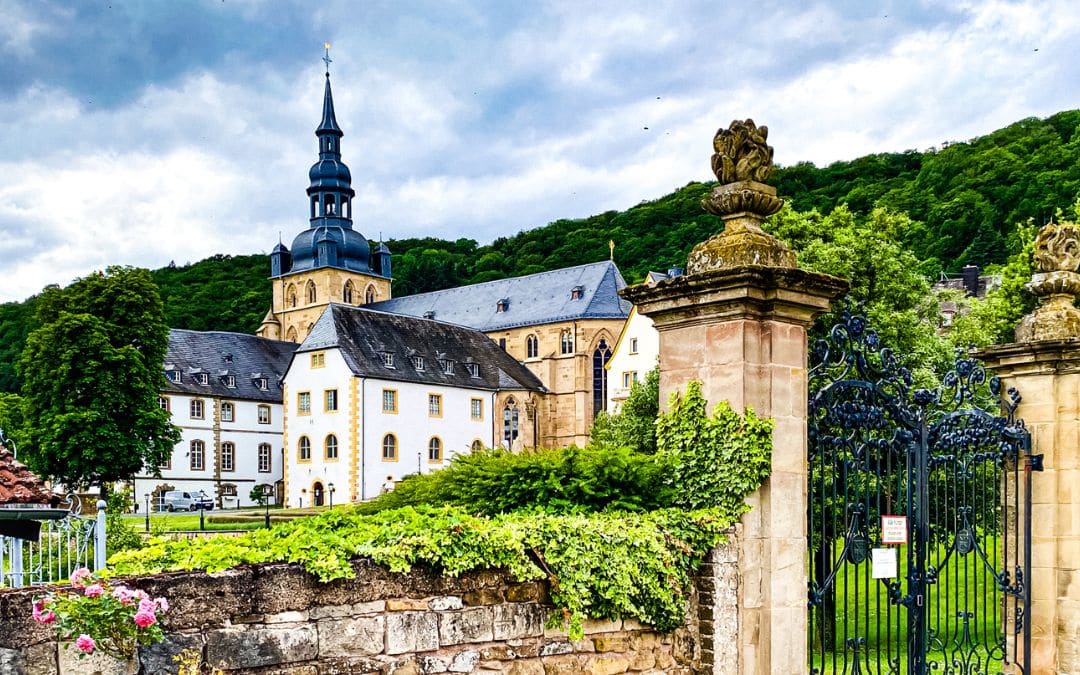
The Benedictine Abbey of St. Mauritius in Tholey is regarded as the oldest monastery on German soil. Its origins reach back to Late Antiquity. The present appearance of the abbey church, however, is shaped above all by its Gothic architecture and modern stained-glass windows.
The church became internationally known for the three abstract choir windows by Gerhard Richter. Their mirrored patterns are based on the artist’s book Patterns and change in effect depending on the time of day and the light.
Equally worth seeing are Mahbuba Maqsoodi'swindows. Born in Afghanistan and now based in Munich, the artist created most of the church’s new windows with figurative scenes from the Old and New Testaments.
While Richter’s abstract forms leave ample room for personal associations, Maqsoodi’s windows tell specific biblical stories. Both visual languages are united by their intense colors.
I found this juxtaposition especially fascinating. The windows do not feel like independent works of art; together, they transform the entire church interior. You may come to Tholey because of Gerhard Richter, but you should also allow enough time to look closely at Maqsoodi’s work.
The well-kept monastery garden is also worth seeing. From the terrace café, you have a pleasant view across the abbey grounds and can round off your visit with coffee and cake.
Tholey Abbey at a Glance
Schaumberg: Views Across the Northern Saarland
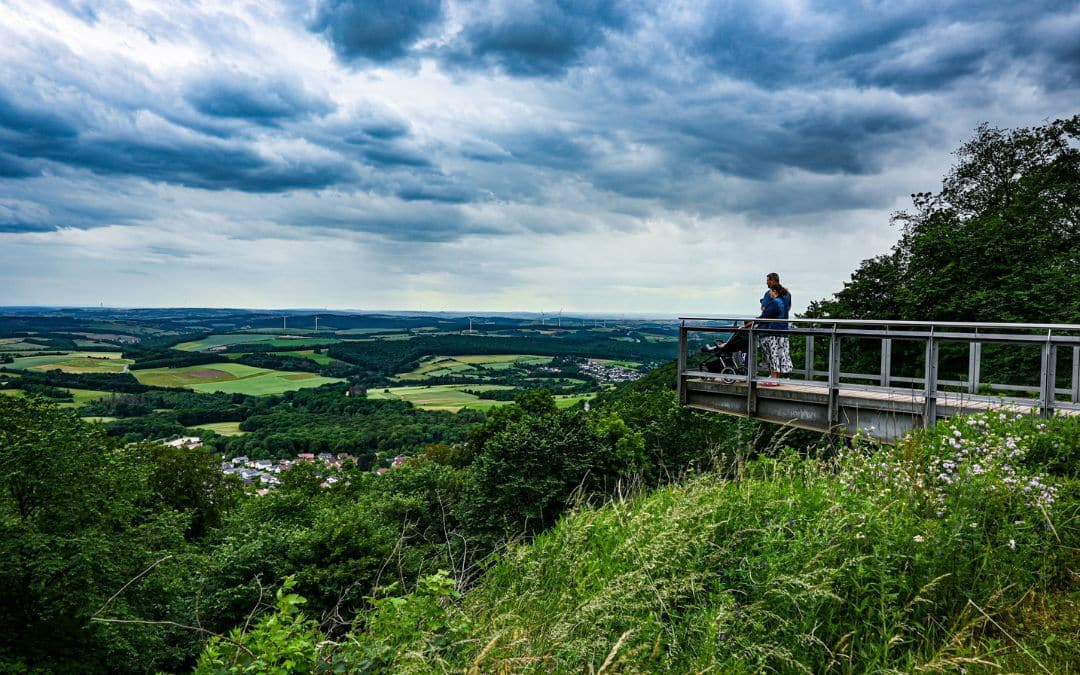
Only a few miles from the abbey rises the Schaumberg, around 1,867 feet high. It is one of the Saarland’s best-known viewpoints and combines easily with a visit to Tholey.
The Schaumberg Towerstands on the summit, and its observation deck is accessible by elevator. From the top, the view extends across Sankt Wendeler Land and large parts of the Saarland. In clear weather, you can also make out the ridges of neighboring regions on the horizon.
Exhibitions inside the tower explain the history of the Schaumberg and German-French relations. The plateau itself is also largely accessible.
For me, the Schaumberg was the perfect complement to the abbey. After concentrating on art and monastic history, the landscape opens up around you at the summit.
Schaumberg at a Glance
St. Wendel: A Pilgrimage Town Centered on the Basilica of St. Wendelin
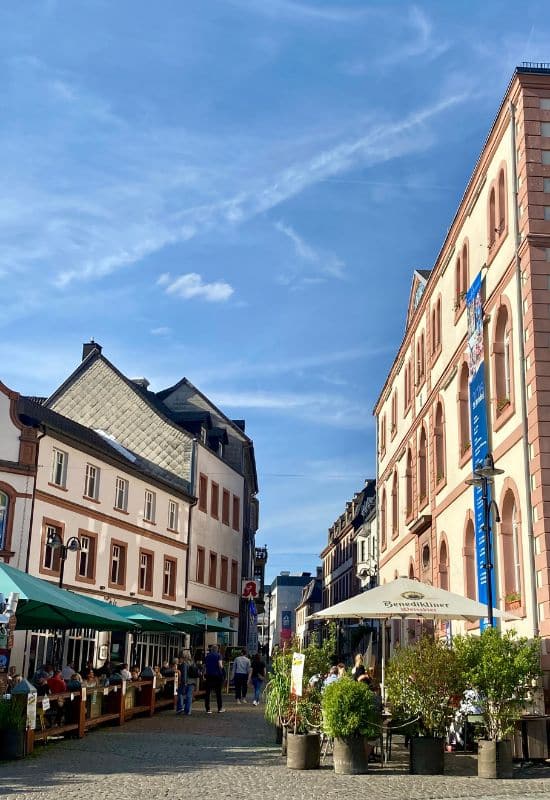
The district town of St. Wendel is the region’s cultural center. Around Schlossplatz, Fruchtmarkt, and the pedestrian zone, you will find historic buildings, cafés, and small shops. The town is ideal for a stroll and a longer lunch break after visiting Tholey and the Schaumberg.
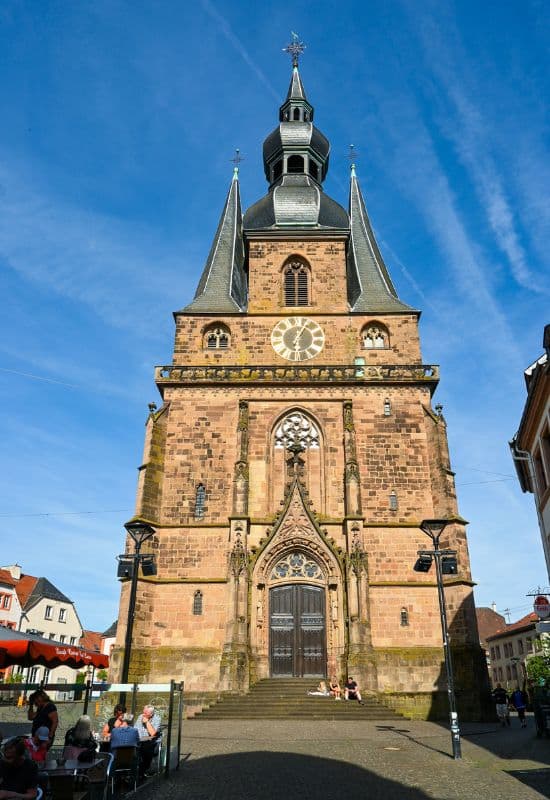
The focus is on the late Gothic Basilica of St. Wendelin,. It was built over the tomb of St. Wendelin, who, according to tradition, lived in the region as a hermit and missionary in the 6th century. His veneration made St. Wendel an important pilgrimage destination for centuries.
Inside, the richly decorated high tomb containing the saint’s remains is particularly striking. The basilica is not only the town’s most important building. It also explains why St. Wendel was able to develop into a regional center.
I first visited St. Wendel during Advent, when the old town becomes an atmospheric setting for the Christmas and medieval market. Outside of the Christmas season, however, the historic center is much quieter and easier to explore.
St. Wendel at a Glance
Bostalsee: An Extra Day to Relax
For a longer stay in Sankt Wendeler Land, add a relaxing day at Lake Bostal. This reservoir near Nohfelden is surrounded by walking and cycling paths and offers beaches, water sports, and places to eat.
On my next visit, I can easily imagine Lake Bostal as a quiet counterpoint to museums, churches, and historic sites. Especially on a weeklong Saarland trip, a day by the water ensures that the itinerary does not consist entirely of sightseeing.
Nonnweiler: Celtic Park and the Otzenhausen Ring Wall
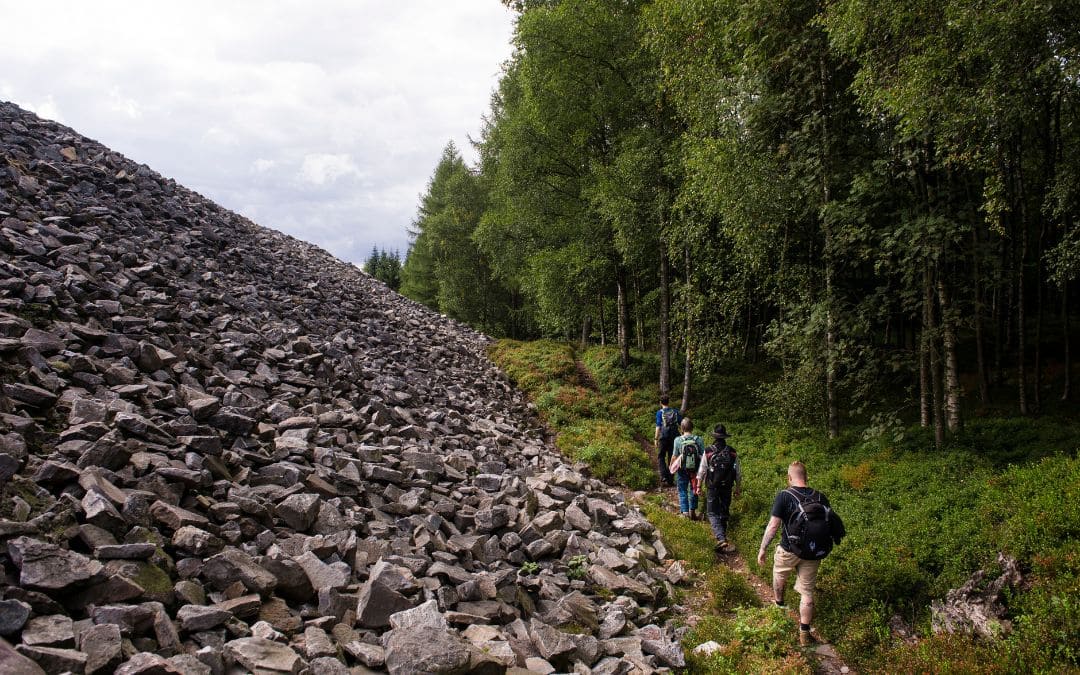
In the municipality of Nonnweiler, the Celtic Ring Wall at Otzenhausen is one of Europe’s most impressive Celtic fortifications. Also known as the Hunnenring, the site was built in the first century BC. Parts of its massive stone walls still reach a considerable height.
At the foot of the ring wall, the Otzenhausen Celtic Park offers insight into Celtic life through a reconstructed village, exhibitions, and events. It also forms the Saarland gateway to the Hunsrück-Hochwald National Park.
Wear sturdy shoes for the walk to the ring wall. The route leads through the forest and has considerably more elevation gain than the paths around Lake Bostal. Anyone who would like to combine archaeology and nature can easily spend half a day or a full day here.
Otzenhausen Celtic Park and Ring Wall at a Glance
How Much Time Should You Allow for Sankt Wendeler Land?
Tholey Abbey, the Schaumberg, and St. Wendel can be combined in one day if you start in the morning and do not plan a longer hike on the Schaumberg.
A practical day could look like this:
- Morning: Tholey Abbey and monastery garden
- Midday: Schaumberg and observation tower
- Afternoon: St. Wendel with the basilica, a walk through town, and a meal or café stop
To hike on the Schaumberg, visit Lake Bostal, or explore the Otzenhausen Ring Wall, allow at least one additional day.
Saarkohlenwald (Saar Coal Forest) and the Urwald vor den Toren der Stadt (Primeval Forest at the Gates of the City)
Only a few miles from central Saarbrücken begins the Saar Coal Forest, a broad woodland landscape closely connected with the region’s mining history. Around former mine sites, subsidence ponds, spoil heaps, and old transport routes, a varied recreation area has developed.
One special section is the Urwald vor den Toren der Stadt (primeval forest at the gates of the city). The woodland is no longer managed through regular forestry. Fallen trees remain where they lie, deadwood provides habitat for plants and animals, and nature is allowed to develop largely without human intervention.
This is not, however, an untouched primeval forest that has always existed in this form. The name describes the long-term goal of allowing a woodland as close to a natural state as possible to develop again.
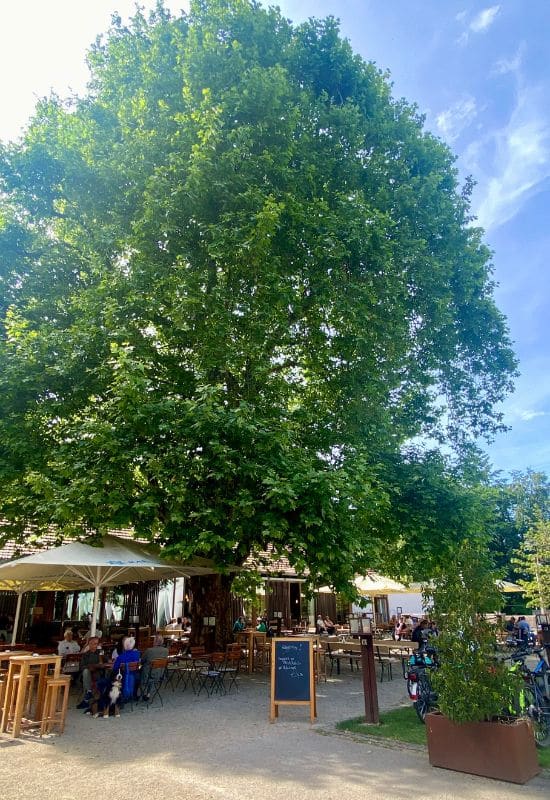
The historic Neuhaus forester's lodge stands in the middle of the greenery and is a good starting point for walks and hikes. On my next stay, I would like to bring more time and follow one of the circular routes through the primeval forest. I find the combination of quiet woodland and visible traces of industrial history particularly interesting. Afterwards, the Forsthaus Neuhaus restaurant is a good place for a meal. In fine weather, its large beer garden makes a pleasant end to the excursion.
Hiking Between Nature and Mining History
Several hiking and themed trails of varying lengths cross the Saar Coal Forest. They explore not only the primeval forest, but also former mining sites and remnants of the industrial past.
Depending on the route, you will encounter broad forest roads, narrower paths, and sometimes wet or uneven sections. For a short walk, start at Forsthaus Neuhaus and choose a smaller loop. Before a longer hike, check the distance, elevation gain, and trail conditions.
Saar Coal Forest and the Primeval Forest at the Gates of the City at a Glance
Which Saarland Attractions Are Still on My List?
After three days in the Saarland, my list had grown rather than shrunk. Some destinations had already been part of my itinerary, but I had to drop them for lack of time. Others I discovered only during the trip.
These remaining places would add Roman history, ceramic culture, Baroque urban planning, underground sites, and slower days in an old cultural landscape to my Saarland experience.
Villeroy & Boch World in Mettlach
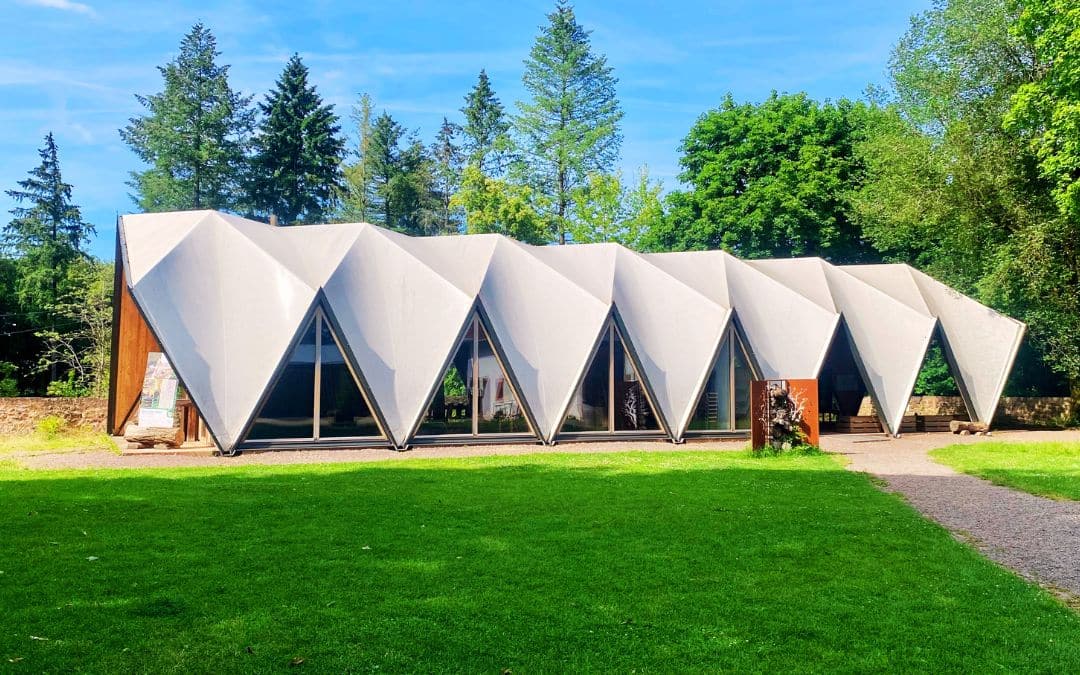
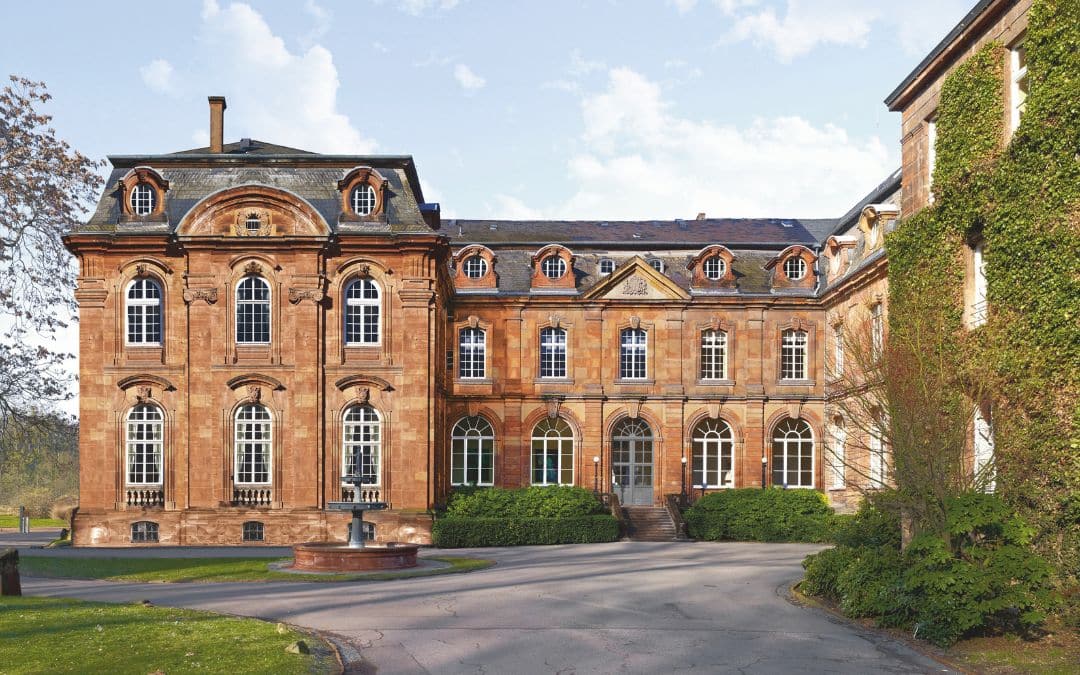
Mettlach is best known as the headquarters of Villeroy & Boch . The new Villeroy & Boch World is located in the Old Abbey, a former Benedictine monastery that has served as the ceramic company’s headquarters since the 19th century.
The exhibition combines company history, design, and ceramic culture. Since Mettlach is only a few miles from the Saarschleife, it combines well with the treetop walk or a hike to the Cloef viewpoint.
Roman Villa Borg and Villa Nennig near Perl
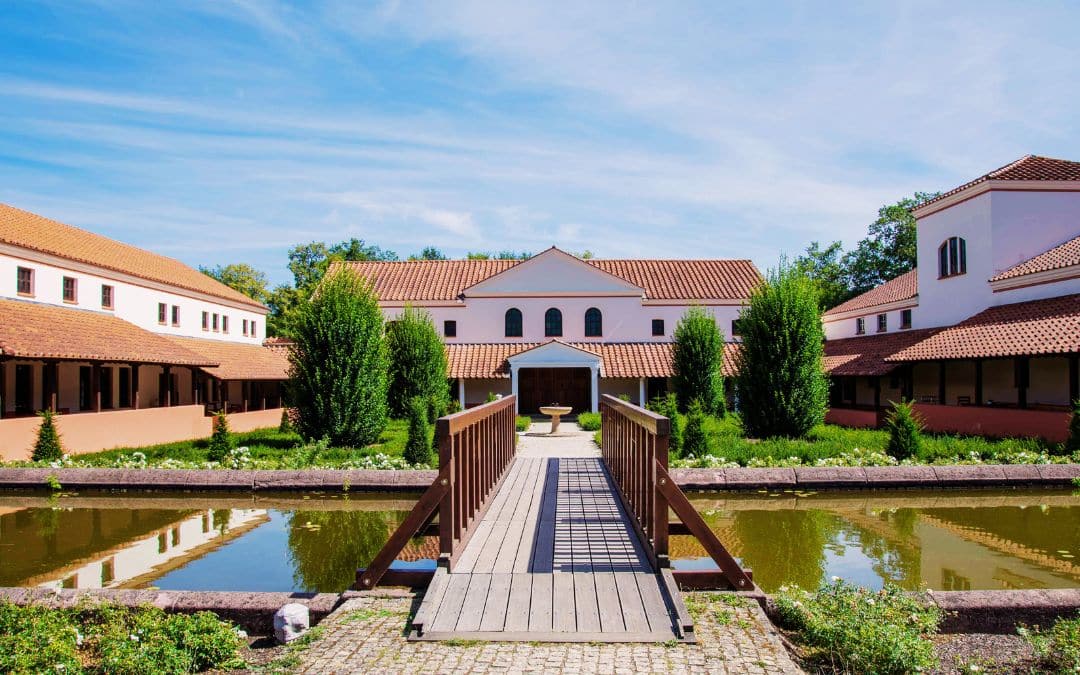
Two major witnesses to the region’s Roman past are located on the Upper Moselle near Perl. They complement each other well, though each has a different focus.
The Roman Villa Borg is a reconstructed Roman country estate with a manor house, baths, gardens, and an archaeological museum. Villa Nennig , by contrast, centers on an original work of art: a mosaic floor measuring around 1,720 square feet and depicting detailed scenes from the amphitheater.
Anyone with a deeper interest in Roman history should not choose between the two sites, but allow enough time for both.
Bliesgau and Blieskastel
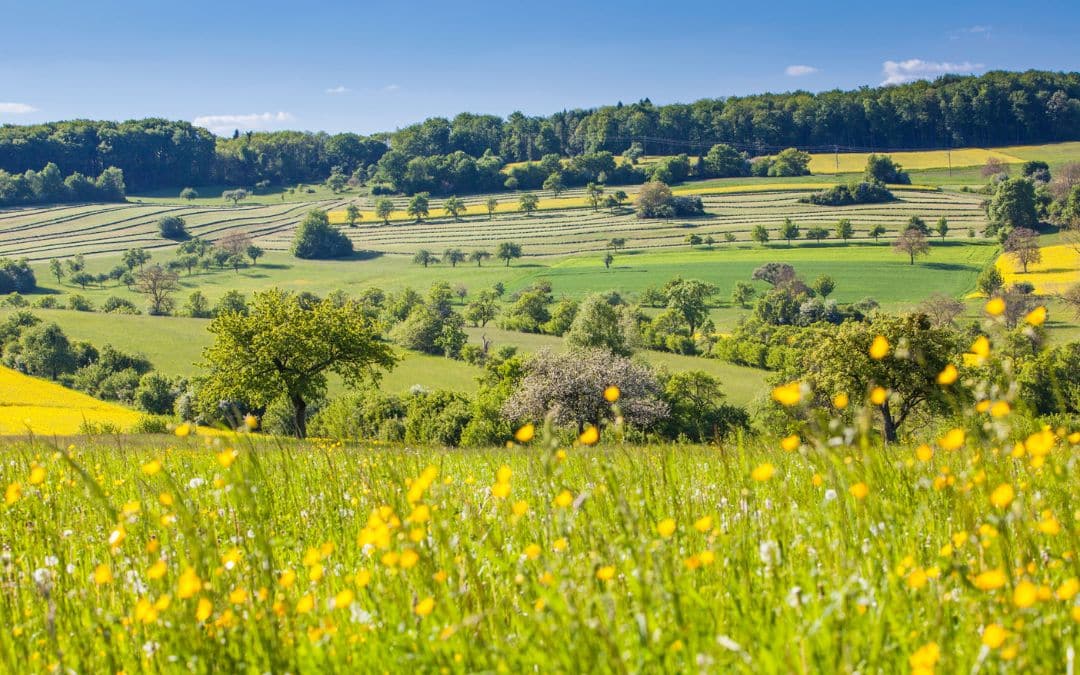
The Bliesgau in the southeastern Saarland offers a very different landscape from the wooded heights around the Saarschleife or the Saar Coal Forest. Orchards, rolling hills, forests, and villages shape this old cultural landscape.
A good base or starting point would be Blieskastel. This small Baroque town has a cohesive historic center with townhouses, churches, and squares. The combination of a stroll through town, regional cuisine, and walks through the Bliesgau sounds like an ideal quiet travel day to me.
Saarlouis and the Saarpolygon
Saarlouis was founded in the 17th century under Louis XIV as a French fortress town. Parts of its fortifications and geometric street plan still recall this past.
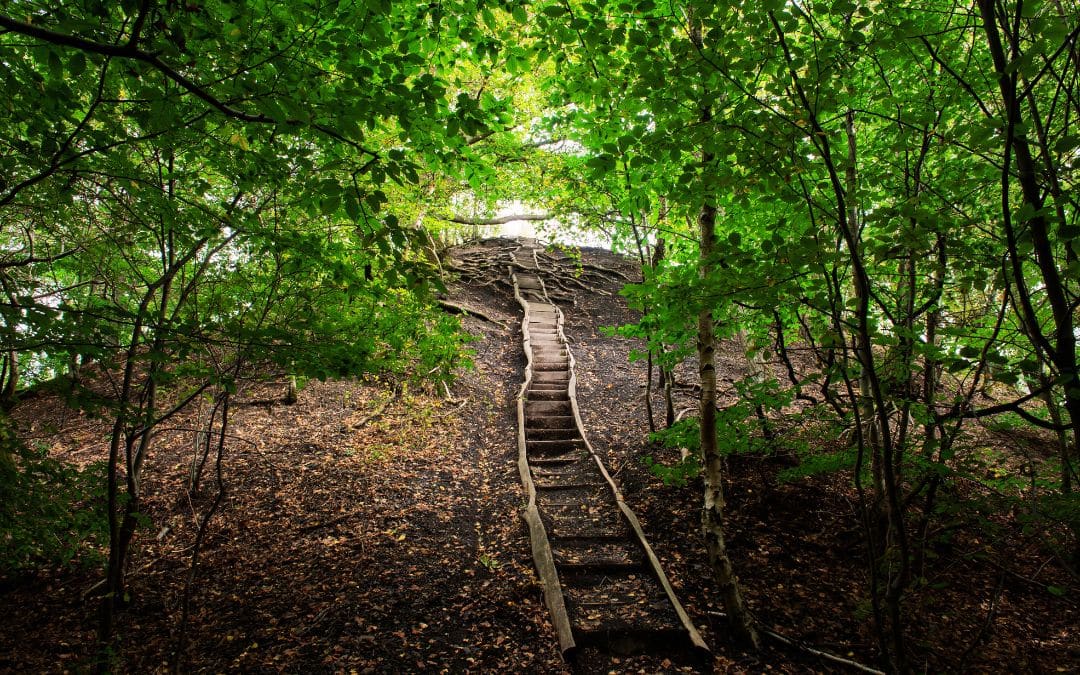
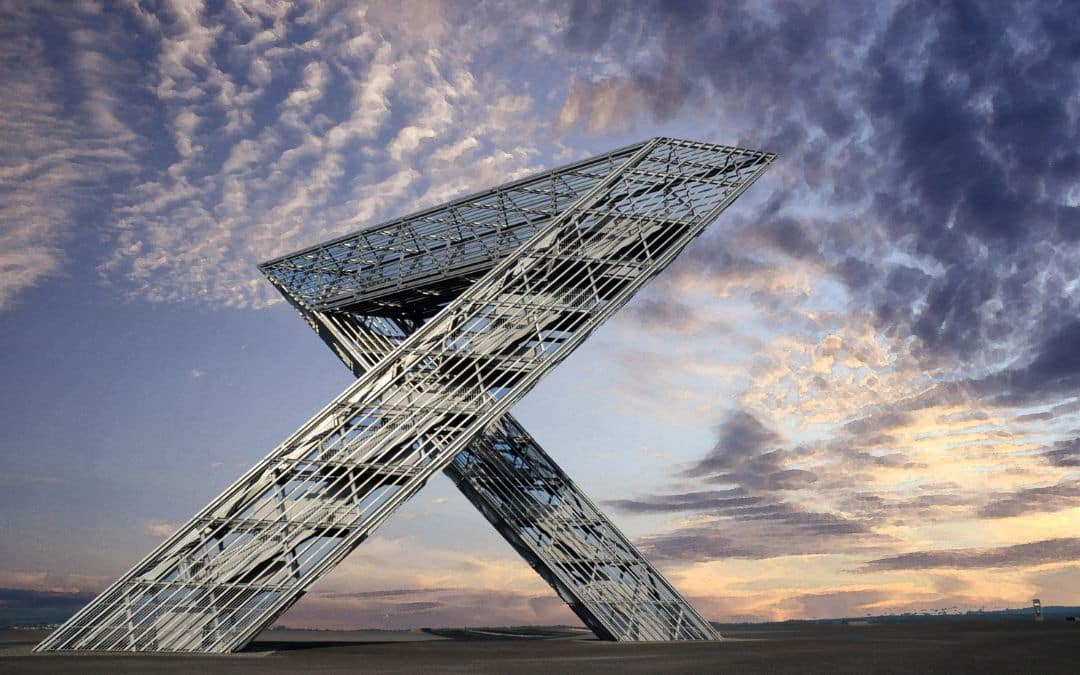
I would combine a visit with the Saar Polygon on the Duhamel spoil heap in Ensdorf. The walkable steel sculpture commemorates the coal-mining industry that shaped the Saarland for generations. After climbing the spoil heap, you have a broad view across the former mining district.
Schlossberg Caves and Fortress Ruins in Homburg
Below the former Homburg fortress lies an extensive system of man-made passages and large domed chambers. The Schlossberg Caves are considered the largest red sandstone caves in Europe.
A visit combines well with a walk to the ruins of Hohenburg Castle on the Schlossberg. Under Louis XIV, the French military engineer Vauban also participated in expanding the fortifications.
Homburg therefore unites two themes running through my Saarland trip: German-French history and places whose most interesting levels lie underground.
Practical Tips for Your Saarland Trip
Distances in the Saarland are short, but it is still worth leaving enough breathing room in your itinerary. Many attractions take more time than their location on the map might suggest. The following tips will help you choose the right length of stay, base, and day trips.
Getting to Saarland
Saarland is located in the far southwest of Germany, along the borders with France and Luxembourg. Despite its location near the edge of the country, it is easy to reach by car and train. Saarbrücken is a particularly convenient base: From the state capital, you can quickly reach many of the attractions featured in this article and also plan day trips to France, Luxembourg, or the Moselle region.
By Car
Saarland is especially easy to reach by car via the A6, which runs from Mannheim and Kaiserslautern to Saarbrücken and continues to the French border. From Trier and Luxembourg, you can access the region via the A1 and A8. The A8 also crosses Saarland from the Luxembourg border through Saarlouis and Neunkirchen toward Zweibrücken.
A car is the most convenient option for exploring the region independently. Although many attractions are only a few miles apart, they cannot always be combined efficiently in a single day using public transportation. This applies, for example, to Tholey Abbey, the Schaumberg, and St. Wendel, as well as to the Saarschleife, Mettlach, and the Roman villas near Perl.
Since Saarbrücken is close to France, it is worth checking the conditions for cross-border travel when booking a rental car. This is especially important if you are planning day trips to Metz, the French region of Lorraine, or Luxembourg.
By Train
Saarbrücken Central Station is the main rail hub in Saarland. From there, trains run toward Mannheim and Frankfurt, Trier and Koblenz, as well as Paris. Regional trains and buses also connect Saarbrücken with many larger towns throughout the state.
Saarbrücken is a particularly convenient base for a car-free trip. The Völklingen Ironworks is only a few train stops away, and towns such as St. Wendel, Homburg, Neunkirchen, and Saarlouis are also connected by public transportation. However, reaching more remote natural attractions, trailhead parking areas, or several different stops in one day requires more time and careful planning.
💡 Tip: If you stay for at least two nights with a participating accommodation provider, you will receive the Saarland Card. It allows you to use all buses and regional trains within the saarVV public transportation network free of charge from your arrival day through your departure day. Admission to numerous attractions is also included.
By Plane
Saarland has its own small international airport, Saarbrücken Airport. It is located southeast of the state capital and is connected to Saarbrücken Central Station and the city center by the R10 bus. The ride to the central station takes about 25 minutes. Rental car offices are located directly across from the terminal.
Since Saarbrücken Airport offers only a limited number of direct flights, many travelers may also consider Frankfurt, Luxembourg, or Frankfurt-Hahn airports. The most convenient option depends not only on the airfare, but also on where you plan to stay and how you intend to continue your journey.
Arriving via Frankfurt
For international travelers flying into Germany, Frankfurt Airport is often the first major hub. My Frankfurt Airport Guide You'll find everything you need for a smooth arrival and departure.
My tip: If you arrive by train or plane and want to explore Saarland independently, you can first discover Saarbrücken without a car and rent one only for selected day trips. This saves you the trouble of finding parking in the city center while still giving you flexibility for excursions to the Saarschleife, the Bliesgau region, or the Upper Moselle.
How Many Days Should You Allow for the Saarland?
Allow at least four days for the main cultural attractions. In that time, you can explore Saarbrücken, visit the Völklingen Ironworks, spend a day around the Saarschleife, and combine Tholey Abbey, the Schaumberg, and St. Wendel.
I spent three days in the Saarland myself. That was enough for an intensive first impression, but it felt rushed. It helped that I already knew St. Wendel and Tholey Abbey from an earlier trip and could keep my visits there shorter this time.
For a relaxed trip, I recommend at least one week. That leaves time for a hike in the Primeval Forest at the Gates of the City, a day of relaxation at Lake Bostal, or additional cultural and nature destinations such as the Bliesgau, Saarlouis, Homburg, and the Roman villas near Perl.
My conclusion on length of stay:
- 3 days: An intensive first overview
- 4 days: The main highlights without too much time pressure
- 1 week: A balanced combination of culture, nature, and relaxation
Is Saarbrücken the Right Base for a Saarland Trip?
My answer after this trip is an unqualified yes, especially for a first visit.
From Saarbrücken, you can explore not only the state capital itself, but also reach many of the Saarland’s main excursion destinations on day trips. Völklingen, the Saarschleife, Tholey and the Schaumberg, and St. Wendel are all within easy reach.
At the same time, Saarbrücken offers a wide selection of restaurants, cafés, hotels, and cultural activities. Especially in the evening, it is convenient to walk through the city center after a long day of sightseeing and choose a restaurant spontaneously.
For a longer trip focused on nature, a second base may be useful, for example at Lake Bostal or in the Bliesgau. Because distances are short, however, it is not essential. Anyone who prefers to unpack only once can easily plan a weeklong Saarland trip from Saarbrücken.
Where to Stay in the Saarland: My Recommendation in Saarbrücken
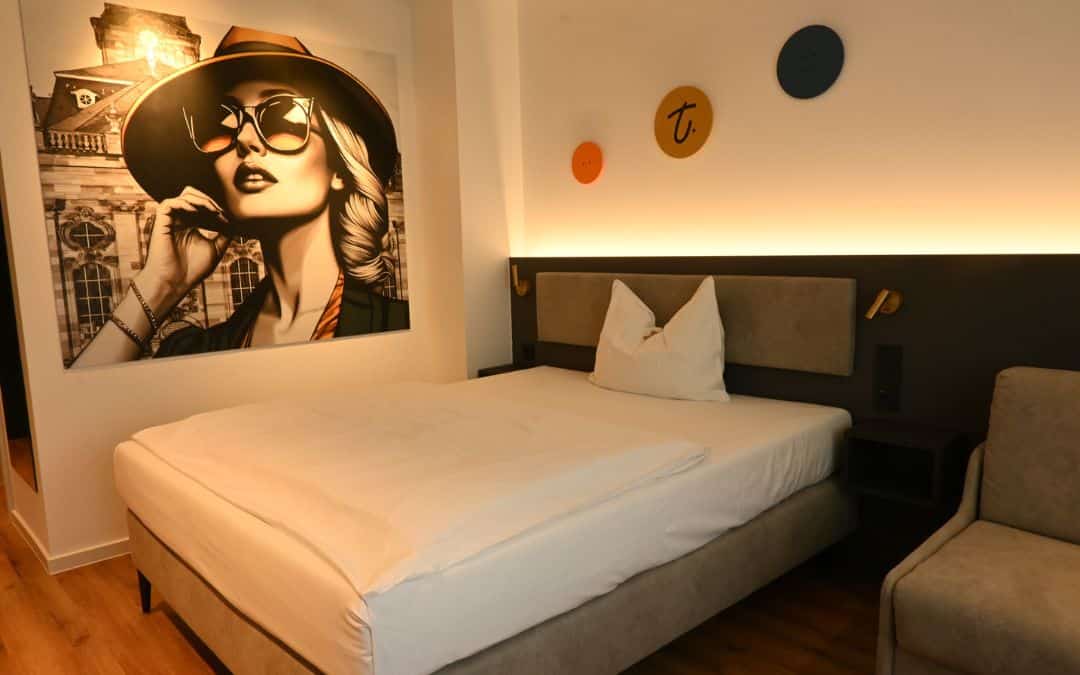
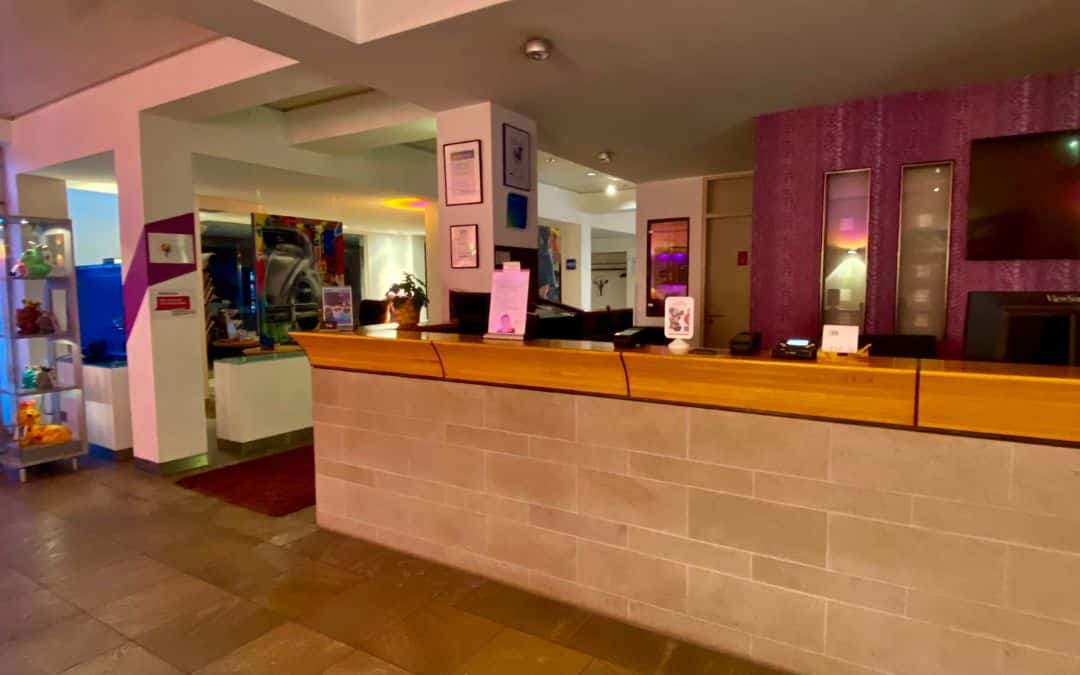
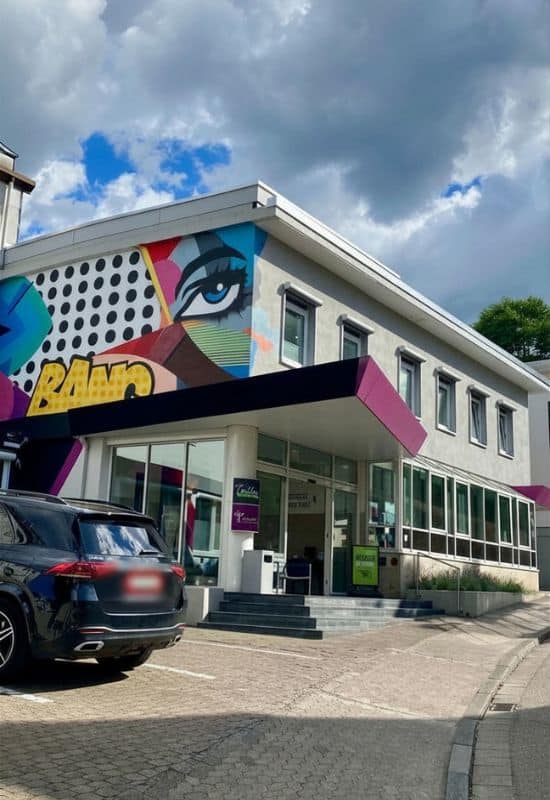
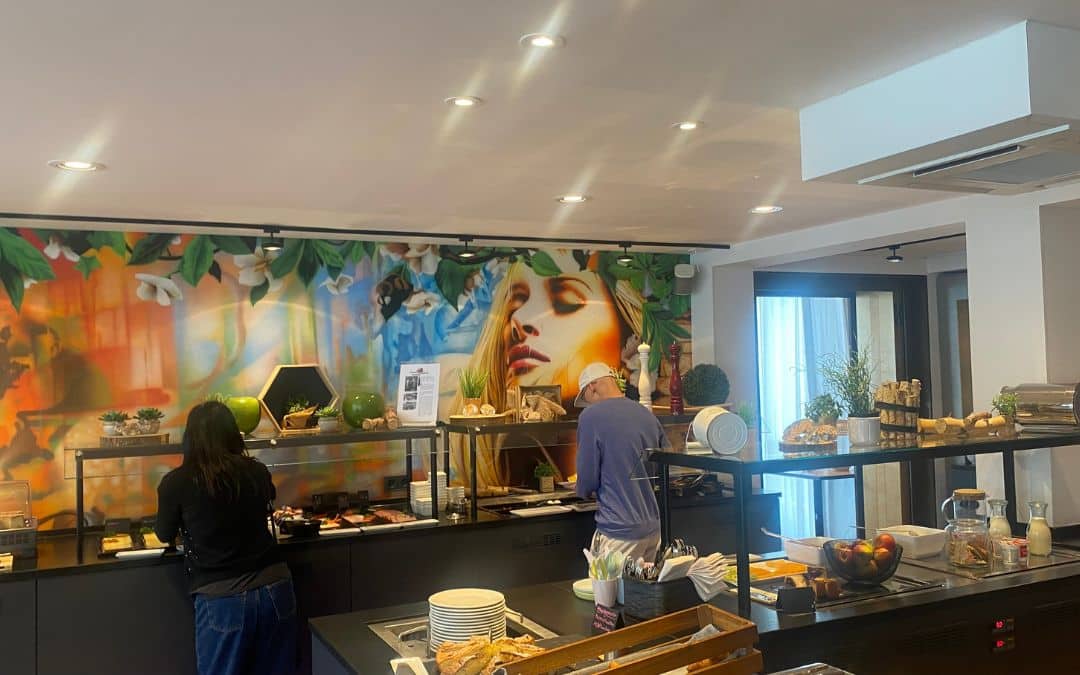
During my Saarland trip, I stayed at Hotel Am Triller, located in a quiet residential neighborhood above Saarbrücken Castle. St. Johanner Markt, with its restaurants and sidewalk cafés, is about a 15-minute walk away. The location was also convenient for my day trips because I could quickly drive out of the city.
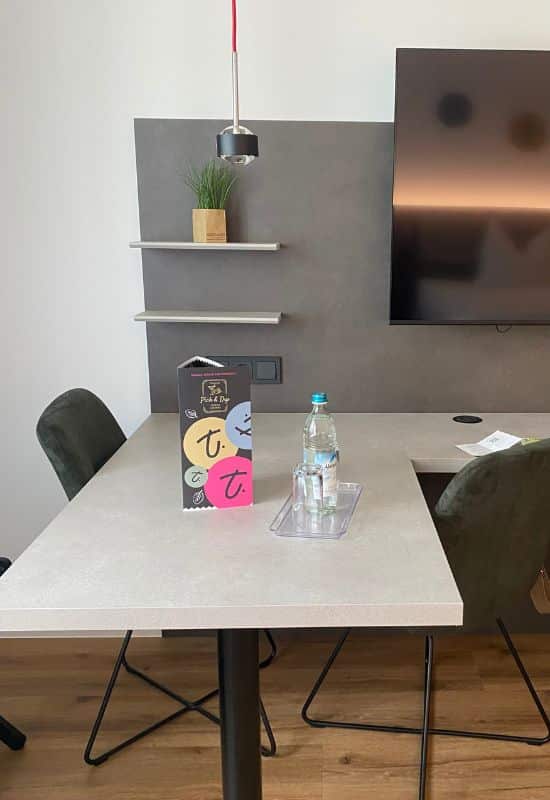
I stayed in a spacious studio decorated in a colorful Pop Art style. It offered significantly more space than a traditional hotel room and was comfortably furnished for a longer stay. In addition to a cozy sitting area and a large smart TV, there was a workspace for two and a fully equipped kitchenette with an oven and dishwasher.
The modern bathroom had a large shower and plenty of storage. With the summer temperatures, I was also very grateful for the air conditioning.
I especially appreciated the warm and personal service. The staff at reception gave me useful restaurant recommendations for the city center and were always happy to help with questions.
I particularly appreciated the friendly and personalized service. The staff at the front desk gave me great restaurant recommendations for downtown and were always happy to help with any questions I had.
For anyone arriving by car, the three parking levels directly at the hotel are another advantage. I always found a free space during my stay. For me, Hotel Am Triller was therefore an excellent base for exploring Saarbrücken and the wider Saarland independently.
Do You Need a Car in the Saarland?
Personally, I would prefer to explore the Saarland by car. It gives you much more flexibility, especially when you want to combine several sights in one day. This applies, for example, to Tholey, the Schaumberg, and St. Wendel, or to the Saarschleife with Mettlach and the Roman villas near Perl.
A Saarland trip without a car is certainly possible, however. From Saarbrücken, many important destinations can be reached by train and bus. Völklingen and St. Wendel are particularly straightforward. For more remote nature destinations, hiking parking lots, or multiple stops in one day, you will need more time and careful coordination of connections.
The Saarland Card is useful. It is provided by participating accommodations for stays of at least two nights. During your stay, it includes free travel on buses and trains within the saarVV public transportation network, as well as admission to numerous attractions.
My recommendation: To focus mainly on Saarbrücken, Völklingen, and a few well-connected places, you can manage without a car. For an independent road trip including the Saarschleife, Tholey, the Bliesgau, Lake Bostal, or the Roman sites, a car is considerably more convenient.
When Is the Best Time to Visit the Saarland?
For a trip through the Saarland, I especially recommend May and June, as well as September and October. During these months, city sightseeing, excursions to the Saarschleife, hiking, and days in nature can generally be combined comfortably. Boat trips on the Saar and many seasonal activities also operate during this period.
July and August can become very hot. This can be tiring during longer city walks, at viewpoints, and on hikes. Anyone who does not cope well with high temperatures should therefore travel in late spring or early fall.
A completely different kind of trip through the Saarland offers December. The region is especially worth visiting for its Christmas markets, particularly because of the Christmas markets. I especially enjoyed the Christmas and Medieval Market in St. Wendel. On Advent weekends, however, it seems to attract half the Saarland. During my visit, it was certainly extremely crowded.
The Christmas market in Saarbrücken also offers a great opportunity to experience the state capital in a festive atmosphere. For a classic tour featuring nature, scenic viewpoints, and longer excursions, however, I would still choose May and June or September and October.
Which Destinations Work Well in Rainy Weather?
Even in bad weather, the Saarland offers enough options for a varied sightseeing day. Saarbrücken has a particularly wide selection.
The Historical Museum Saar with its underground castle complex combines well with the Castle Church and other cultural attractions around Schlossplatz. Art lovers should also visit the Modern Gallery of the Saarland Museum. Its collections range from 19th-century art to Impressionism, Expressionism, and contemporary works. A special focus is the exchange between German and French artistic movements.
To combine a museum visit with shopping, head to Europa-Galerie beside Saarbrücken Central Station. Part of the shopping center occupies the landmarked former Prussian Mining Directorate. Its historic façade and representative interiors were incorporated into the modern building.
The Tholey Abbey is another good choice for a rainy day. The modern windows by Gerhard Richter and Mahbuba Maqsoodi look different depending on the light, but remain worth seeing under an overcast sky.
The Völklingen Ironworks (Völklinger Hütte) only with reservations. Important exhibitions are housed inside the blower hall and other indoor spaces, but a large part of the route crosses the extensive outdoor grounds. Anyone who wants to explore the entire World Heritage Site, including the blast furnace group, charging platform, and inclined ore lift, should choose a dry day if possible.
The Schlossberg Caves in Homburg are a good alternative. Their spacious passages and domed chambers lie protected beneath the Schlossberg. Since the temperature inside remains low year-round, bring a jacket and sturdy shoes even in summer.
In Saarlouis the Municipal Museum on the history of the fortress town and the Ludwig Gallery with its changing art exhibitions are good indoor options. When the rain eases, you can combine them with a walk through the historic center.
Is the Saarland Also a Wine Region?
Yes, although on a smaller scale than the term “Saar wine” might initially suggest. Wine production within the state of Saarland is concentrated along the Upper Moselle around Perl, Nennig, and Sehndorf. The vineyards belong to the Mosel wine-growing region and form the Moseltor district.
The vines grow mainly on shell-limestone soils. Alongside Elbling, one of the oldest grape varieties cultivated in Central Europe, growers produce Pinot Blanc, Pinot Gris, Auxerrois, Chardonnay, and Pinot Noir. The Pinot varieties and sparkling wines are considered specialties of the Saarland’s Upper Moselle.
The wine villages combine well with the Roman villas near Perl or an excursion to the Saarschleife. With advance reservations, you can taste regional wines and sparkling wines at individual wineries.
Unfortunately, I did not have time for this during my trip. On a future visit, I would add a day on the Upper Moselle and combine Villa Borg and Villa Nennig with a wine tasting. That would bring the culinary side of the Saarland even more strongly into the experience alongside culture and nature.
Where Can You Eat Well in and Around Saarbrücken?
Saarbrücken also impressed me with its food. Around St. Johanner Markt, the castle, and the basilica, you will find numerous restaurants and cafés where you can try regional cuisine with French influences.
At Gasthaus Zahm near the St. Johanner Markt, I ordered boudon noir, a French blood sausage with mashed potatoes, apples, and onions. The hearty dish suited the border region and tasted excellent. In good weather, you can also sit outside.
At Tomate 2 Restaurant 2 another typical Saarland dish: beef salad with fried potatoes. It also has pleasant outdoor seating. At both Gasthaus Zahm and Tomate 2, olives with baguette were served before the meal, a small gesture that once again made the French influence noticeable.
For a lighter meal, the Café am Schloss. is a good choice. On my final evening, I ate Quiche Lorraine with salad beneath shady trees. After my lavish waffle break that afternoon, it was more than enough.
I had taken that waffle break at LUUC, directly beside the Basilica of St. John. The serving of Belgian waffles with pistachio cream, vanilla ice cream, whipped cream, and blueberries was so large that it could easily have passed for a main meal.
I also discovered a few good places to eat outside Saarbrücken. In St. Wendel I recommend Le Journal Café & Restaurant on Schlossplatz. It is usually busy and makes a good stop during a walk through town.
At Tholey Abbey the monastery garden caféis operated by Gillen bakery. It is self-service, but you sit in a lovely setting overlooking the greenery. I also enjoyed the cake.
On the Schaumberg , the Schaumberg Alm looks very inviting with its Saarland and Alpine specialties. I did not eat there myself, but I would consider it for a meal on a future visit.
Information
For more inspiration, current event listings, and practical travel information, visit the website of the Saarland Tourism Board. You will also find information about accommodations, attractions, hiking and biking trails, and the Saarland Card.
Visit the website of the Saarland Tourism Board*.
Conclusion: The Saarland Deserves More Than a Long Weekend
Before my trip, I thought three days would be enough for a good overview. After all, distances in the Saarland are short and many attractions lie close together. Once I was there, however, I quickly realized that short drives do not automatically mean a small sightseeing program.
What surprised me most was the diversity. Within just a few days, I moved between Saarbrücken’s underground castle remains, the blast furnaces of the Völklingen Ironworks, the Saarschleife, and the modern stained-glass windows in Tholey. There were also Baroque squares, memorial sites, forest landscapes, and a food culture in which the French influence feels entirely natural.
Saarbrücken was the right base for my first visit. From there, I could easily discover the Saarland’s different sides and spend the evenings in the lively city center after my day trips.
At the same time, there’s still plenty left to see: the Roman villas and wine-growing villages along the Upper Moselle, the Villeroy & Boch World, Saarlouis, the Bliesgau region, the Schlossberg Caves in Homburg, and a longer hike through the Saarkohlenwald.
That is why I will return. The Saarland is small enough for short distances, but varied enough for a longer vacation.
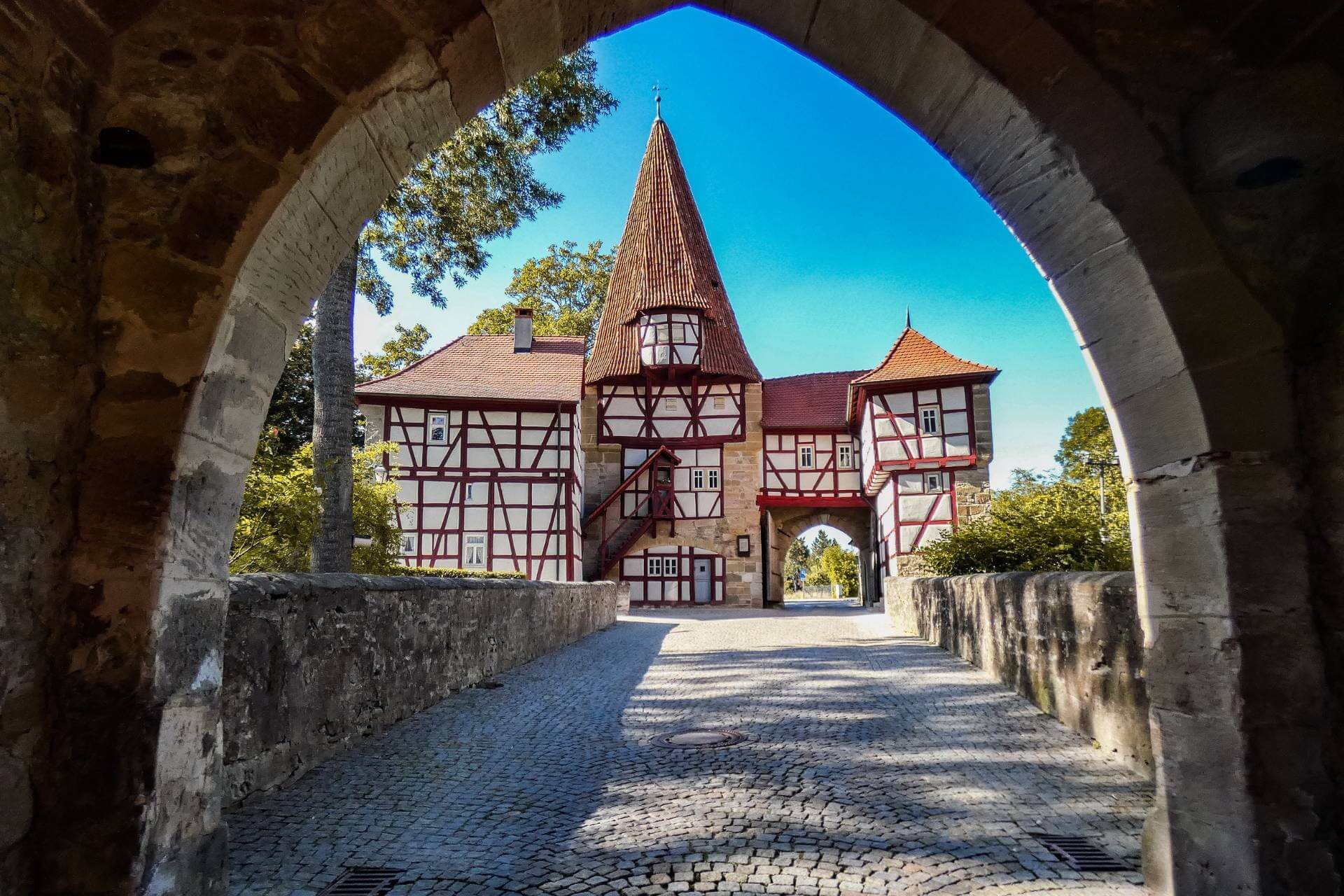
You have more than one weekend to spend in Würzburg? Then take a mini-road trip to see the surrounding area. I read more
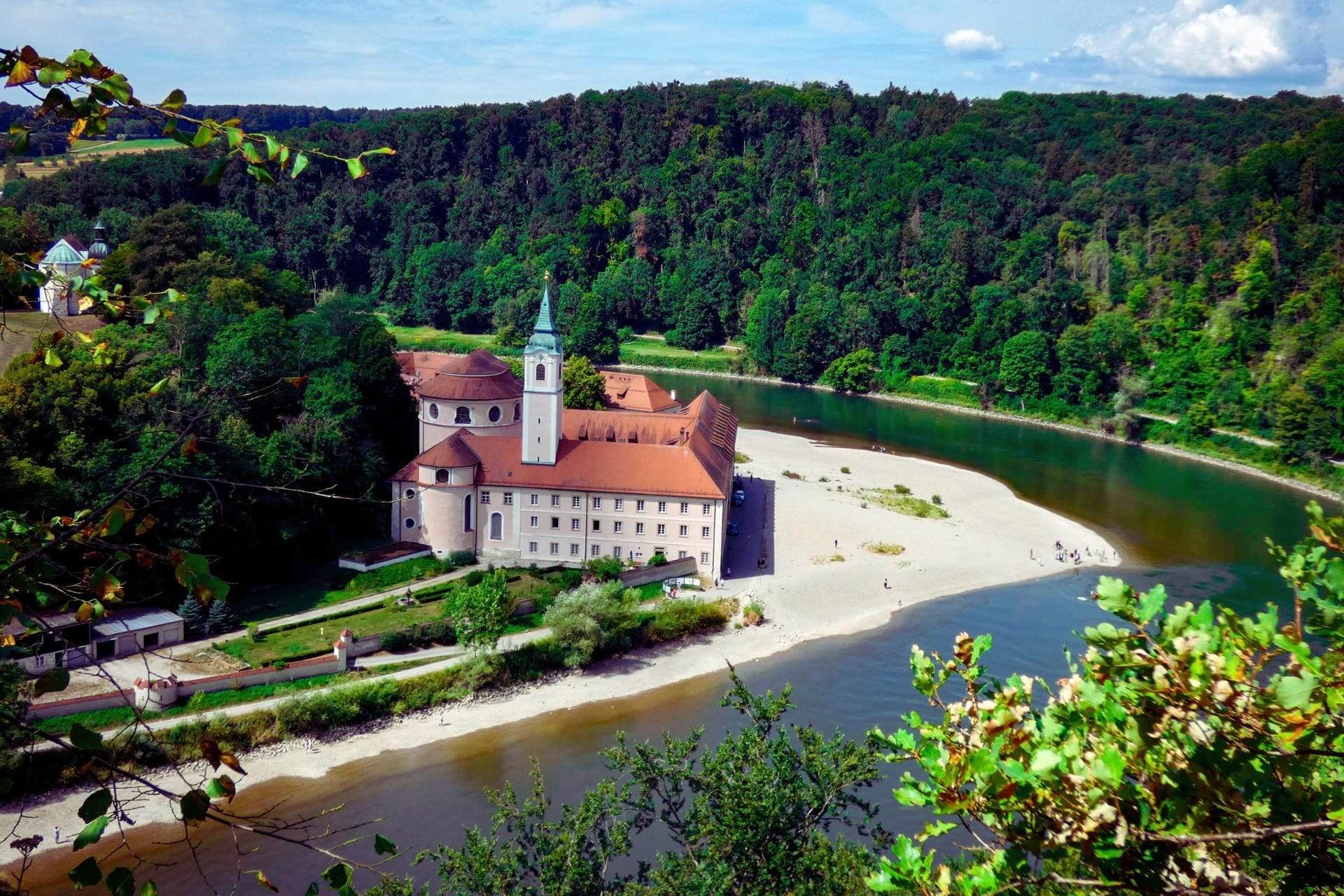
Are you ready to discover Germany's magnificent landscapes? This comprehensive guide takes you to the 52 most beautiful areas of our country read more
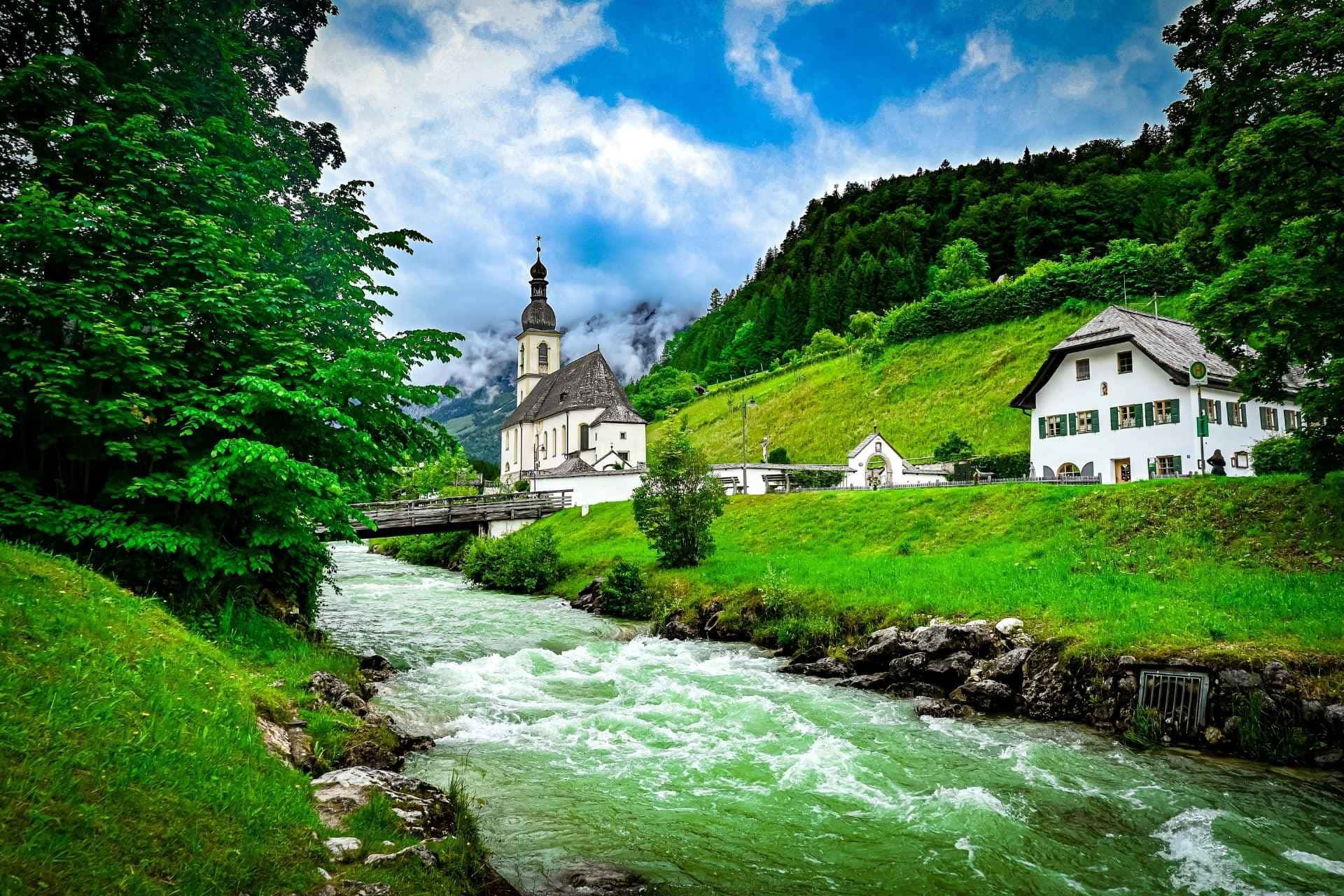
The Berchtesgadener Land impresses with its breathtaking panoramas and, for me, is one of the most beautiful regions in Germany with an abundance of read more
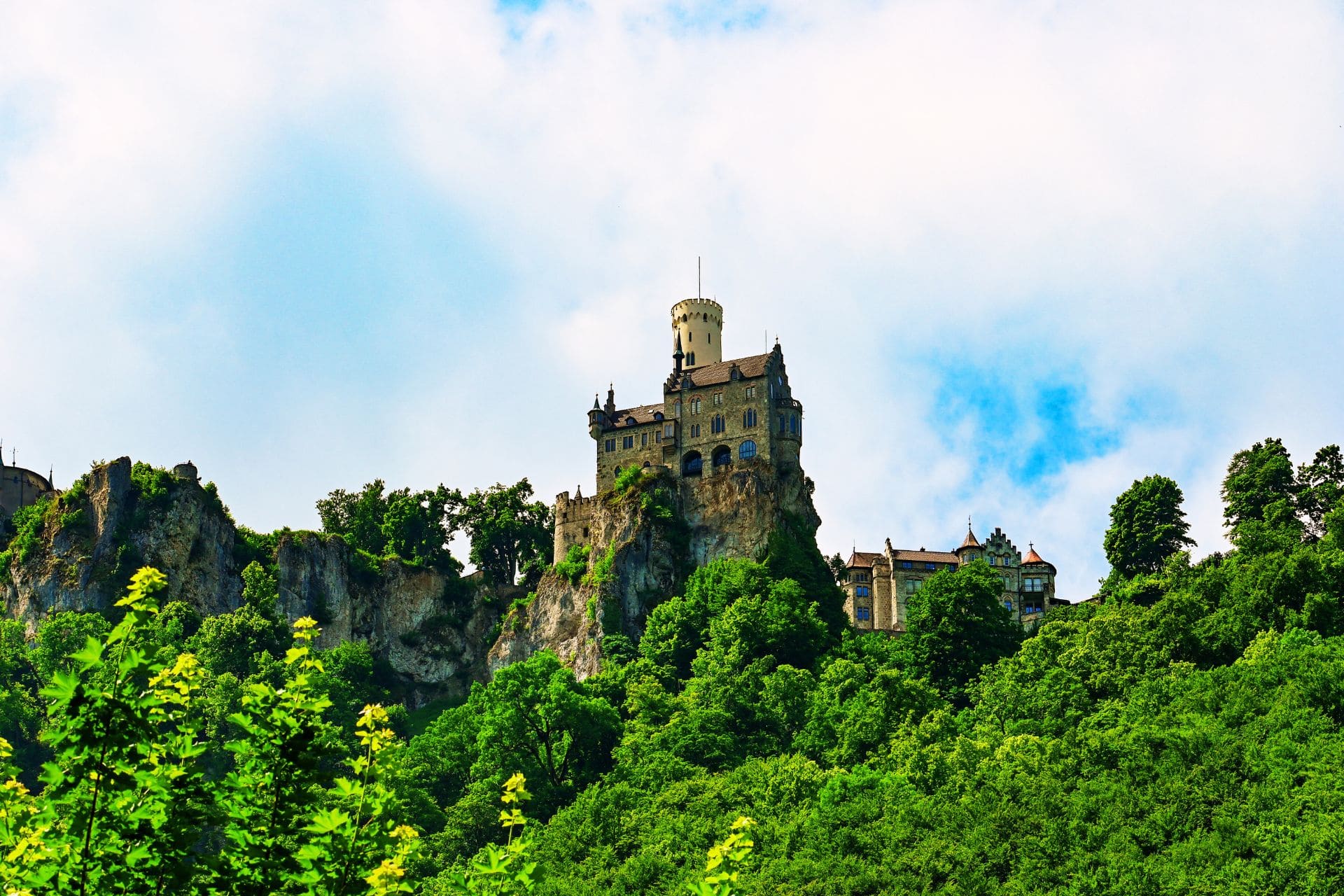
Between Albtrauf, half-timbered houses and World Heritage Site The Swabian Alb is still one of Germany's underrated regions. Yet it combines a read more
About me: I love to travel, write and photograph - preferably in places where the past is visible. Whether it's half-timbered towns, castles or quiet landscapes - there's something in every place that touches you and inspires you to think further. With my blog Angie's Travel Routes I would like to inspire you to discover Germany on your own. I share my experiences, personal impressions and practical route tips to make your next trip a special experience.
You can find out more about me to my newsletter.

 Deutsch
  English
A wonderful, comprehensive travelogue about the Saarland. I never would have expected the diversity, history, varied natural scenery, and culinary delights that await visitors here. I think I’ll visit the places described in the near future, now that this report has piqued my curiosity. Thank you, Angelika, for the detailed account and the impressive photos. Best regards, Matthias
Dear Matthias,
I'd be really happy if my article piques your curiosity about the Saarland. It's definitely worth a visit, and I'd like to go back myself to explore the places I didn't have time to see on my trip.
Warm regards,
Angelika