
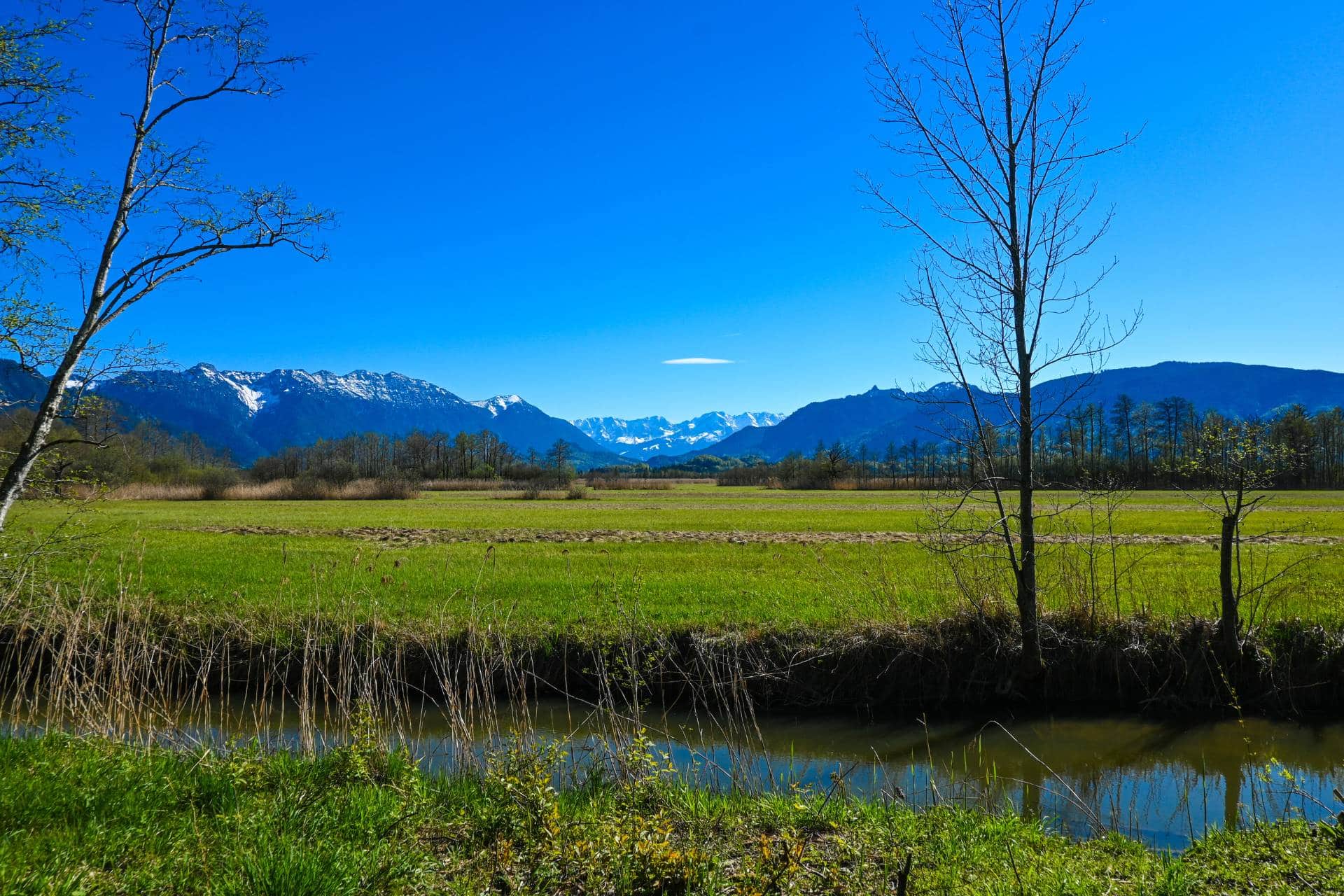
The Blue Land lies in the Upper Bavarian Alpine foothills, about 60 kilometres south of Munich. Morning and evening, the light bathes the landscape in a soft blue: the moorland, the lakes, the distant mountain ranges of the Estergebirge, the Ammergau Alps and the Wetterstein massif. This is not a seasonal phenomenon – it simply is that way, at any time of year, day after day.
It was Franz Marc, the expressionist painter and co-founder of the artists' group Der Blaue Reiter (The Blue Rider), who gave this landscape its poetic name. Blue was his favorite color - for him it represented longing, depth and the spiritual. Even as a young academy student, Marc regularly moved to the Kochel area to study painting, finally settling in the Bavarian Oberland in 1908 and buying a house in Ried near Kochel am See in 1914. He called the landscape around Kochel his „Blue Land“. Together with Wassily Kandinsky, Gabriele Münter, August Macke and others - who settled mainly around Murnau and the Staffelsee - one of the most influential art movements of the modern era took shape here in the early 20th century: Expressionism. The name of their artists' group was coined by Kandinsky and Marc in a garden pavilion in Sindelsdorf: "Both of us loved blue – Marc loved horses, I loved riders. So the name came of itself," Kandinsky recalled in 1930.
Because the art history of the Blue Rider is inseparably linked to both places – Murnau and Kochel – this article covers not only the official tourism area around the Staffelsee but also the Kochelsee, Walchensee and the Franz Marc Museum. Three unspoilt lakes, the largest contiguous moorland area in Central Europe, important art museums, a vibrant open-air museum and one of Germany's most renowned stud farms make the Blue Land a destination that appeals equally to art lovers, nature enthusiasts and those simply looking to unwind.
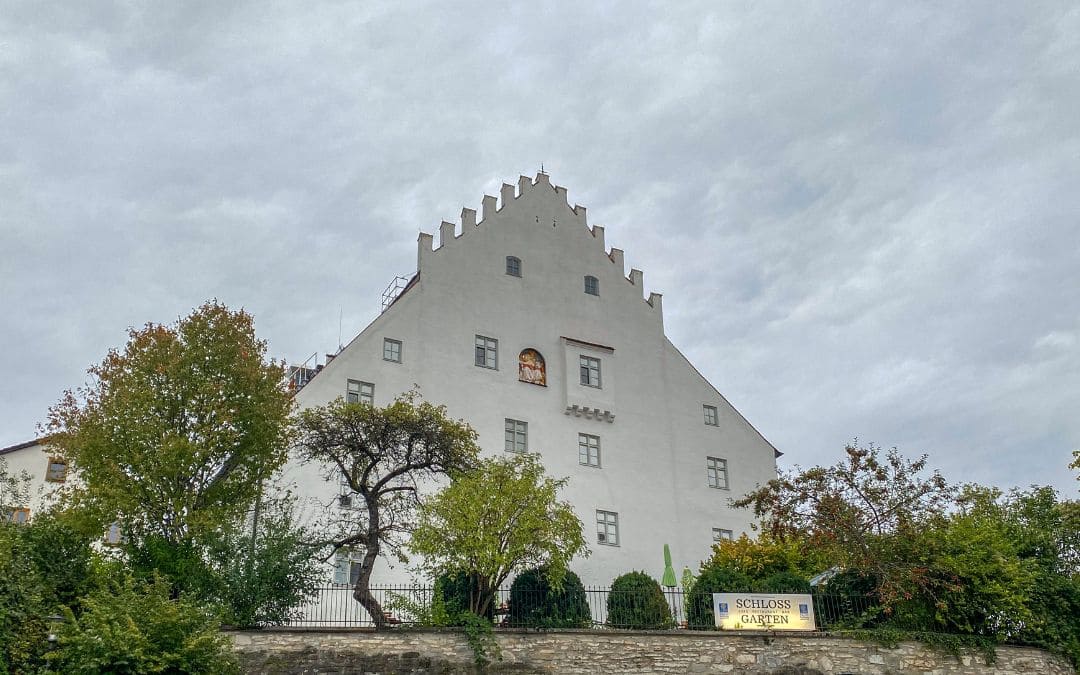
- Art history up close at Schlossmuseum Murnau: works by Gabriele Münter, Kandinsky and other Expressionists – plus a magnificent view from the castle over the Murnauer Moos and the Alps.
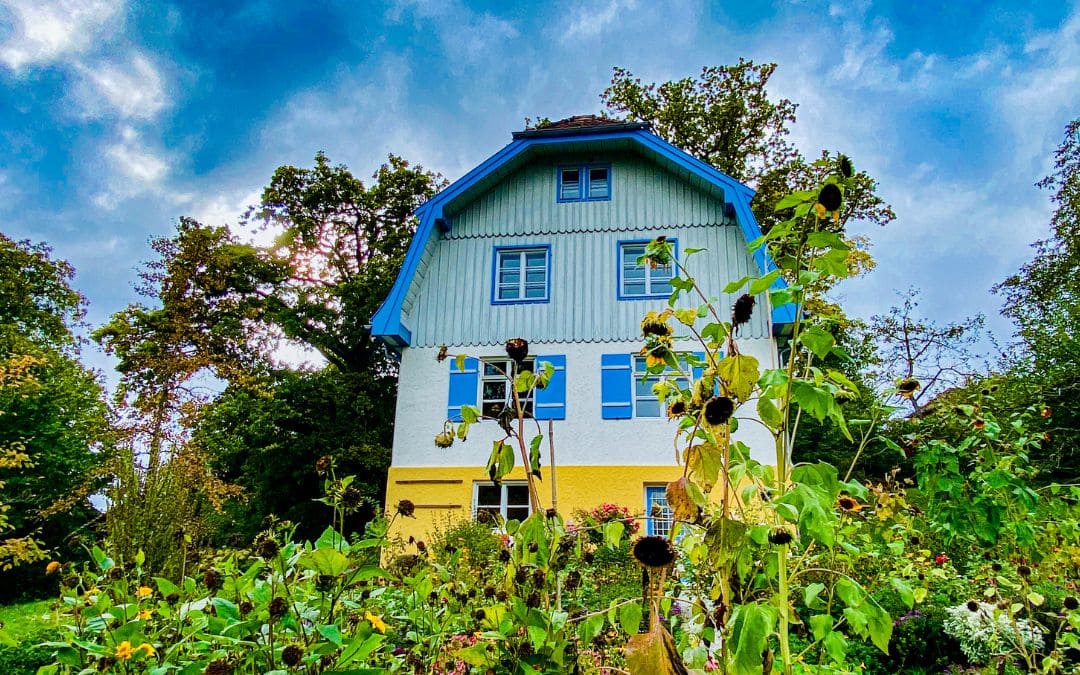
- Exploring the Münter House: The charming house with its unusual mansard hip roof and wonderful cottage garden where Kandinsky and Münter lived and worked is now a museum and one of the most atmospheric places in the Blue Land.
- Hiking the Murnauer Moos: The 32 km² moorland is a natural wonder set against an Alpine backdrop - best explored on foot along the 12 km Moos circular trail.
- A boat trip on the Staffelsee:The leisurely cruise past the seven islands is one of the most relaxing experiences the region has to offer.
- Franz Marc Museum in Kochel am See: Indispensable for all those who really want to understand the Blue Rider - with a fantastic view of Kochelsee and Herzogstand.
- Cable car ride up to the Herzogstand: Ride up comfortably by cable car, then take the short, scenic walk along the panoramic path to the Berggasthaus Herzogstand – with one of the finest views of the Walchensee and the Alps.
The Blue Land: All Sights, Day Trip Destinations and Dining Tips on the Map
The map below shows all the sights, day trip destinations and my restaurant, café and beer garden recommendations at a glance. Entries are color-coded by category – so you can plan your stay according to your interests: art museums, nature experiences, mountain excursions or a relaxed meal.
1. Murnau am Staffelsee – Heart of the Blue Land
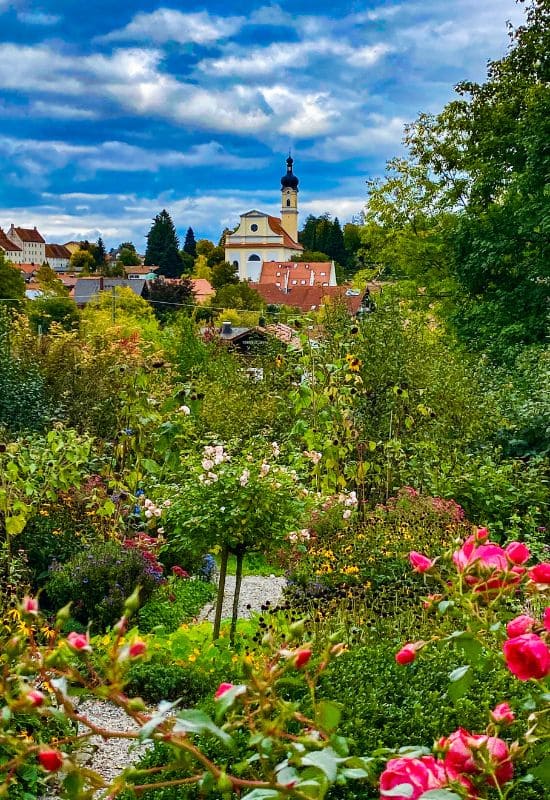
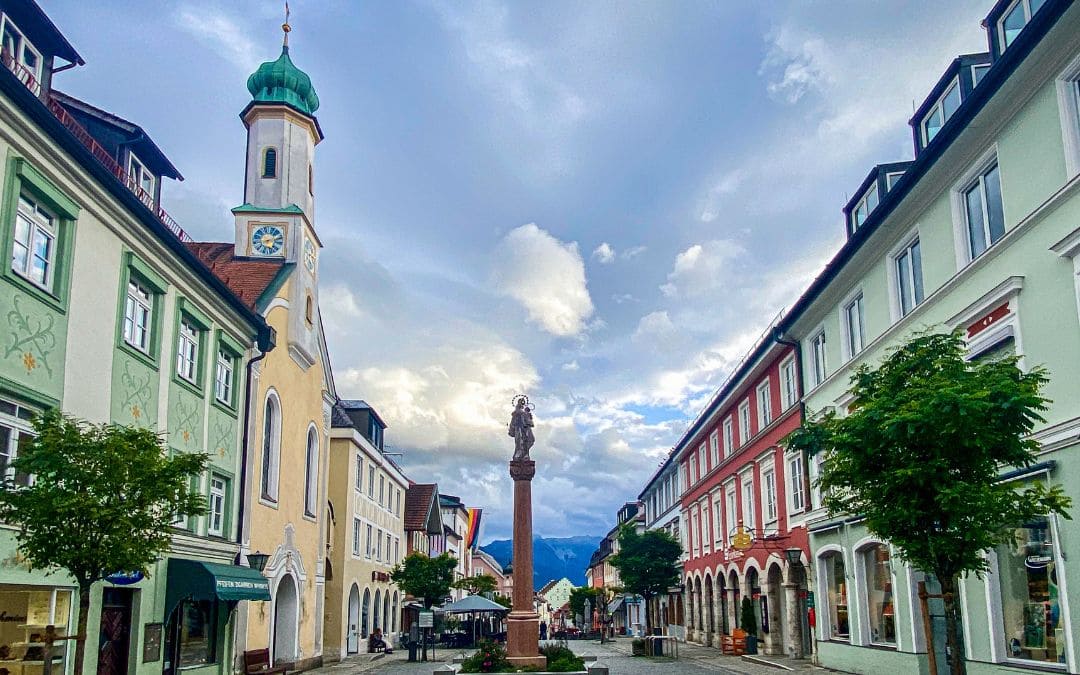
Murnau am Staffelsee is the heart of the Blue Country - and a place that is not immediately obvious. Anyone strolling through the pedestrian zone with its colorful facades immediately senses the special flair: the houses on Untermarkt and Obermarkt have brightly painted facades, where Lüftlmalerei meets expressionist colorfulness. No coincidence - because Murnau is inextricably linked with the history of the Blue Rider.
Around 12,000 people live in this small market town nestled between the Staffelsee, the Murnauer Moos and the panorama of the Alps. The town is easy to explore on foot and makes an excellent base for day trips throughout the region.
Schlossmuseum Murnau
The white palace towers above the town and is home to one of the most important collections of Expressionist art in Bavaria: Works by Gabriele Münter, Wassily Kandinsky, Alexej von Jawlensky, Marianne von Werefkin and other members of the Blaue Reiter and the Neue Künstlervereinigung München can be seen here. The collection is complemented by exhibits on Hinterglasmalerei (reverse glass painting) - a Bavarian folk art that fascinated and strongly influenced the Expressionists - as well as changing special exhibitions. Together with the Museum der Phantasie in Bernried on Lake Starnberg, the Franz Marc Museum on Lake Kochel, the Museum Penzberg and the Städtische Galerie im Lenbachhaus, the museum is part of the MuSeenLandscape Expressionism,
Schlossmuseum Murnau at a Glance
Münter-Haus
About 10 minutes' walk from the castle is the Münter-Haus - with its unusual mansard hip roof and a beautiful cottage garden. Gabriele Münter bought the house in 1909, and from then on she and Wassily Kandinsky spent their summers here together. The house quickly became a meeting point for the avant-garde: Franz Marc, August Macke, Alexej von Jawlensky and others came to visit, and in 1911 the decisive working sessions for the almanac "Der Blaue Reiter" took place here.
Today, the Münter House is a museum and one of the most atmospheric places in the Blue Land. Much inside remains as it was: the staircase banister painted by Kandinsky with colourful riders, flowers and folk motifs; the jointly decorated furniture; the reverse glass paintings. You can feel here how people lived and worked – and how this landscape, this place and this everyday life flowed into the paintings.
Münter House at a Glance
🍽️ Where to Eat in Murnau
- Griesbräu zu Murnau - Traditional brewery on the Obermarkt, brewing since 1676 and family-owned for 100 years; Bavarian cuisine and house-brewed beers in various styles (Helles, Weissbier, Dunkel and many seasonal brews); closed Wednesdays; no reservation needed, just walk in
- Karg Bräustüberl - Cozy brewery pub with warm wood interiors and a pretty terrace; house-brewed wheat beer in several varieties; hearty Bavarian home cooking; closed Mondays and Tuesdays
- Restaurant Auszeit - Stylish, modern restaurant in the arts and culture park; creative seasonal cuisine with fresh regional ingredients; large sun terrace
- Il Duetto - Popular Italian restaurant in the pedestrian zone; pizza and pasta in a relaxed atmosphere
- Konditorei & Kaffeehaus Barbara Krönner - A Murnau institution on the Obermarkt; homemade cakes, tarts, ice cream and pralines; perfect for a coffee break while exploring the town
💡 Tip: explored Murnau with local guide Jac-Peter Tölkes – a true insider who brings the town to life through stories and connections rather than dry facts. My in-depth Interview article about Murnau am Staffelsee has many more tips, personal impressions and practical advice for your visit.
2. Murnauer Moos – Central Europe's Largest Contiguous Moor Area
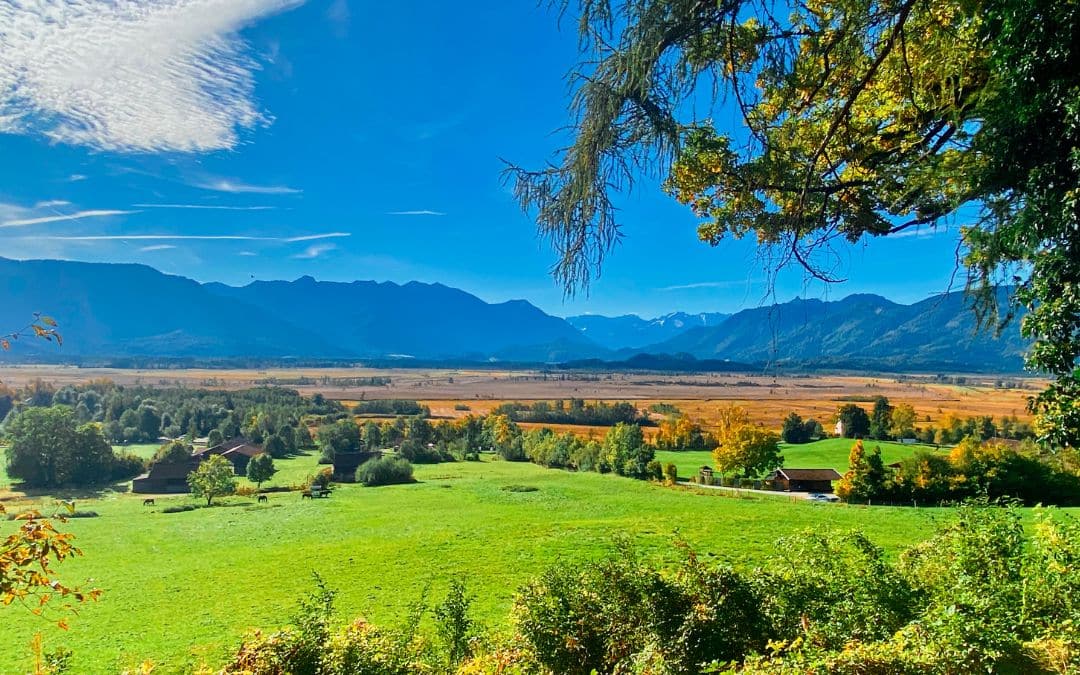
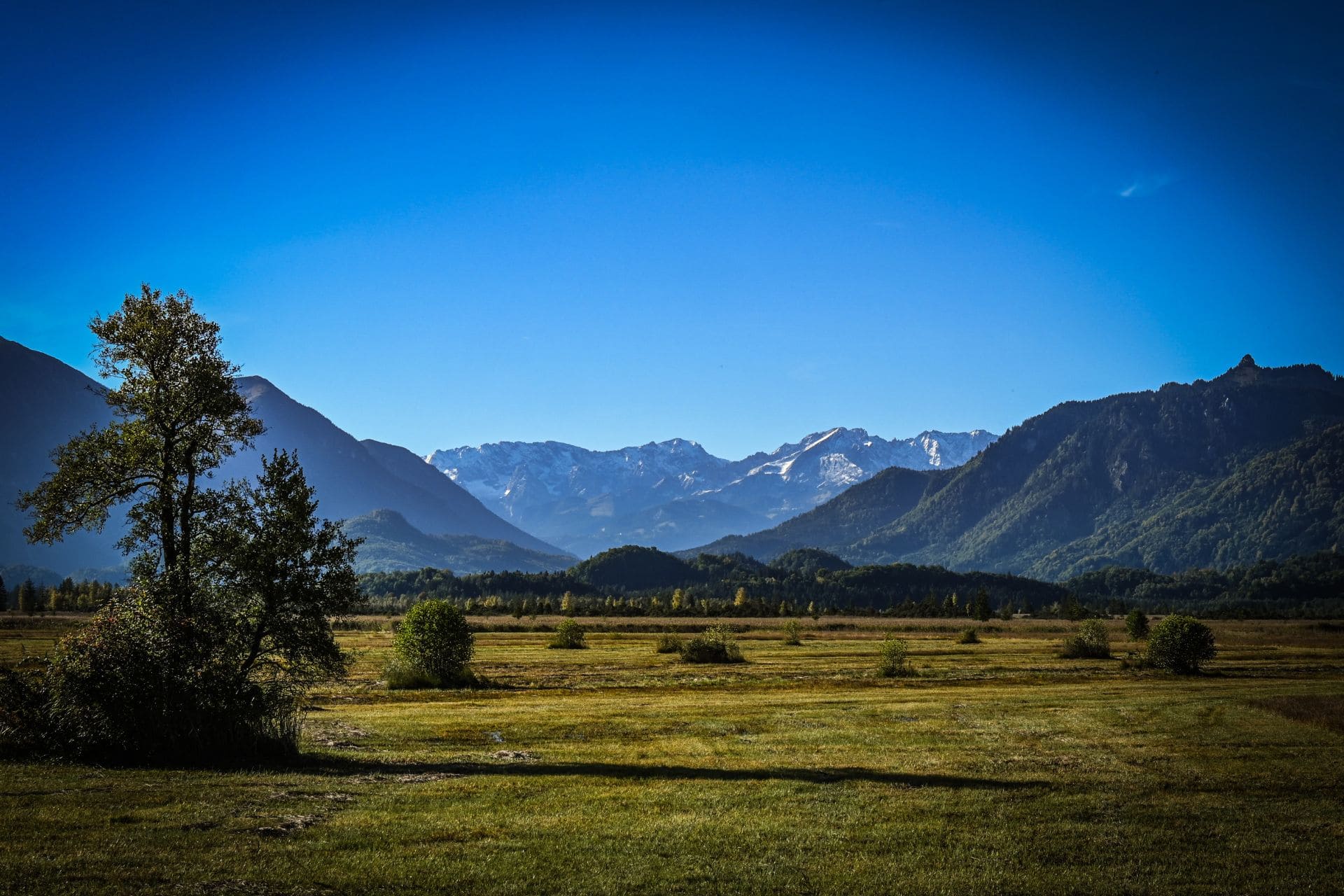
Right on the doorstep of Murnau lies one of Central Europe's most impressive natural landscapes: the Murnauer Moos. Covering around 32 km², it is the largest contiguous moor area north of the Alps - and one of the few in Central Europe that has remained largely intact in its original state. Formed at the end of the last Ice Age in the tongue basin of the Loisach Glacier, it today encompasses fens, transitional moors and raised moors within a small area.
The Moos has been a nature reserve since 1980 and is a refuge for many animal and plant species that have long since disappeared elsewhere: the great grey shrike, corncrake and adder are at home here, as are rare plants such as the carnivorous sundew, the Siberian iris and various orchids. On clear days, the backdrop stretches to the Wetterstein and Estergebirge mountain ranges – a panorama not easily forgotten.
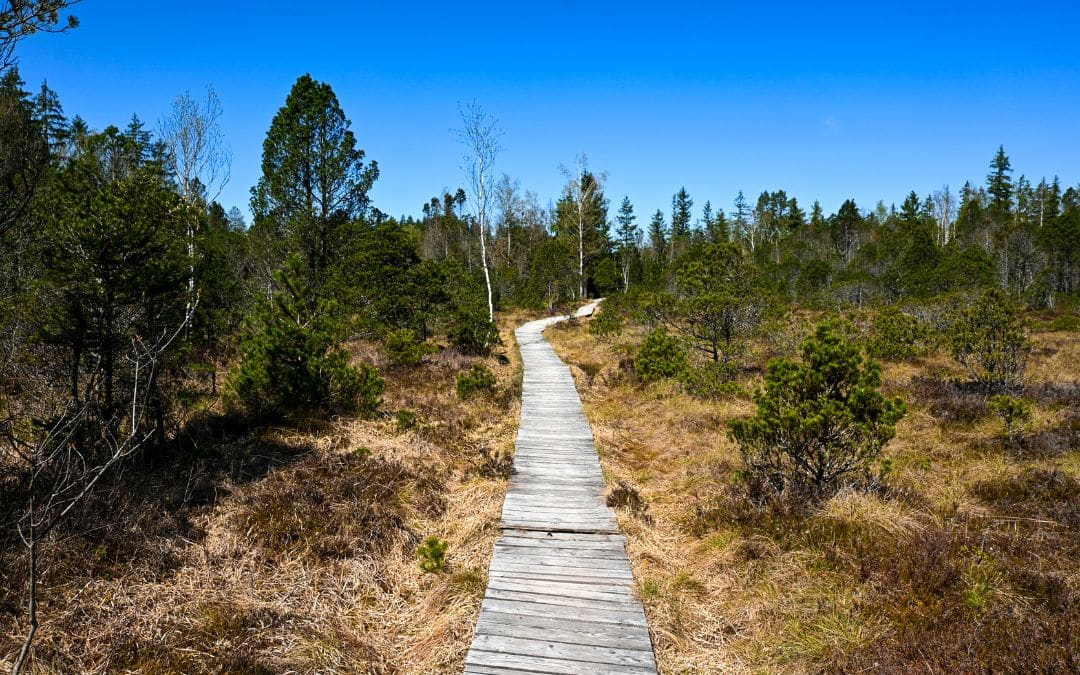
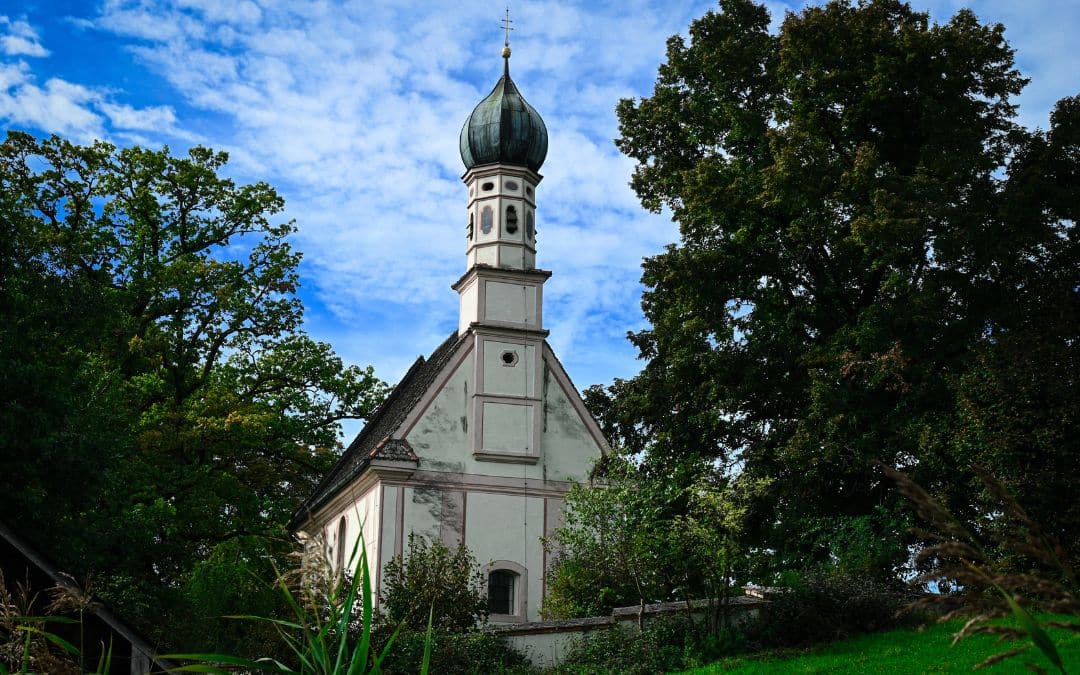
The most popular route through the Moos is the Moos circular trail around 12 kilometres, largely flat and on firm paths, with the boardwalk across the moorgy "Lange Filze" as its highlight – a wooden walkway leading through open moorland. The starting point is the Ramsachkircherl (also known as „Ähndl“), a small baroque church with a beer garden, which offers a nice destination at the end of the hike. On nice weekends, the circular route is well frequented - an early start is worthwhile. If you want to shorten the route, you can park your car at the hiking parking lot in Westried and walk to the Bohlensteg in around 15 minutes.
💡 Tip: The Murnauer Moos and its significance for nature and the region are covered in depth in my Interview article about Murnau am Staffelsee with extensive background information from local guide Jac-Peter Tölkes.
Murnauer Moos at a Glance
3. Staffelsee, Riegsee and Froschhauser See - the Lakes of the Blue Land
The three lakes of the Blue Land – Staffelsee, Riegsee and Froschhauser See – are among the warmest bathing lakes in Upper Bavaria, all formed during the Würm Ice Age by the Isar-Loisach Glacier. Together they cover nearly 1,000 hectares of water.
Staffelsee
The Staffelsee is the largest of the three lakes at 766 hectares - and the most island-rich lake in the Alpine foothills: seven wooded islands give it its distinctive character. The largest, the island Wörth, is the only permanently inhabited island; archaeological finds confirm settlement since Celtic times, and a monastery was founded here in the 8th century. The second largest, Buchau is today a car-free campsite accessible only by ferry.
The Staffelsee's peat-rich water warms up quickly due to its sheltered position – ideal for swimmers, sailors, stand-up paddlers and canoeists. In winter, when the lake freezes over, it becomes a vast ice rink for skaters and curlers.
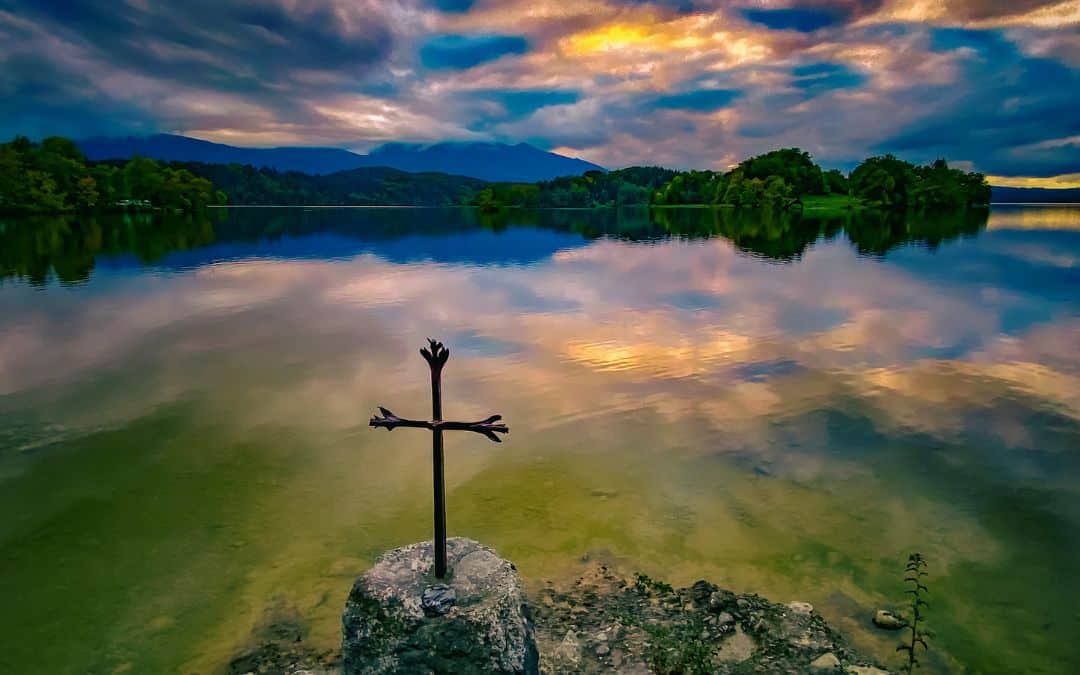
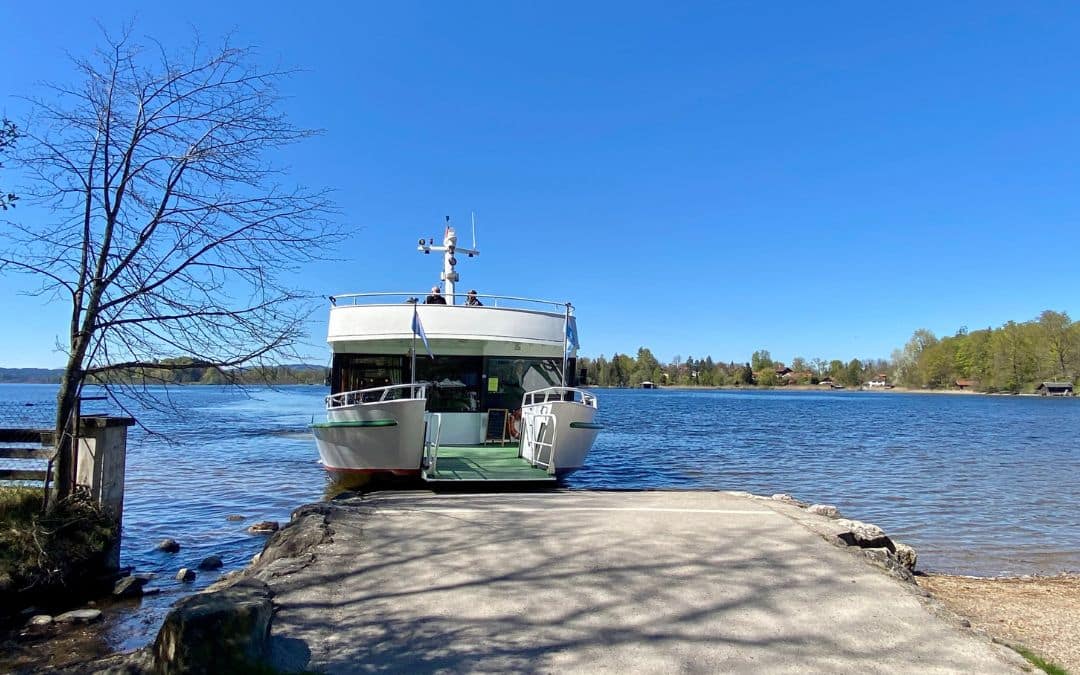
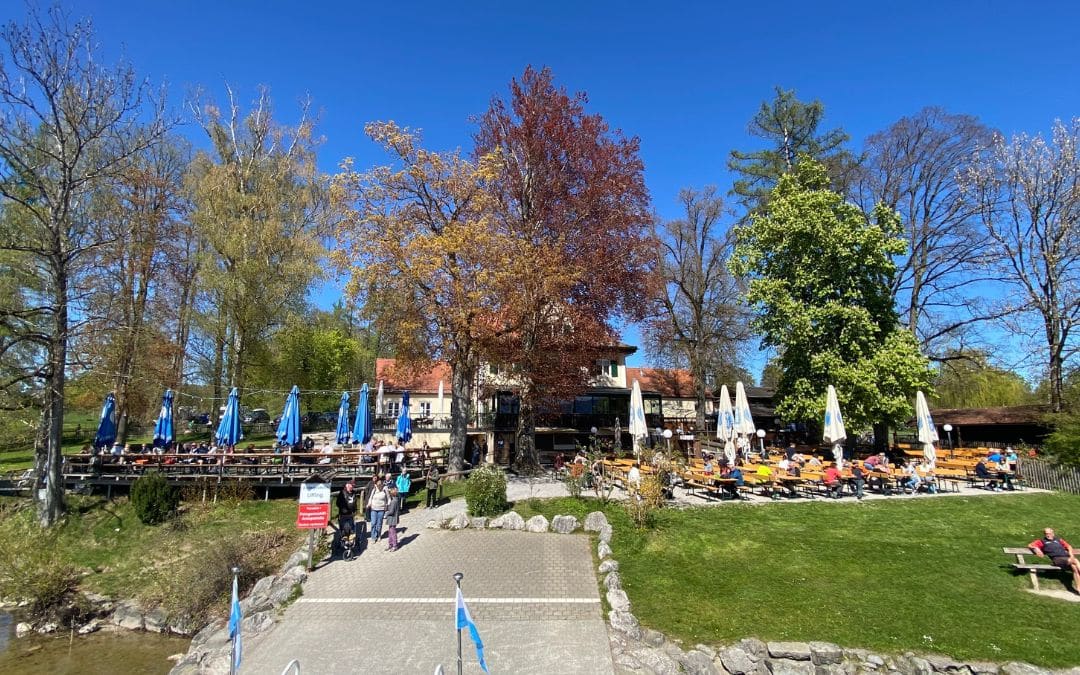
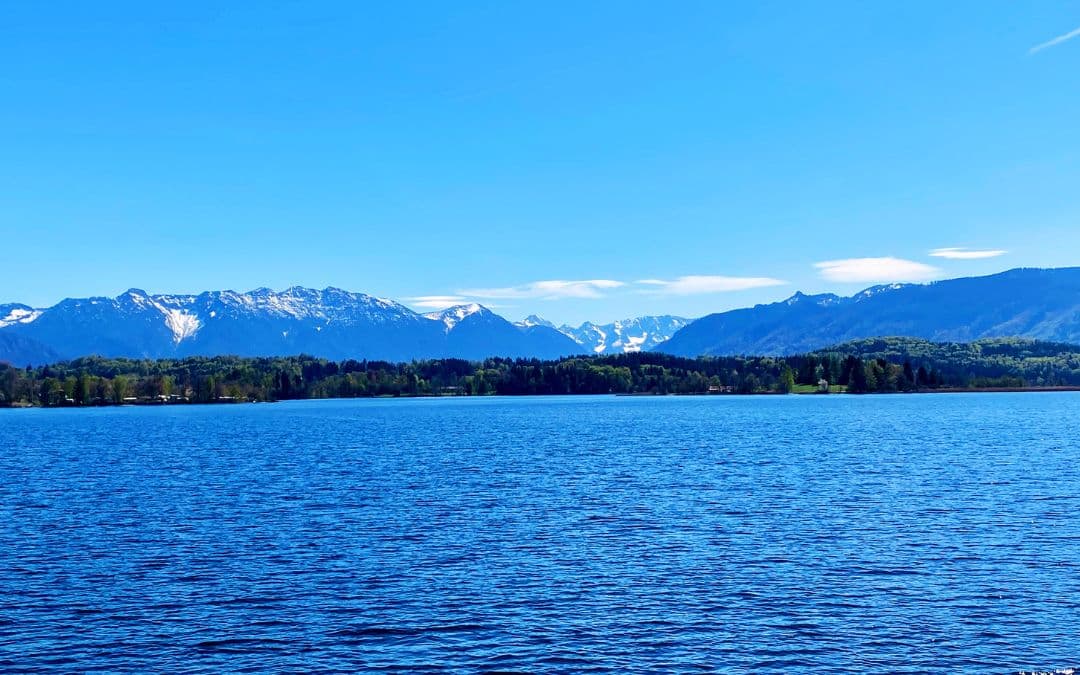
A special experience is a Staffelsee boat trip. From May to October, the MS Seehausen runs daily from several landing stages - including the Achele landing stage in Murnau, where there is a nice beach café (self-service) right by the water. If you prefer to walk, you can take the 22 km circular trail - or choose one of the shorter options: the signposted Kleine Staffelseeschleife (Small Staffelsee Loop) with lake and mountain views starts and ends at the Alpenblick lakeside restaurant, where you can enjoy a refreshment in the beer garden afterwards and take in the magnificent view. Or you can hike in about an hour from the Strandbad Alpenblick in Uffing to the Seehausen landing stage - from there you also have a particularly lovely view across the lake, and the boat brings you back comfortably.
Staffelsee at a Glance
🍽️ Where to Eat at the Staffelsee
- Seerestaurant Alpenblick, Uffing - Upscale restaurant right on the lake with a magnificent Alpine panorama and freshly caught Staffelsee fish; the adjoining beer garden serves classic Bavarian fare; starting point for the Kleine Staffelseeschleife
- Burgstüberl, Peninsula Burg, Seehausen - Burg Peninsula, Seehausen – Traditional inn with beer garden on the peninsula, surrounded by the lake on three sides; hearty Bavarian cooking
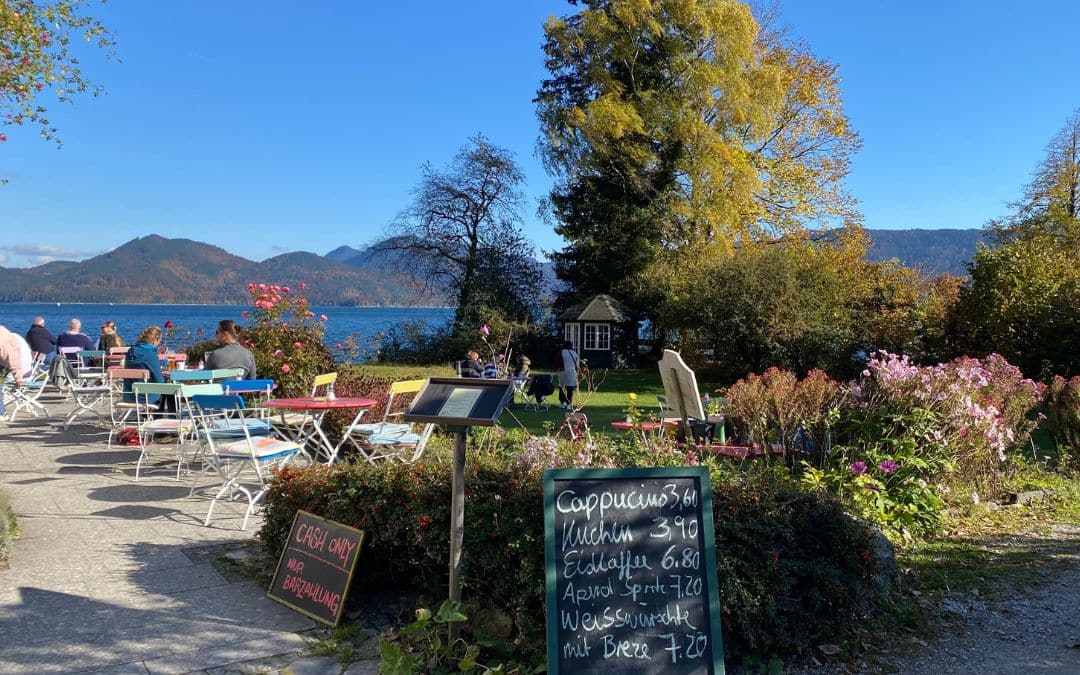
- Bucht 27, Murnau - Beach kiosk with a beautiful terrace right at the Achele landing stage and bathing area; perfect for a break before or after the boat trip
Riegsee
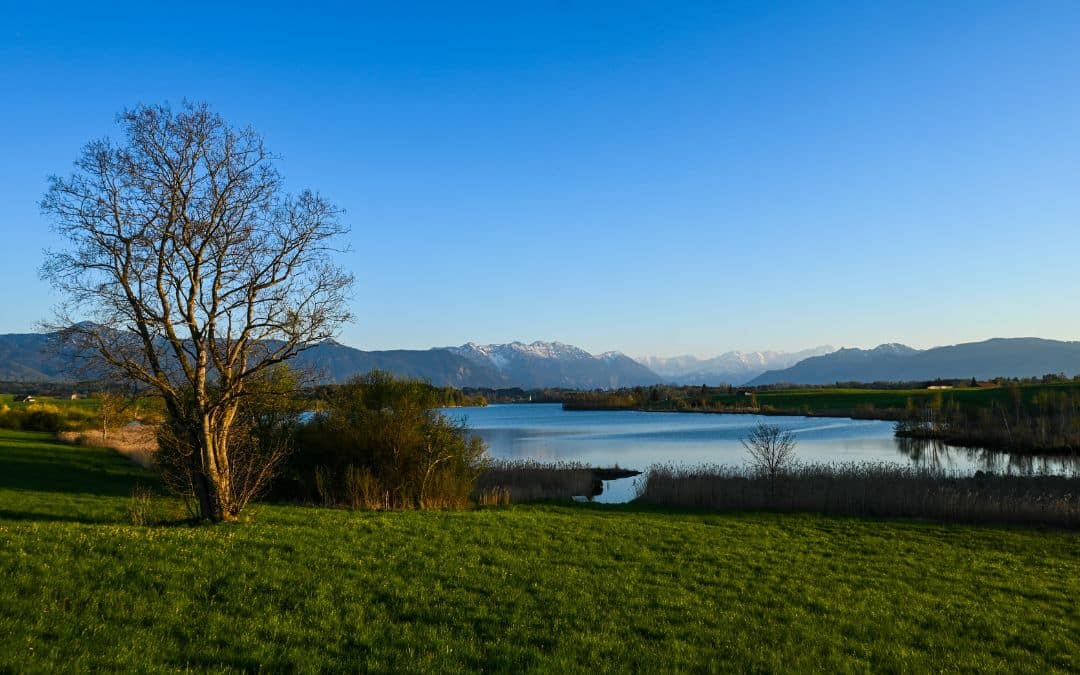
East of Murnau lies the quieter, more natural Riegsee - at 188 hectares the second largest lake in the region. It is an unusual lake among Bavarian lakes: it has no surface inflow or outflow. Its water comes entirely from groundwater and precipitation.
The Riegsee is particularly popular with water sports enthusiasts: on the western shore there is a surf school and boat rental. Those seeking something quieter can enjoy the view from the shore across to the Zugspitze massif – a panorama that has drawn artists and writers to the small community of Riegsee. A well-signposted circular trail leads around the lake and connects it with the neighboring Froschhauser See.
Riegsee at a Glance
Froschhauser See
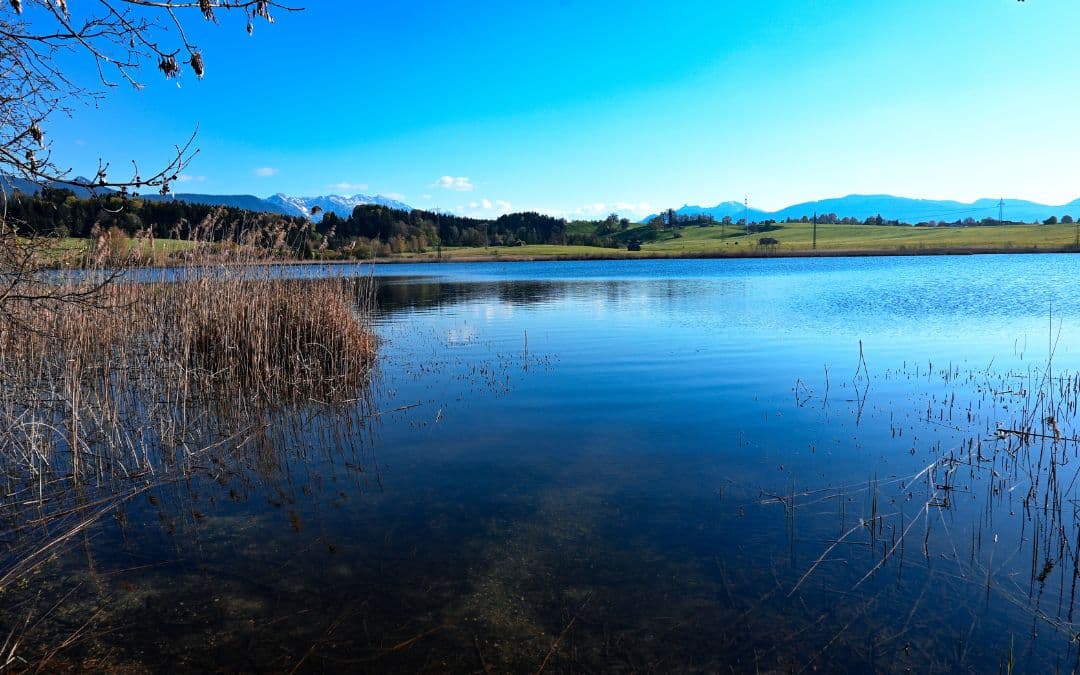
The Froschhauser See is the smallest of the three lakes in the Blue Land at just 16.5 hectares – and the most peaceful. It lies in a nature reserve just a few hundred metres from the Riegsee, separated by a road. Motor boats and paddle boats are not permitted, which preserves the lake's exceptional tranquillity. Waterbirds thrive here. The only bathing spot is on the north shore, right next to a parking lot.
Near the lake, on Riegseer Straße, stands the pretty little pilgrimage church of St. Leonhard. It is worth taking a look at the magnificent rococo interior.
Froschhauser See at a Glance
4. Kochelsee – Alpine Lake with Panorama and History
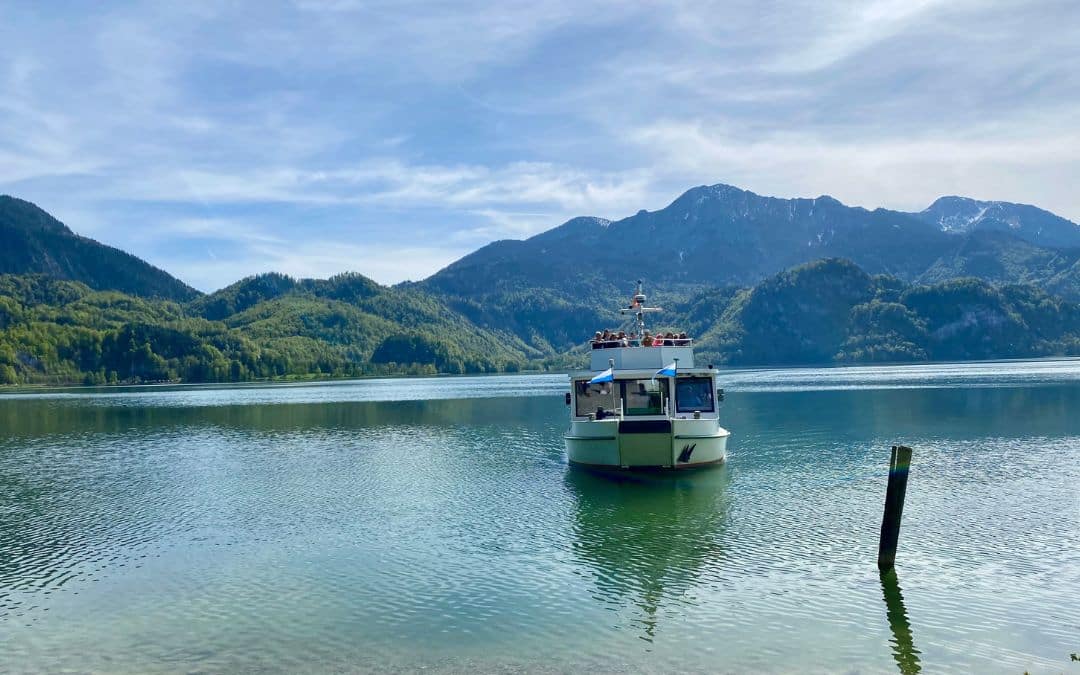
About 15 kilometers south-east of Murnau lies the Kochelsee - an alpine lake at the foot of the mountains with a very different atmosphere to the wide-open Staffelsee. Covering just under 6 km² with a depth of over 60 metres, it is considerably smaller, but framed by an impressive mountain backdrop: to the south, Herzogstand (1,731 m) and Jochberg (1,567 m) rise directly above the water, while the northern end merges into the flat Alpine foothills and the Loisach-Kochelsee moorland.
The Kochelsee is known for the strong winds that sweep down from the Herzogstand – making it a popular spot for windsurfers and kitesurfers. For those seeking something calmer, there are bathing spots, boat rental, stand-up paddling and a motor boat service running from Easter to the end of September. The boat stops at the Walchensee power station in Altjoch - from there it is easy to combine the return journey with a walk along the Felsenweg (cliff path) to Schlehdorf, a trail carved into 300-metre-high rock faces along the southern shore.
Those who prefer an easier walk can stroll the flat Loisach-Moos circular trail from Kochel station through the Kochelsee moorland – with views of the Jochberg, Herzogstand and Heimgarten and past the impressive Walchensee power station.
🍽️ Where to Eat at the Kochelsee
- Seehotel Grauer Bär, Kochel am See - Elegant restaurant with large windows overlooking the lake and a lovely lakeside terrace; refined Bavarian cuisine in a warm atmosphere; also recommended as a place to stay.
- Landgasthaus Fischerwirt, Schlehdorf - Cozy country inn with beer garden at the foot of Schlehdorf monastery; fresh fish from the Kochelsee and regional specialities; the cream puffs in various versions are a must; closed Mondays and Tuesdays.
Kochelsee at a Glance
💡 Insider Tip: Schloss Aspenstein and Georg-von-Vollmar-Akademie
Above the Kochelsee lies Schloss Aspenstein a place with a turbulent history. During the Nazi era, Reich Youth Leader Baldur von Schirach lived in the castle with his family; after the war it was expropriated and later developed into an educational center. Today the Georg-von-Vollmar-Akademie runs a conference and study center here with seminars on history, politics and society – including fascinating educational journeys, such as Tracing National Socialism in the Alpine Region. I took part in one of these educational journeys myself – an experience I can wholeheartedly recommend. Read more in my article: Educational Leave with the Georg-von-Vollmar-Akademie: Insight Guaranteed.
5. Franz Marc Museum – Blue Rider on the Kochelsee
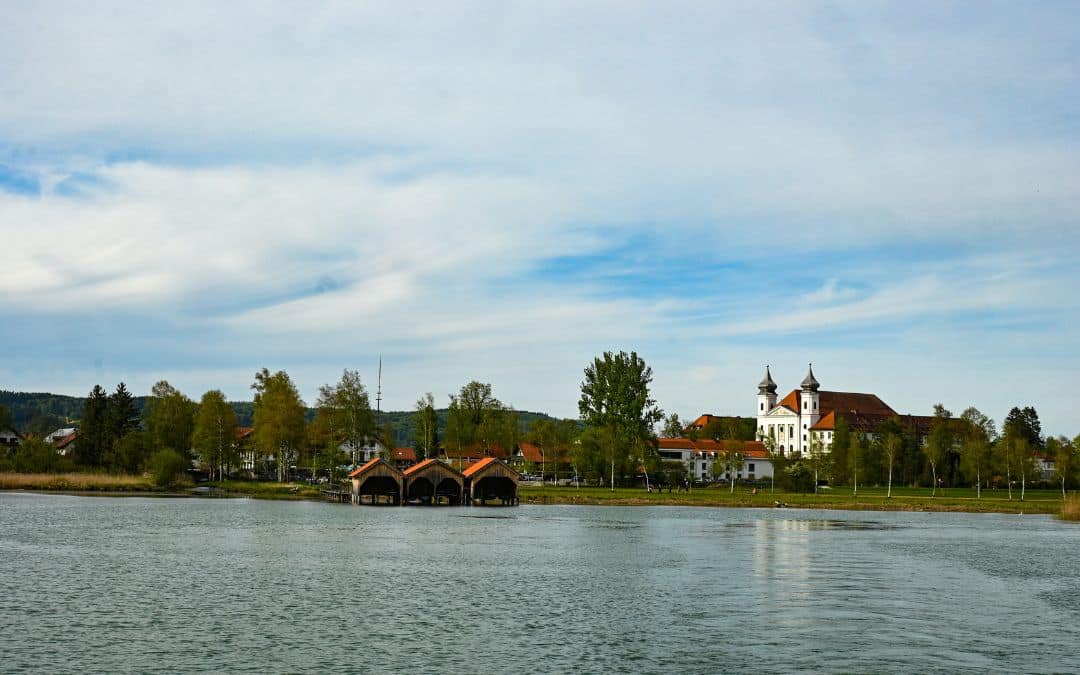
High above Lake Kochelsee, with sweeping views of the water and the mountain range of the Bavarian Alps, lies the Franz Marc Museum - one of the most important sites for Expressionist art in Germany. The choice of location is no coincidence: as a young artist, Franz Marc was regularly drawn to the Kochel area to study painting, and the landscape here - the light, the mountains, the silence - left deep traces in his work.
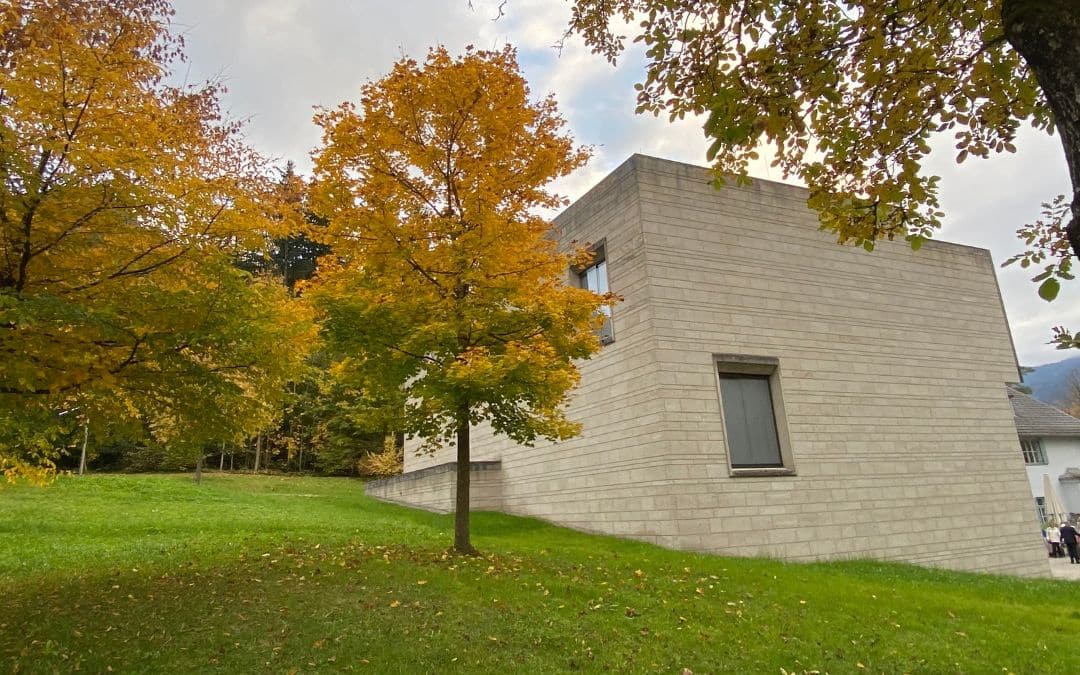
The museum was opened in 1986 and extended in 2008 with a striking new building designed by Zurich architects Diethelm & Spillmann. Large windows frame the landscape outside like paintings - a deliberate architectural concept that makes the close connection between the Blue Rider artists and their surroundings visible. The new building is connected to the historic villa built around 1900 by an inner courtyard.
The collection extends well beyond Franz Marc: it includes works by Kandinsky, Macke, Klee and other members of the Blue Rider, as well as pieces from the Brücke artists' group and German post-war abstraction - including significant works by the group ZEN 49, founded in 1949 at the Galerie Stangl in Munich. A sculpture park extends the exhibition outdoors; a free audio guide via the museum app accompanies the visit.
Right at the museum is the café Franz am See - with homemade cakes, ice cream and seasonal lunch dishes and, in fine weather, views of the Kochelsee.
Franz Marc Museum at a Glance
💡 Insider Tip: The Grave of Franz and Maria Marc
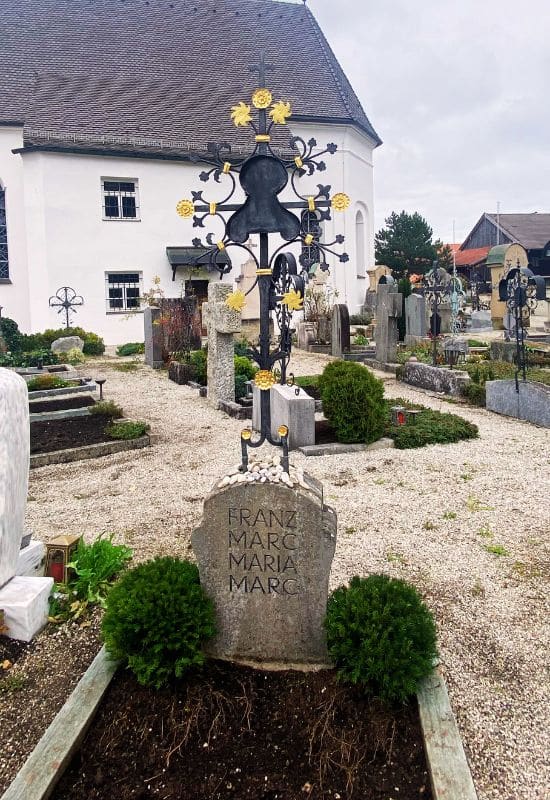
For those who want to get even closer to the artist of the Blue Land, the grave of Franz and Maria Marc in the Kochel am See cemetery are well worth a visit. Franz Marc fell on 4 March 1916 near Verdun; he was initially buried in the park of Château Gussainville. In 1917, his wife Maria Marc had his remains transferred to Kochel am See – into the landscape he had called his "Blue Land" and which had so profoundly shaped his work. Maria Marc, herself a painter and faithful guardian of his legacy, was also buried there after her death in 1955.
The cemetery is within easy walking distance of Kochel am See town center and is freely accessible.
6. Walchensee – Germany's Deepest Alpine Lake
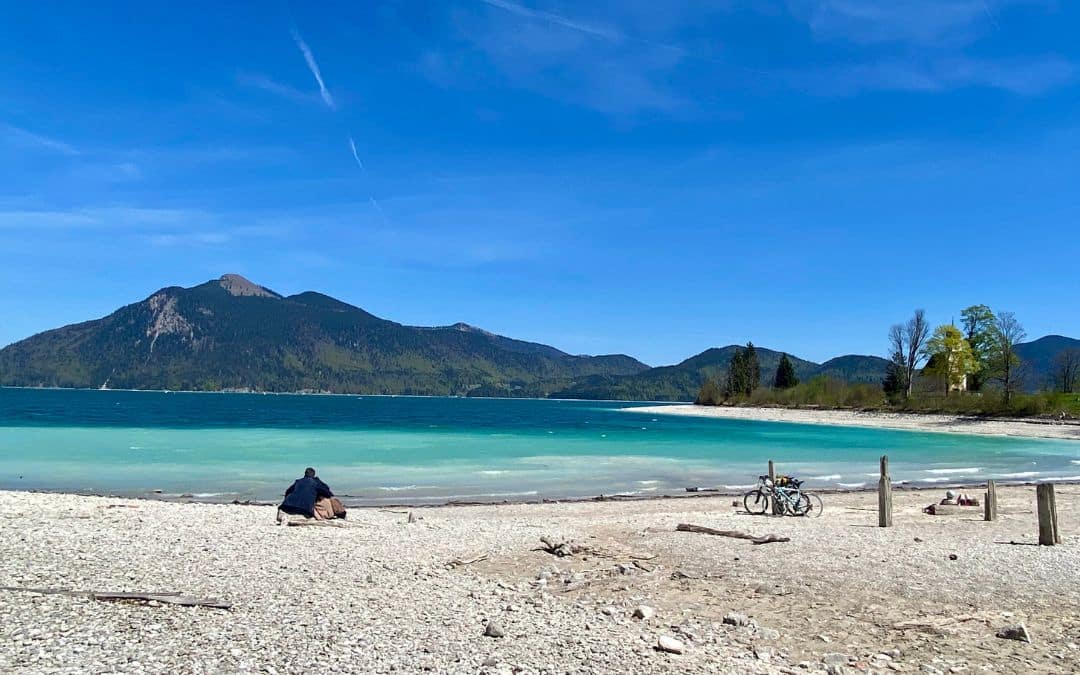
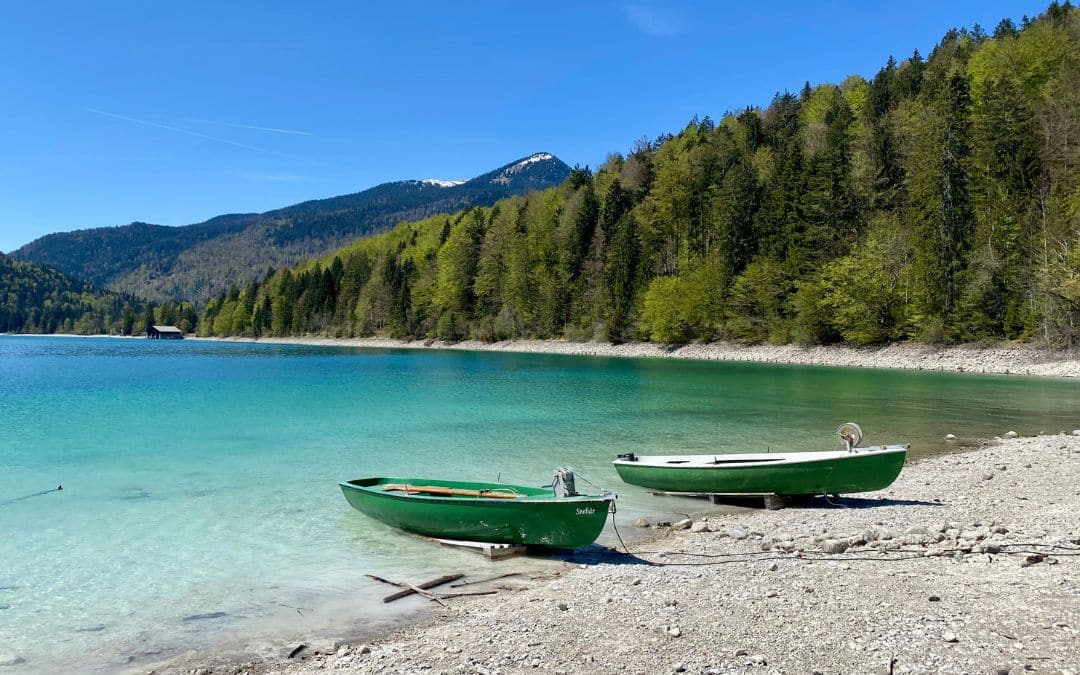
Driving over the Kesselberg from the Kochelsee, you suddenly enter another world: the Walchensee lies at 800 metres above sea level, nestled in a rocky mountain landscape, shimmering in an almost surreal turquoise blue. At over 16 km² in area and 192 metres deep, it is the largest and deepest Alpine lake in Germany – and one of the few lakes where motor boats are prohibited. This creates a stillness not found at the Staffelsee or Kochelsee.
The Walchensee is a paradise for water sports enthusiasts: windsurfers and kitesurfers prize the frequent Föhn wind sweeping down from the mountains. Divers find up to 13 dive sites with exceptional visibility – and legends of sunken gold treasures from Benediktbeuern monastery. Those seeking quiet can paddle on a stand-up board across the smooth water or find one of the unspoilt bathing spots on the south and east shores. Nearly 14 of the 27 kilometres of shoreline are car-free and accessible on foot.
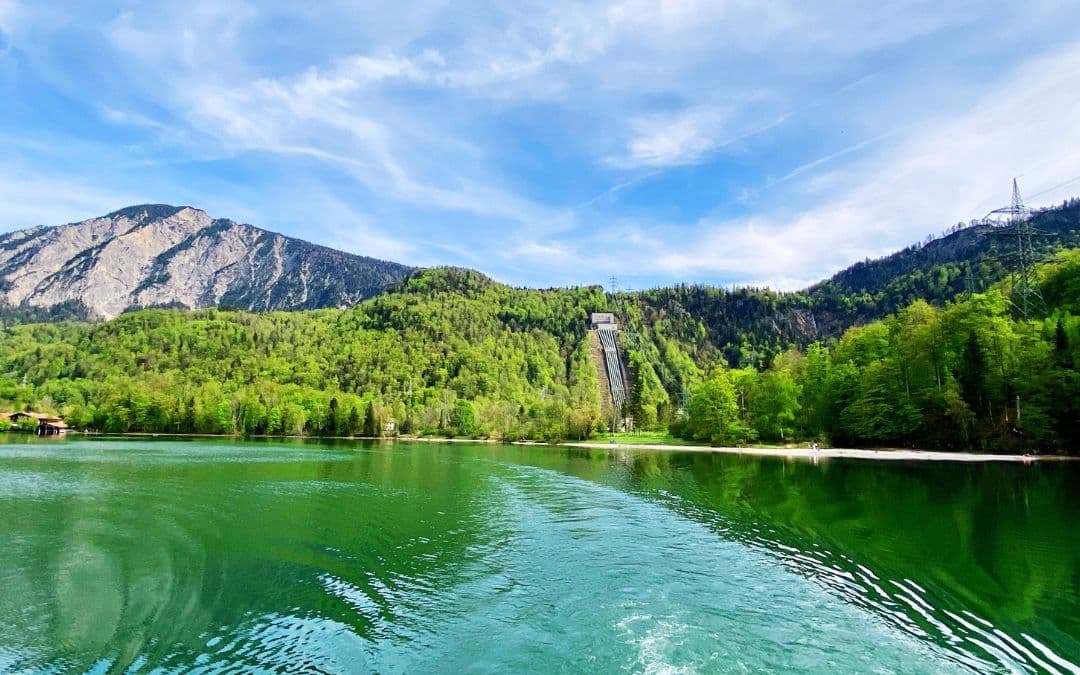
Lake Walchensee has a special place in the history of energy: since 1924 it has served as a water reservoir for the Walchensee power station - the water falls 200 meters down through huge pipes to the Kochelsee, where it drives turbines. The imposing structure can be viewed up close during a boat trip on the Kochelsee.
Walchensee at a Glance
💡 Insider Tip: Zwergern Peninsula – Tranquillity off the Beaten Track
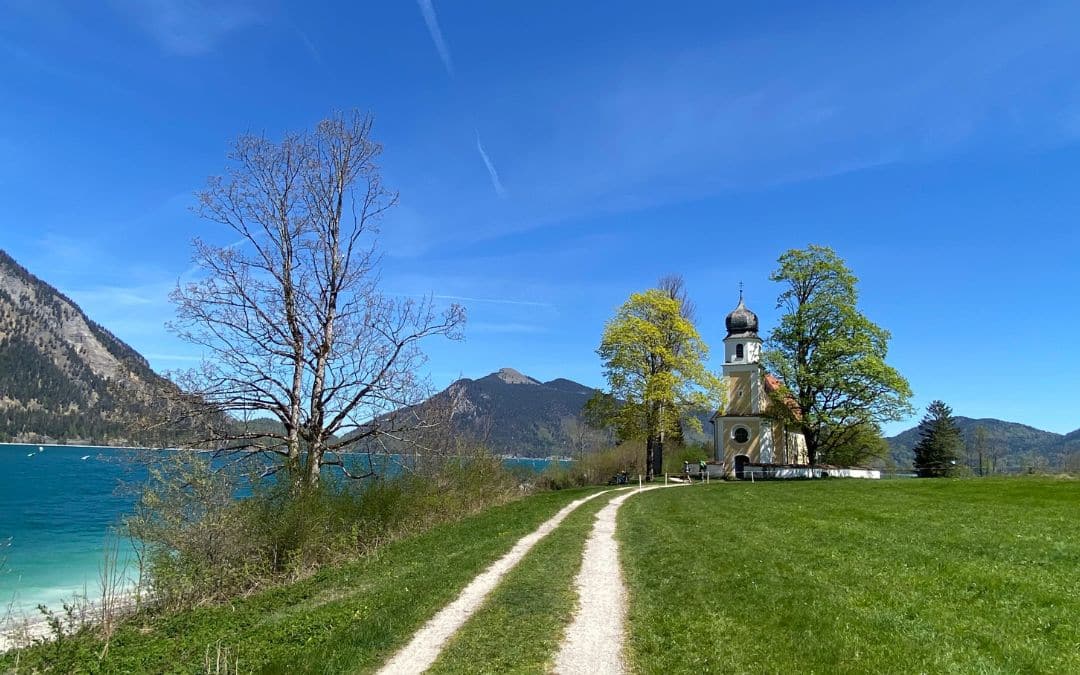
While the main shore of the Walchensee can be busy on fine days, the Zwergern Peninsula in the southwest of the lake, is usually peacefully secluded. The starting point is the Einsiedl parking lot - right next to a lovely sunbathing lawn with a beach. From there a path runs along the lakeshore to the picturesque, listed church of St. Margareth (first documented in 1344) and on to the Zwergern-Spitz, from which you can watch the surfers on the lake. On the way back, stop at Fischerei Zwergern: a fish roll or coffee and cake with views of the lake – nothing more is needed.
Those who wish can extend the route through the forest via the Katzenkopf-Buckel ridge. The peninsula is a genuine insider tip – even at weekends you will barely meet another walker.
Parking: Paid parking lot Einsiedl directly at the bathing spot.
7. Herzogstand and Heimgarten – Panorama over Two Lakes
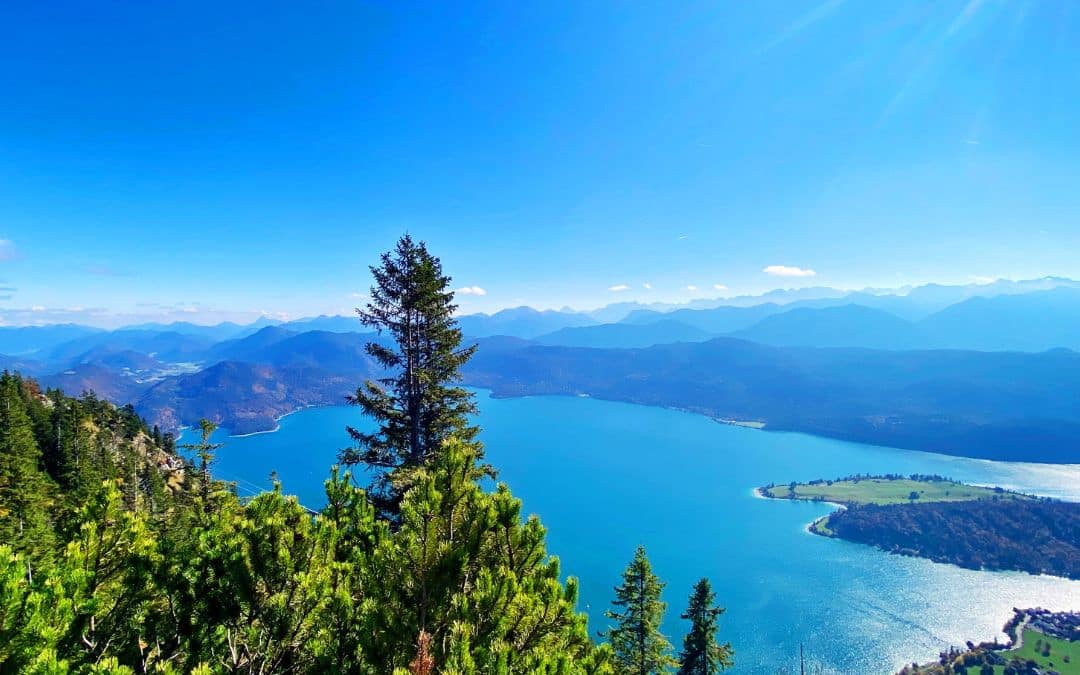
Taking the Herzogstandbahn cable car in just four minutes from Walchensee up to the Fahrenberg (1,600 m), you are rewarded with one of the finest mountain panoramas in Upper Bavaria: to the north glitters the Kochelsee, to the south the Walchensee – both in view at once, with the Alps as a backdrop. No wonder King Ludwig II counted this viewpoint among his favorite destinations.
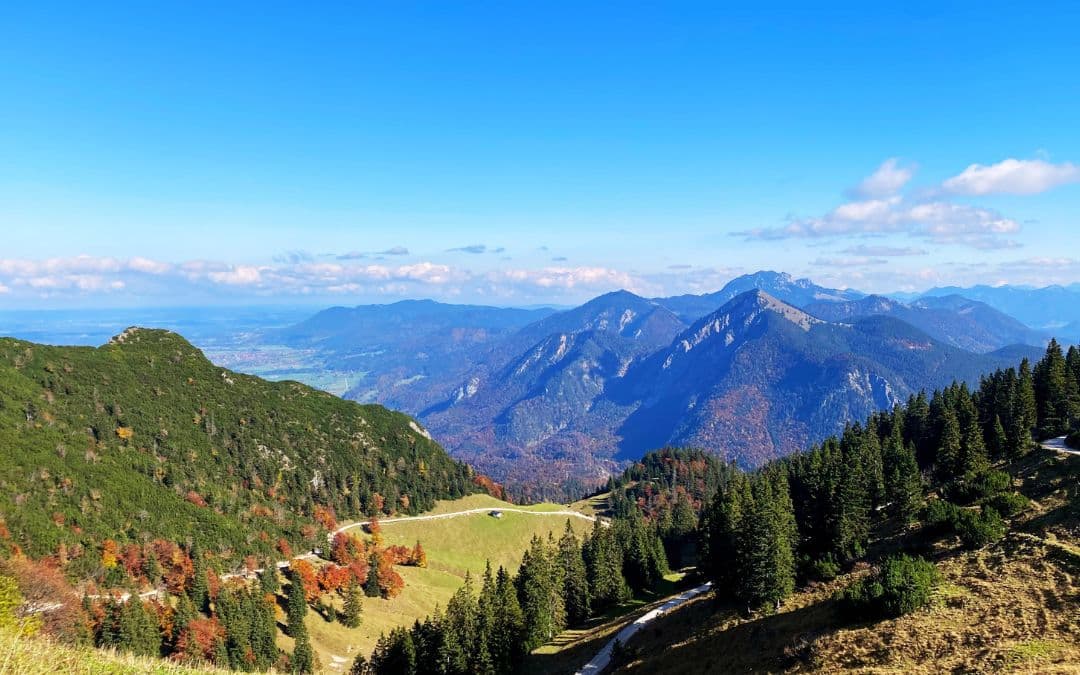
From the top station, the Panorama trail - a wide, easily walkable gravel track – leads gently around the Fahrenbergkopf, past a bust of King Ludwig II, to the Berggasthaus Herzogstand at 1,575 meters.The path is largely level and well suited to children and less experienced walkers. Geological information boards along the way explain the geological features of the Herzogstand, which during the last Ice Age protruded as a so-called nunatak some 330 metres above the glacier. Those who want variety on the return can take the narrower path via the chapel on the Fahrenbergkopf – this route runs over roots, stones and steps and requires some sure-footedness, but offers further beautiful views.
If you want more mountain air, you can climb from the inn in another 30 minutes to the Herzogstand summit (1,731 m) – with a viewing pavilion and an even wider panorama. Experienced hikers can then continue on the demanding ridge walk to the Heimgarten (1,791 m): a mountain ridge ranked among the 100 most beautiful ridge walks in the Alps. Sure-footedness and a head for heights are absolutely essential. Below the Heimgarten summit, at 1,785 metres, lies the Heimgartenhütte , open until mid-October – the only refreshment stop on the ridge, without overnight accommodation.
Herzogstandbahn at a Glance
🍽️ Where to Eat at the Herzogstand and Walchensee
- Berggasthaus Herzogstand1,575 m – Cozy mountain inn right at the top station with a sunny terrace and views of the Walchensee and Kochelsee; Bavarian snacks, cakes and drinks; check opening times and closing days in advance
- Strandcafé Bucherer, Walchensee – Right opposite the Herzogstandbahn valley station on the lakeshore; lovely views of the lake and the surfers; homemade cakes and tarts; ideal for a treat after the cable car ride
8. Freilichtmuseum Glentleiten (Open-Air Museum) – a Journey into Rural Upper Bavaria
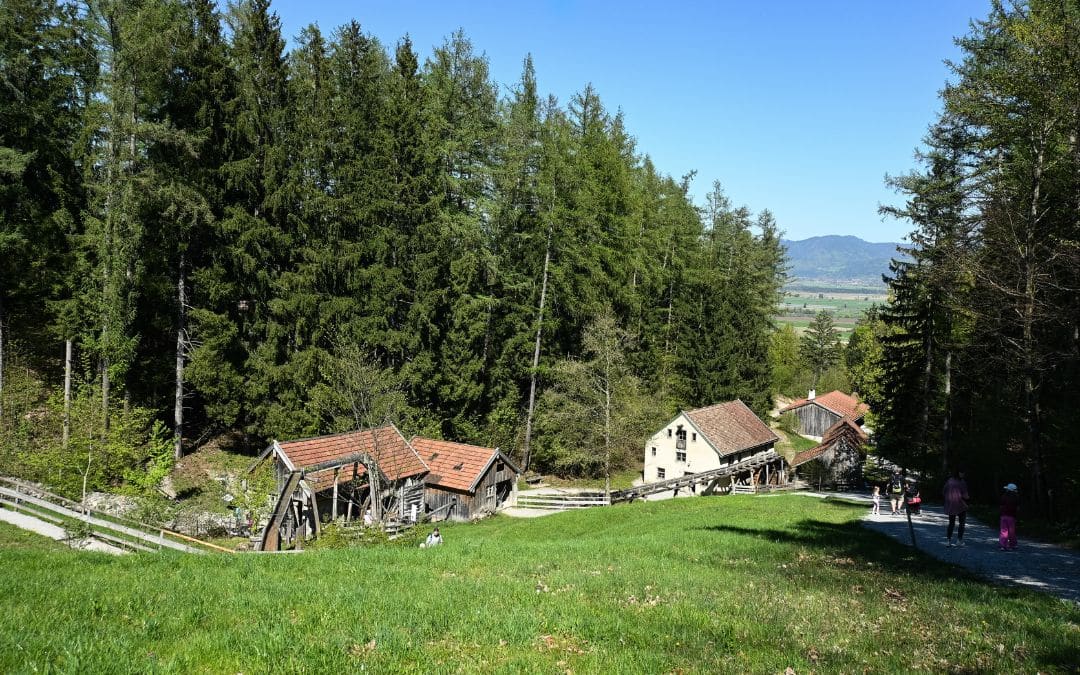
High above the Kochelsee, on an extensive hillside site between Murnau and Großweil, lies the Freilichtmuseum Glentleiten – the largest open-air museum in Upper Bavaria. On around 40 hectares, over 70 historic buildings from rural areas of Upper Bavaria have been reconstructed: farmsteads, craftsmen's workshops, mills and barns, set within a cultural landscape maintained according to historical models, with traditional livestock breeds and heritage fruit varieties.
In this museum, the houses are the exhibits – they tell the stories of their former inhabitants through their furnishings and fittings. At Glentleiten, visitors can experience the world of work, customs, and traditions, as well as the architecture and its regional variations. Nestled within a cultural landscape maintained in accordance with historical models, the expansive grounds feature not only buildings open to the public but also gardens, forests, and pastures—where heritage breeds of livestock graze and historic varieties of fruit and vegetables grow.
The oldest building is over 430 years old; the youngest is a period-correct Gasolin gas station with a 1960s look, which stands for mass motorization and the resurgence of tourism in the post-war period. In 2026, the museum will celebrate its 50th anniversary - half a century of living everyday history in Upper Bavaria.
Glentleiten Open-Air Museum at a Glance
🍽️ Where to Eat near Freilichtmuseum Glentleiten
- Alpengasthof Kreut-Alm, Kreut 1, 82439 Großweil -Traditional mountain inn in an old monastery building, a short drive up the road from the open-air museum; shady beer garden under ancient lime trees with a wonderful view of the Kochelsee and the mountain scenery; Bavarian cuisine with regional ingredients; the Kaiserschmarrn to Grandmother's recipe is a must; closing days vary, check opening hours on the website
9. Haupt- und Landgestüt Schwaiganger – 1,000 Years of Horse Breeding at the Foot of the Alps
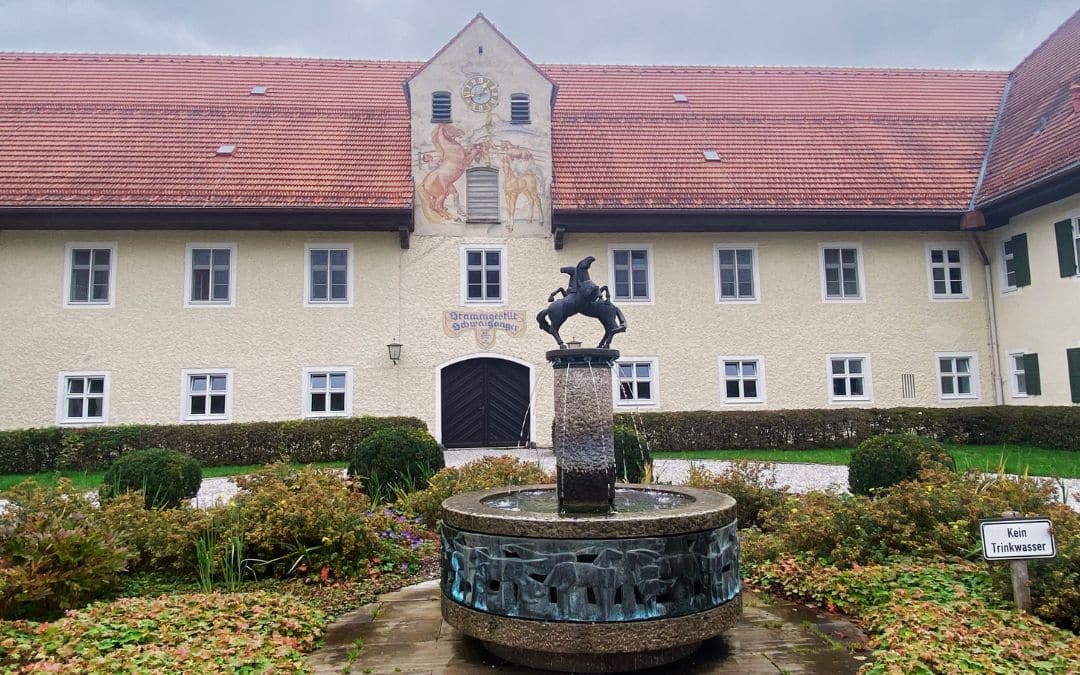
Anyone who walks through the gates of the Haupt- und Landgestüts Schwaiganger in Ohlstadt on a Tuesday, Wednesday, or Thursday afternoon enters a place that seems to have been frozen in time: sprawling 19th-century stables, well-tended paddocks, stallions being led through the indoor riding arena—and the Alpine panorama in the background.
Today, Schwaiganger Today, Schwaiganger is the southernmost state stud farm in Germany and one of the oldest horse breeding facilities in the country - horses have been kept here for over 1,000 years. Today, the state competence center for horse breeding and riding in Bavaria breeds three breeds: Bavarian Warmblood, South German Coldblood and Haflinger. The stud also works to preserve endangered livestock breeds, including the historic Murnau-Werdenfelser cattle, which originates from this very landscape.
The grounds are open daily from 8 am to 5 pm free of charge – in spring the foals frolic in the paddocks, in September the grand Gestütsschau (stud show) takes place with dressage quadrilles and stallion presentations. Public tours (approx. 1.5 hours) run from May to mid-October on Tuesdays, Wednesdays and Thursdays at 1:30 pm and 3:00 pm, without prior booking, meeting at the fountain in front of the main building.
Haupt- und Landgestüt Schwaiganger at a Glance
10. Kloster Benediktbeuern – 1,250 Years of History at the Foot of the Benediktenwand
On the southern edge of the Loisach-Kochelsee moorland, with the distinctive Benediktenwand as a backdrop, lies one of Bavaria's oldest monastic complexes. Monastic life in Benediktbeuern began in the 760s; after destruction by the Hungarians in 955, it was revived in 1031. The current Baroque complex from the 17th and 18th centuries is considered one of the finest in Bavaria – with the Basilica of St. Benedict, the Gothic cloister and the Baroque chapter house as its highlights, all visitable on an approximately 60-minute guided tour.
A particular highlight is the Fraunhofer Museum in the monastery's historic glassworks: the physicist Joseph von Fraunhofer conducted research here from 1807 to 1819, laying the foundation for his groundbreaking discoveries in optics. Since January 2026 the complex has been known as Don Bosco Kloster Benediktbeuern, combining monastic life, youth education and nature conservation under one roof.
Benediktbeuern Monastery at a Glance
Day Trips from the Blue Land
The Blue Land – and Murnau in particular – is exceptionally well placed: some of Bavaria's best-known and most beautiful destinations are within less than an hour's drive. Those spending several days in the region have an ideal base for day trips in every direction.
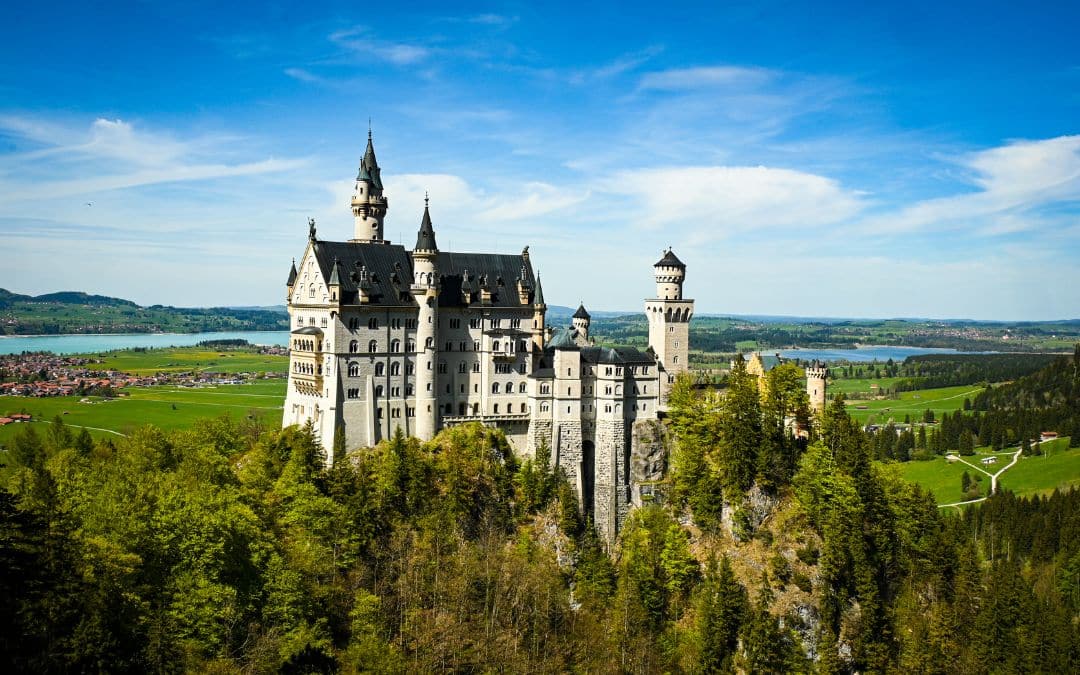
Neuschwanstein Castle and Füssen (approx. 50 min.) - The world's most famous castle - a UNESCO World Heritage Site since 2025 - perches on a rocky crag above the Alpsee and attracts millions of visitors each year. Tickets must be booked online in advance. If time allows, explore the charming old town of Füssen and nearby Hohenschwangau Castle. The Tegelberg, The mountain station of the Tegelberg cable car offers a magnificent view of the Bavarian-Swabian lake landscape.
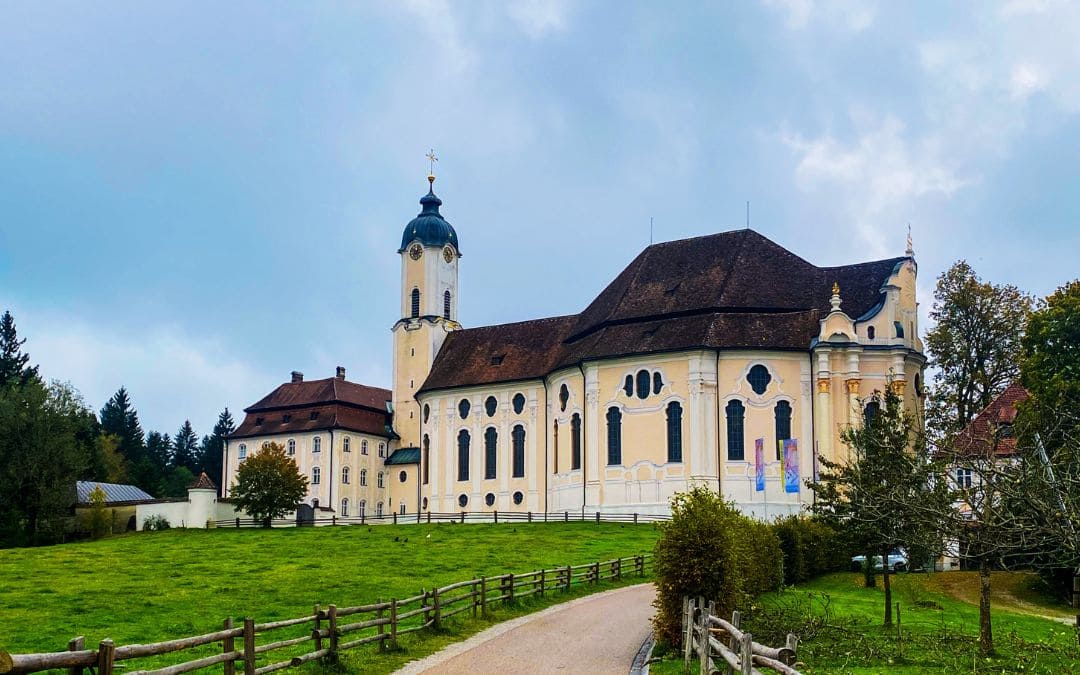
Wieskirche (approx. 30 min.) - The Wieskirche in Steingaden is UNESCO World Heritage Site and considered one of the finest Rococo churches in the world. Its interior, with its breathtaking stucco work and vibrant colors, surprises even visitors who don't usually seek out churches.
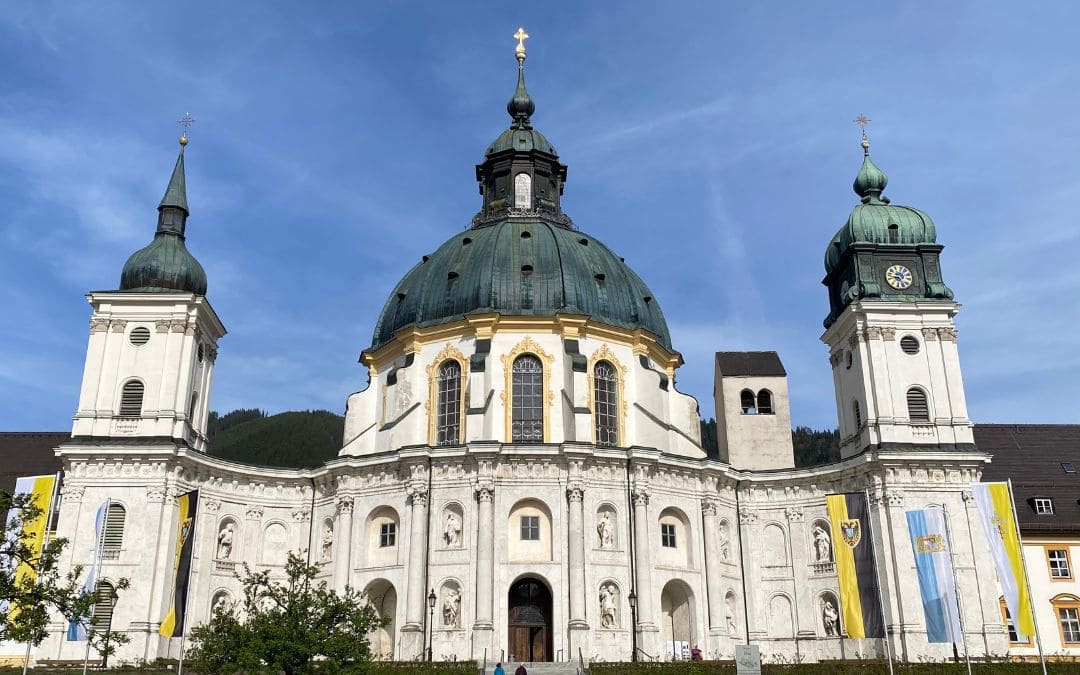
Kloster Ettal (Ettal Abbey) (approx. 25 min.) - This Baroque Benedictine monastery in the Ammergau valley is one of Bavaria's most important monastic complexes. The basilica is free to enter; the monastery shop sells its own products – spirits, cheese and beer.
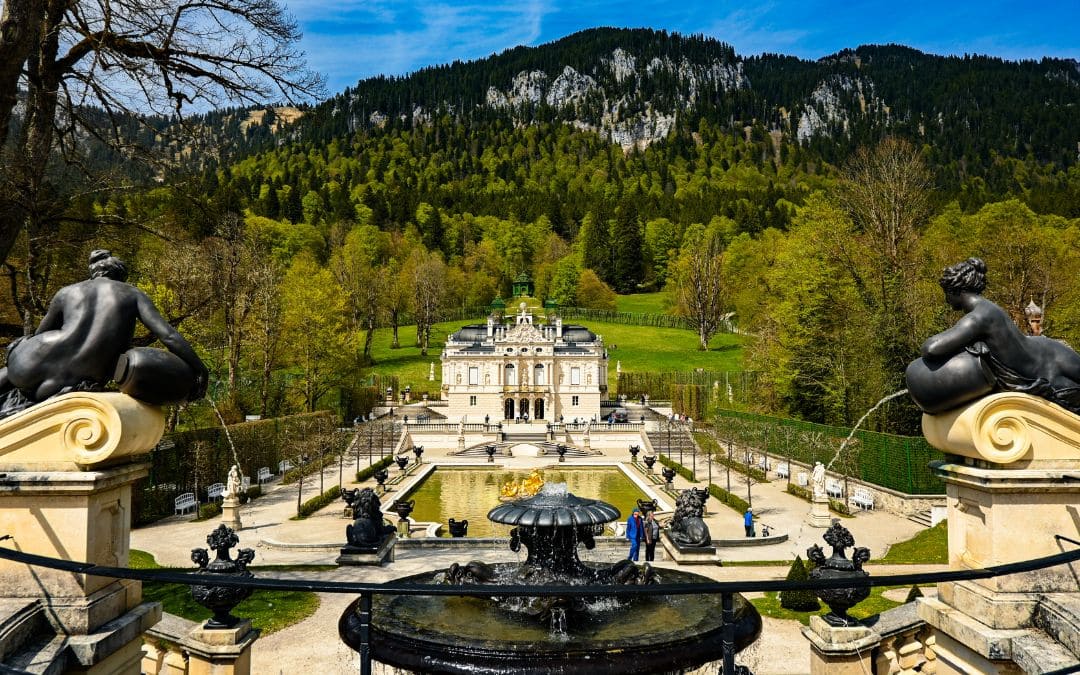
Schloss Linderhof, (approx. 35 min.) - Ludwig II's favorite castle and the only one completed during his lifetime lies in a romantic mountain valley near Ettal, and, like Neuschwanstein, is part of the UNESCO World Heritage Site The Castles of King Ludwig II of Bavaria. It is worth planning half a day, as there is a lot to discover in the extensive palace gardens, such as the Venus Grotto and the Moroccan House. There is much less hustle and bustle here than at Neuschwanstein, especially if you avoid the weekends.
Oberammergau and Laber-Bergbahn (approx. 30 min.) - The world-famous Passion Play village delights visitors with its extraordinary Lüftlmalerei facade paintings and wood carvings.The Laber-Bergbahn cable car travels up to the Laber (1,686 m) with a spectacular 360-degree view over the Ammergau Alps.
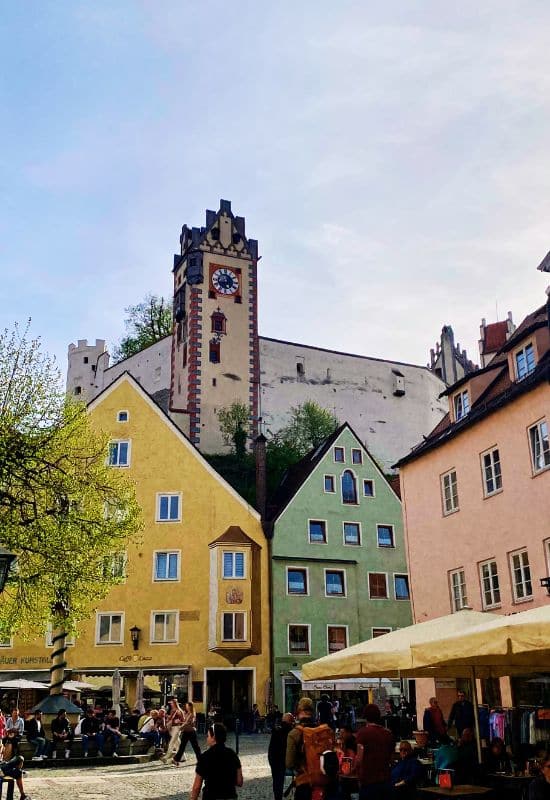
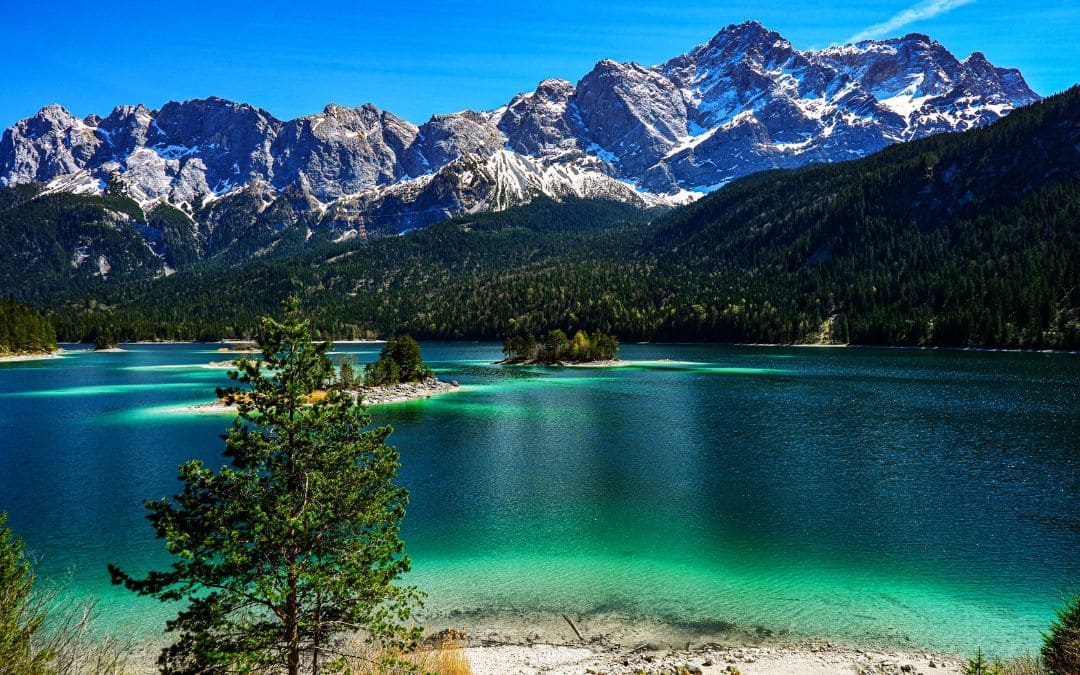
Garmisch-Partenkirchen, Eibsee and Zugspitze (approx. 40 min.) - The Eibsee with its turquoise waters and offshore islands, is one of the most beautiful lakes in Bavaria. From here the Zugspitze cable car takes you directly to the Zugspitze (2,962 m) - Germany's highest peak. Garmisch itself is worth a stroll through the pedestrian zone with its historic Lüftlmalerei houses.
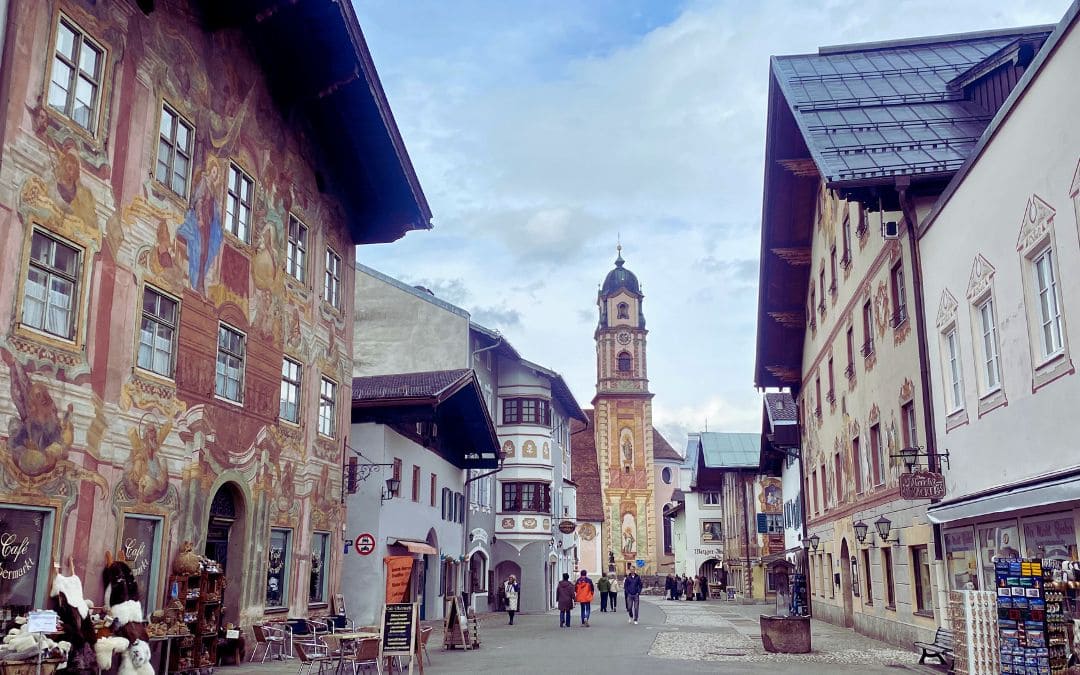
Mittenwald (approx. 45 min.) - The picturesque violin-making village on the Austrian border impresses with its magnificent Lüftlmalerei, the world-famous violin making museum and Karwendelbahn, which ascends to 2,244 metres.
Bad Tölz (approx. 35 min.) - The historic Marktstraße with its colorfully painted houses is one of the most beautiful old town streets in Bavaria. Bad Tölz is also known for its Alpamare spa and the annual Leonhardifahrt festival.
Lake Starnberg and Buchheim Museum (approx. 50 min.) - Lake Starnberg is one of Bavaria's largest and most famous lakes. In Bernried the Buchheim Museum der Phantasie (museum of imagination) - an extraordinary Expressionist museum right on the lakeshore, housing the collection of Lothar-Günther Buchheim (also known as the author of the novel „Das Boot“) and thematically a perfect complement to the Blue Rider. Note: The museum reopened in May 2026 after renovation works; the full reopening of all areas is planned for autumn 2026. Check the website for current information.
Practical Travel Tips for the Blue Land
Getting There
By train: The Blue Land is easily reached from Munich by train. The Bayerische Oberlandbahn (BOB) runs hourly from Munich Hauptbahnhof to Murnau – journey time is approximately 70 minutes. From Murnau, many sights can be reached comfortably by bus or bicycle. Kochel am See is also accessible by train (Munich–Kochel line, approx. 75 min.).
By car: From Munich take the A95 highway towards Garmisch-Partenkirchen, exit Murnau/Kochel. Journey time is approximately 60 - 75 minutes depending on traffic. Note: on fine summer weekends the A95 towards Murnau can be very busy - an early start is advisable.
Arriving via Frankfurt
For international travelers flying into Germany, Frankfurt Airport is often the first major hub. My Frankfurt Airport Guide has everything you need for a smooth arrival and onward journey.
Best Time to Visit
The Blue Land is attractive all year round. The best time to visit is from April to October:in spring the Murnauer Moos is in bloom and the foals at Gestüt Schwaiganger frolic in the paddocks; in summer the lakes invite swimming and water sports; and autumn enchants with clear mountain air and vivid autumn colors. If possible, avoid the Bavarian school holidays – particularly the summer holidays (mid-July to early September) and the Whitsun holidays bring significantly more visitors to the region, and parking lots at the lakes and popular attractions fill up quickly.
Where to Stay
The Blue Land offers accommodation for every taste and budget - from small family guesthouses to five-star nature resorts.
In Murnau:
- Alpenhof Murnau* The region's only five-star hotel sits directly on the Murnauer Moos with Alpine panorama, wellness area, two outdoor pools and the Murnauer Reiter restaurant. Award-winning, including recognition as one of Germany's "101 best hotels". The perfect choice for an indulgent stay in the Blue Land.
- Hotel Post Murnau* Right in Murnau's pedestrian zone, in a listed Art Nouveau building that King Ludwig II once passed through on his way to Schloss Linderhof. Personal, homely atmosphere; ideal for those who want to explore everything on foot.
Hidden gem for the budget-conscious:
- Haus Andre (Pension zum Bichlbauer) - Cozy family guesthouse in a quiet location in Riedhausen, a district of Seehausen am Staffelsee, just a few minutes' walk from Murnau station and about 10 minutes on foot from the pedestrian zone. Warm, welcoming atmosphere and homemade jams at breakfast – a genuine insider tip for those who want to experience the Blue Land without a large budget.
In Kochel am See:
- Seehotel Grauer Bär*- Right on the Kochelsee with large windows overlooking the lake and a lovely lakeside terrace; refined Bavarian cuisine in the restaurant. The ideal base for trips to the Franz Marc Museum, Walchensee and Herzogstand.
Local Food and Drink
The cuisine of the Blue Land is solidly Bavarian – but with some regional specialities you'll rarely find elsewhere. Fresh fish from the Staffelsee and Kochelsee features on many menus: Renke (freshwater whitefish), Arctic char and trout are delivered directly from local fishermen. Brotzeit platters with Obazda (a Bavarian cheese spread), Radi (white radish) and fresh farmhouse bread are a staple of every good beer garden. For those with a sweet tooth: the cream puffs at Fischerwirt in Schlehdorf and the Kaiserschmarrn at Kreut-Alm to Grandmother's recipe are not to be missed. And anyone who wants to experience the Blue Land with all their senses should try a glass of local beer from one of Murnau's two breweries – at Beer from one of the two Murnau breweries - at the Griesbräu or in the Karg Bräustüberl - or a house schnapps from the monastery store in Benediktbeuern.
Conclusion: The Blue Land – More Than a Landscape
No tourist crowds, no overrun hotspots – just lakes, moorland, mountains and an art history you can almost touch. Once you understand why Kandinsky, Franz Marc and Gabriele Münter kept returning here, you see the landscape differently: the soft morning light, the blue of the mountains on the horizon, the stillness above the moor.
The region offers a rare combination: small enough to experience a great deal in just a few days, and rich enough to keep revealing something new. And with the many day trip destinations nearby – from Neuschwanstein to the Walchensee, from Oberammergau to Lake Starnberg – the Blue Land is an ideal base for a week or more in the Bavarian Alpine foothills.
My personal tip: don't come for just one day. Take your time, wander through Murnau without a plan, sit in a beer garden in the evening and watch the Alps. The Blue Land works its magic slowly – but once it does, it stays with you.
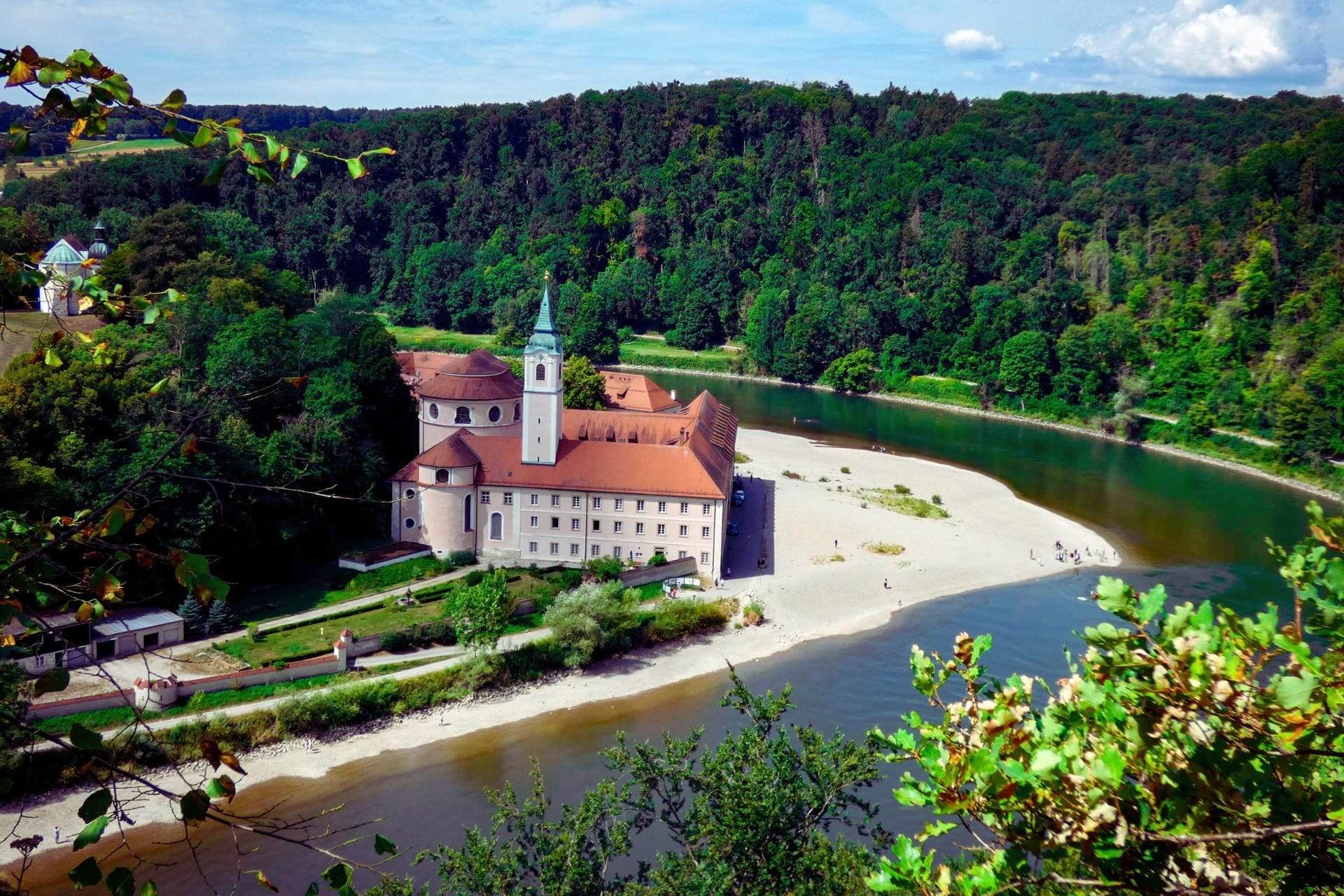
Some places are not obvious at first glance. Murnau am Staffelsee is one such place. Between Staffelsee, the Alpine foothills and read more
Are you ready to discover Germany's magnificent landscapes? This comprehensive guide takes you to the 52 most beautiful areas of our country read more
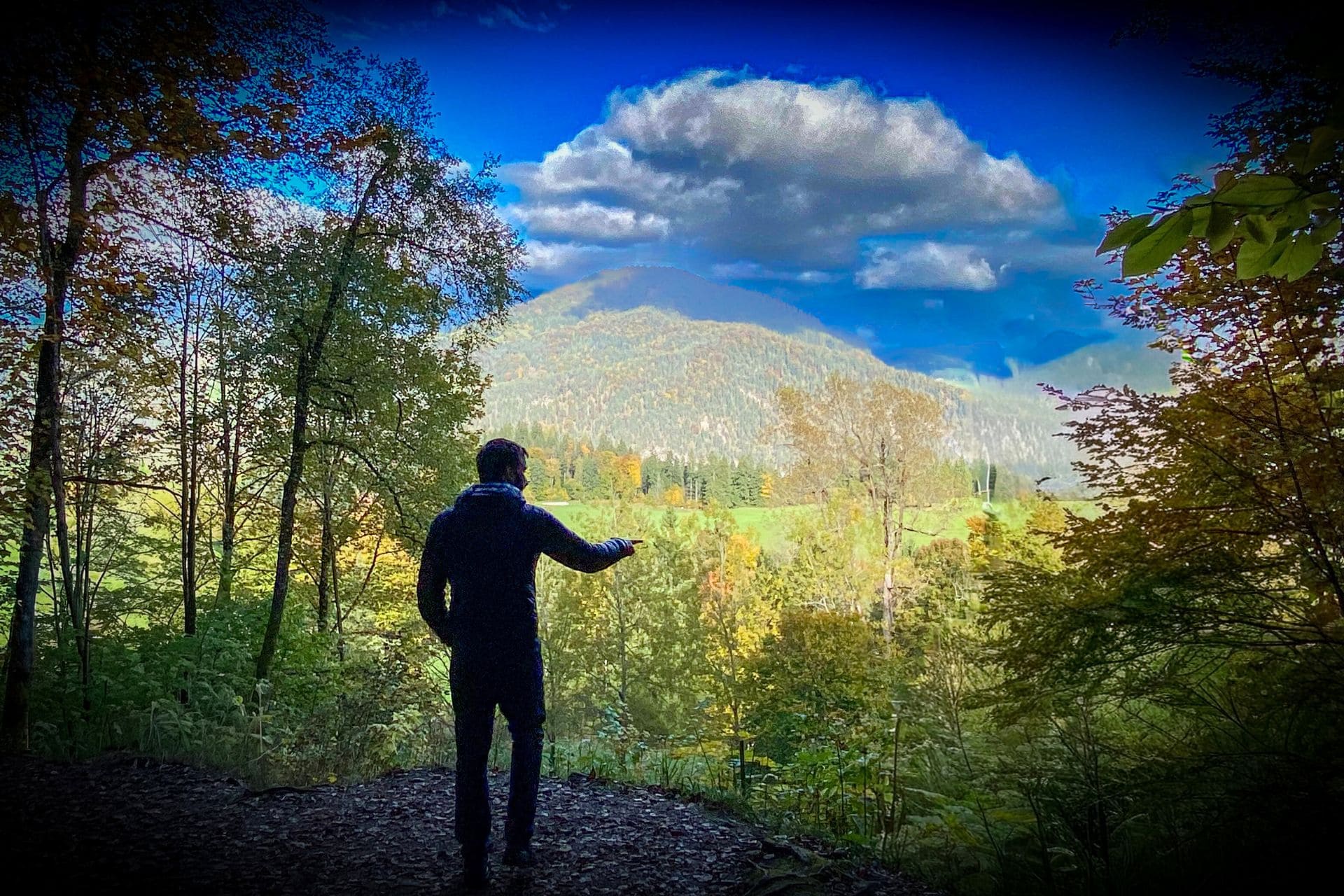
On the road with Tatort Geschichte podcaster Hannes Liebrandt On the trail of National Socialism in the Alps I'm not really a friend read more
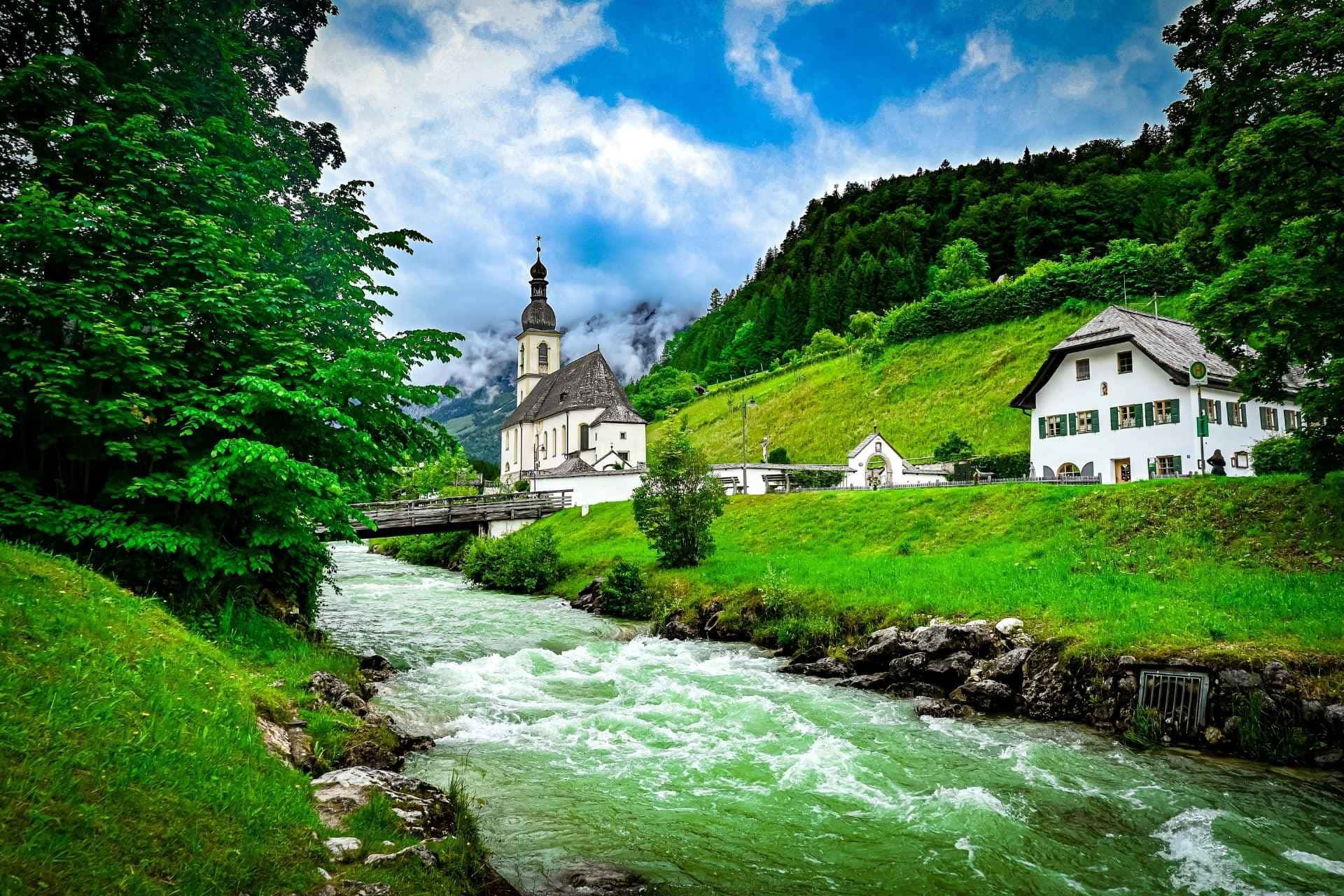
The Berchtesgadener Land impresses with its breathtaking panoramas and, for me, is one of the most beautiful regions in Germany with an abundance of read more
About me: I love to travel, write and photograph - preferably in places where the past is visible. Whether it's half-timbered towns, castles or quiet landscapes - there's something in every place that touches you and inspires you to think further. With my blog Angie's Travel Routes I would like to inspire you to discover Germany on your own. I share my experiences, personal impressions and practical route tips to make your next trip a special experience.
You can find out more about me to my newsletter.
 Deutsch
  English
0 Comments
Trackbacks/Pingbacks