
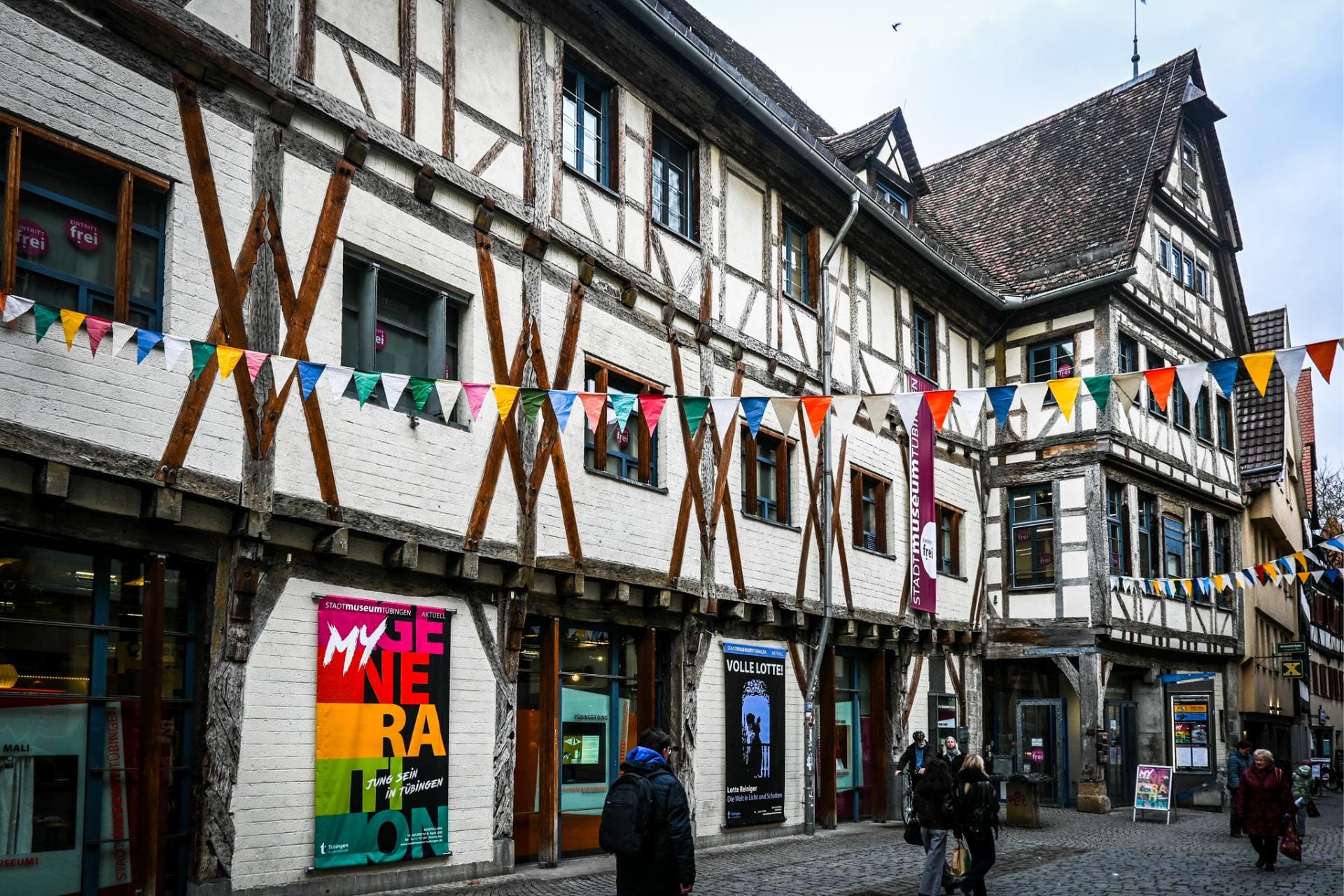
This article was created with the support of the Stadtmuseum Tübingen and the Museum Alte Kulturen (Museum of Ancient Cultures) at the University of Tübingen.
Anyone looking for museums in Tübingen will find a surprisingly diverse cultural landscape in this university town on the Neckar River. Between local history, literature, archaeology, and contemporary art, there are seven places that reveal very different sides of Tübingen.
In this article, I introduce you to 7 museums and cultural sites in Tübingen that impressed me most during my visits: from the Tübinger Stadtmuseum (the city's local history museum) and Hölderlinturm (a literary museum and memorial site dedicated to the poet Friedrich Hölderlin) to the Museum alte Kulturen at Hohentübingen Castle, Kunsthalle Tübingen, and the Neues Kunstmuseum Tübingen.
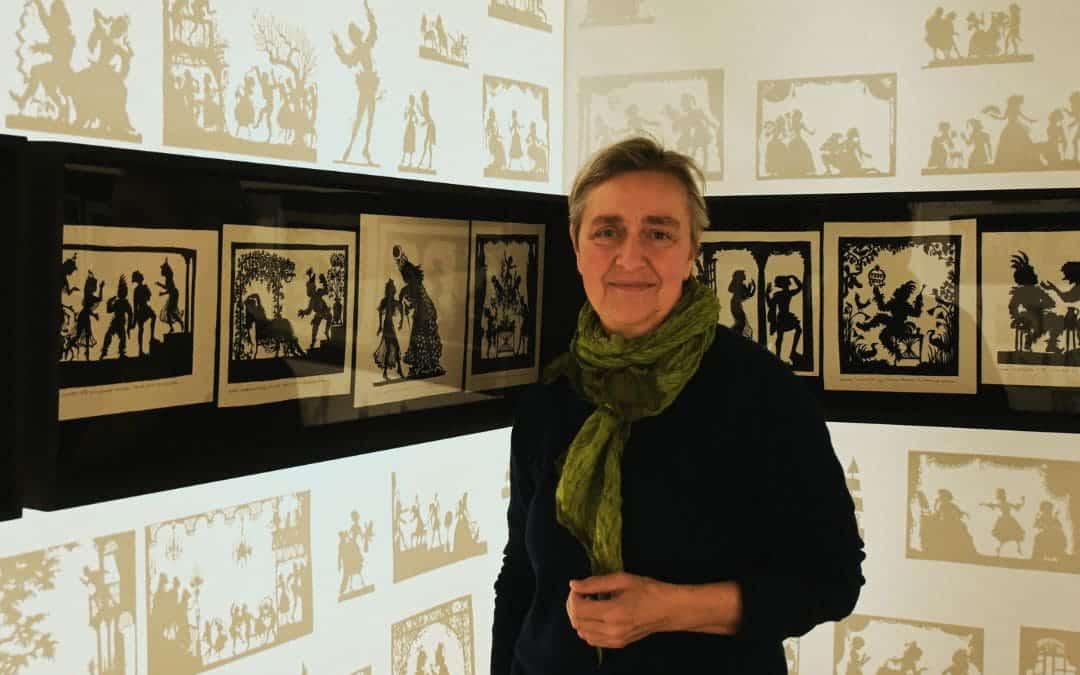
For me, part of the appeal of these places is closely tied to a personal tour: Wiebke Ratzeburg, director of the Tübingen City Museum, showed me around the City Museum, Hölderlin Tower, the Hesse Cabinet, and the Historic City Cemetery. That made it especially tangible for me how closely local history, literature, and memory culture are intertwined in Tübingen.
Another highlight was my visit to the Museum Alte Kulturen at Hohentübingen Castle. Here, the perspective expands far beyond the town itself, reaching back into the earliest history of humankind. With Kunsthalle Tübingen and the New Art Museum Tübingen, I also visited two places that show just how vibrant contemporary art is in Tübingen as well.
This article is intended as a complement to my self-guided walking tour of Tübingen.It does not aim to be complete, but instead brings together a personal selection of museums and cultural sites in Tübingen that connect past and present in special ways.
Tübingen Museums Focused on Local History, Literature, and Remembrance
Together with Wiebke Ratzeburg, director of the Stadtmuseum Tübingen, I visited four places where Tübingen’s history becomes visible in very different ways: the Stadtmuseum Tübingen, the Hölderlinturm, the Hesse-Kabinett, and the historic Stadtfriedhof (City Cemetery).
It is precisely this combination that makes clear how closely local history, literature, and remembrance are woven together in Tübingen.
Stadtmuseum Tübingen - A Great Starting Point for Understanding the City
The Tübingen City Museum is an ideal starting point if you not only want to see the city, but also understand it.
Between half-timbered houses, the university and the Neckar, a coherent picture of Tübingen quickly emerges. What is often missing is the question: What has actually shaped this city? That is exactly where the Stadtmuseum comes in. It does not simply present history, but helps you recognize connections.
What stands out is how consistently the museum encourages visitor participation. A good example is the permanent exhibition on silhouette artist and animation filmmaker Lotte Reiniger. A large part of her estate is now in Tübingen because the Stadtmuseum has given her work a permanent home.
Rather than simply displaying the works, the museum invites you to become active yourself: in an interactive room, you can try out how a silhouette film is made using trick tables and a projector. It makes you realize how much patience and precision lie behind this art form.
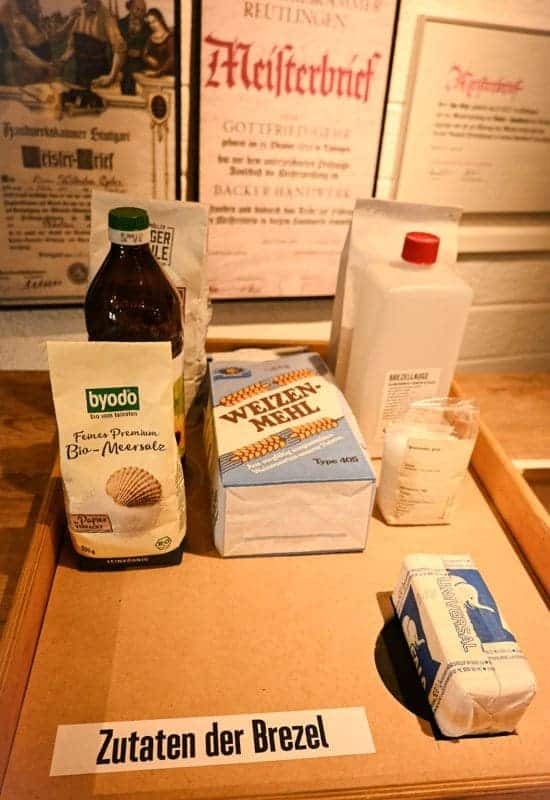
Local history is not simply narrated here either, but developed collaboratively. At several stations, people who live and work in Tübingen today have their say. One of them is baker Albrecht Gehr. At his “pretzel table,” the focus is not only on ingredients, but on the question of how craftsmanship, everyday life, and tradition shape life in a town. And how the elephant ended up on Fala yeast packaging ... the answer is revealed in the next exhibition room, which explores Tübingen during the colonial era.
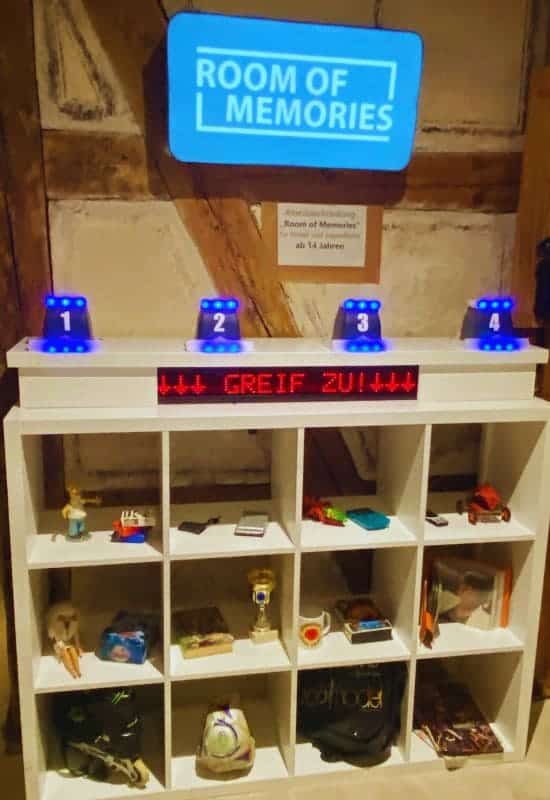
The strongest impression on me was made by a room that deliberately breaks away from the format of a traditional exhibition: the “Room of Memories.”
You do not simply walk into it. First, you choose an object from a shelf that speaks to you most—perhaps an issue of BRAVO magazine, an “Atomkraft – Nein danke” mug, or an old game console. You combine it with a personal quality written on a card, such as “good at listening” or “able to stand my ground.” Both are then left behind.
Then you enter a room designed like an attic—and encounter objects from the Nazi era. Behind each one lies a real story from Tübingen. What remains is not a quick explanation, but a question: How would you have acted?
At the end, the real stories are revealed, either briefly or in more detail. That is exactly what makes the experience linger.
The museum also offers a digital “Actionbound,” which allows you to go on a self-guided search for traces of the past in Tübingen using your smartphone or tablet. Here too, the point is not simply to absorb information, but to discover it for yourself.
For me, that is precisely the strength of the Stadtmuseum Tübingen: it does not only show what happened. It asks you to position yourself in relation to it.
And that's exactly what makes it one of the best places to begin your visit to Tübingen.
Stadtmuseum Tübingen at a Glance

Hölderlinturm - The Most Poetic Place on the Neckar in Tübingen
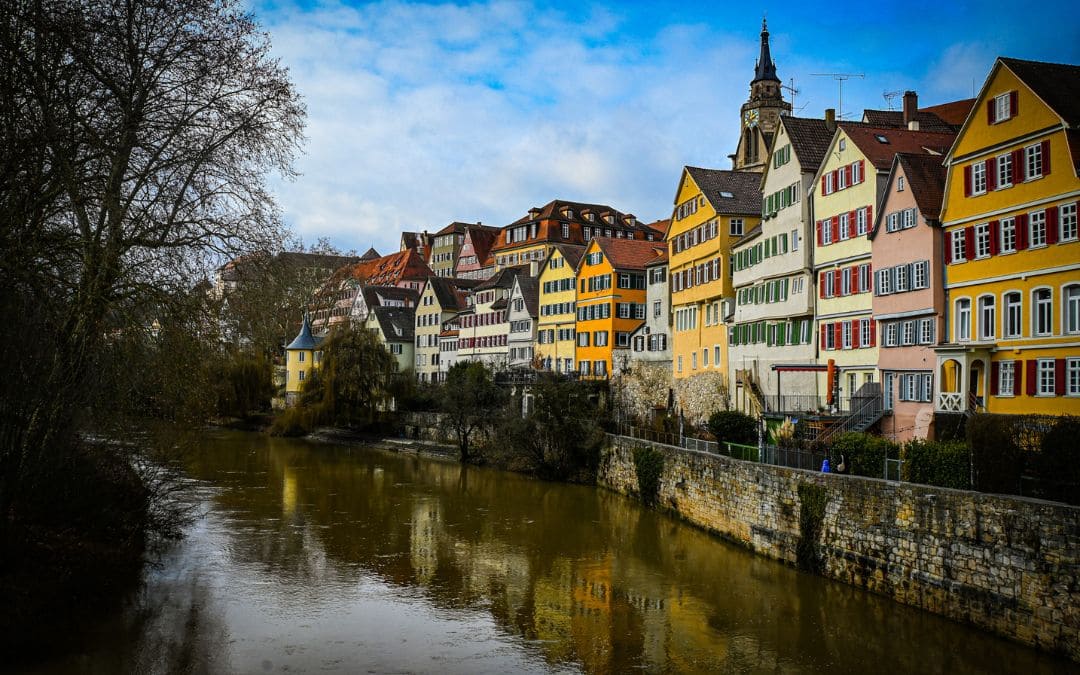
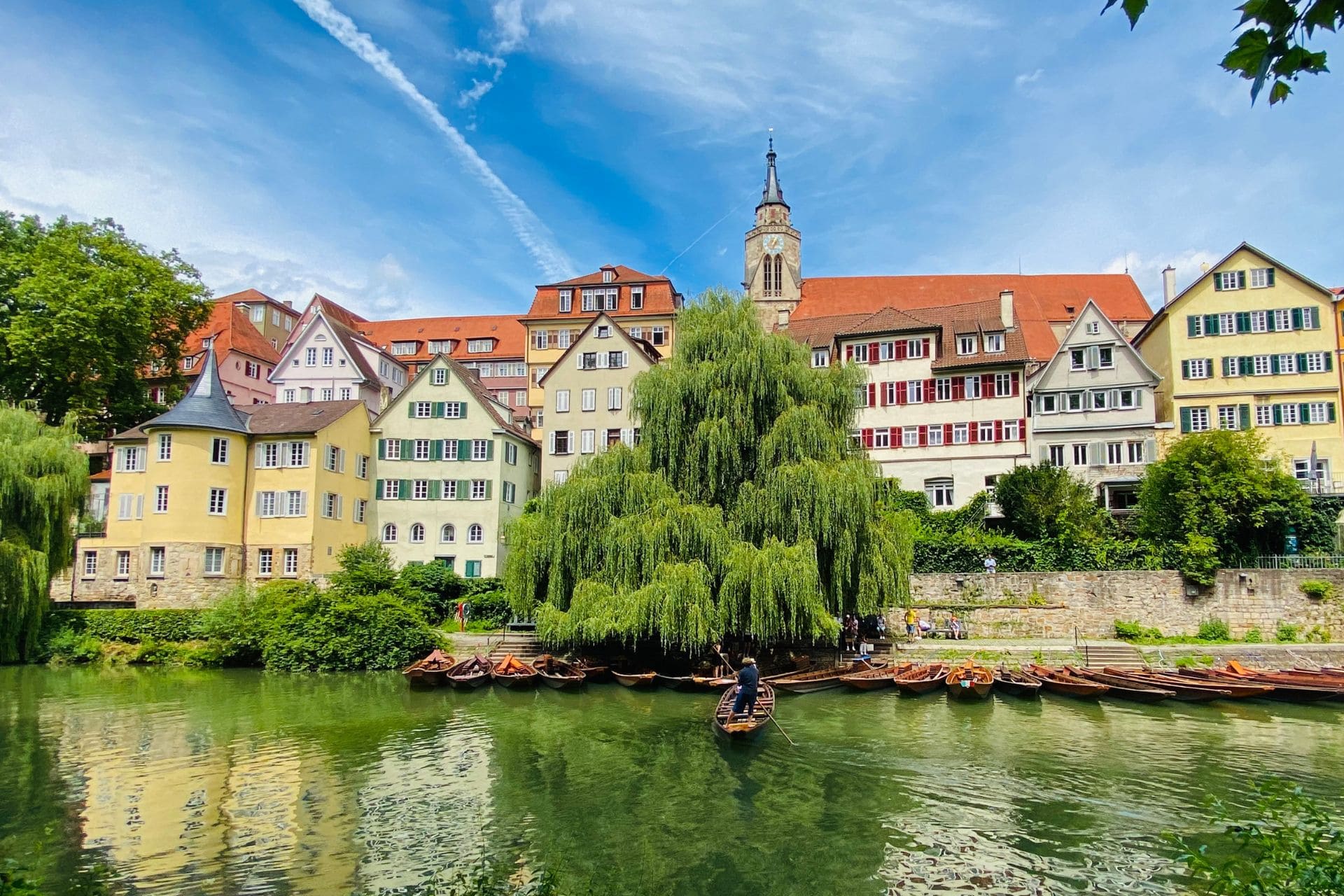
The Hölderlinturm is not only one of the city’s best-known landmarks, but also one of the most important literary memorial sites in the world. Located directly on the Neckar River, it forms the striking end point of Tübingen’s famous Neckarfront, which you can admire particularly well from Neckar Bridge or Neckar Island. With the punt boats along the riverbank and the weeping willow in front of the tower, this is, for me, one of the most atmospheric places in Tübingen.
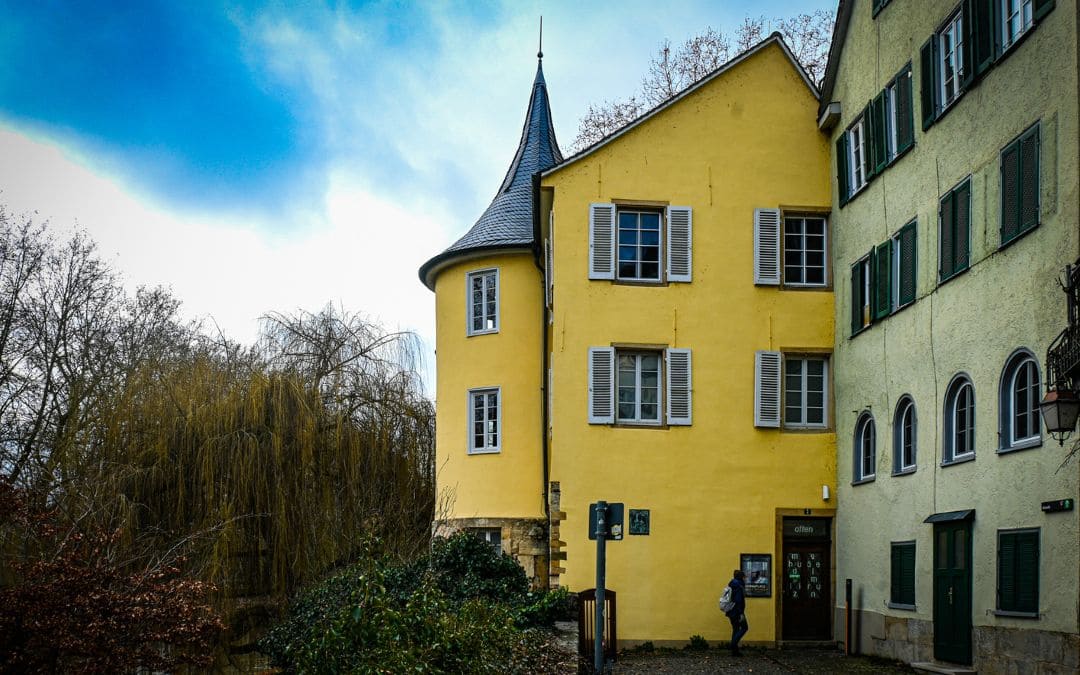
At the same time, the Hölderlinturm is much more than just a photogenic building by the river. It is a literature museum, a poet’s residence, and a site of remembrance all in one. Friedrich Hölderlin spent the second half of his life here: in 1807, the Zimmer family took him into their house on the Neckar, where he lived in a tower room until his death in 1843. During his lifetime, his work received little recognition; today, he is considered one of the most important German-language poets.
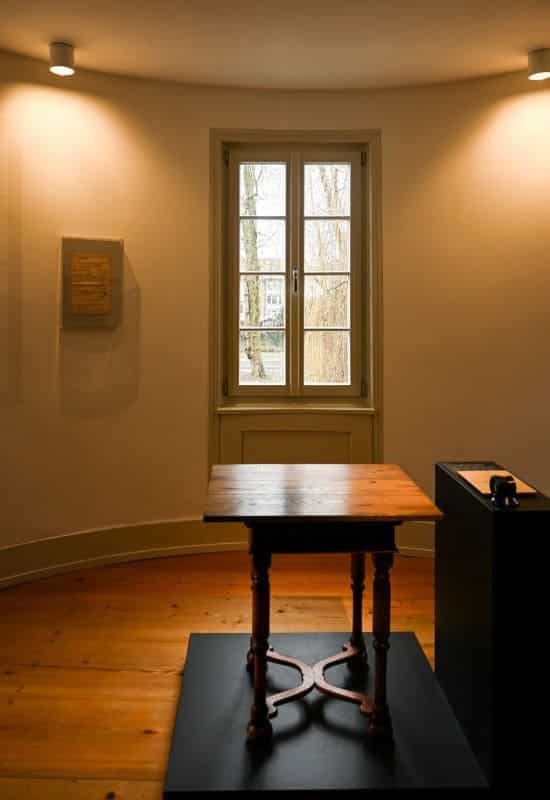
The permanent exhibition takes a cautious approach to this period of his life. It is dedicated to Hölderlin's years in the tower, his visitors and his late poems. This is what makes the visit so impressive for me: the place does not impose a quick interpretation, but leaves room for your own view.
It is still easy today to imagine how important this location must have been for Hölderlin. The house stands directly on the Neckar, and from his tower room he looked out over the river valley. That makes it easier to understand why the tower was not only a place of retreat for him, but also a place of intense perception. Light, water, and the seasons suddenly no longer seem like abstract motifs, but like something that may have entered his work directly from the surrounding landscape.
The tower we see today, however, is not quite the same one in which Hölderlin lived. After a fire on December 14, 1875, the building was rebuilt in altered form, and the tower received its current round shape.
If you are interested in literature, city history and special places by the water, I think the Hölderlin Tower is one of the most impressive museums and cultural sites in Tübingen. That is also part of the appeal of this place: it preserves memory not as a rigid monument, but as a place that connects history, literature and the cityscape to this day.
Hölderlinturm at a Glance
Hesse Cabinet - Hermann Hesse’s Literary Beginnings
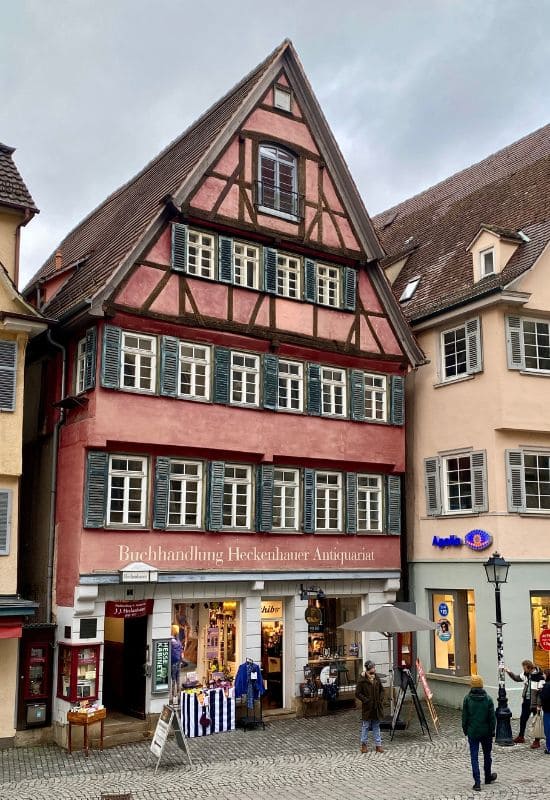
The Hesse-Kabinet in Tübingen is one of Tübingen’s more understated museums—and that is precisely what makes it so appealing. Right in the middle of the old town, directly on Holzmarkt Square across from St. George’s Collegiate Church, this small literary memorial site lies almost hidden between little shops and half-timbered buildings.
This is where Hermann Hesse began his apprenticeship as a bookseller in 1895 at the Heckenhauer antiquarian bookshop. After difficult years in his youth, he found something like stability in Tübingen for the first time and devoted himself intensely to literature. At the end of this period, he published his first poems under the title Romantic songs - a quiet beginning to what would later become a world-famous literary career.
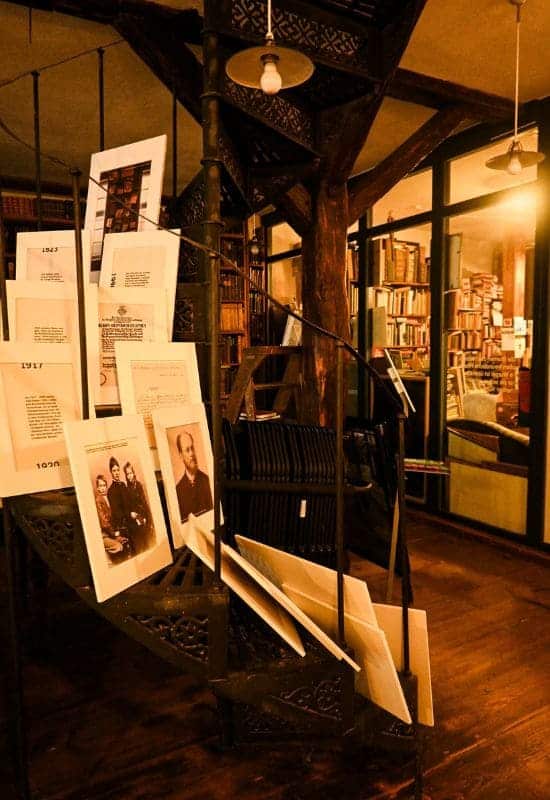
Today, the Hesse-Kabinett commemorates this early phase in the life of the future Nobel Prize winner. Unlike many museums, it does not rely on grand staging, but instead creates a calm, almost intimate atmosphere. With its historic bookshelves, narrow spiral staircase, and armchairs and sofas, the Hesse-Kabinett feels more like a place to linger than an exhibition in the traditional sense.
You can sit down here, browse through books, and look at photographs from Hermann Hesse’s life. It is precisely this restraint that makes the visit so special: the Hesse-Kabinett does not explain Hesse—it allows you to come closer to him. It is a quiet yet memorable cultural site for anyone interested in literature, the early years of great writers, or special places in Tübingen’s old town.
Hesse-Kabinett at a Glance
Historic Stadtfriedhof (City Cemetery) - Between Remembrance and Local History
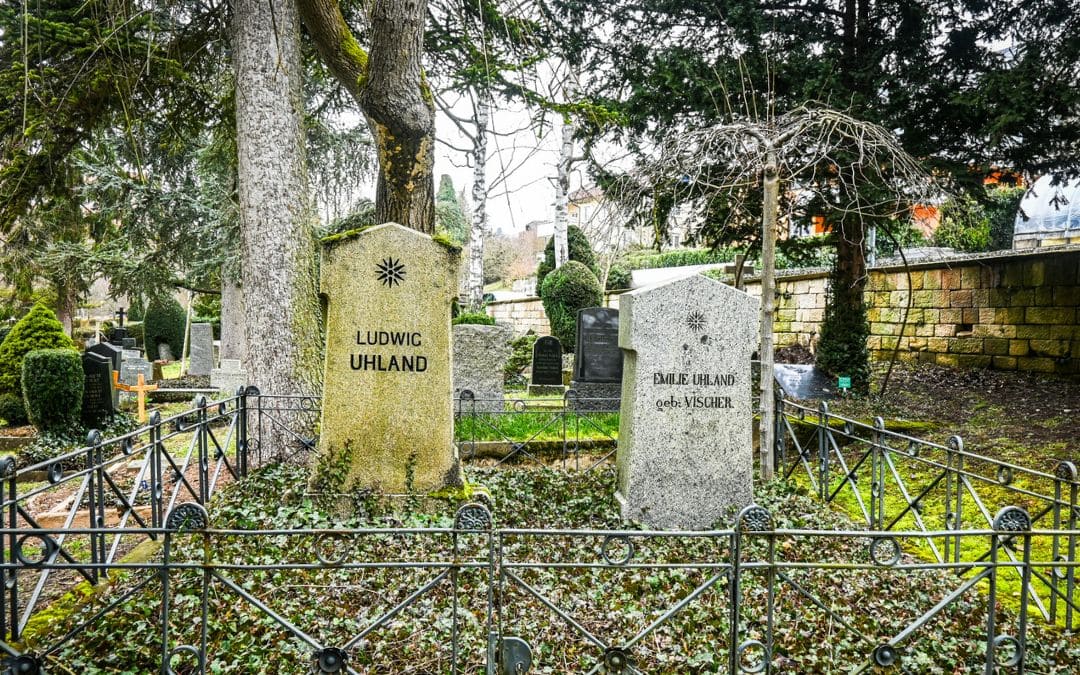
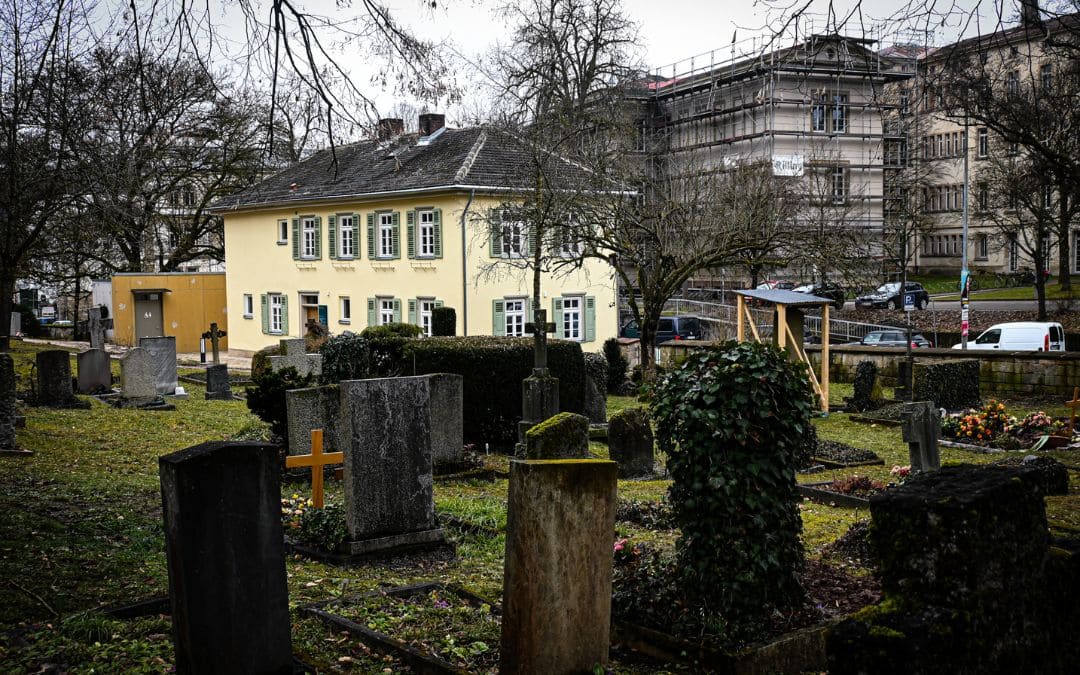
The historical Stadtfriedhof in Tübingen is not a place that you simply visit. Between old trees and historic gravestones, you will encounter a piece of the city's history that is not on display, but remains silently present. The cemetery was laid out outside the city walls in 1829. Today it looks like a park-like retreat in the middle of the city.
Many well-known names can be found here: Friedrich Hölderlin, Ludwig Uhland, Walter Jens, Hans Küng, and Kurt Georg Kiesinger. But it is not only these graves that shape the cemetery. It is the density of stories layered here—stories from literature, academia, politics, and intellectual life.
It is precisely the connection between past and present that makes the Stadtfriedhof so special.
In the former caretaker’s house at the entrance, the current Tübingen writer-in-residence lives today. Since 2008, the city has awarded this scholarship to poets who live and work here for several months. While old gravestones outside recall past lives, new literature is being created inside.
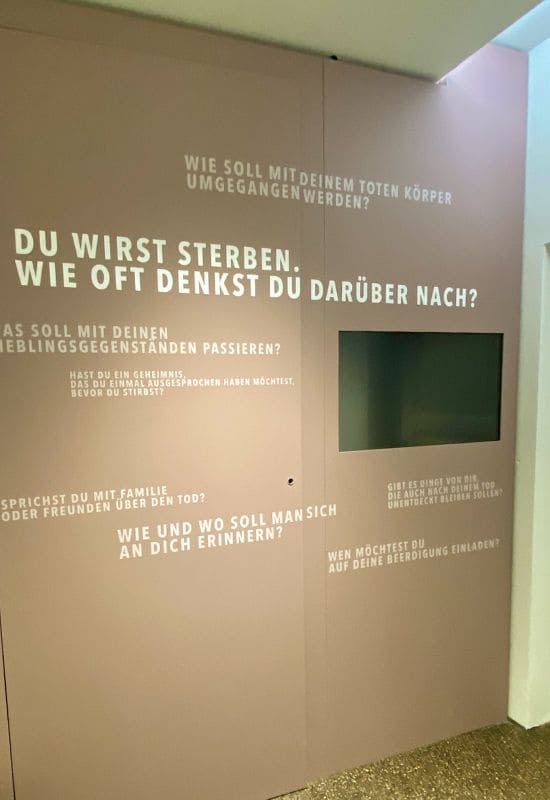
The exhibition Death and Remembrance on the ground floor of the house carries this idea further. It does not only tell the story of burial culture, but quietly raises larger questions: how do we deal with remembrance today? And what remains of a life?
Especially striking is the so-called Gräberfeld X (Grave Field X). During the Nazi era, more than 1,000 people were buried here whose bodies had been handed over to the anatomical institute after death -many of them victims of Nazi violence.
The fact that their names are now being documented and their stories continue to be researched changes the way you look at the cemetery. It does not only remember, but also asks you to look more closely. It is not a closed chapter of local history, but a quiet place where past and present exist side by side.
If you take the time to explore the many facets of the Stadtfriedhof, it becomes one of the most remarkable stops in Tübingen - precisely because it does not fully reveal itself at first glance.
Historischer Stadtfriedhof at a Glance
From Local History to the History of Humankind
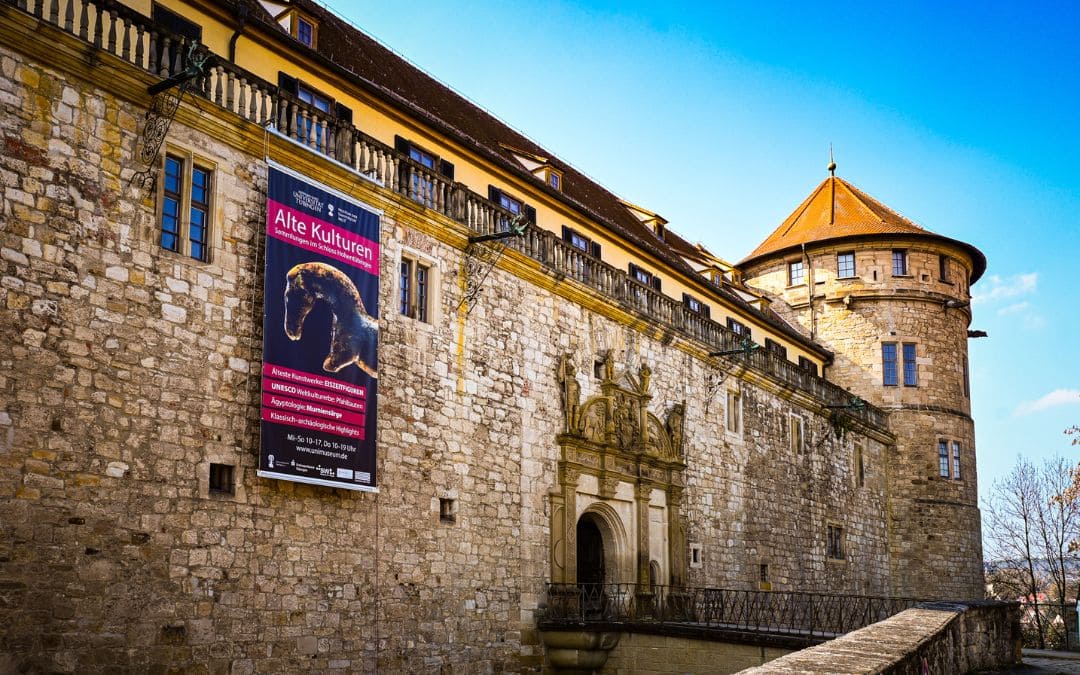
The Museum Alte Kulturen at Hohentübingen Castle broadens the perspective once again. Here, the focus is no longer only on Tübingen itself, but on cultural development across thousands of years - from the oldest works of art created by humankind to the remains of early settlement history.
Museum Alte Kulturen - World Cultural Heritage at Hohentübingen Castle
After local history, literature, and remembrance, the Museum Alte Kulturen (Museum of Ancient Cultures) is no longer only about Tübingen itself, but about several thousand years of cultural history.
Even the walk up to Hohentübingen Castle is part of the visit. The complex is enthroned above the old town and not only offers a sweeping view over Tübingen and the Swabian Alb, but also provides a fitting setting for the museum.
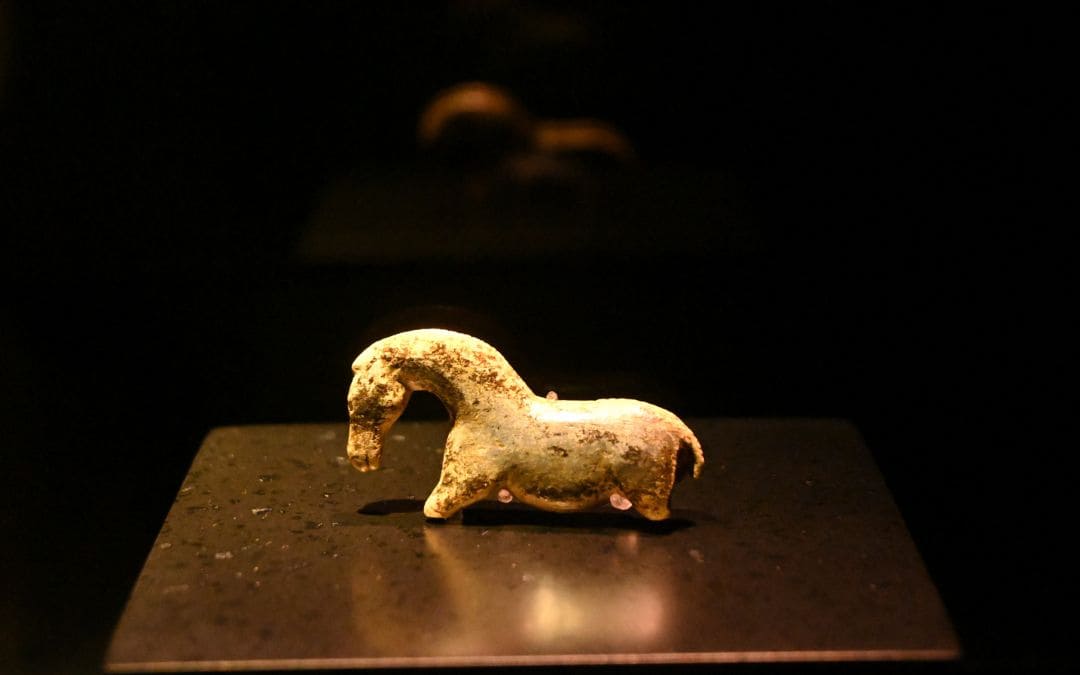
the story stretches from prehistory to antiquity. Around 4,600 objects are on display across roughly 2,000 square meters. What I find especially impressive is that finds from two UNESCO World Heritage Sites come together here. They include the famous Ice Age figurines carved from mammoth ivory, among them the well-known Vogelherd horse, as well as fragments of the oldest known musical instruments in human history (UNESCO World Heritage Caves and Ice Age Art in the Swabian Jura) . There are also objects from the UNESCO World Heritage Prehistoric Pile Dwellings around the Alps, which offer insight into the lives of early settlement communities.
For me, that connection is exactly what makes the museum so special: it does not only present individual outstanding objects, but makes visible just how far back the cultural history of this region reaches.
During my visit, I was lucky enough to experience a private tour instead of the scheduled highlights tour, and it was every bit as informative as it was enjoyable. Afterwards, I was able to look at some of the most important pieces again at my own pace. One highlight for me was the Egyptian collection, with the walk-in offering chamber of Seschemnefer III from Giza and the coffin of Idi from Assiut, whose lid is decorated with a unique star clock.
But even beyond these highlights, the museum is well worth exploring. The Tübingen Arms Runner (Tübinger Waffenläufer) and the Knights’ Hall with its approximately 350 casts of Greek and Roman sculptures show that this museum does not live from just a few famous objects. It is a place where new connections keep opening up.
That also applies to one object you should not miss during your visit to Hohentübingen Castle: the Tübingen giant barrel in the castle cellar. Built beginning in 1546, it holds around 85,000 liters and is considered the oldest surviving giant wine barrel in the world.
It is precisely the combination of castle history, archaeological finds, world cultural heritage and regional history that makes the Museum Alte Kulturen one of the most fascinating museums in Tübingen.
Museum of Ancient Cultures at a Glance
Tübingen and Contemporary Art
As strongly as Tübingen is shaped by history, literature, and remembrance, contemporary art is also very much alive here. With the Kunsthalle Tübingen and the Neues Kunstmuseum Tübingen, the city has two institutions that deliberately turn their attention to the present—though in very different ways.
The Kunsthalle Tübingen has stood for exhibitions of international caliber and thoughtful engagement with contemporary art for decades. The Neues Kunstmuseum Tübingen, by contrast, places stronger emphasis on an open, biographical, and multimedia approach. Together, the two show that Tübingen’s museum scene does not stop at the past, but continues to develop visibly in the present.
Kunsthalle Tübingen – Contemporary Art with International Reach
The Kunsthalle Tübingen has been one of the region’s defining venues for 20th- and 21st-century art. With its changing exhibitions, it regularly brings international art to Tübingen and demonstrates that ambitious exhibitions do not only take place in major metropolitan centers.
At the same time, the Kunsthalle does not see itself as an exclusive institution for experts, but aims to make art accessible to a broad public. Interactive, participative and cross-generational mediation formats are just as much a part of this as the exhibitions themselves. The fact that this approach is also recognized beyond the region is shown by the Baden-Württemberg Lotto Museum Prize, which the Kunsthalle won in 2022.
I experienced what this looks like in practice during my visit to the current exhibition Alex Katz. Dancing with Reality (visited in April 2026). The show made very clear what the Kunsthalle Tübingen stands for: internationally important contemporary art presented in a smaller city with great care, expert interpretation, and an open, welcoming approach.
The guided tour gave me a completely different way into the exhibition. What at first glance appeared clear and reduced gained much more depth through the conversation. For me, that is one of the Kunsthalle’s great strengths: it brings important works of contemporary art to Tübingen while creating a framework in which you can approach them without hesitation.
If you are interested in contemporary art, modern exhibitions, or internationally known artists, the Kunsthalle Tübingen is one of the city’s key cultural addresses.
Kunsthalle Tübingen at a Glance
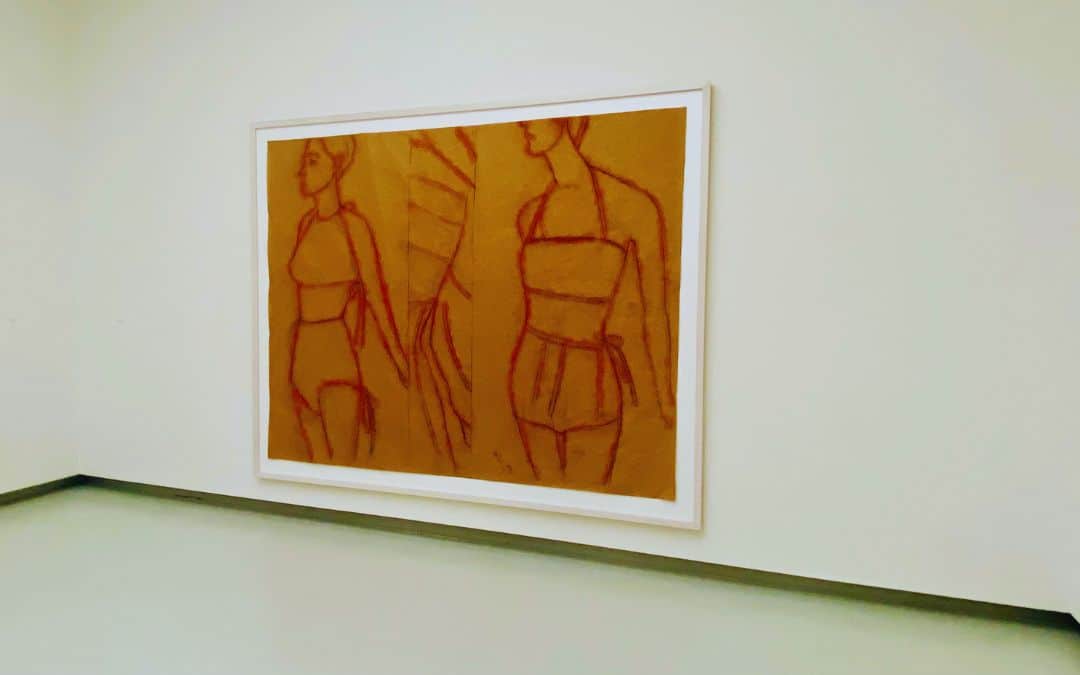
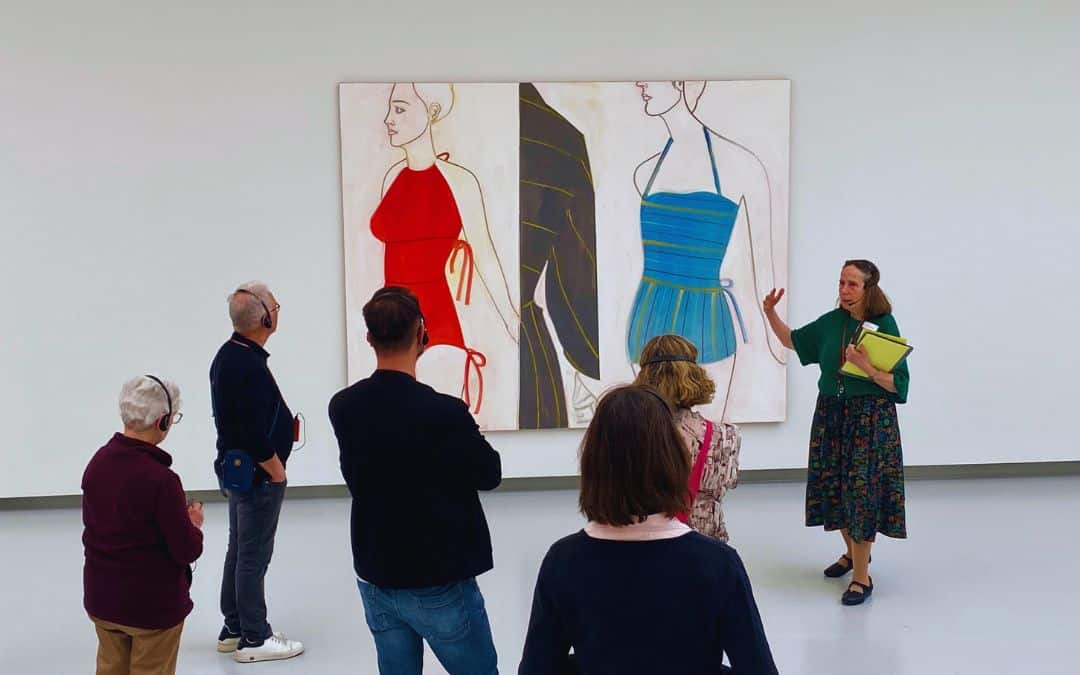
During a guided tour of the exhibition Alex Katz. Dancing with Reality the art mediator explained the artist's working technique from the preliminary sketch to the finished work using the example of this painting from the „Claire McCardell“ series.
Neues Kunstmuseum Tübingen - A New Impulse for Tübingen’s Art Scene
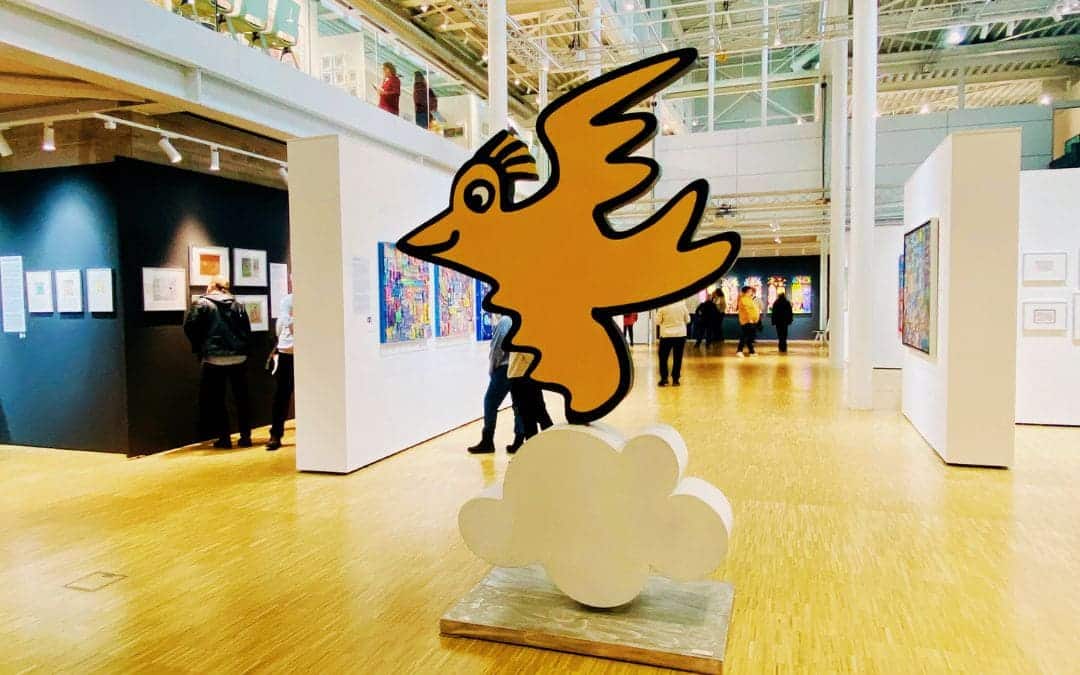
With the Neues Kunstmuseum Tübingen , the city has gained a cultural site since 2025 that noticeably expands its museum landscape. This privately funded institution sees itself not only as an exhibition venue, but explicitly as a forum for art and culture. Its aim is to create a new and as open as possible approach to art.
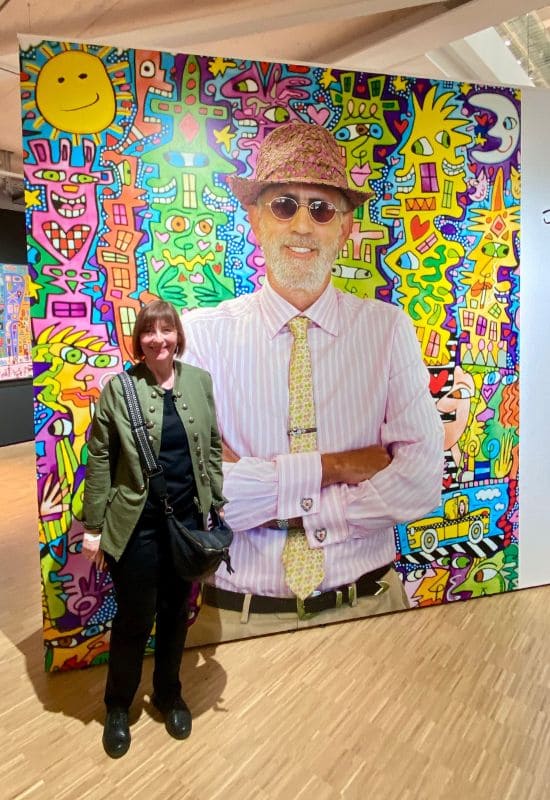
Its opening exhibition, Udo Lindenberg - Panic in Tübingen , already showed the direction it wants to take: art is not meant to be kept at a distance, but placed in a broader context and made accessible through multimedia experiences.
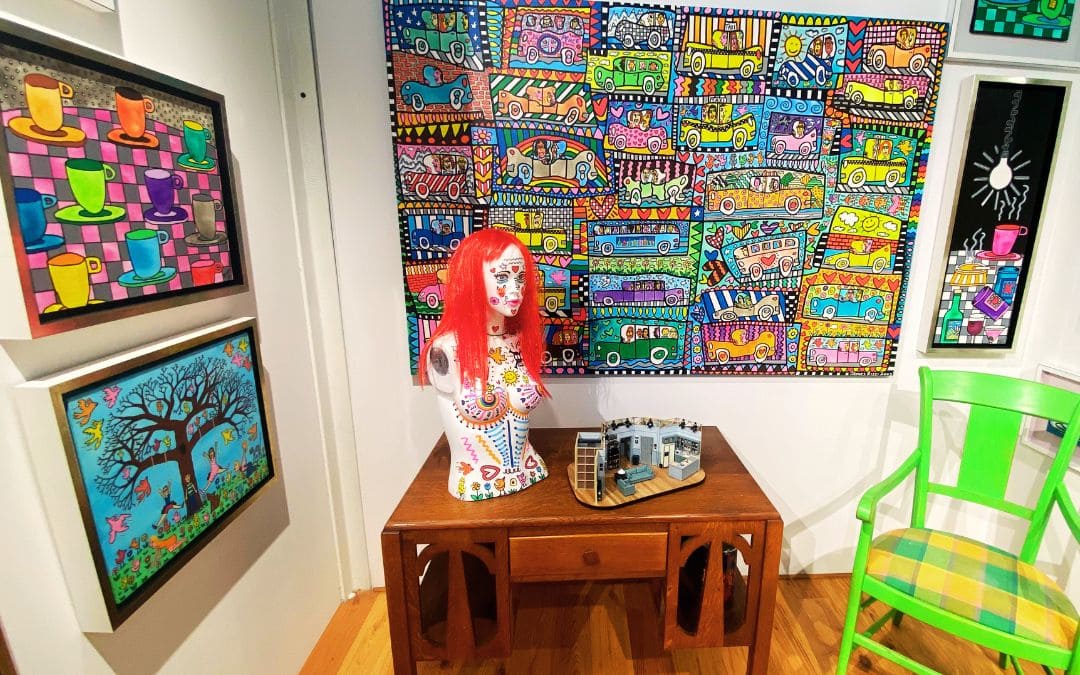
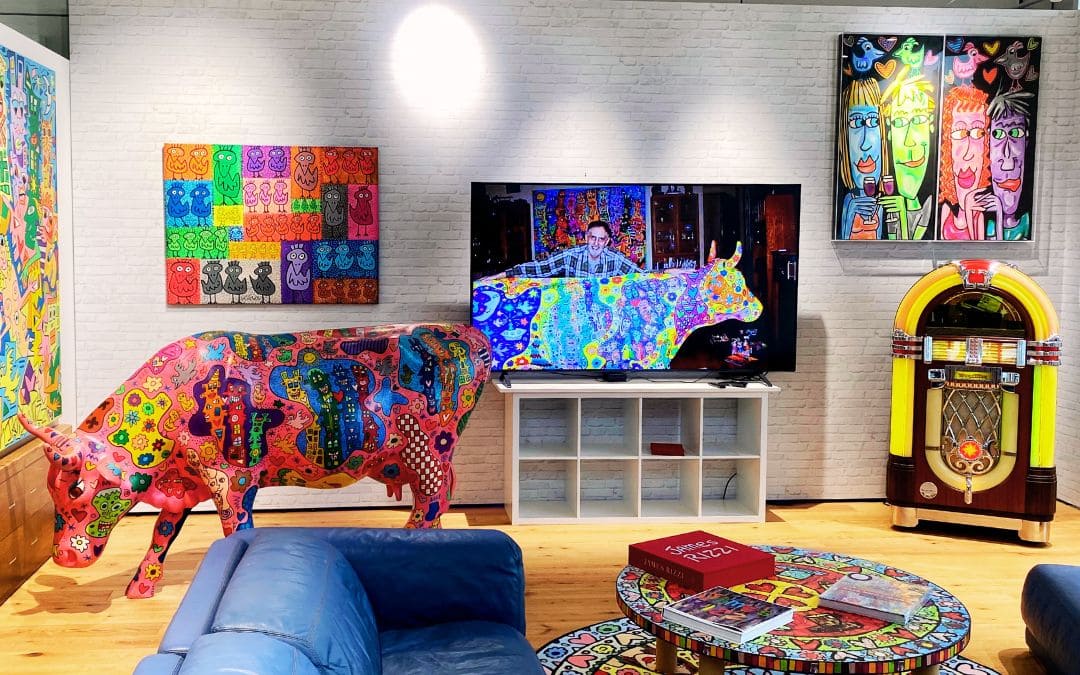
I also had this impression during my own visit. What has stayed with me most from the exhibition James Rizzi - Home away from Home, was the reconstruction of the artist’s studio. For me, that glimpse into the artist’s workspace created a particularly special point of access, because it connected the works more closely to the person behind them.
That seems to me to be one of the Neues Kunstmuseum’s strengths. It does not only show art, but also tries to make the artist’s personality, working methods, and environment visible. In that way, contemporary art becomes accessible without losing its depth.
The rest of the program underlines that ambition as well. With the exhibition 95 years Janosch and the announced project Ronnie Wood. The Artist the museum relies on well-known names, but also on formats that make it possible to experience art biographically, spatially and emotionally.
What is more, the Neues Kunstmuseum Tübingen does not stop at exhibitions. With event series such as Gysis Begegnungen (Gysi's Encounters), it has also established itself as a place of exchange where guests from politics, culture, media, and society come together.
For me, the Neues Kunstmuseum Tübingen is therefore more than just another museum in the city. It brings new topics, new formats, and new audiences to Tübingen. That is exactly what gives it a distinct place within the city’s art scene.
Neues Kunstmuseum Tübingen at a Glance
My Conclusion on Tübingen’s Museum Scene
What impressed me most about Tübingen’s museum scene is the way very different places come together to form a coherent whole. Between the Stadtmuseum Tübingen, the Hölderlinturm, the Hesse-Kabinett, and the Historischer Stadtfriedhof, it becomes clear how closely local history, literature, and remembrance are interwoven in Tübingen. With the Museum Alte Kulturen at Hohentübingen Castle, that perspective expands far beyond the city into the earliest history of humankind. The Kunsthalle Tübingen and the Neues Kunstmuseum Tübingen, in turn, show that Tübingen does not only live from its past, but also provides important impulses in contemporary art.
For me, it is precisely this combination that makes the museums in Tübingen so special. It is not only about individual collections or exhibitions, but about places that complement one another and together create a layered picture of the city.
This article therefore does not offer a complete overview, but a personal selection. Anyone who takes the time to engage with these places will come to know Tübingen not only as a beautiful university town on the Neckar, but also as a city of culture with remarkable variety.
Further Reading
If you would like to discover Tübingen as a whole, I will show you on a tour of the old town the most beautiful sights.
Tübingen also fits beautifully into a road trip across the Swabian Alb In a separate in-depth article, I introduce you to my 52 highlights of the Swabian Alb .
For travel planning, my comprehensive guide to the 52 most beautiful regions in Germany gives you an overview of some of the country’s finest destinations.
I have also put together a separate article with travel tips for The Most Beautiful Cities in Germany .
For your visit to Tübingen, the local city magazine Tübingen Südstadt offers helpful tips on cultural events, day trips, and restaurants in the city.
On this city tour through Tübingen, I will show you the most important sights of the old town, which is one of the most beautiful in Baden-Württemberg read more
Between Albtrauf, half-timbered houses and World Heritage Site The Swabian Alb is still one of Germany's underrated regions. Yet it combines a read more
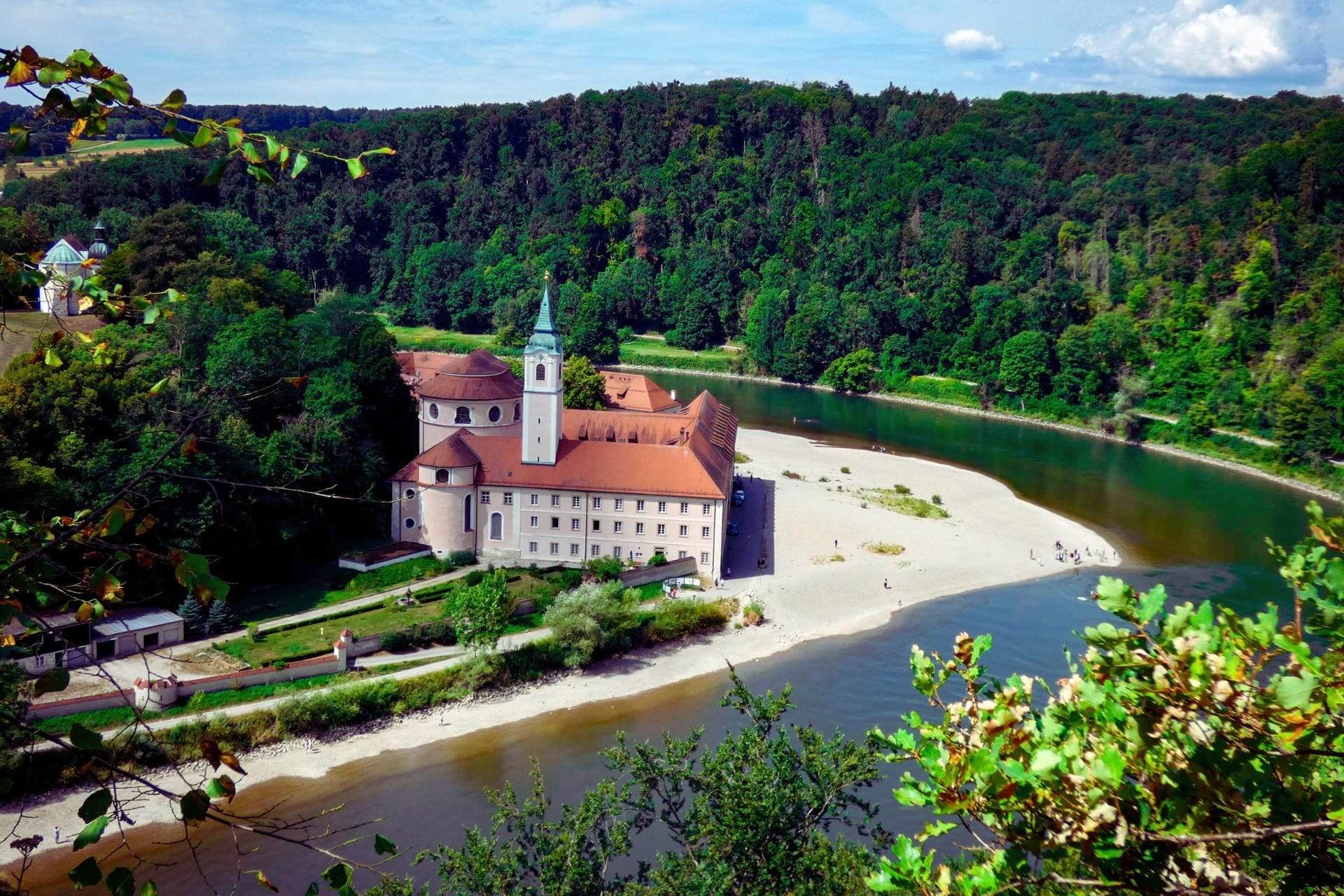
Are you ready to discover Germany's magnificent landscapes? This comprehensive guide takes you to the 52 most beautiful areas of our country read more
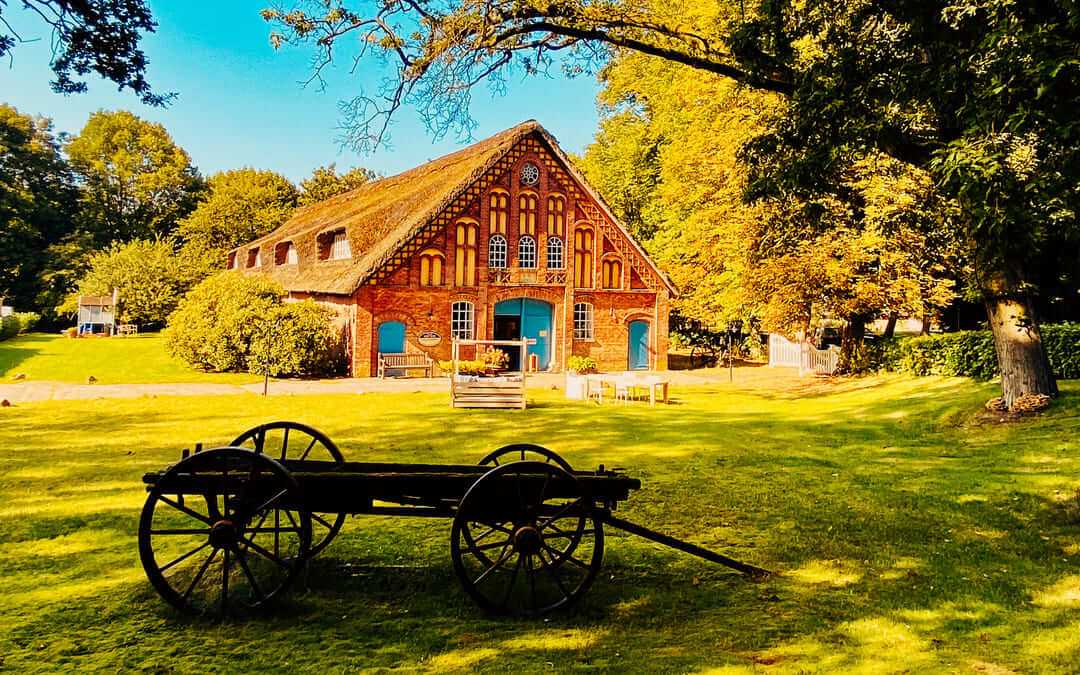
Germany is perfect for a road trip: well-maintained roads, a variety of landscapes, exciting cities and plenty of culture and cuisine read more

About me: I love to travel, write and photograph - preferably in places where the past is visible. Whether it's half-timbered towns, castles or quiet landscapes - there's something in every place that touches you and inspires you to think further. With my blog Angie's Travel Routes I would like to inspire you to discover Germany on your own. I share my experiences, personal impressions and practical route tips to make your next trip a special experience.
You can find out more about me to my newsletter.

 Deutsch
  English
0 Comments
Trackbacks/Pingbacks